Plant Disease Management Handbook

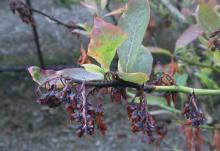
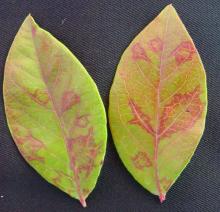
Image related to Blueberry (Vaccinium corymbosum)-Virus Diseases
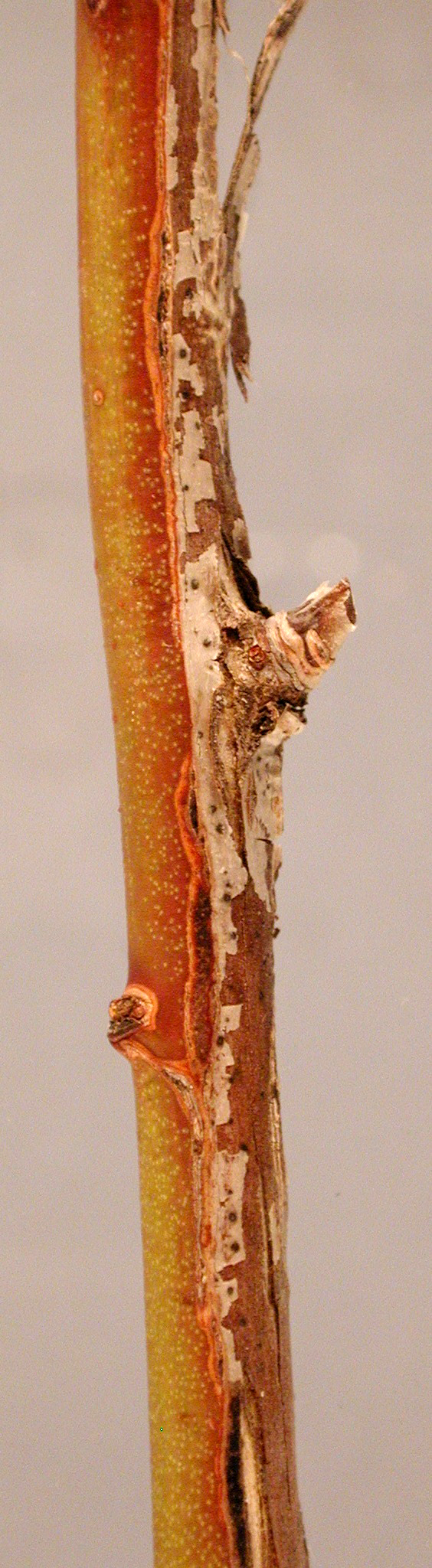
Image related to Blueberry (Vaccinium corymbosum)-Twig Canker
Image related to Blueberry (Vaccinium corymbosum)-Twig Blight
Image related to Blueberry (Vaccinium corymbosum)-Stem Canker

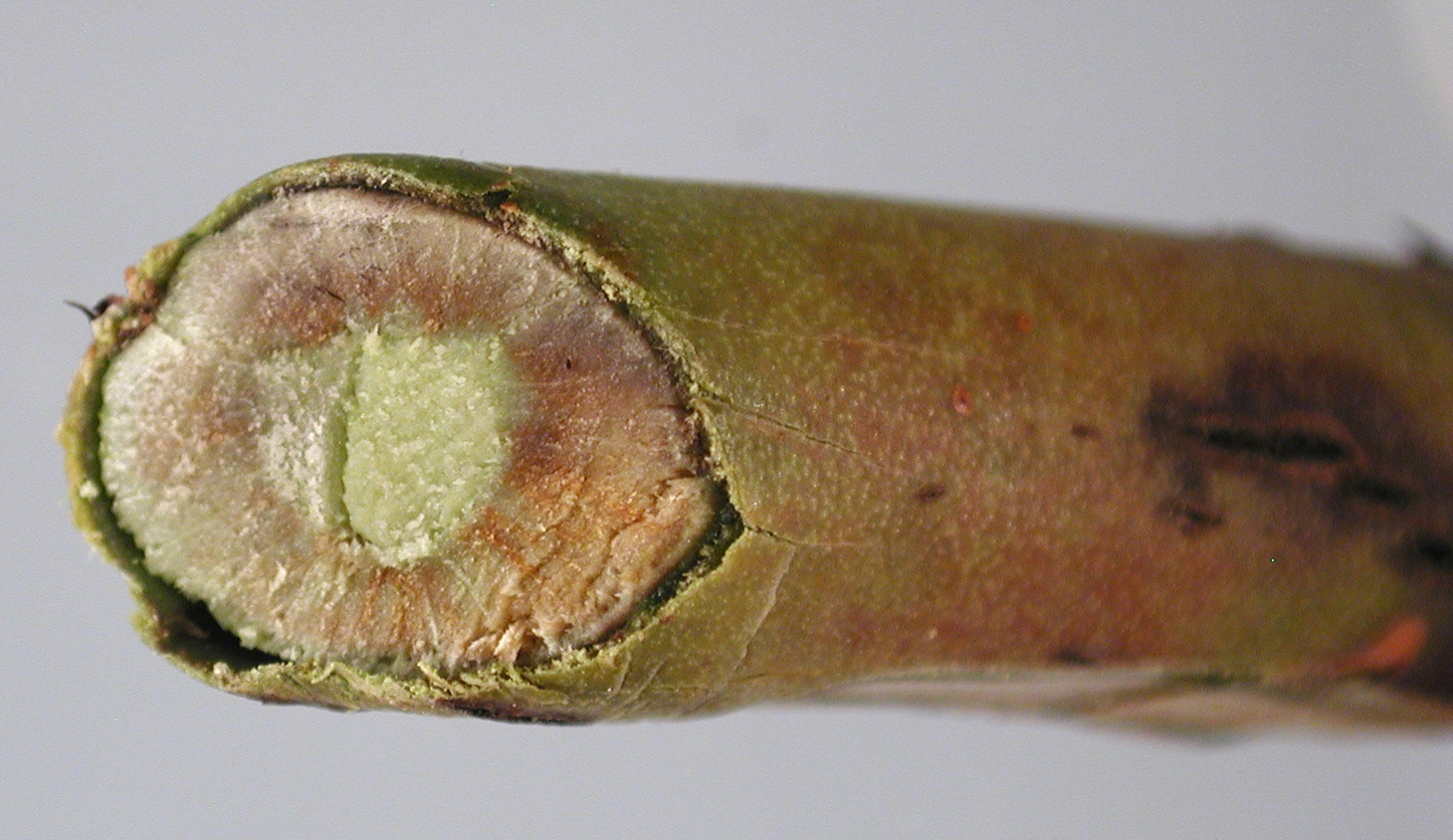
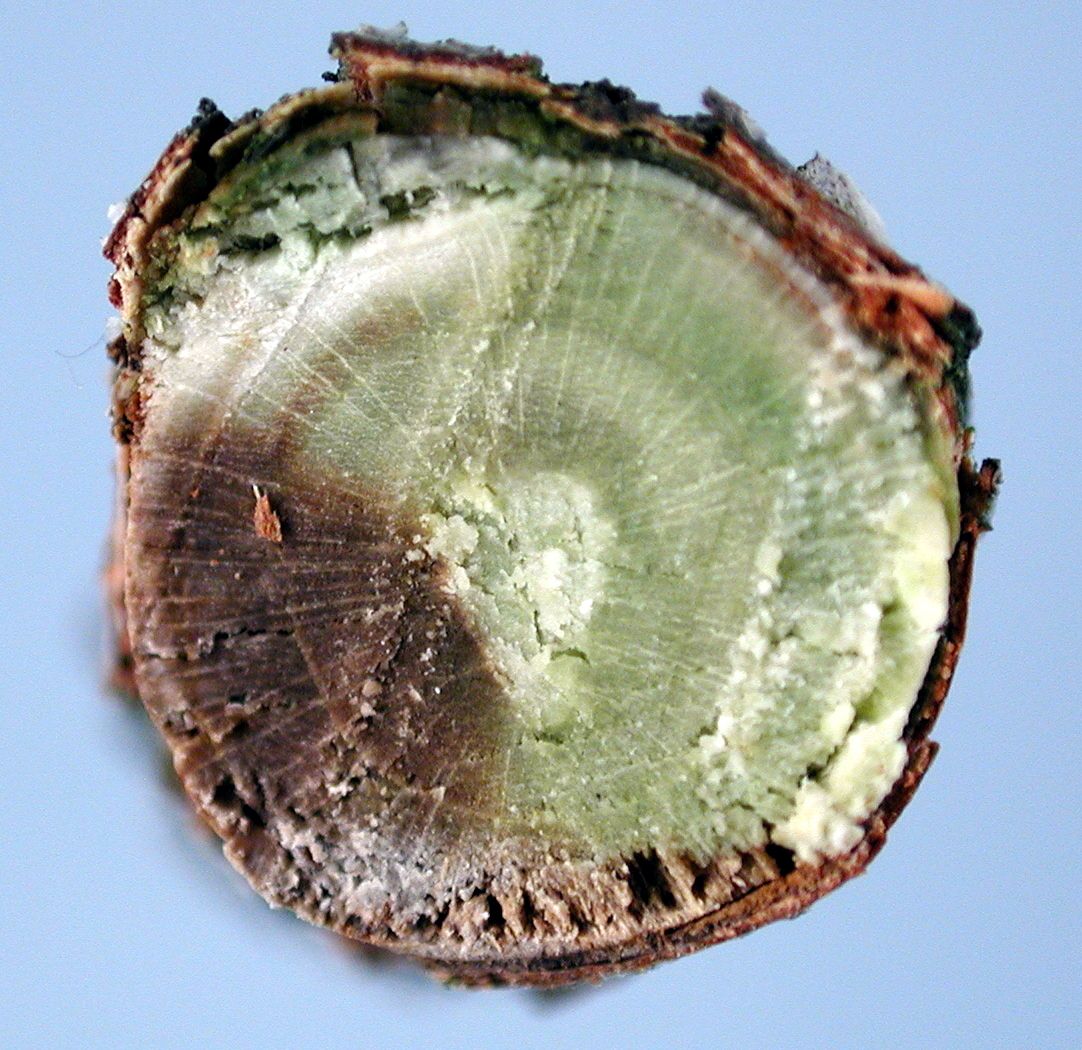
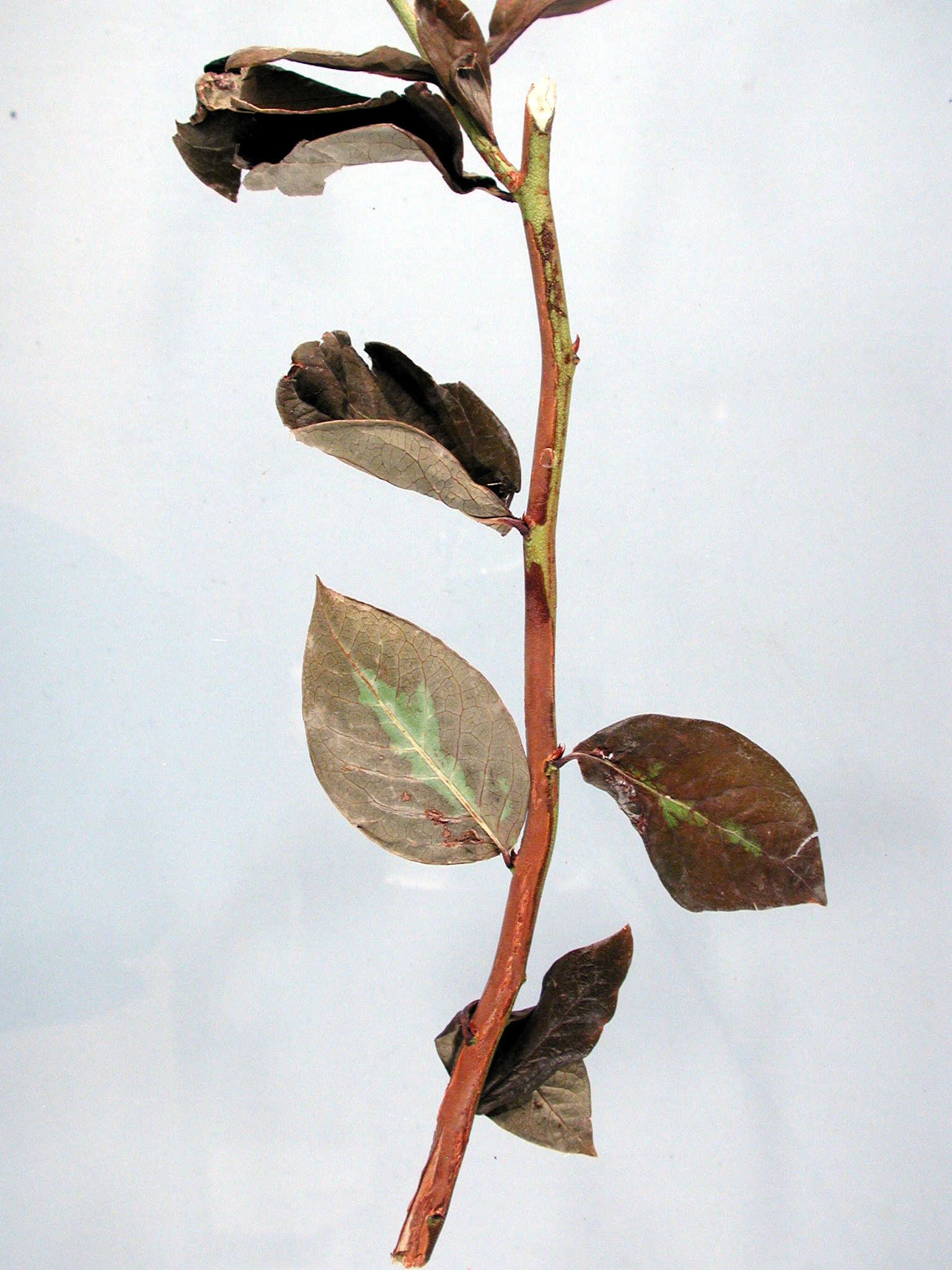
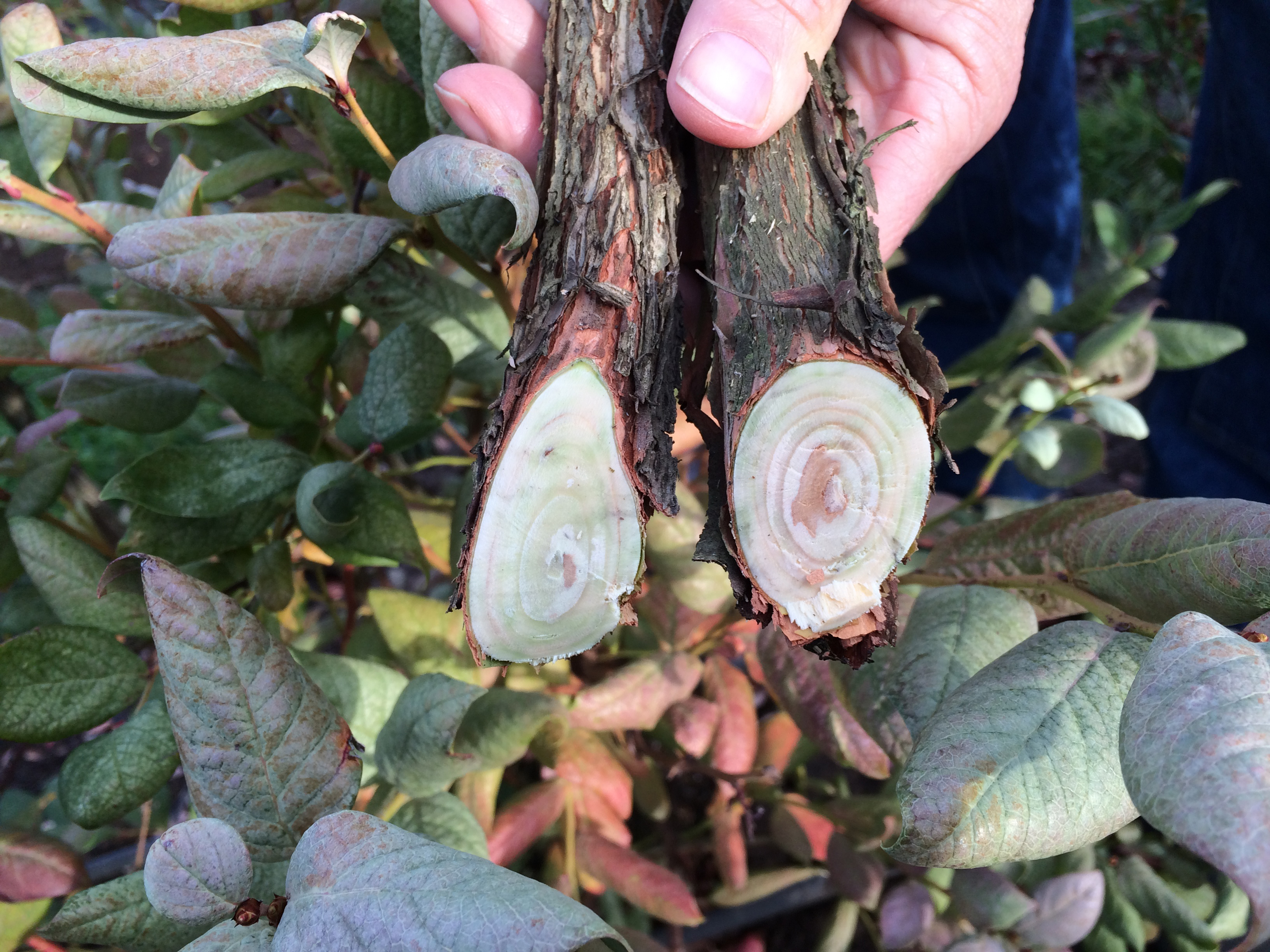
Cause Silver leaf is not new to the PNW as it has been a minor problem on stone fruit for many years. It is a disease where the fungus, Chondrostereum purpureum, invades cut or wounded stems and limbs of a wide variety of plants. This fungus was confirmed for the first time in 2014 by the OSU Plant Clinic on 'Draper' and 'Liberty' blueberry with silver leaf symptoms although samples with these symptoms had been received since 2009.

Image related to Blueberry (Vaccinium corymbosum)-Silver Leaf

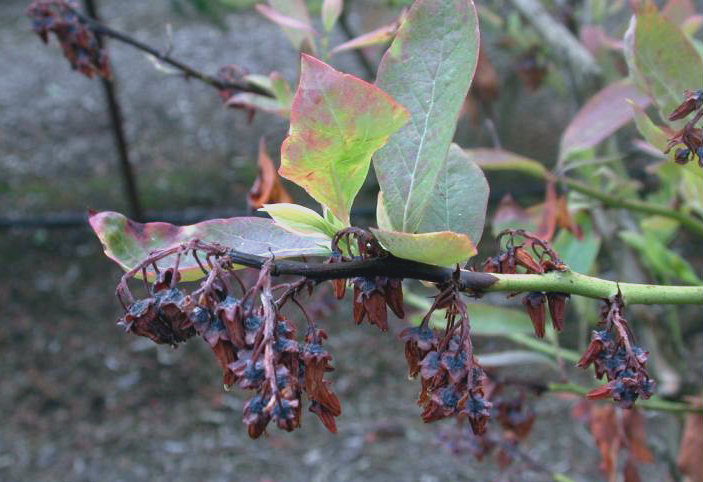
Cause The blueberry shock virus (BlShV), which is pollenborne. Transmission occurs when pollinators, especially foraging honeybees, transfer infected pollen to flowers on healthy plants. The cultivars Berkeley, Bluegold, Bluetta, Cargo, Duke, Liberty, Aurora, Pemberton, Reka, and Elliott are particularly susceptible and the virus spreads rapidly through a field. In 'Bluecrop', 'Bluejay', 'Mini Blue', 'Calypso', 'Legacy', 'Perpetua', 'Reka', and 'Toro' the virus spreads very slowly in the field.

Image related to Blueberry (Vaccinium corymbosum)-Scorch

Cause Phytophthora root rot, caused primarily by the oomycete Phytophthora cinnamomi, is a soilborne disease affecting blueberry in the Pacific Northwest. It is primarily a warm weather pathogen and does not survive well where soils freeze deeply or repeatedly in winter. This fungus-like organism has an extremely wide host range and infects a large number of tree and shrub species in the Pacific Northwest including other ericaceous plants (such as rhododendron and madrone) and many conifers.

Image related to Blueberry (Vaccinium corymbosum)-Root Rot

Cause Paratrichodorus renifer. Stubby-root nematodes are migratory ectoparasites, and therefore found only in soil. This nematode is commonly found in blueberry plantings throughout the PNW but more frequently in Washington and British Columbia. This nematode has been shown to seriously damage blueberry cuttings by severely stunting the young root system. In microplot experiments, this nematode caused 40% yield loss of blueberry 'Chippewa.'