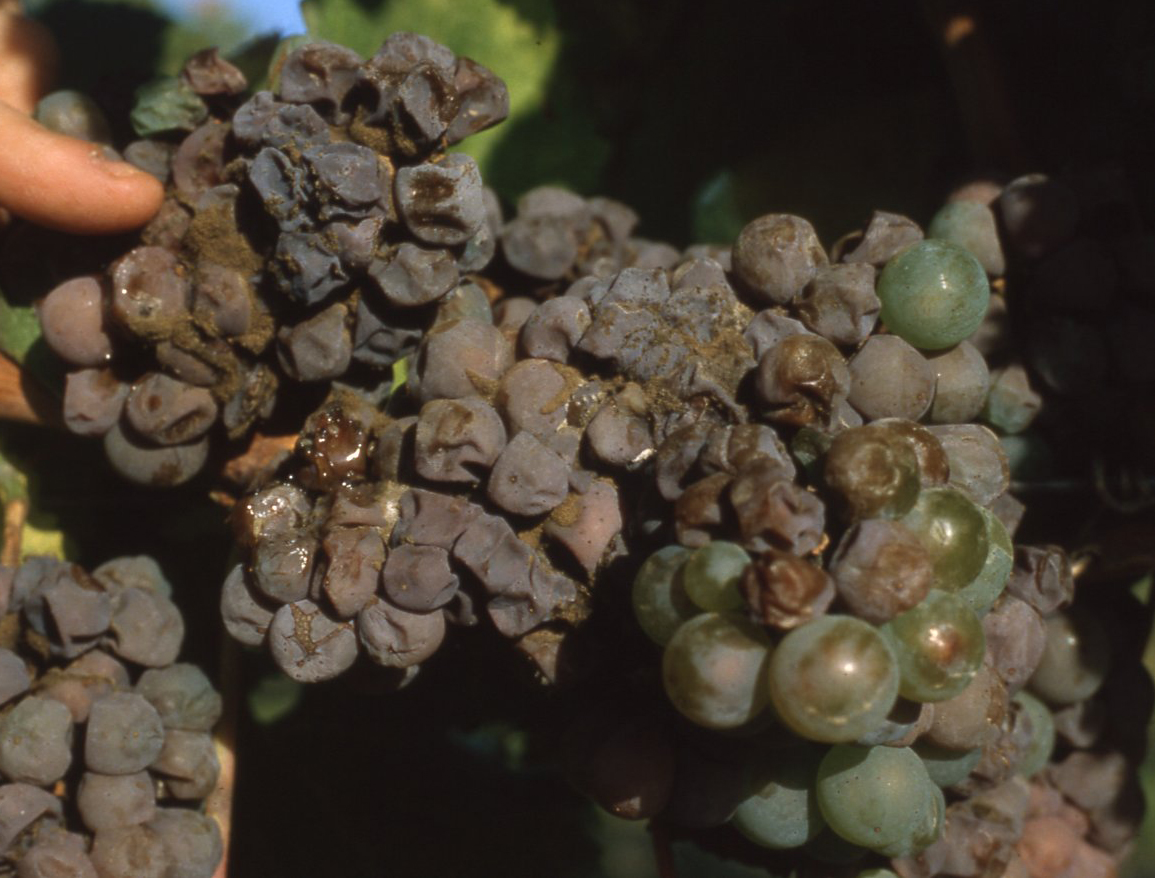
On the fruit, the fungus at first may appear grayish or whitish, but later has a brownish russeted appearance.
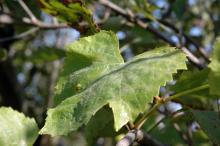
Powdery mildew is best seen on leaves with incidental lighting (with the sun at an angle), in full sunlight with the sun over your shoulder.
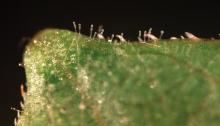
Using low power magnification you can see upright threads with chains of spores that look like a row of tiny water droplets or a short string of tiny pearls.
David Gadoury.
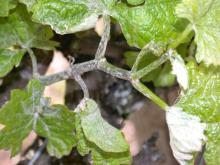
Flag shoots may be white to gray, deformed and/or delayed in bud break.
Walt Mahaffee.
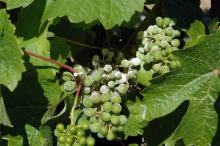
Powdery mildew can often be seen on green fruit well before verasion.
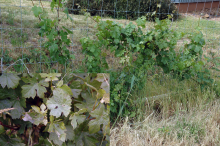
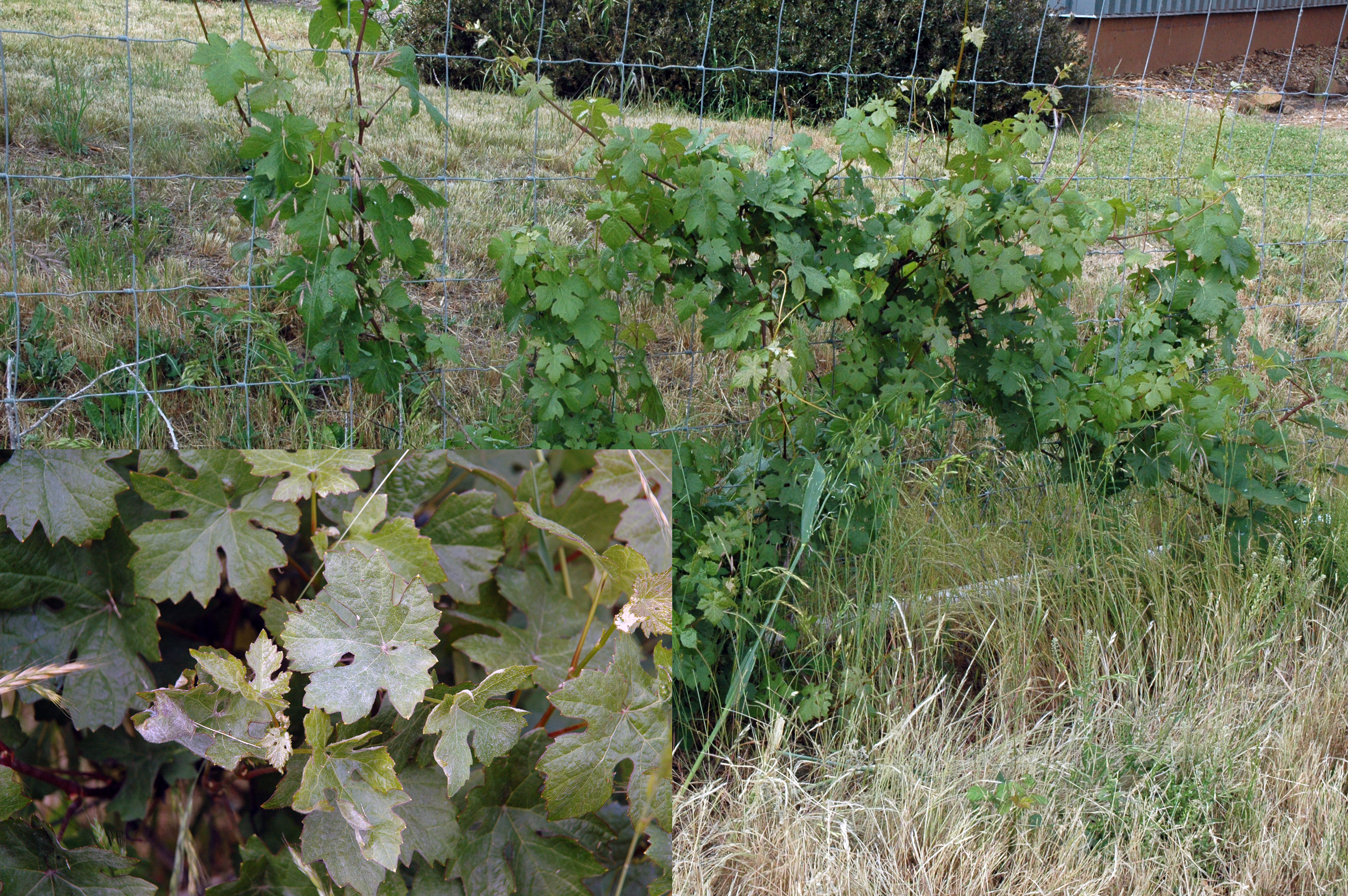
Scout for powdery mildew on escaped vines that may be in the fence rows near the vineyard. Leaves on this fence row vine had powdery mildew (lower left image).
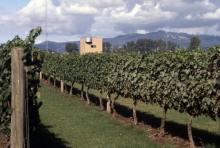
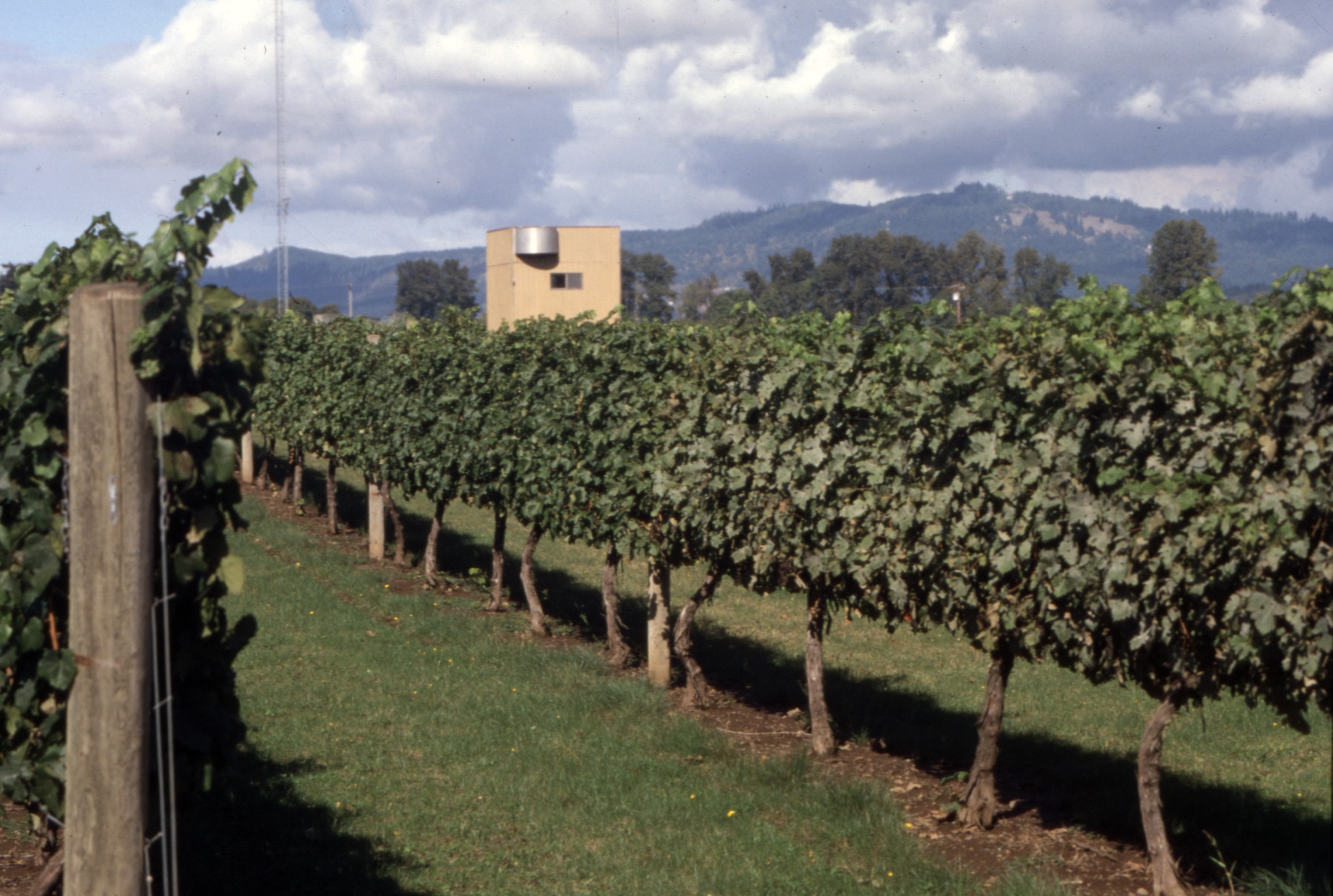
The white cast to the vines on the right are due to powdery mildew. Other vines have been treated with various fungicides.
Photo by Jay W. Pscheidt, 1995
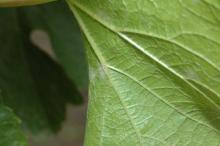
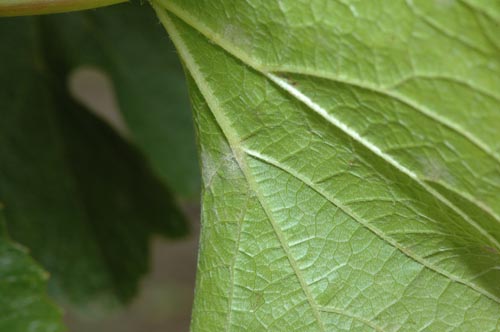
The first mildew colonies generally can be found on the underside of leaves as very small diffuse spots.
Haywood Photography, 2005.
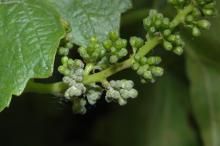
An early start to the epidemic can destroy clusters before bloom.
Haywood Photography, 2005.
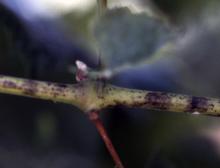
Powdery mildew can be found on green canes as feathery dark patches.
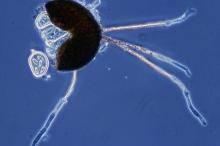
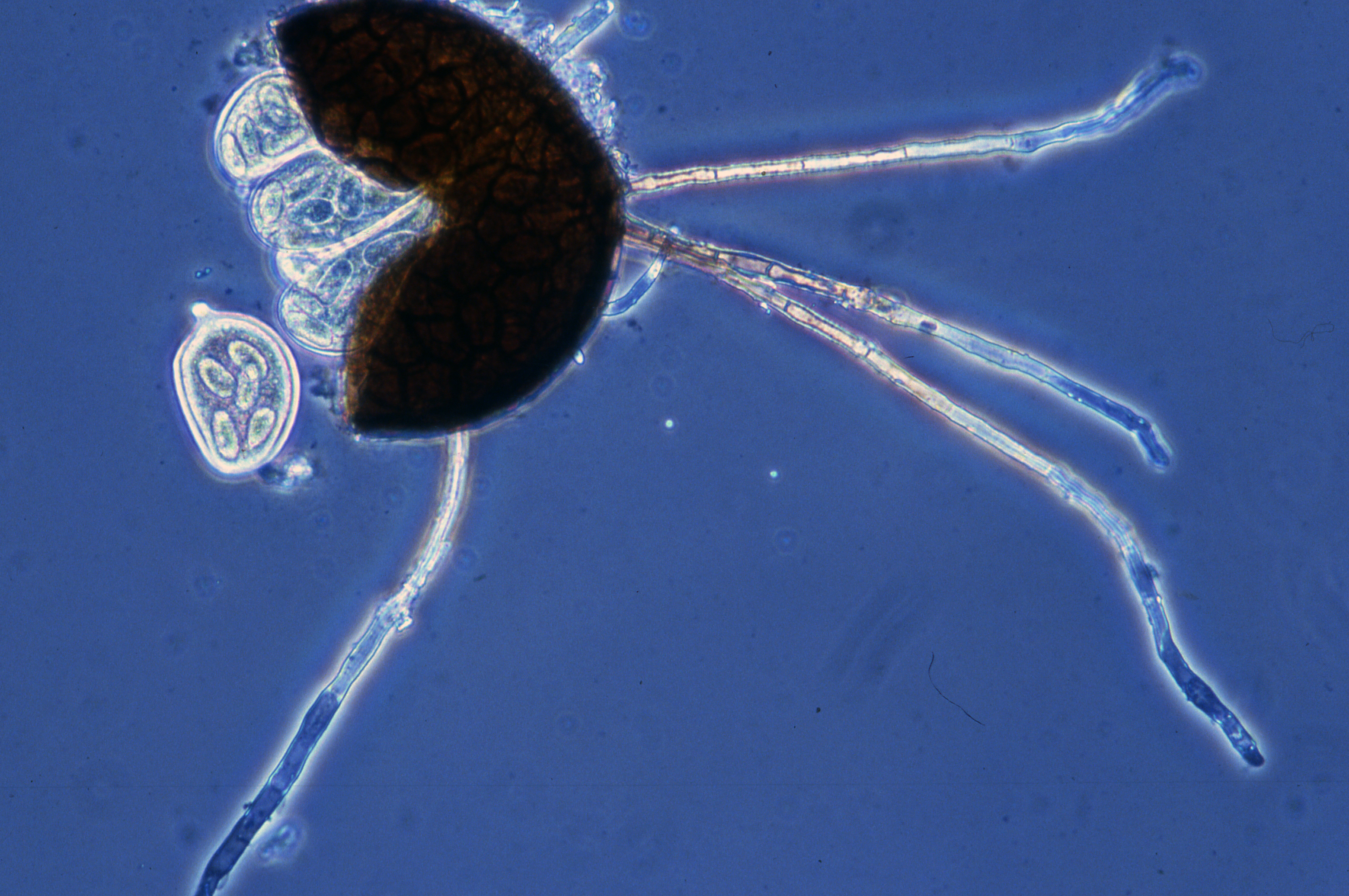
Cleistothecia squashed open to show several asci with ascospores.
Photo by Melodie Putnam, 1998.