Plant Disease Management Handbook

Cause A fungus, Claviceps purpurea, that affects about 400 species of grass as hosts, including all species grown for seed. The disease is most common in bluegrass, bentgrass, and Chewing's fescue but may occur in perennial ryegrass or tall fescue. Sclerotia of the fungus overwinter on or near the soil surface and germinate in spring, giving rise to stalked, spherical structures that eject ascospores. The flower is the only part susceptible to infection.

Image related to Grass for Seed-Ergot

Cause Neotyphodium coenophialum and N. lolii are fungi that grow within tall fescue and perennial ryegrass, respectively. The name endophyte describes this life habit of the fungi. Natural transmission occurs only by planting endophyte-infected seed; no transmission from infected to uninfected plants has been observed in nature. Both plant and fungus benefit from the relationship.

Cause A fungus, Tilletia controversa, which survives as spores in soil or in smut balls in seed.

Cause Drechslera spp. and Bipolaris spp. are fungi that survive as conidia and dormant mycelia in infected plant tissue and debris. Cool season grasses such as tall fescue, perennial ryegrass, bluegrass, fine fescue, bentgrass, and orchardgrass are all affected. This is one of the more common leaf spot diseases of ryegrass and tall fescue. Conidia are spread by wind, rain, irrigation water, or equipment. Cool, wet spring weather favors the disease.

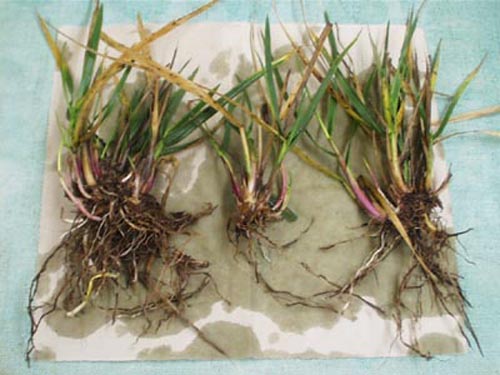
Cause Several soil-inhabiting or seed-contaminating fungi or fungus-like microorganisms such as Pythium spp., Fusarium spp., and Rhizoctonia spp. Any soil condition that prevents rapid germination and emergence increases the possibility of seed rot, damping-off, or seedling blight.

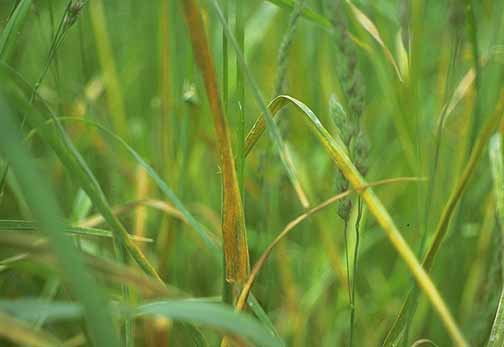
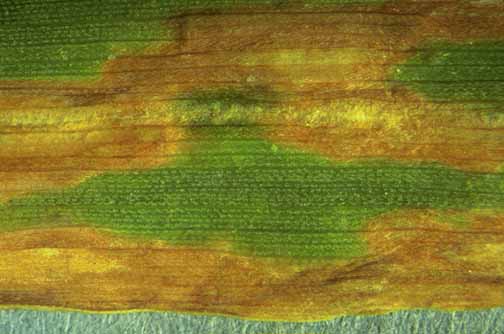
Cause Puccinia coronata, a fungus that overwinters on infected plants. Tall fescue, perennial ryegrass, bluegrass, and orchardgrass are all susceptible. The alternate host is buckthorn (Rhamnus spp.). Its importance varies considerably with its proximity to the grass host. Primary inoculum is urediniospores; secondary inoculum (urediniospores) is produced in initial pustules and disseminated by wind. Teliospores are two-celled and are produced in late summer.

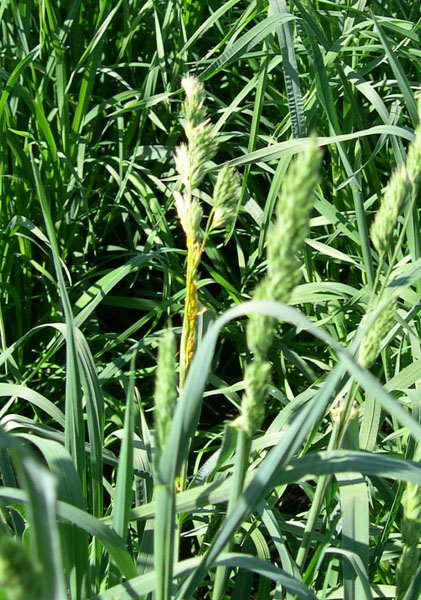
Image related to Grass for Seed-Choke

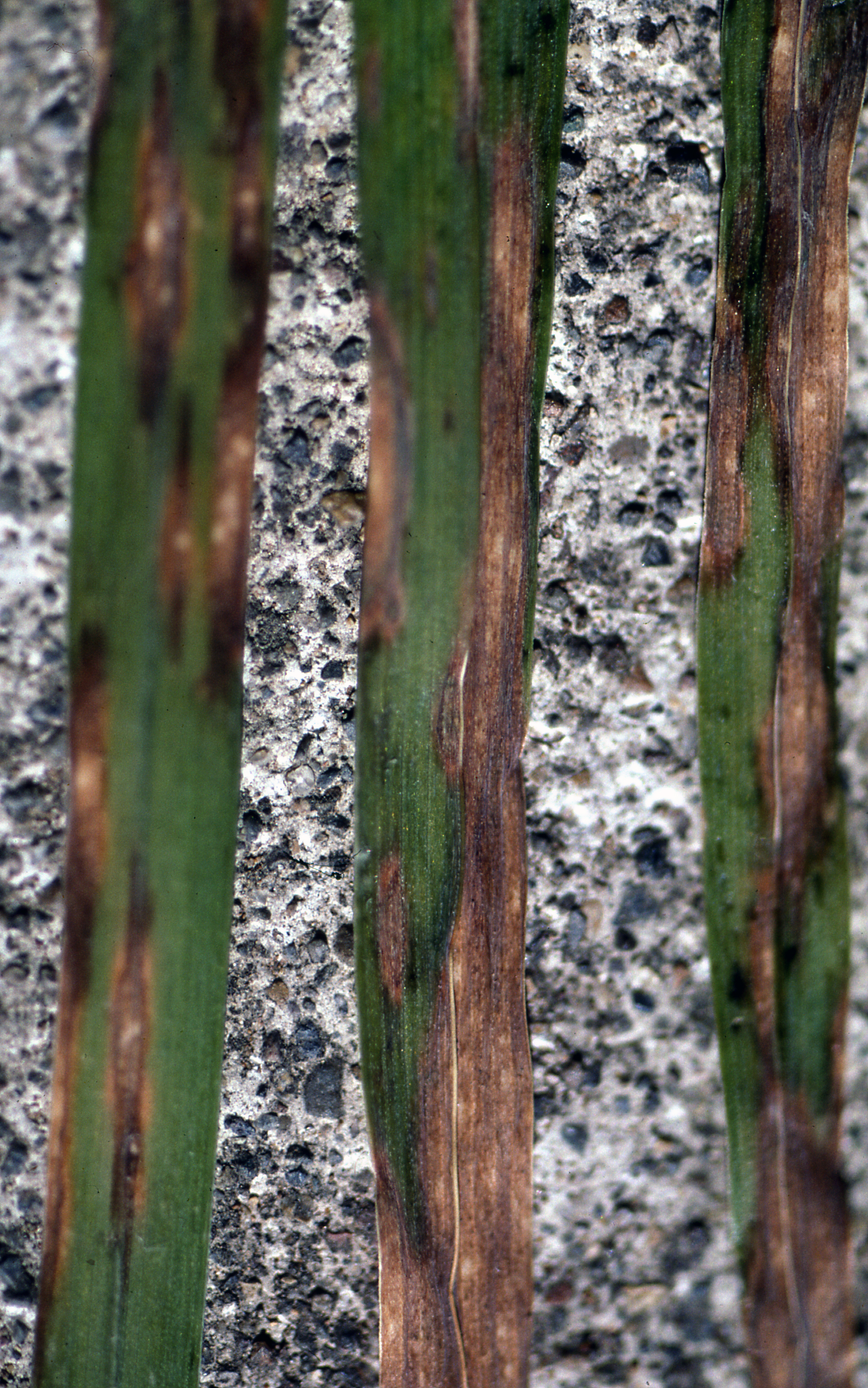
Cause Cercosporidium graminis (teleomorph: Mycosphaerella recutita), a fungus that overwinters as mycelial stromata in affected leaves and debris and infects all cool season turf and forage grasses including: orchardgrass, fescue, ryegrass, bluegrass, and bentgrass. Conidia develop from overwintering mycelium and are splashed, blown, or otherwise disseminated to healthy leaves. The brown stripe fungus sporulates during cool, moist weather in spring and autumn.

Image related to Grass for Seed-Brown Stripe and Gray Streak