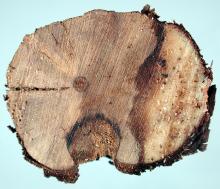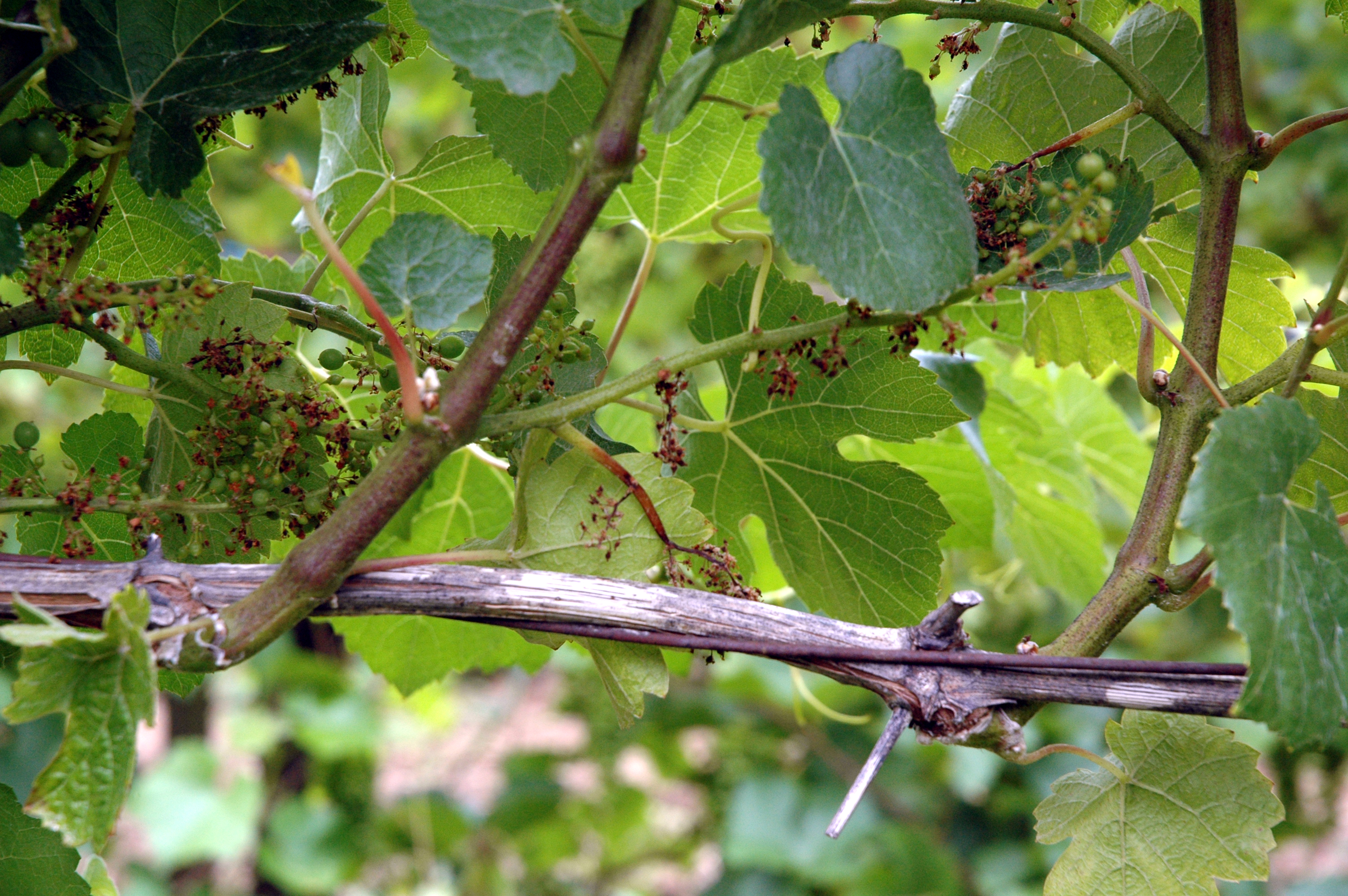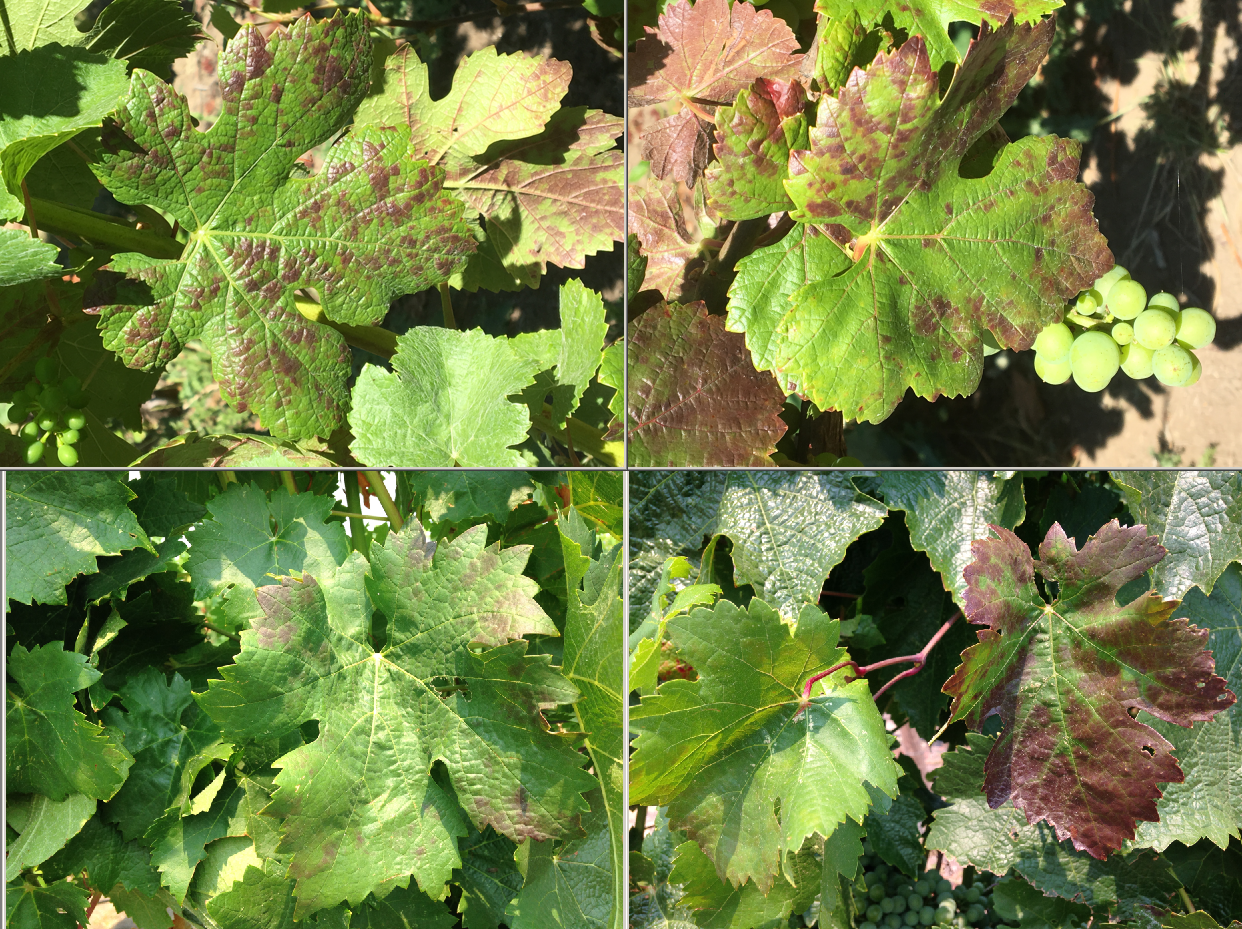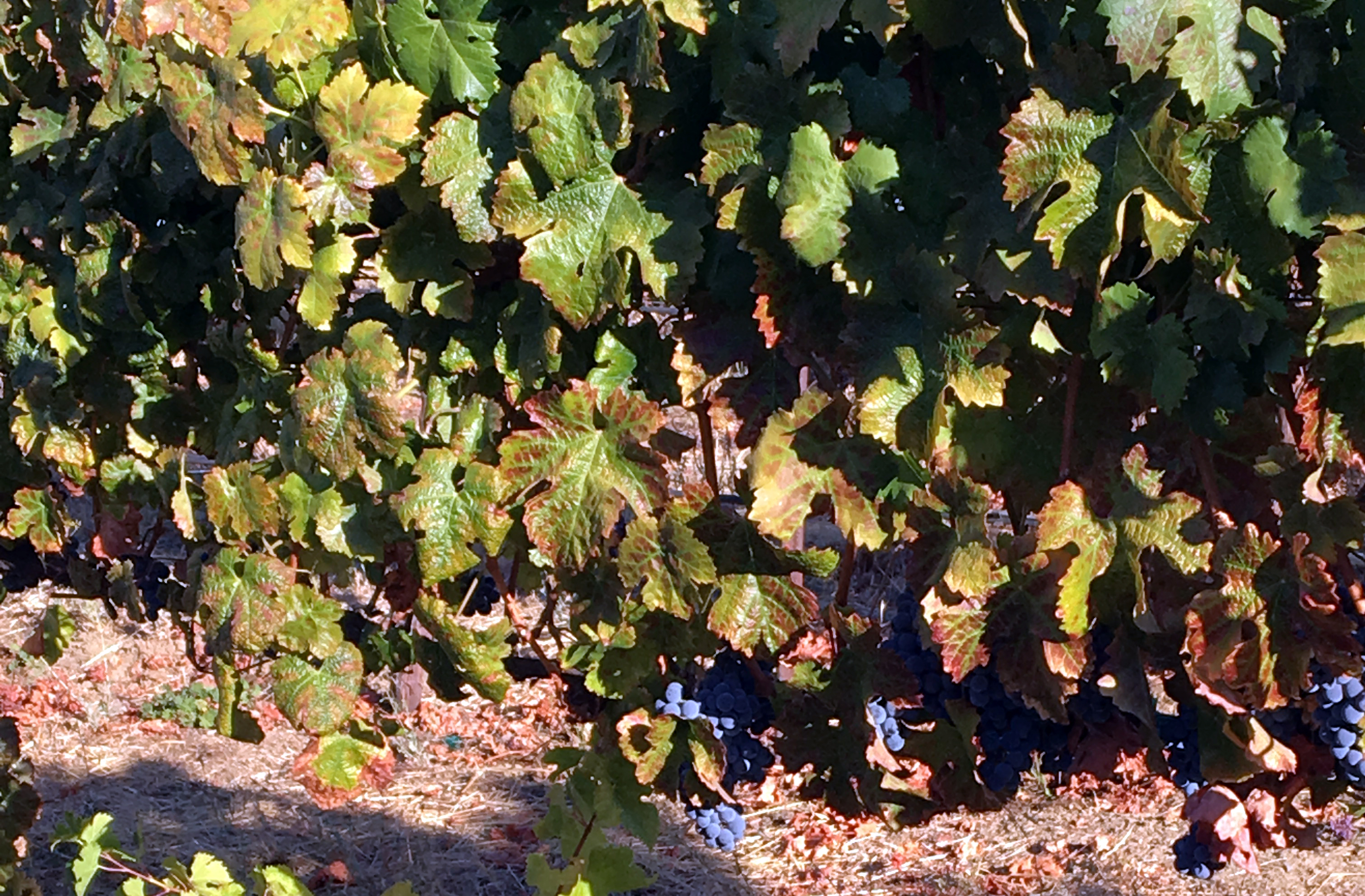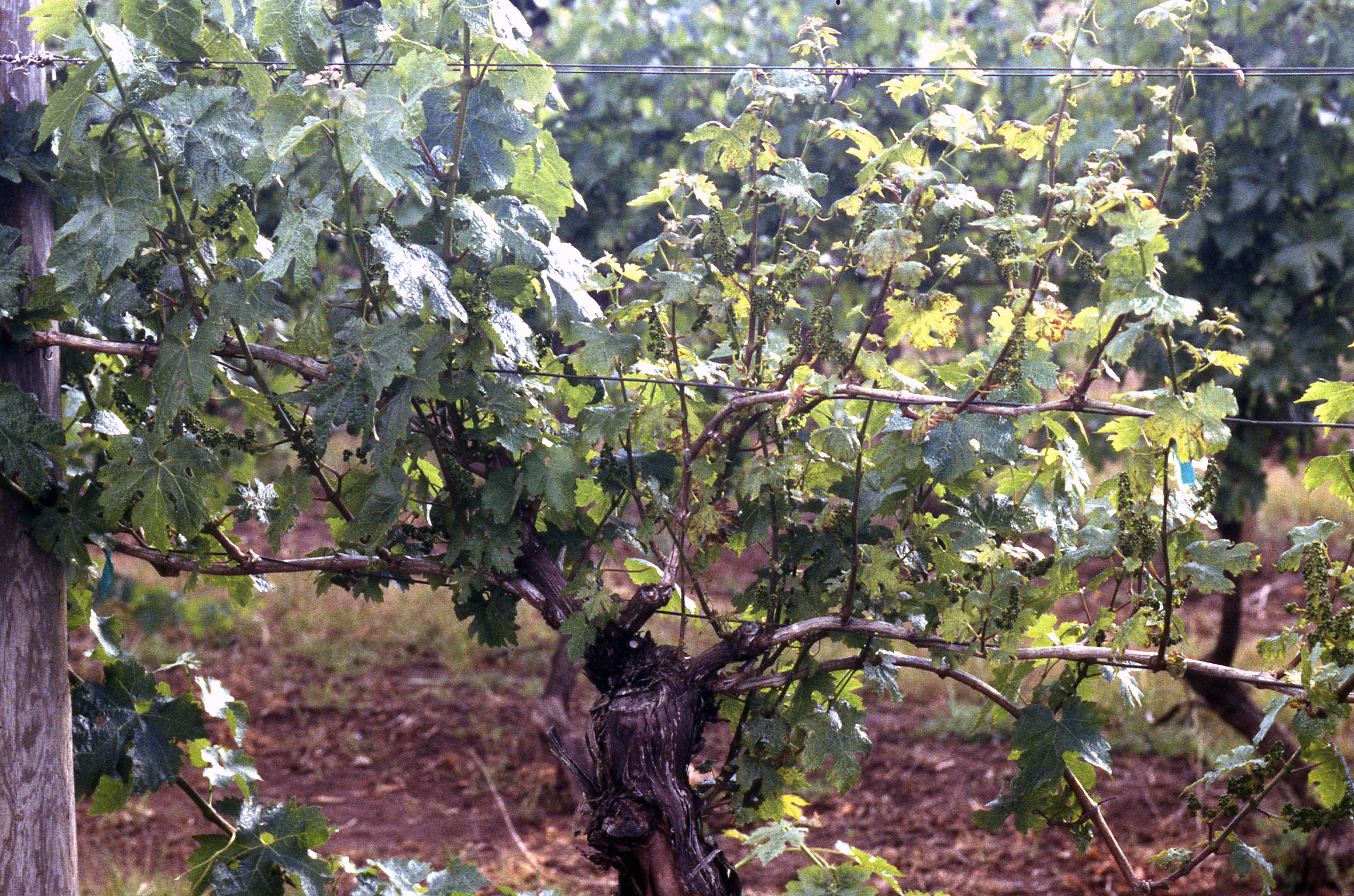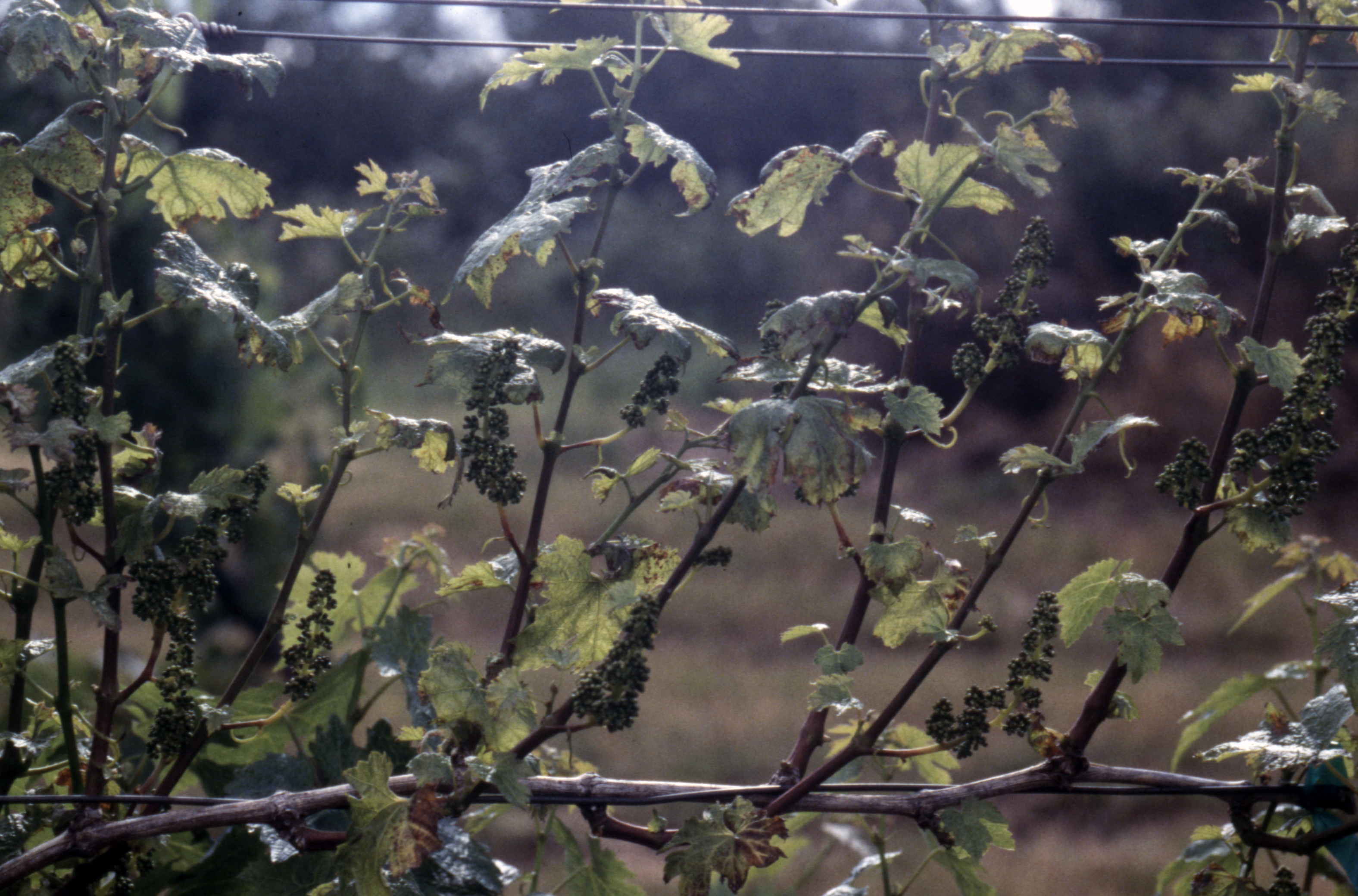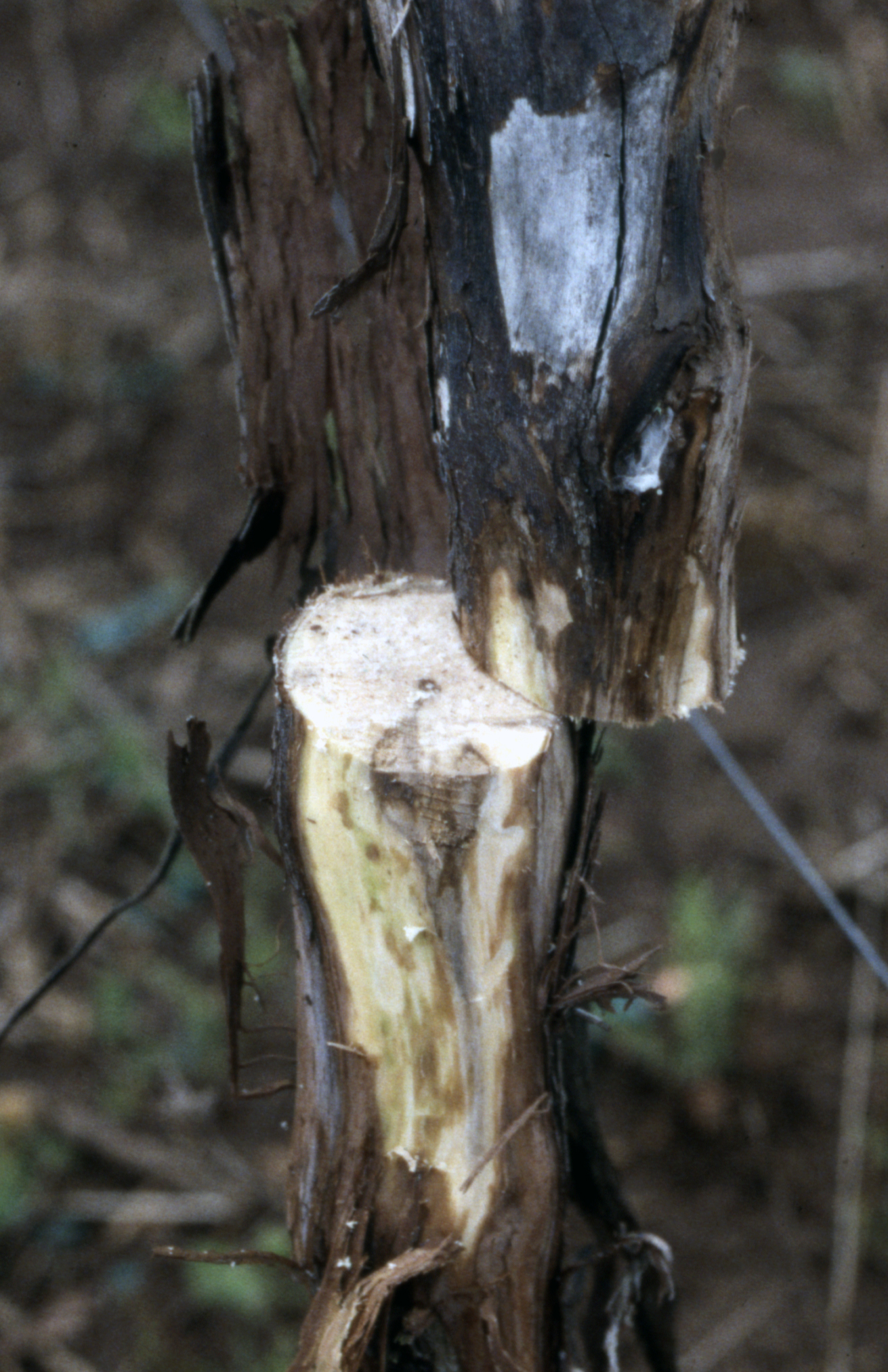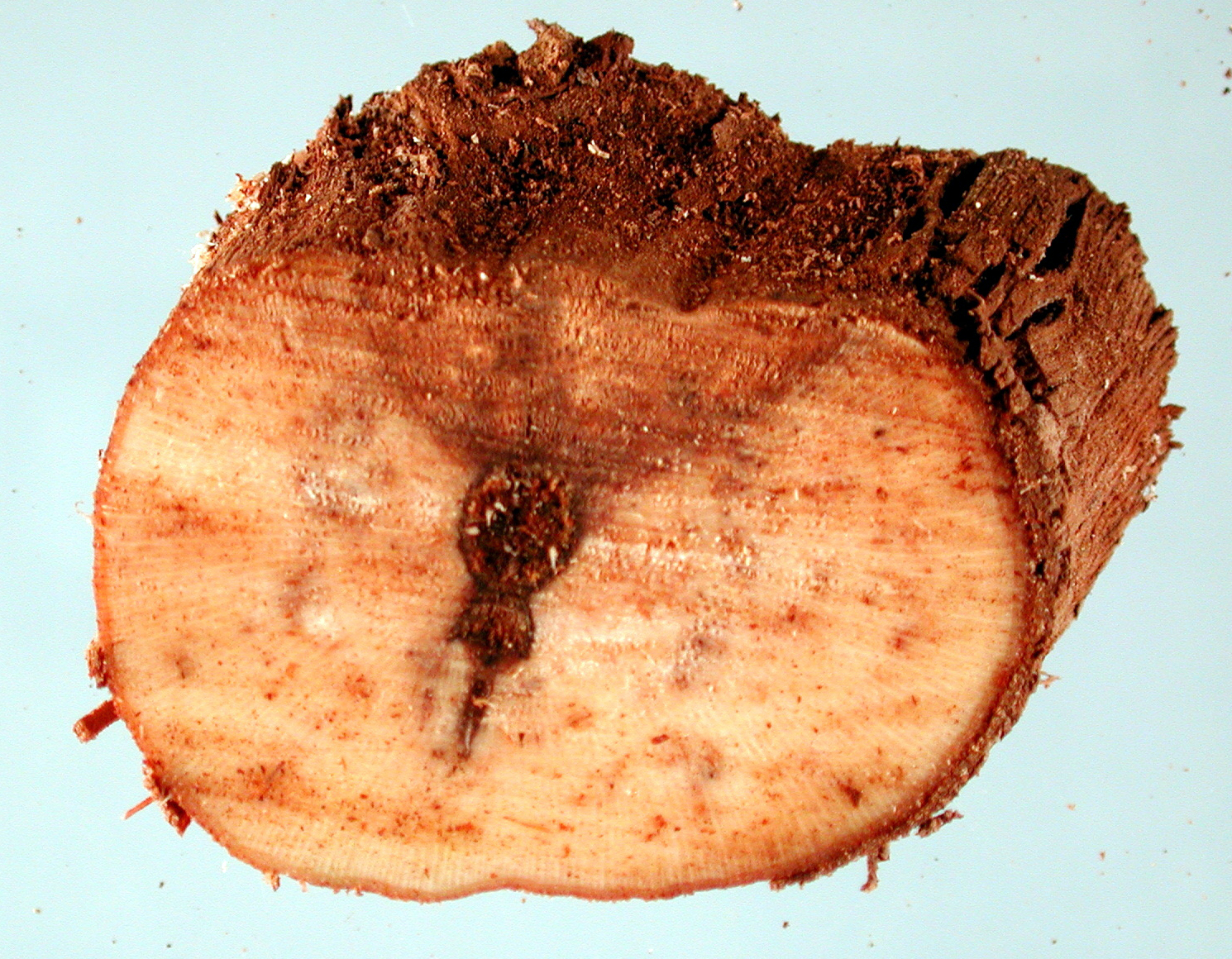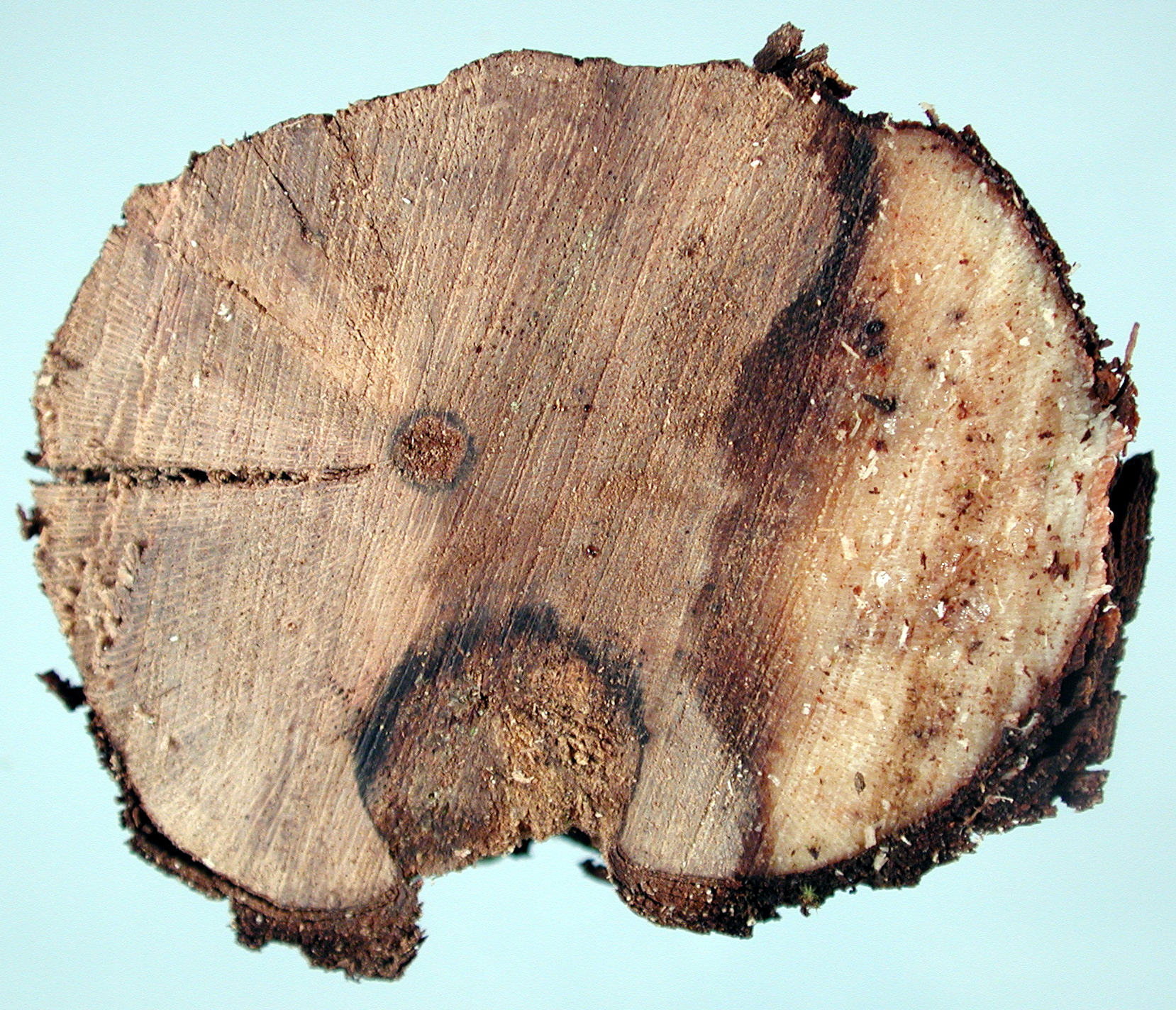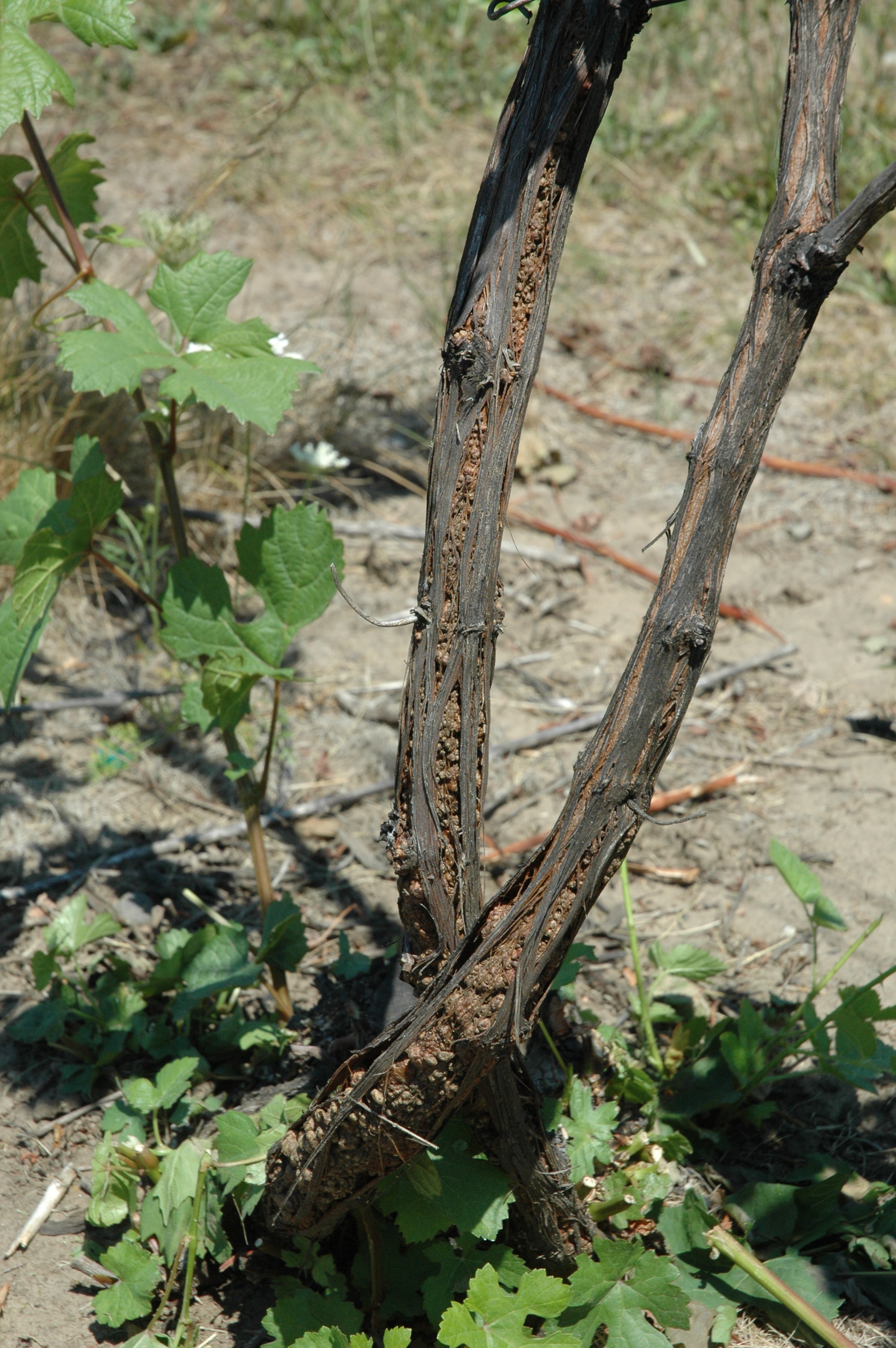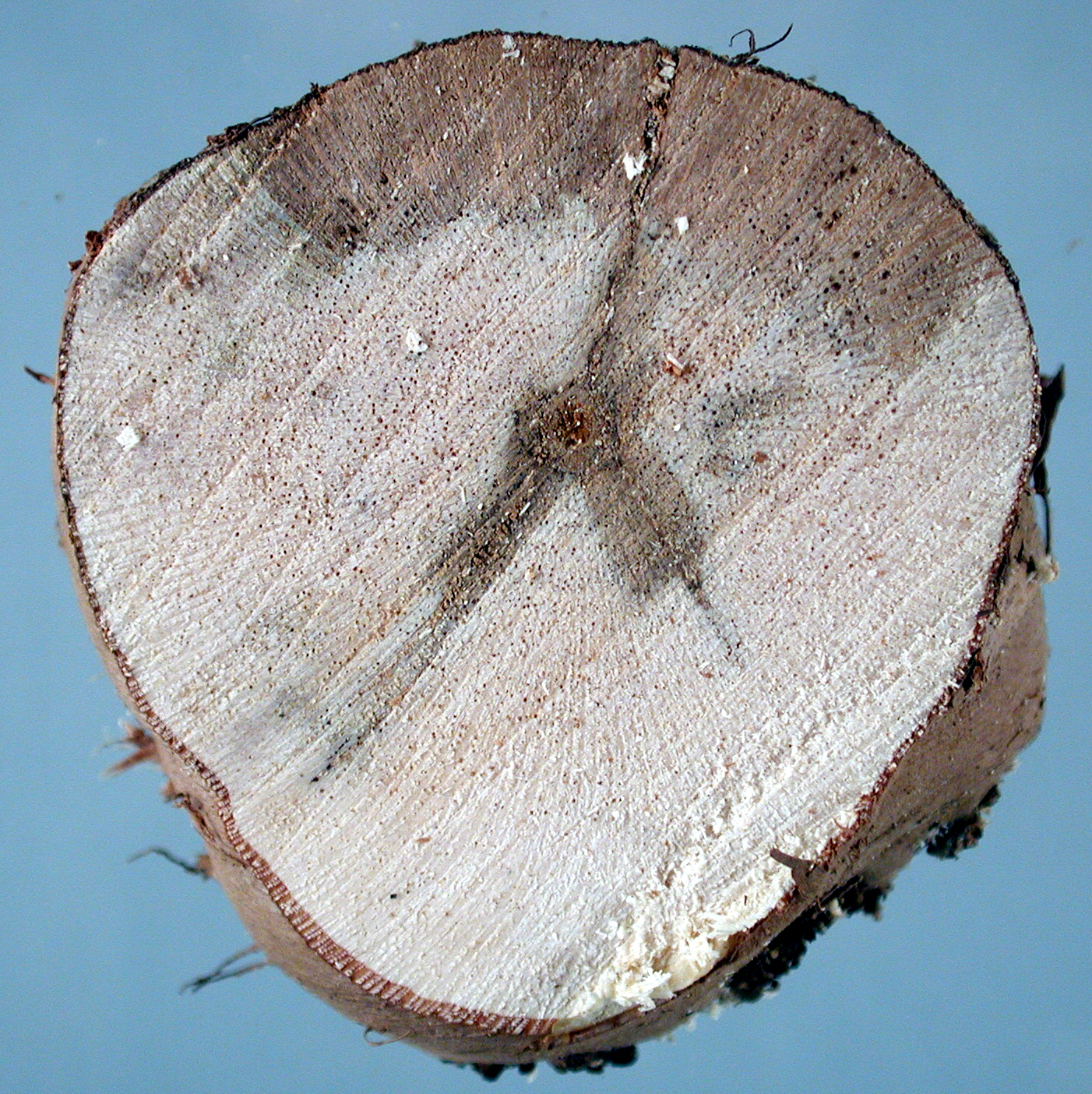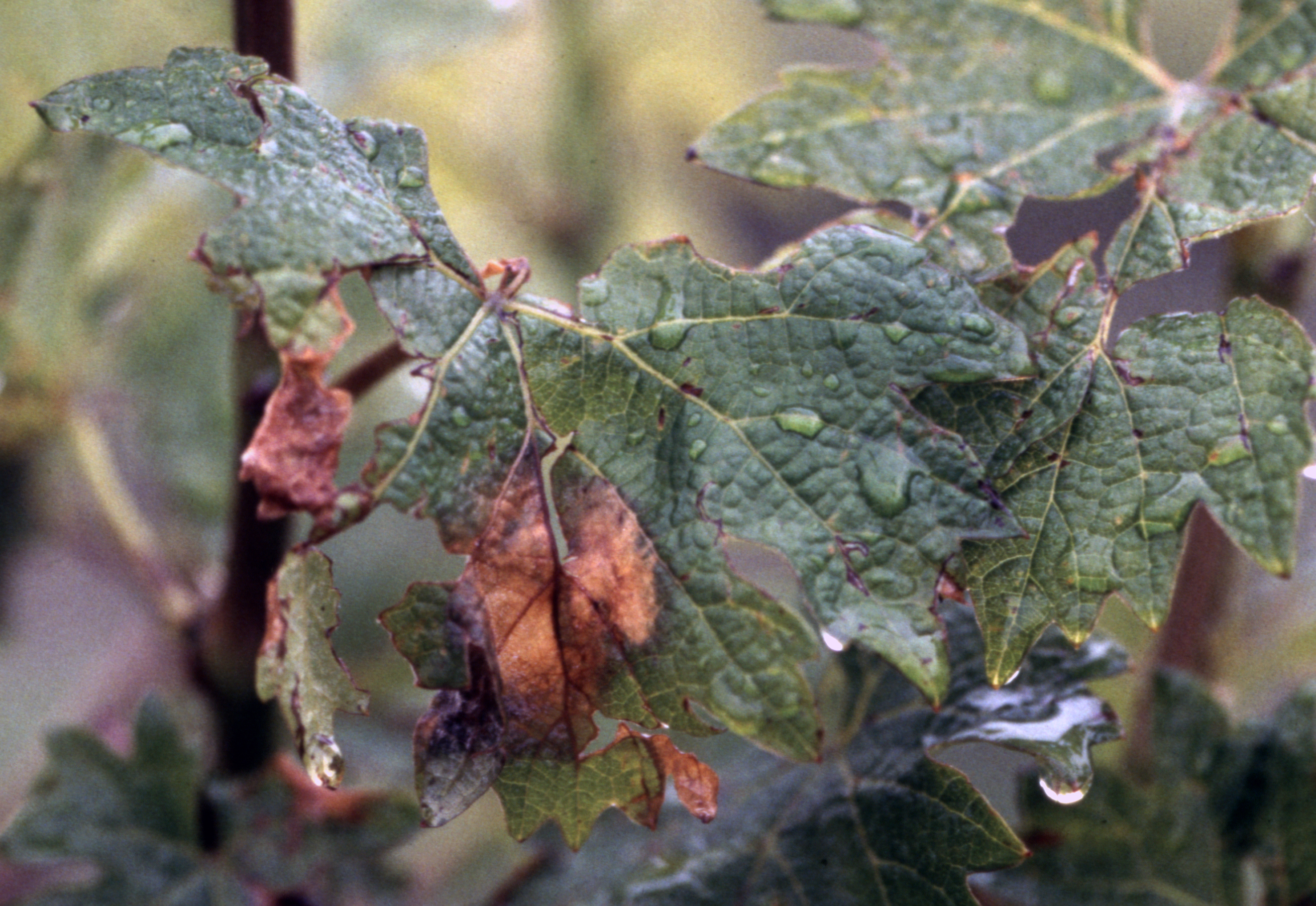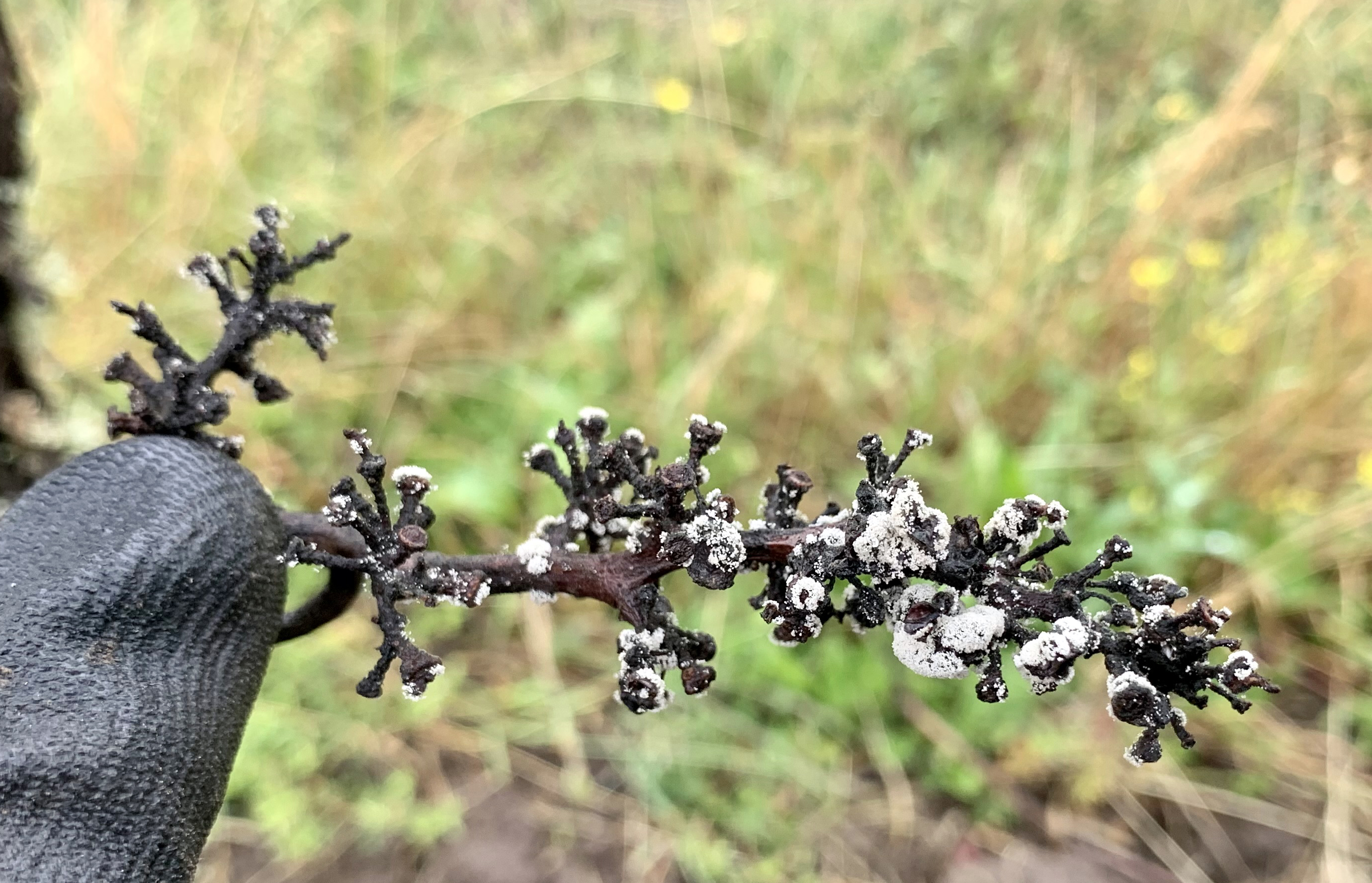
Note Out of dozens of samples there have been 3 that were diagnosed with Armillaria root rot by the OSU Plant Clinic.
Cause Drepanopeziza ribis (asexual: Gloeosporidiella ribis), a fungus that overwinters on dead leaves. Small, mushroom-like fruiting bodies (apothecia) develop on fallen leaves in spring. They produce airborne ascospores that infect newly developing leaves. Rainy weather favors spore release and infection. Different fruiting bodies (acervuli) are produced in 3 to 4 weeks after ascospore infection.
Notice the lesions with purple borders and tan centers.
Photo by Jay W. Pscheidt, 1991.
Numerous leaf spots on these currant leaves.
OSU Extension Plant Pathology Slide Set, 1978.
Cause Fusarium lateritium, a fungus. Frequently forms on twigs or branches damaged by freezing.
Symptoms Tan cankers with a purple border where tissue should be green. Peach-color elliptical fruiting bodies (sporodochia) develop within the cankered area where the lenticels are located.
Symptoms Stunting and browning or necrosis of the central part of young gloxinia plants, resulting in death. Ringspots, veinal necrosis, and chlorotic or necrotic brown line patterns in zigzags may develop on leaves of mature plants. Local lesions may show in as little as 2 days after thrips feeding.
OSU Extension Plant Pathology Slide Collection, 1953.
Note the white areas in the flower coloration.
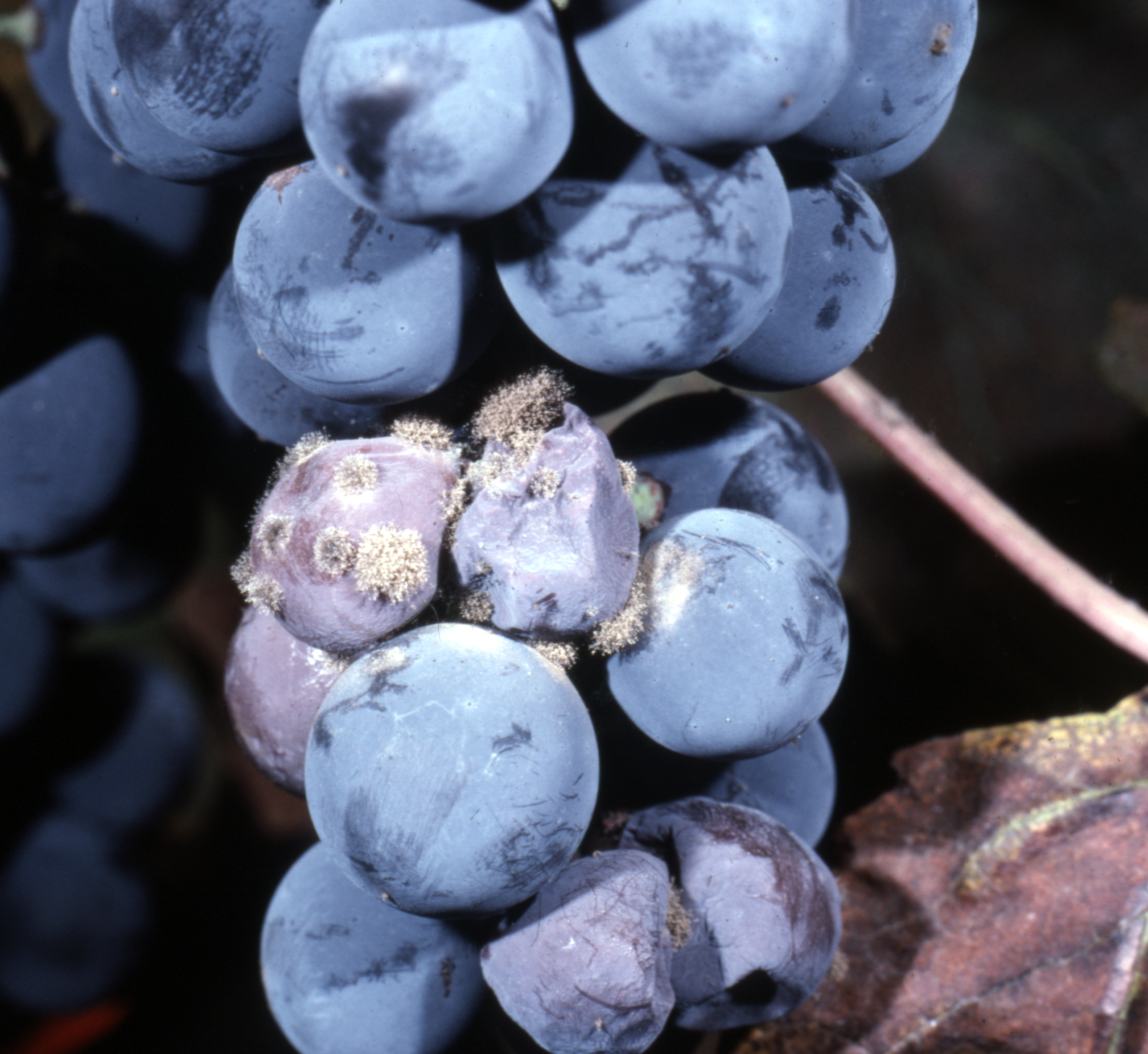
OSU Extension Plant Pathology Slide Collection, 1980.
Gray or yellowish green streaking or flecking can occur on leaves.
OSU Extension Plant Pathology Slide Set, 1985.
Cause Stromatinia gladioli, a soilborne fungus that survives in soil indefinitely (> 10 years). Sclerotia germinate in response to nearby gladiolus roots. Other hosts include crocosmia, crocus, and freesia. daffodil, iris, hyacinth and tulip are not hosts. The fungus enters leaves at or near the ground line and causes a dry rot of leaves and stem, which may kill the plant. Wounds are not required for infection. The disease is favored by cool, wet conditions, and wet soils.
Cause Meloidogyne hapla, root-knot nematodes, are sedentary endoparasites, where only second-stage juveniles (infective stage) and adult males (may be rare) are in soil.