Plant Disease Management Handbook

Cause Puccinia brachypodii var. poae-nemoralis, a fungus that infects Kentucky bluegrass and survives as mycelium from season to season in infected foliage. Primary inoculum is urediniospores produced in pustules on overwintering sources; secondary inoculum is produced in pustules from primary infections. Several urediniospore cycles can occur in a growing season. Teliospores are two-celled and develop with urediniospores in fall; they often are covered by epidermis.

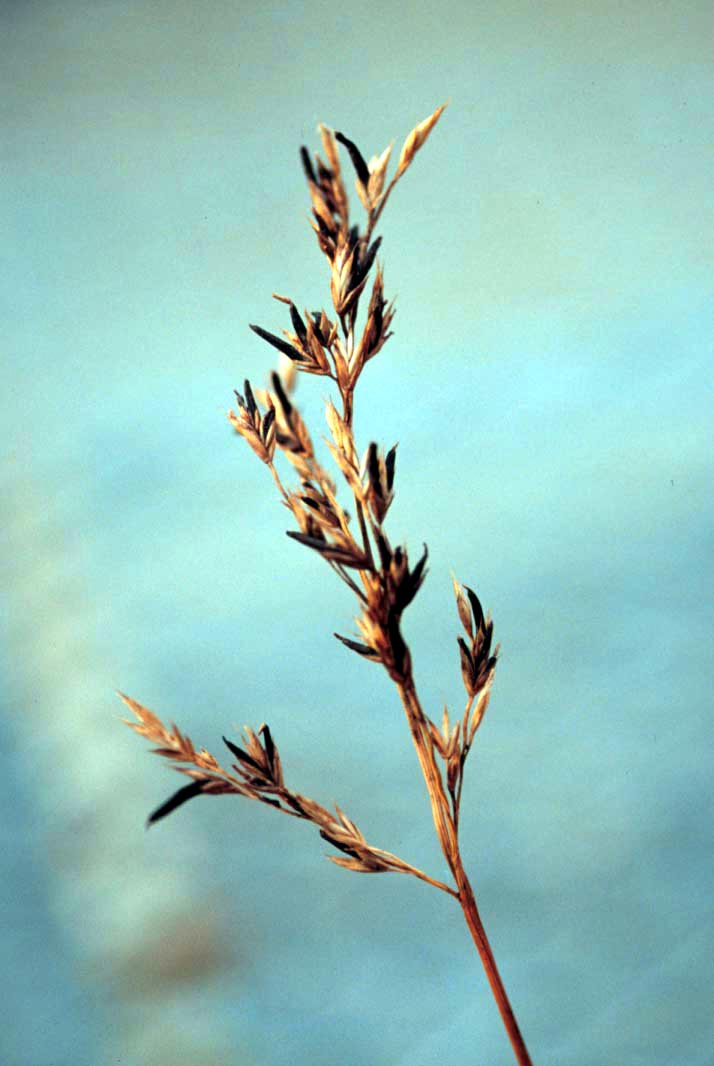
Cause A fungus, Gloeotinia temulenta, that lives in infected grass seed. Over 40 species of grass are susceptible. The disease is most common in annual ryegrass, perennial ryegrass, and tall fescue. In spring, the fungus emerges as stalked, cup-shaped apothecia (one to several per seed). Ascospores are ejected from the apothecia into the air; only those that land on flowers of a susceptible grass host will infect.

Cause A fungus, Sordaria sp., that is commonly found in the feces of herbivores. It is not considered a pathogen of grass or other plants. It showed up in Oregon seed fields during 2011 in areas of fields treated with high rates of chicken litter under unusually warm and wet early fall conditions. The fungus produces masses of black ascospores, which can coat leaf blades.

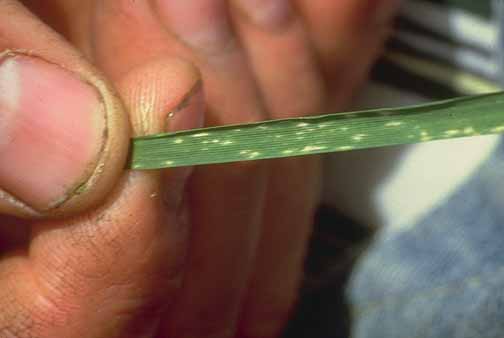
Cause Barley yellow dwarf virus (BYDV) infects many cultivated and wild grasses, including tall fescue, Chewing's fescue, ryegrass, orchardgrass, and bluegrass.

Image related to Grass for Seed-Barley Yellow Dwarf

Cause Short shoot syndrome (SSS), a term coined by the Oregon wine grape industry, describes a vine condition where shoots are severely stunted early in spring. Research conducted in Oregon and other cool climate grape growing regions worldwide have shown a relationship of this specific type of stunting with presence of grape rust mites (Calepitrimerus vitis). Other factors can cause stunting of shoots.

Image related to Grape (Vitis spp.)-Short Shoot Syndrome