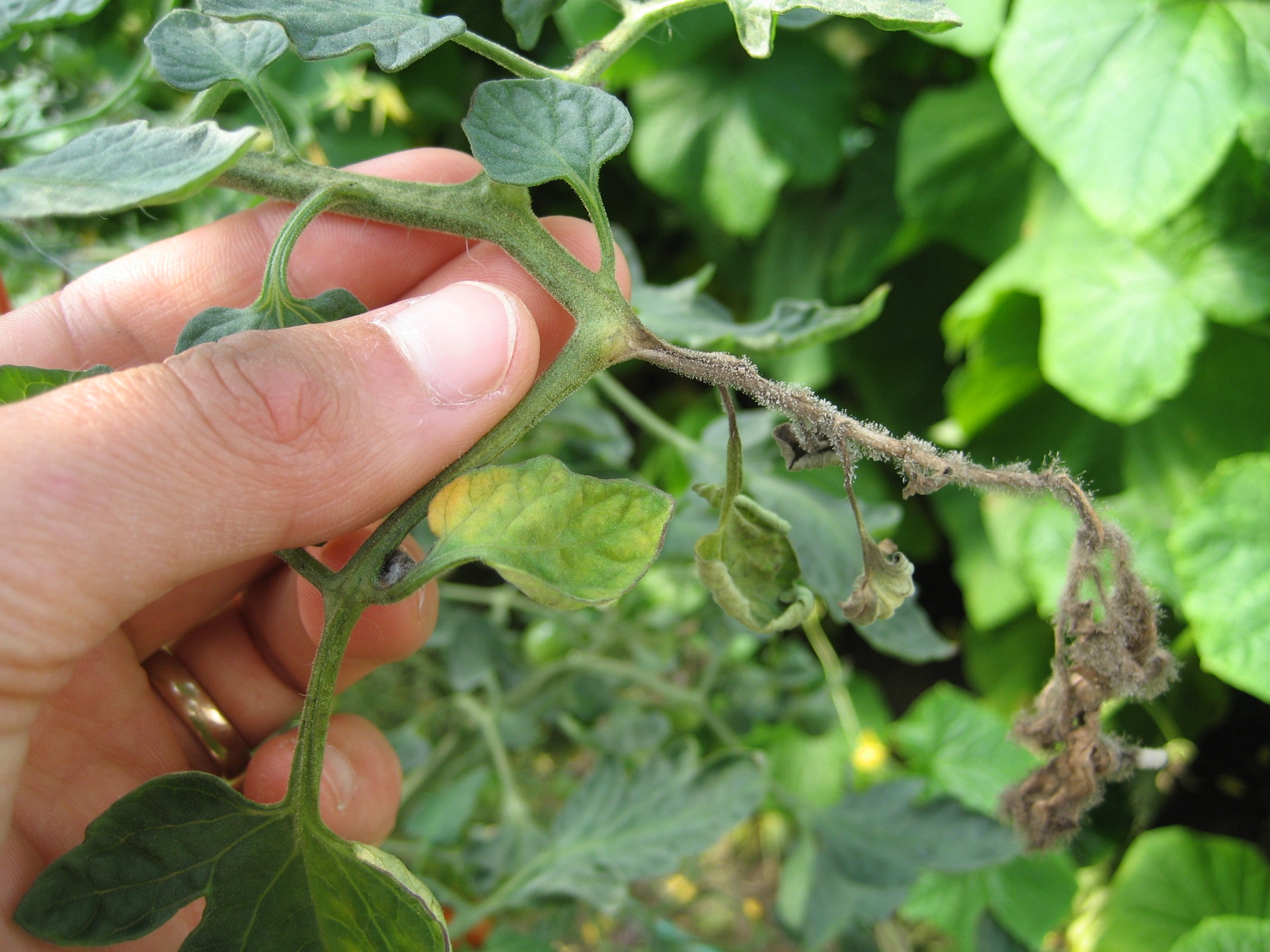
A greenhouse-grown tomato plant with gray mold. Note the fuzzy, gray growth that is the fungus.
Cathy Turner (University of Alaska), 2007.
Cause The bacterium Rhodococcus fascians is a Gram positive actinomycete. Recent genomic studies have found there are at least 13 different genetic groups of R. fascians, meaning it is a species complex. Pathogenic Rhodococcus are capable of infecting at least 44 plant families and can infect woody and herbaceous plants, including both dicots and monocots. Herbaceous perennials are most frequently affected.
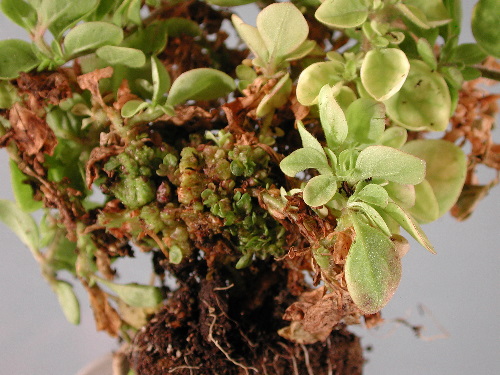
Leafy gall caused by the bacteria Rhodococcus fascians showing multiple buds that only partially expand.
OSU Plant Clinic image, 2008.
Petunia with shoot proliferation.
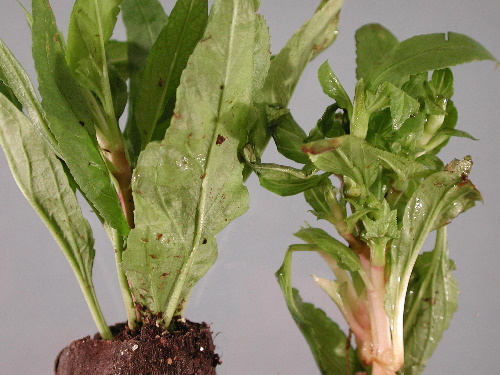
Melodie Putnam, 2006.
Veronica 'Royal Candles' with shoot proliferation. Infected plant is on the right.
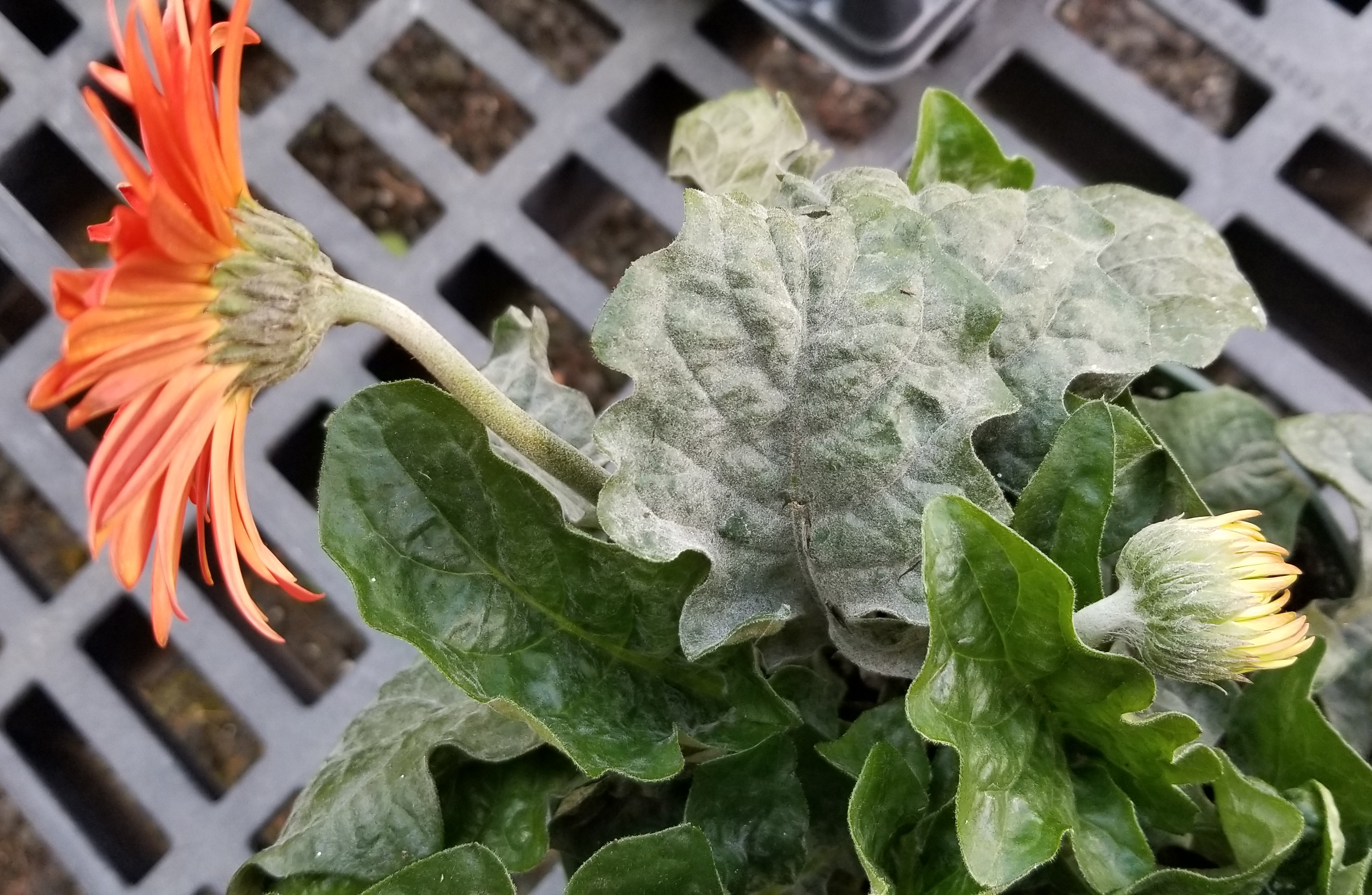
Cause Botrytis cinerea (sexual: Botryotinia fuckeliana) and other Botrytis spp., fungi that colonize dead, dying, and wounded plant parts. From these infections they can attack healthy tissues. A moist, humid environment is ideal for pathogen sporulation and spread. Spore dispersal is stimulated by changes in relative humidity. Conidia may come from many sources in and outside the greenhouse.
Mature or spent flowers commonly develop the gray sporulation of this fungus.
Jay W. Pscheidt, 2020.
Botrytis colonized flowers may fall onto leaves allowing the fungus to gain entry into these tissues.
Jay W. Pscheidt, 2002.
Sporulation of the fungus on old leaf tissue.
Jay Pscheidt, 2007.
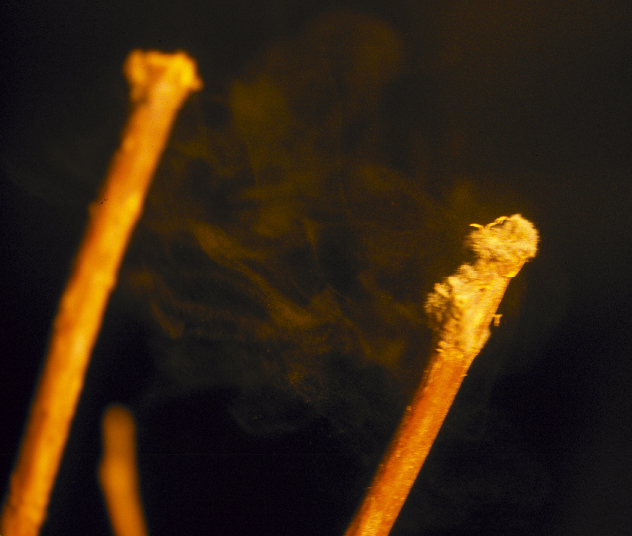
Spores of Botrytis look like smoke in the air after this colonized stem was bumped.
Jay W. Pscheidt, 2001.
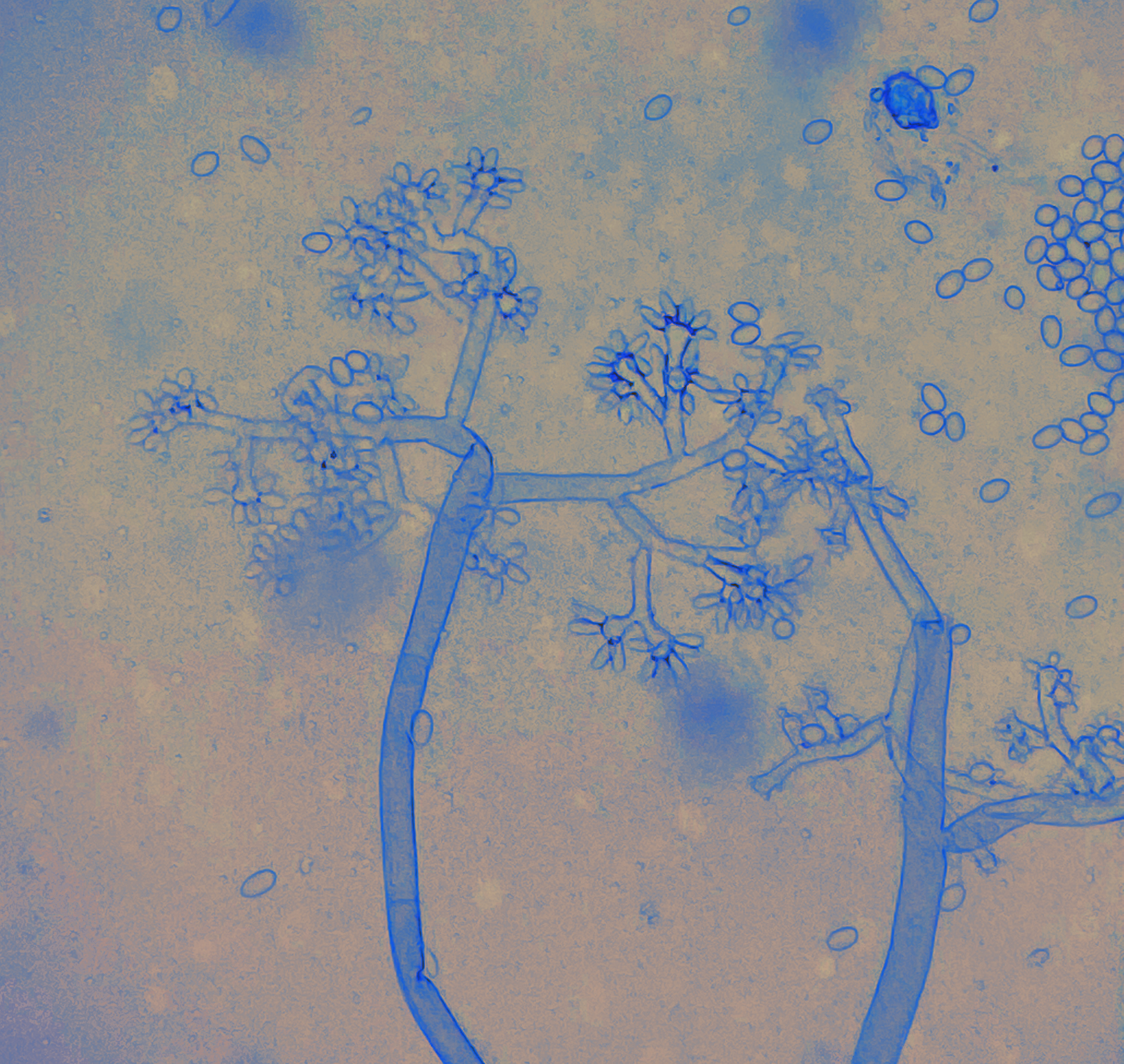
Microscopic image of Botrytis conidiophores and spores stained blue.
OSU Plant Clinic, 2021.
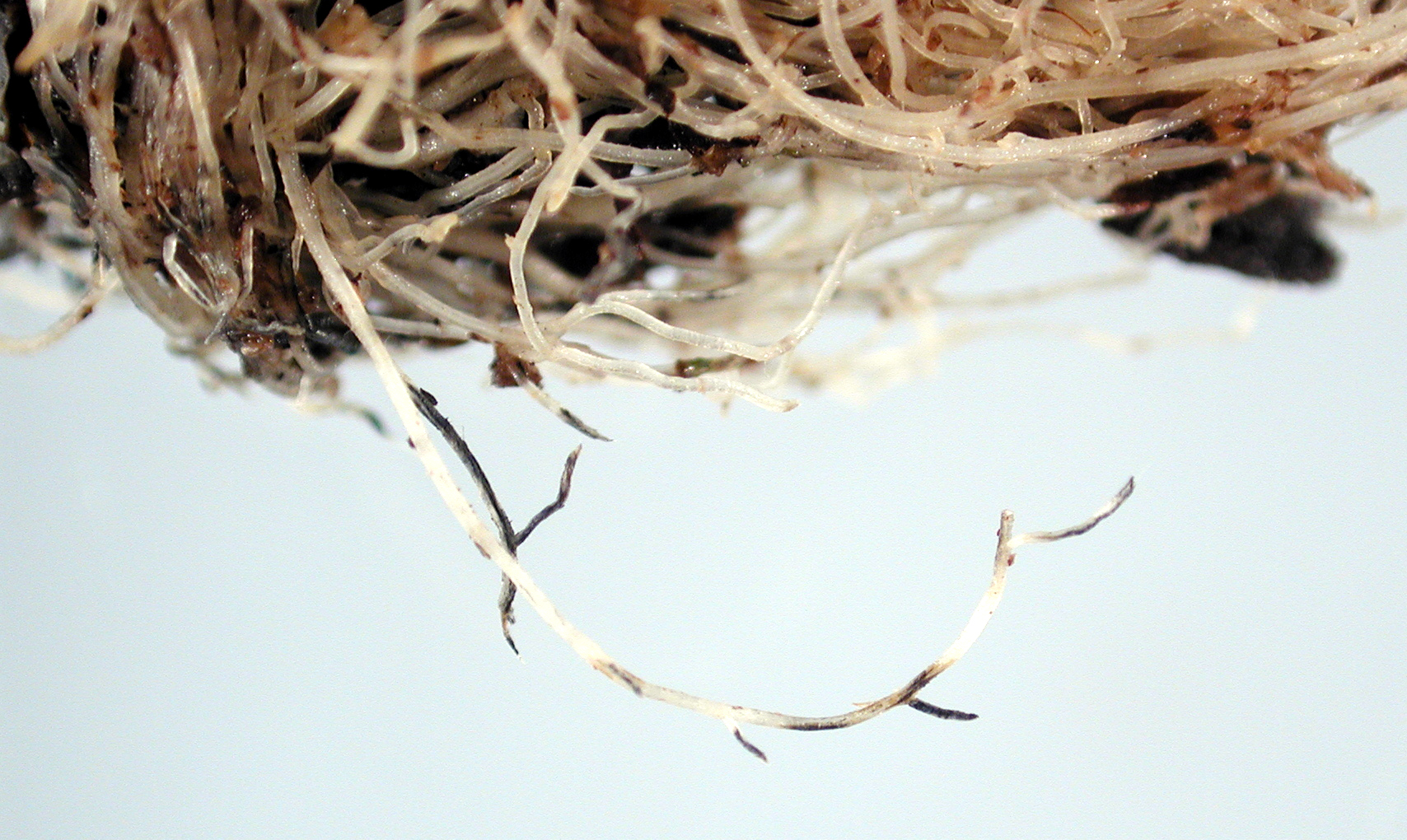
Cause Berkeleyomyces sp.(formerly Thielaviopsis basicola) is a widely distributed root pathogen reported from at least 30 plant families, including many ornamental plants. Untreated or improperly treated field soil can be a source of T. basicola if used in potted-plant culture. Most soilless media including commercial peat moss are clean. T.
Chlamydospores characteristic of Thielaviopsis under high magnification.
Melodie Putnam.
The diagnostic flat, black root lesions occur because of the abundant formation of chlamydospores on the root surface and in the root cortex (of this phlox plant).
OSU Plant Clinic Image, 2014.
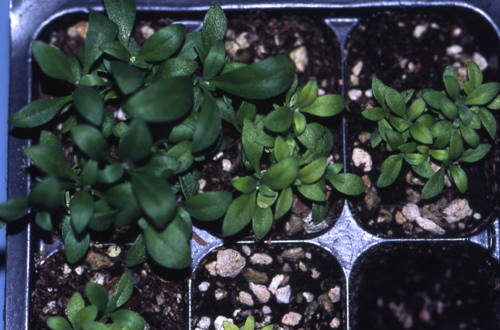
Note the stunted and chlorotic plants.
Melodie Putnam, 2000.
Black rotted roots of this 'Rozanne' geranium.
OSU Plant Clinic Image, 2014.
Cause A fungus, Dilophospora alopecuri, that infects fine fescue and overwinters in infested residues or soil and may be seedborne. Dark colored fruiting bodies (pycnidia) develop and aggregate between veins on older leaves and leaf sheaths. Conidia are produced and dispersed by rain splashing.
Cause A fungus, Ustilago striiformis. Many common grasses are hosts, but damage is most severe in bluegrass (Poa),bentgrass (Agrostis), and orchardgrass (Dactylis). It can be a significant problem in pastures, causing a reduction in hay yield and quality. Affected plants are susceptible to root rots and drought stress; they may die during cold winter weather or hot, dry summer conditions..