Plant Disease Management Handbook

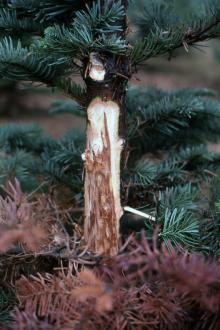
Cause The fungus Phoma eupyrena is associated with three different diseases called upper stem canker, lower stem canker, and Phoma blight. The fungus can survive in soil by forming chlamydospores and machinery or blowing soil can transport spores to uninfected areas. Upper stem canker infection occurs when spores land in bark fissures caused by rapid seedling growth. Infection for the other two diseases occurs below the soil collar, which builds up from rain or irrigation-splashed soil.

Image related to Fir, Douglas (Pseudotsuga menziesii)-Upper Stem Canker

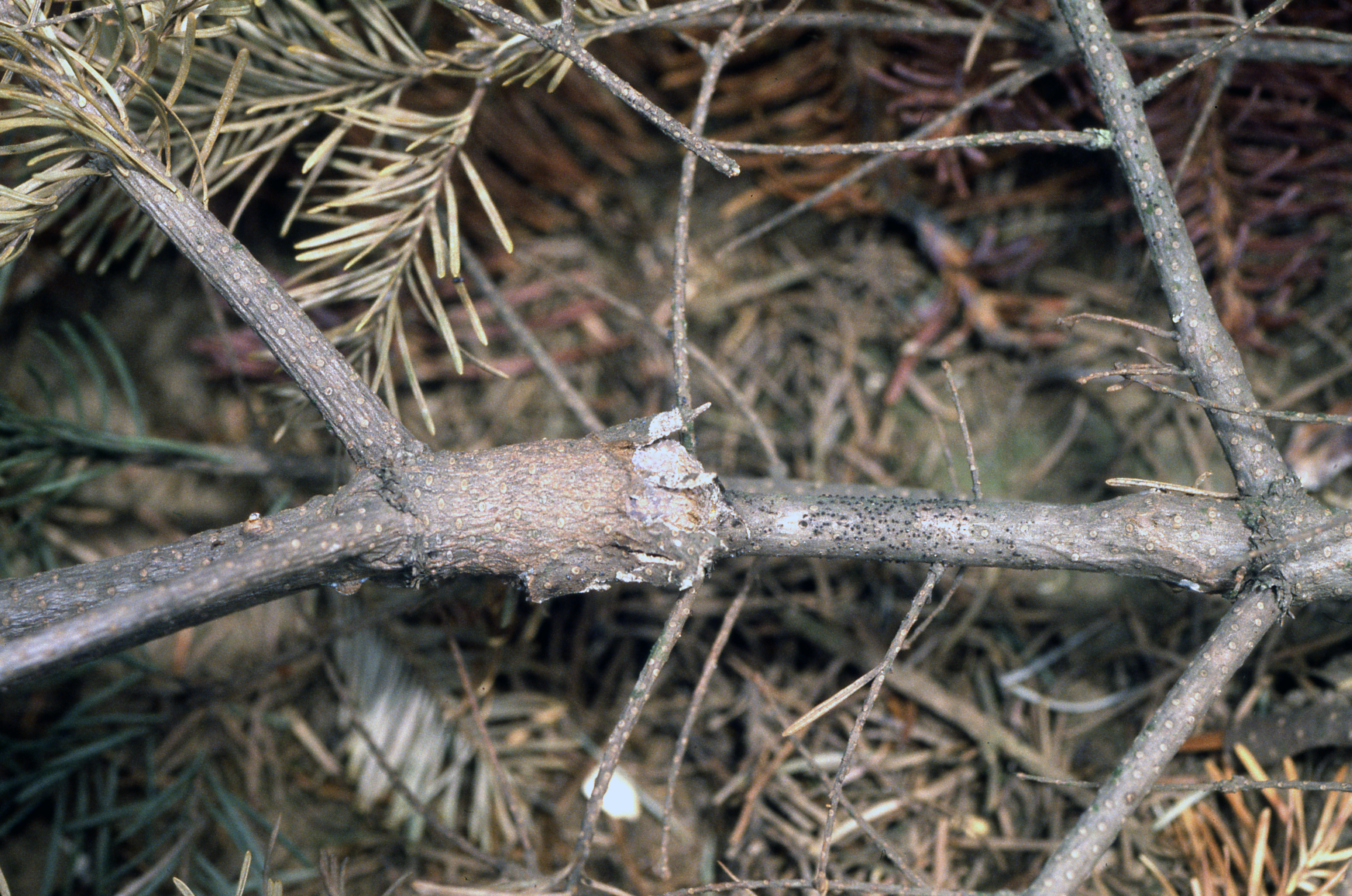
Cause Dermea boycei (asexual: Faveostroma boycei) and Diaporthe lokoyae (asexual: Phomopsis lokoyea), fungi. Cankers are most often found on trees that are not vigorous or are weak from drought or winter injury, typically 1 to 2 years after the stress. Infections are on new shoots from windblown spores. Mechanical injuries can also be sites for new infections.

See:

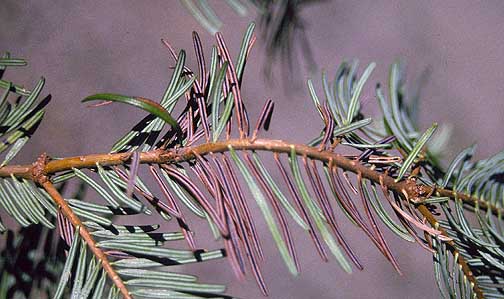
Cause The fungus Melampsora occidentalis is the most common cause of needle rust in the Pacific Northwest. The alternate host is black cottonwood and other poplars. The aecial stage is found on the current-year needles. Urediniospores and teliospores are on the alternate host, poplar.

Image related to Fir, Douglas (Pseudotsuga menziesii)-Rust

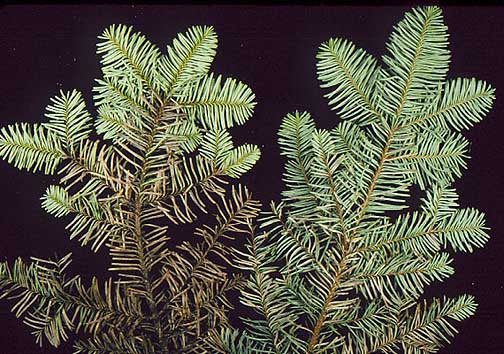
Cause Nothophaeocryptopus gaeumannii, a fungus found on trees of all age classes from natural forests to ornamental landscapes. This disease is considered one of the top threats to Douglas-fir plantation health and productivity in western Oregon, Washington and SW British Columbia.

Image related to Fir, Douglas (Pseudotsuga menziesii)-Needle Cast, Swiss
Image related to Fir, Douglas (Pseudotsuga menziesii)-Lower Stem Canker

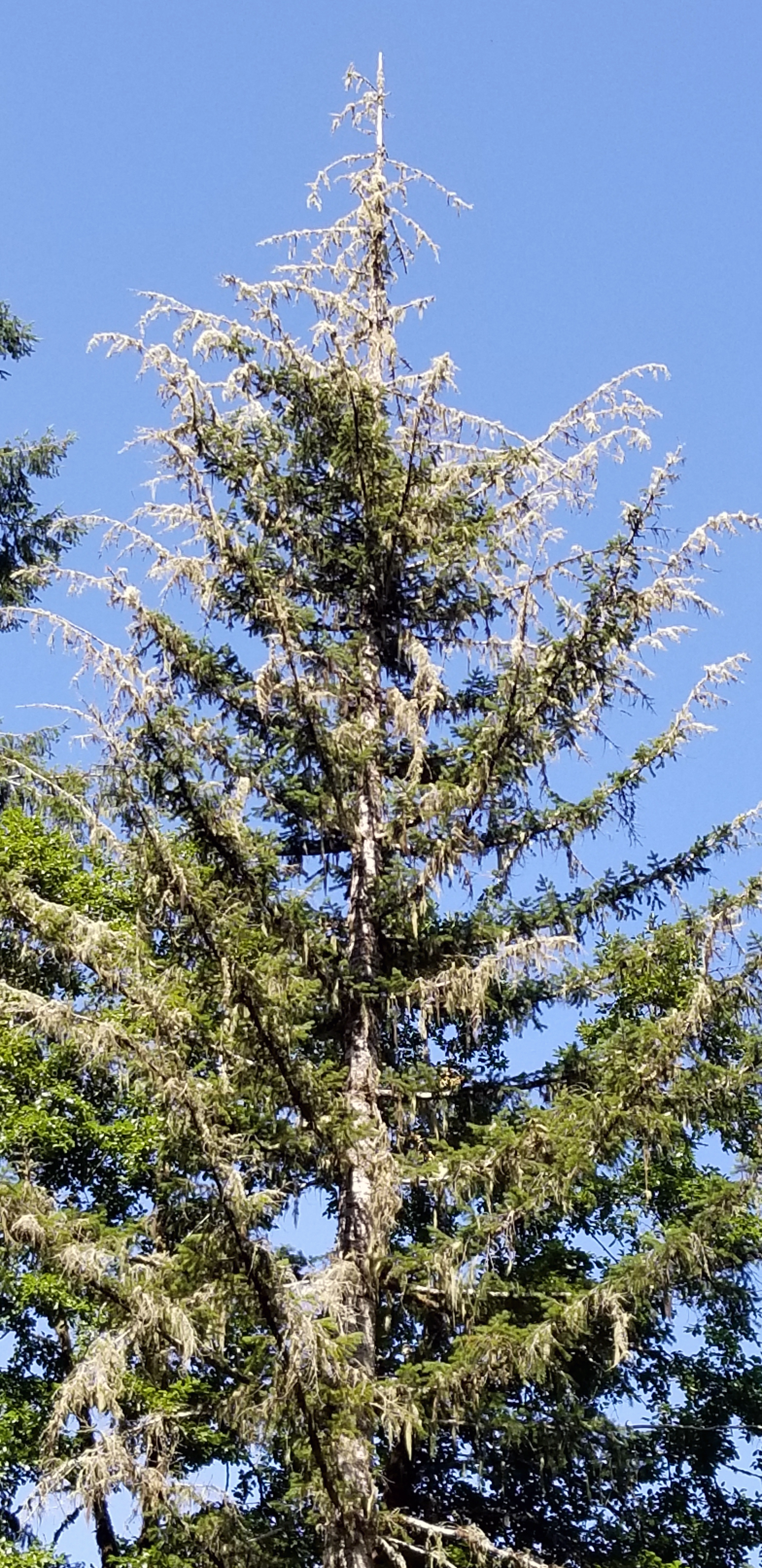
Cause Coniferiporia sulphurascens is a native root pathogen and often found in forested areas, in large old tree stumps where it can live several decades as a saprophyte. Infection spreads from tree to tree through the stand and from stumps to roots of healthy seedlings or trees that contact infected wood. Root infections eventually lead to root and lower bole decay; the tree dies directly or as a result of windthrow. Infected trees may take several years to die, declining slowly over time.

Two people examining decay of tree

Cause In most container and bareroot nurseries, the genus Fusarium is ubiquitous in nursery soils, on seeds of several conifer species, and on healthy and diseased conifer seedlings, especially Douglas-fir, western white pine (Pinus monticola), and ponderosa pine. Fusarium commune, however, is the primary species of Fusarium associated with root disease in conifers.

Image related to Fir, Douglas and True-Hypocotyl Rot and Root Rot
Image related to Fir, Douglas (Pseudotsuga menziesii)-Gray Mold