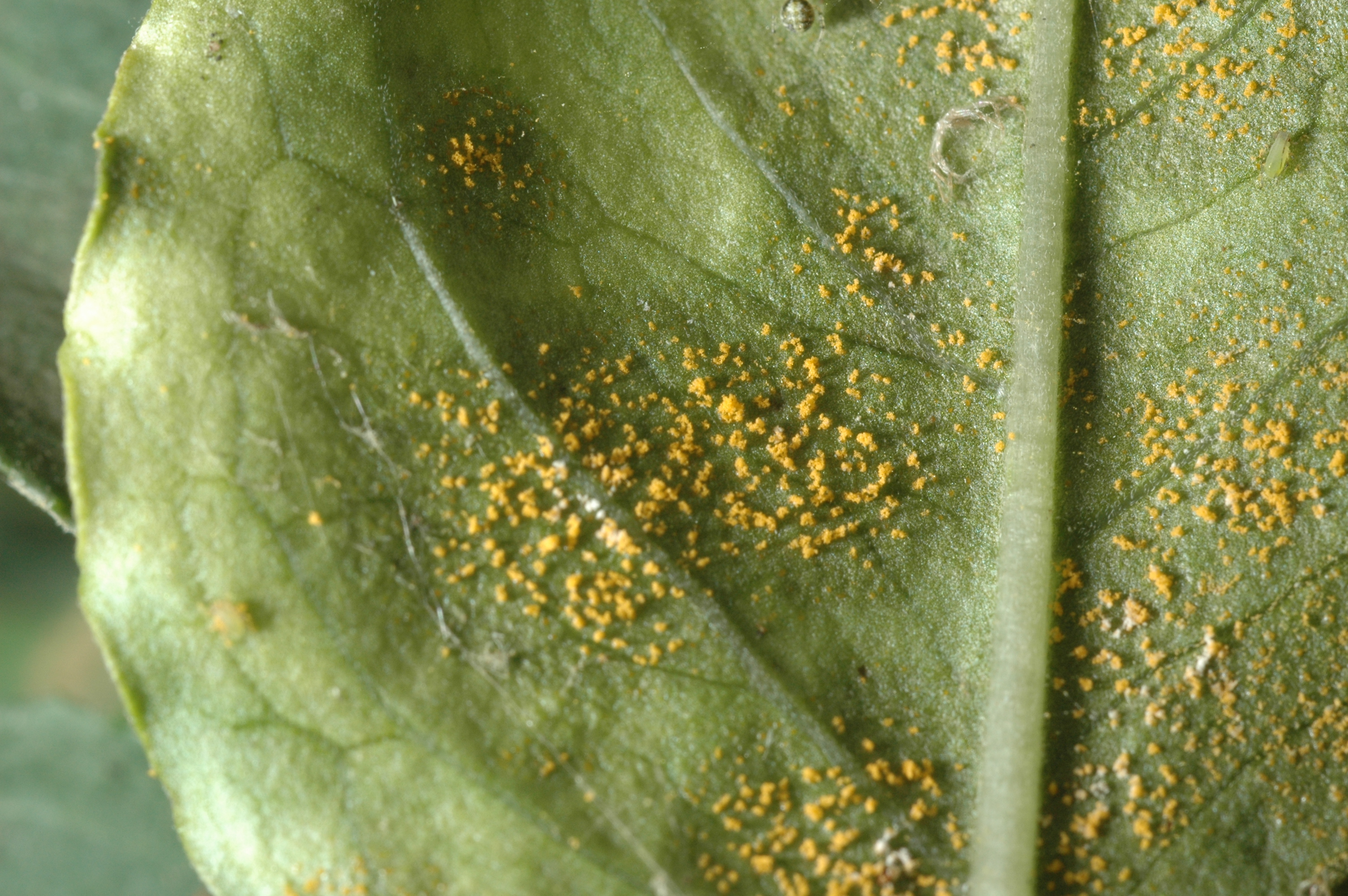
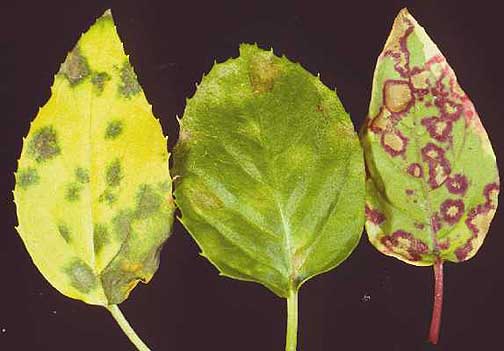
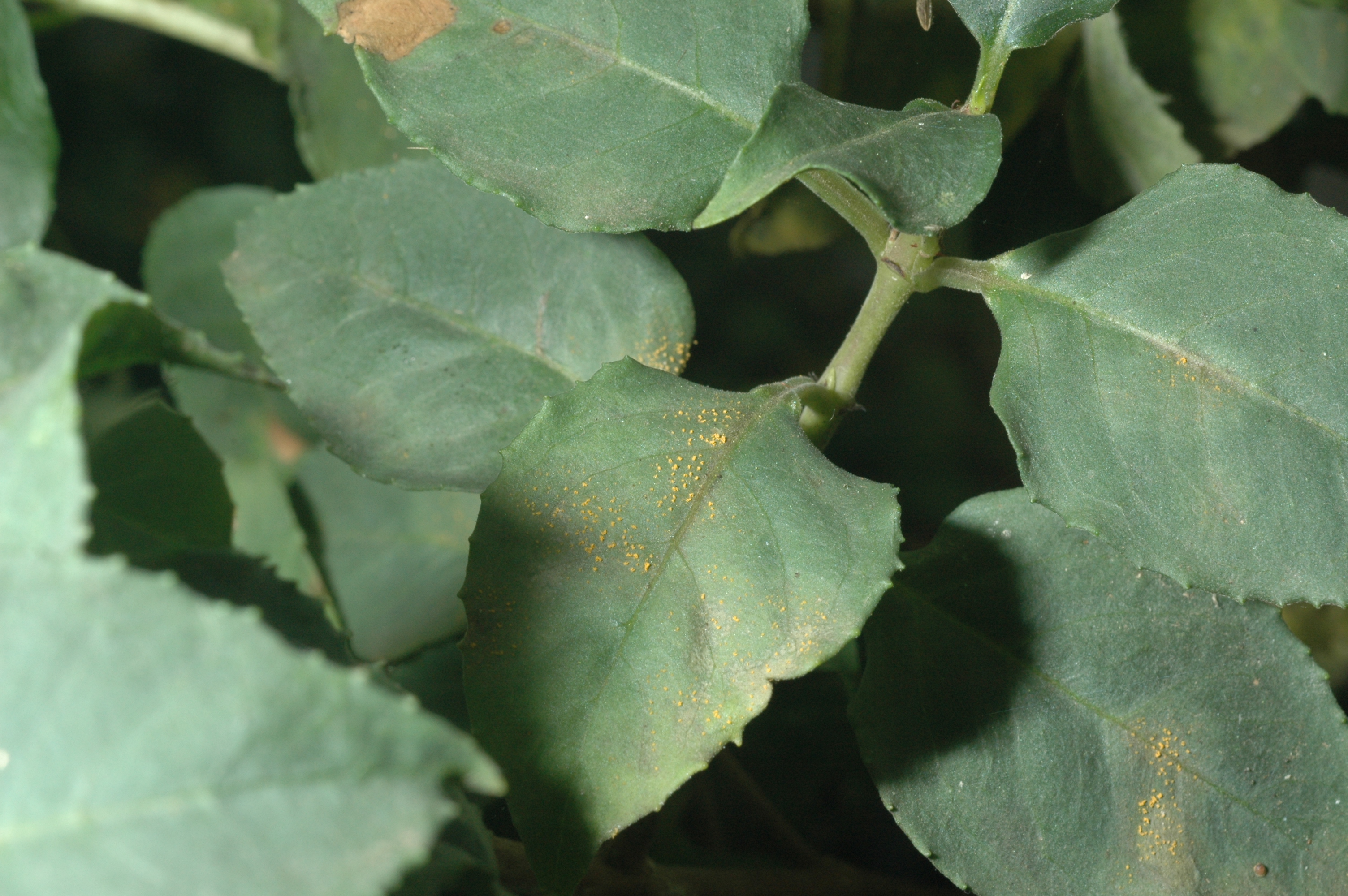
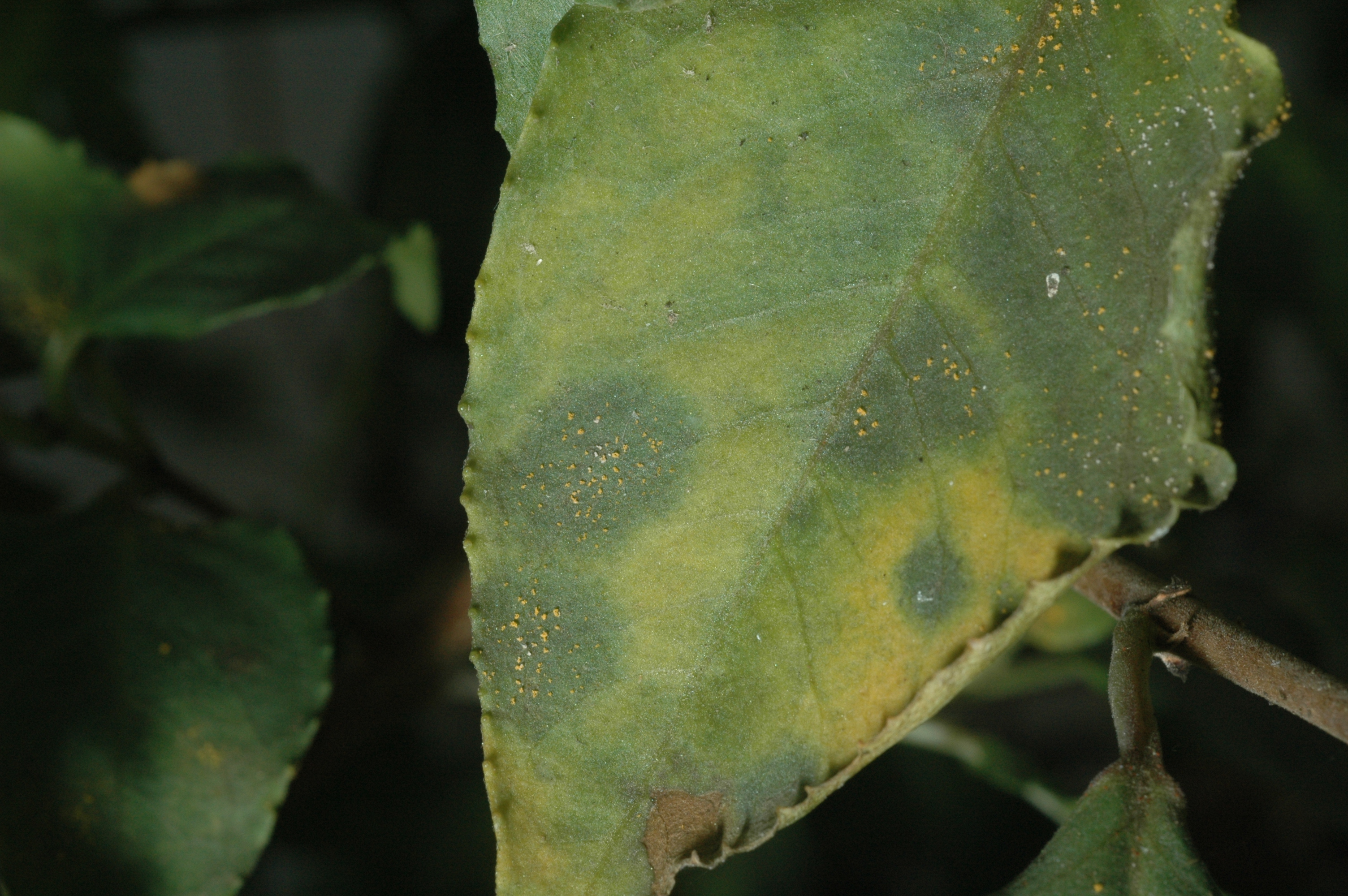
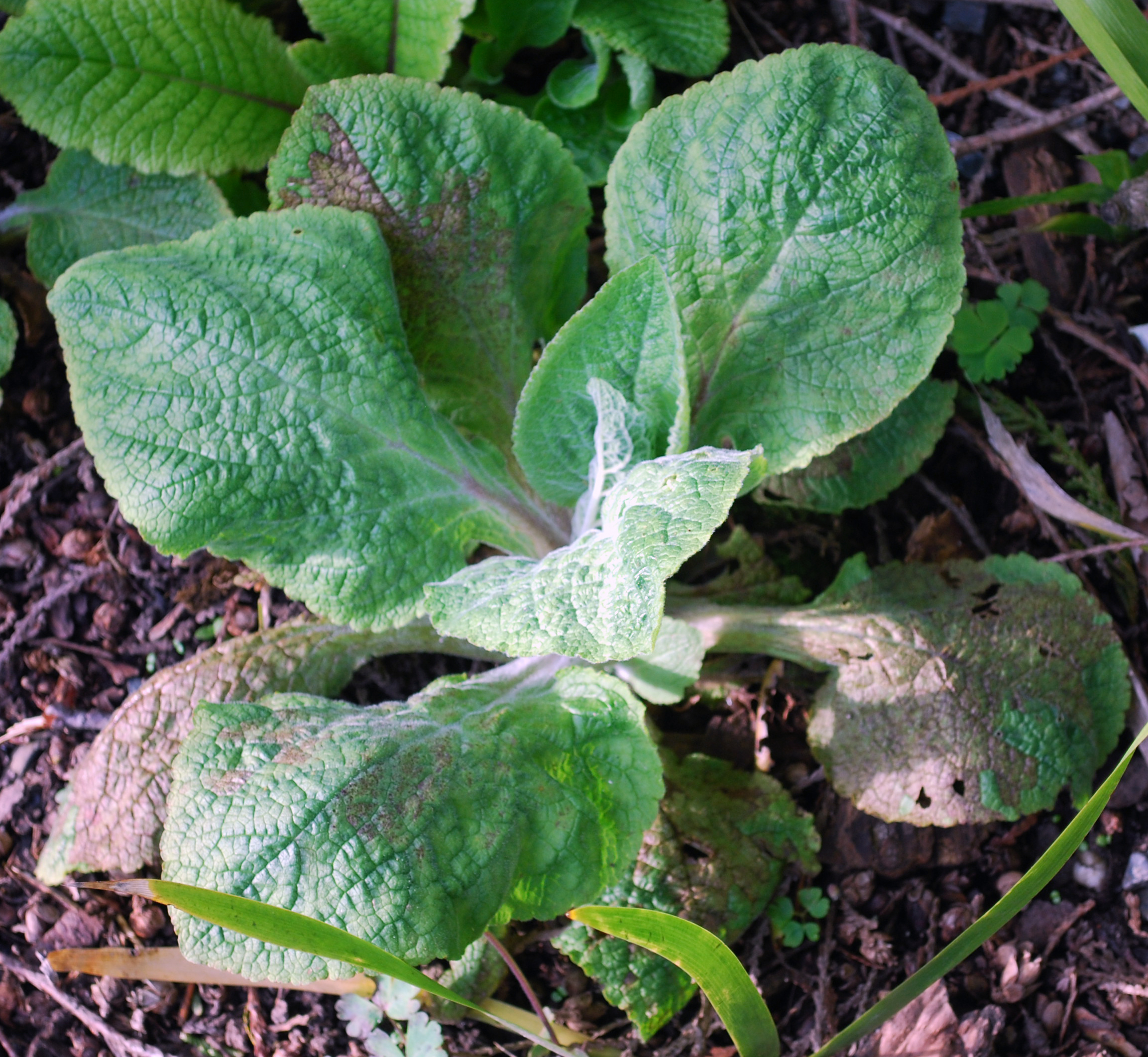
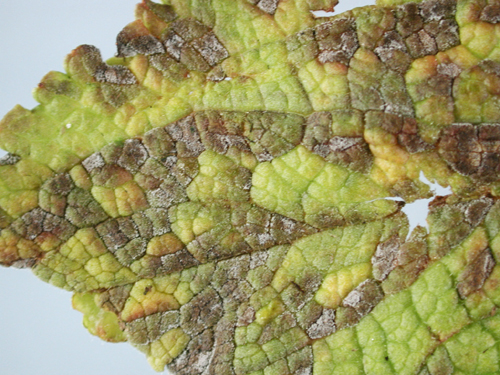
Leaf spots look similar to one another. This leaf produced Ramularia-like spores on the underside of leaves.
Jay W. Pscheidt, 2016.
Cause The fungus Peronospora digitalidis has been found once by the OSU Plant Clinic and reported once from a commercial nursery sample. The disease is common throughout coastal production in California. It can be found in the PNW nursery industry and in the landscape in Washington. Cool wet weather favors this disease. Conidia of this fungus are dispersed by wind or rain-splashed.
Downy mildew does occur in the landscape in Washington. Note lesions with angular margins.
Jenny Glass, 2011.
Note angular lesions.
Melodie Putnam, 2010.
These blotches were due to downy mildew on this Digitalis Foxlight 'Ruby Glow'.
OSU Plant Clinic Image, 2016.
Cause The fungus Colletotrichum fuscum has been reported from Oregon and is favored by warm wet weather. It overwinters in plant debris.
Symptoms Small, light, or purplish brown spots develop on leaves. Spots remain small, about 0.12 inch, with a purple margin and can be circular or angular. Numerous fruiting bodies (acervuli) of the fungus may be seen at the spots' centers. If seedlings are attacked, they may wilt and die.
Cause There are 9 different viruses reported on Forsythia. Tobacco ringspot virus (TobRV) and arabis mosaic virus appear to have been found in Washington. These are nematode-transmitted viruses.
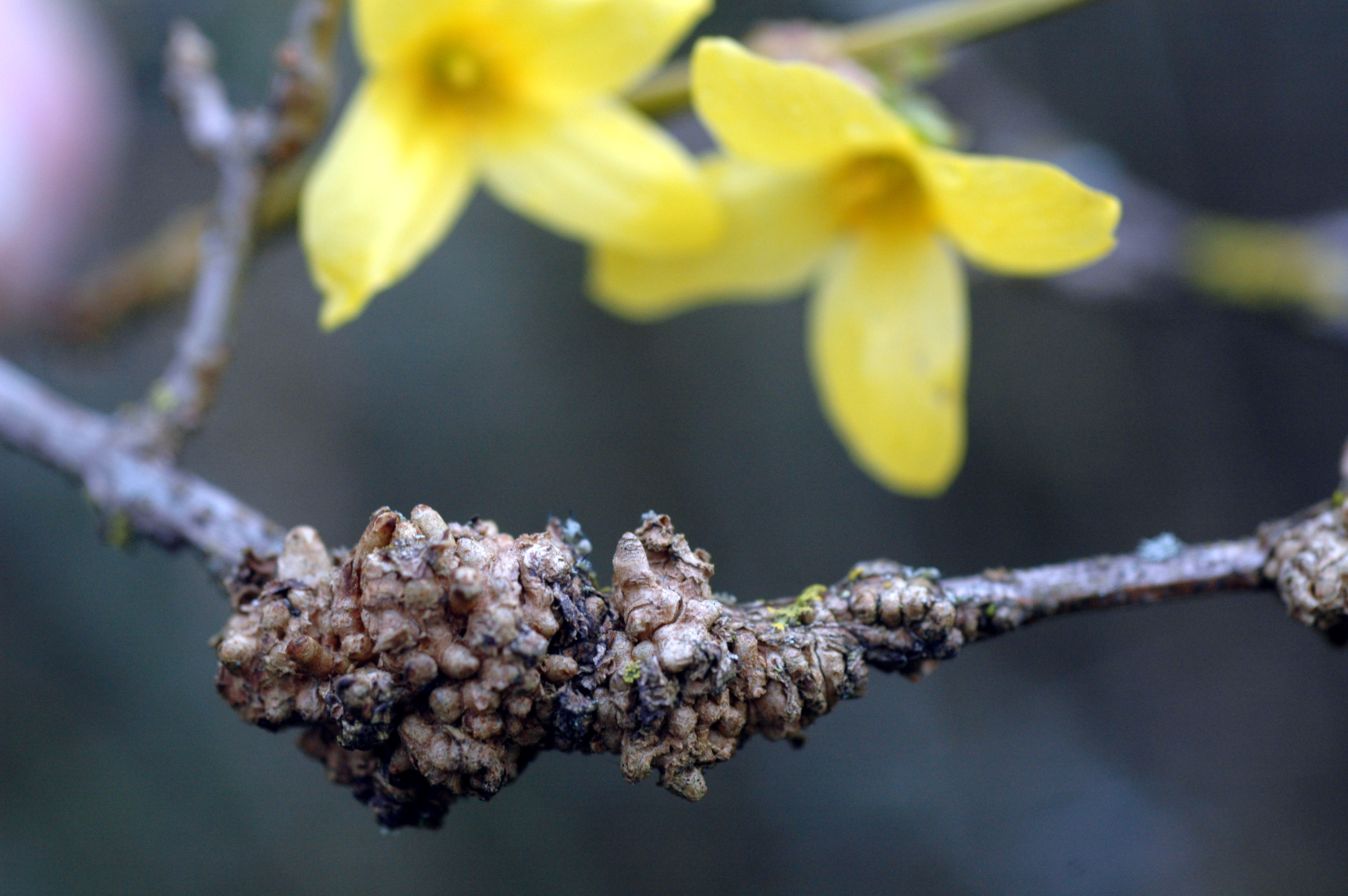
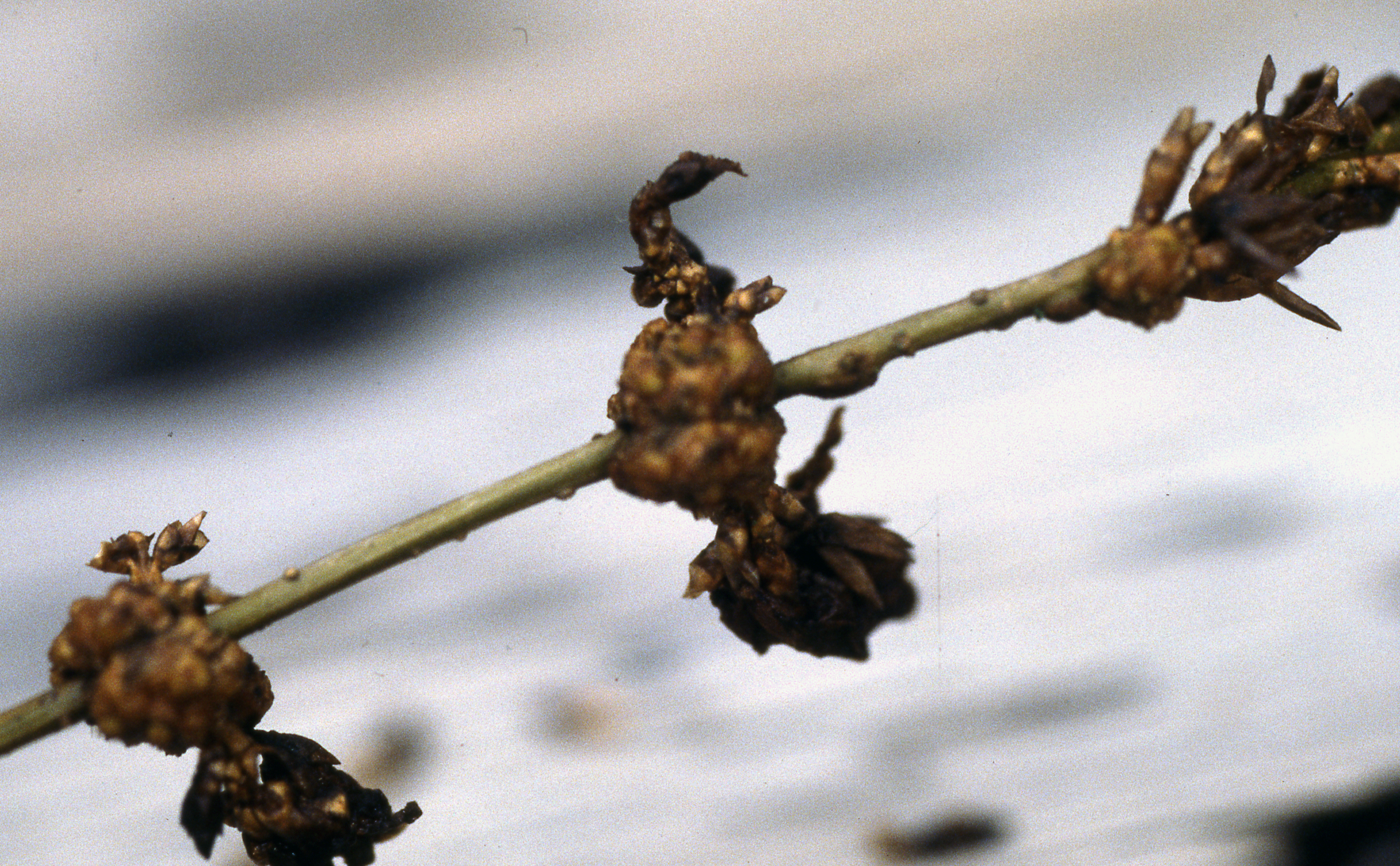
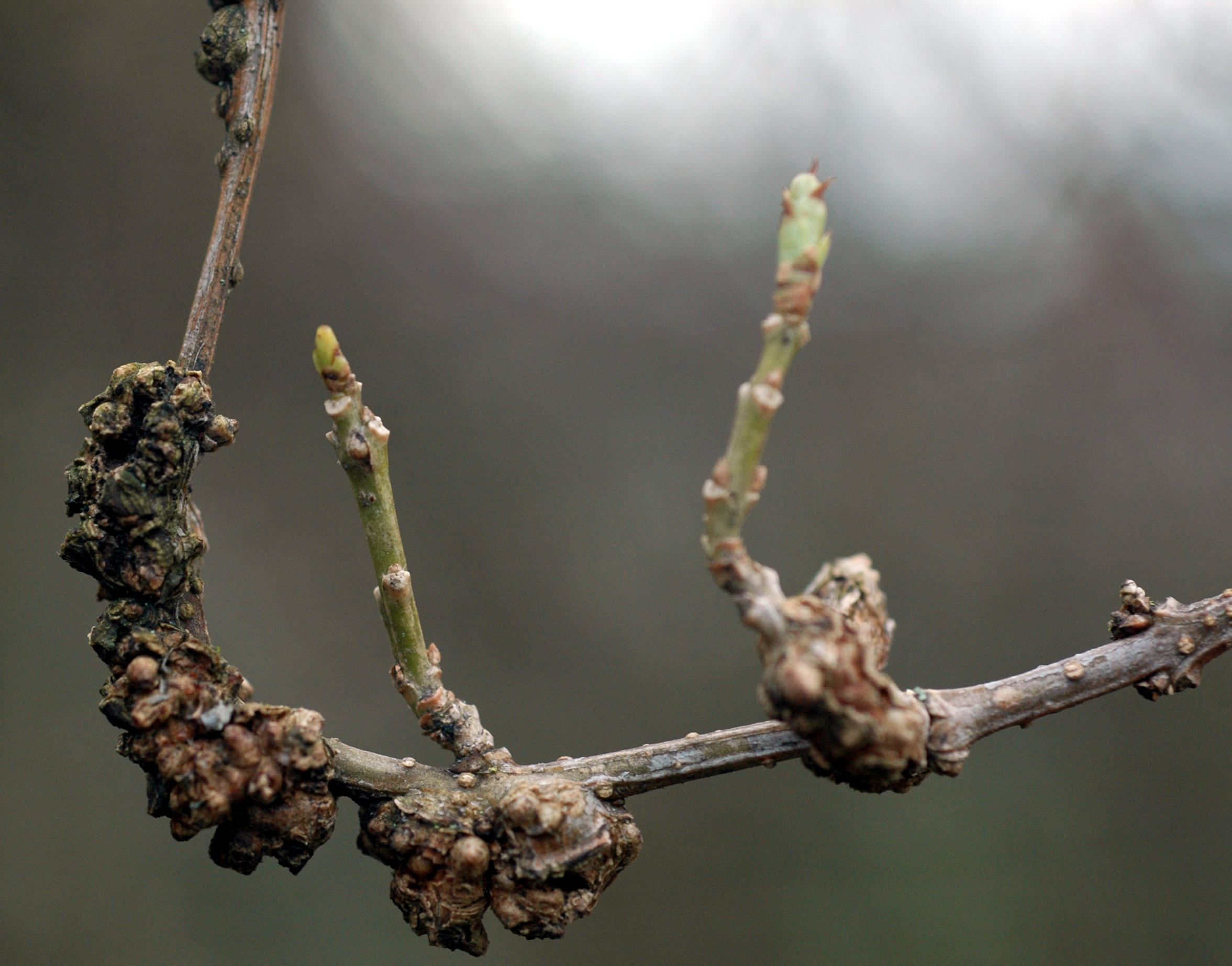
Cause The OSU Plant Clinic has isolated the bacterium Pseudomonas savastanoi from galled forsythia tissue from several locations. This bacterium is also involved with a disease of olive called olive knot where similar galls are found on twigs and branches. It is suspected that it is a new pathovar but that remains to be confirmed. Infection may occur in the fall through leaf scars as in the olive knot pathogen system.
Galled tissue looks like root initials or callus growth.
Jay W. Pscheidt, 2011.
Note the small galls along this stem.
Photo by Jay W. Pscheidt, 1994.
Shoots may continue to grow even when heavily galled. Do not use these for propagation!
Jay W. Pscheidt, 2011.
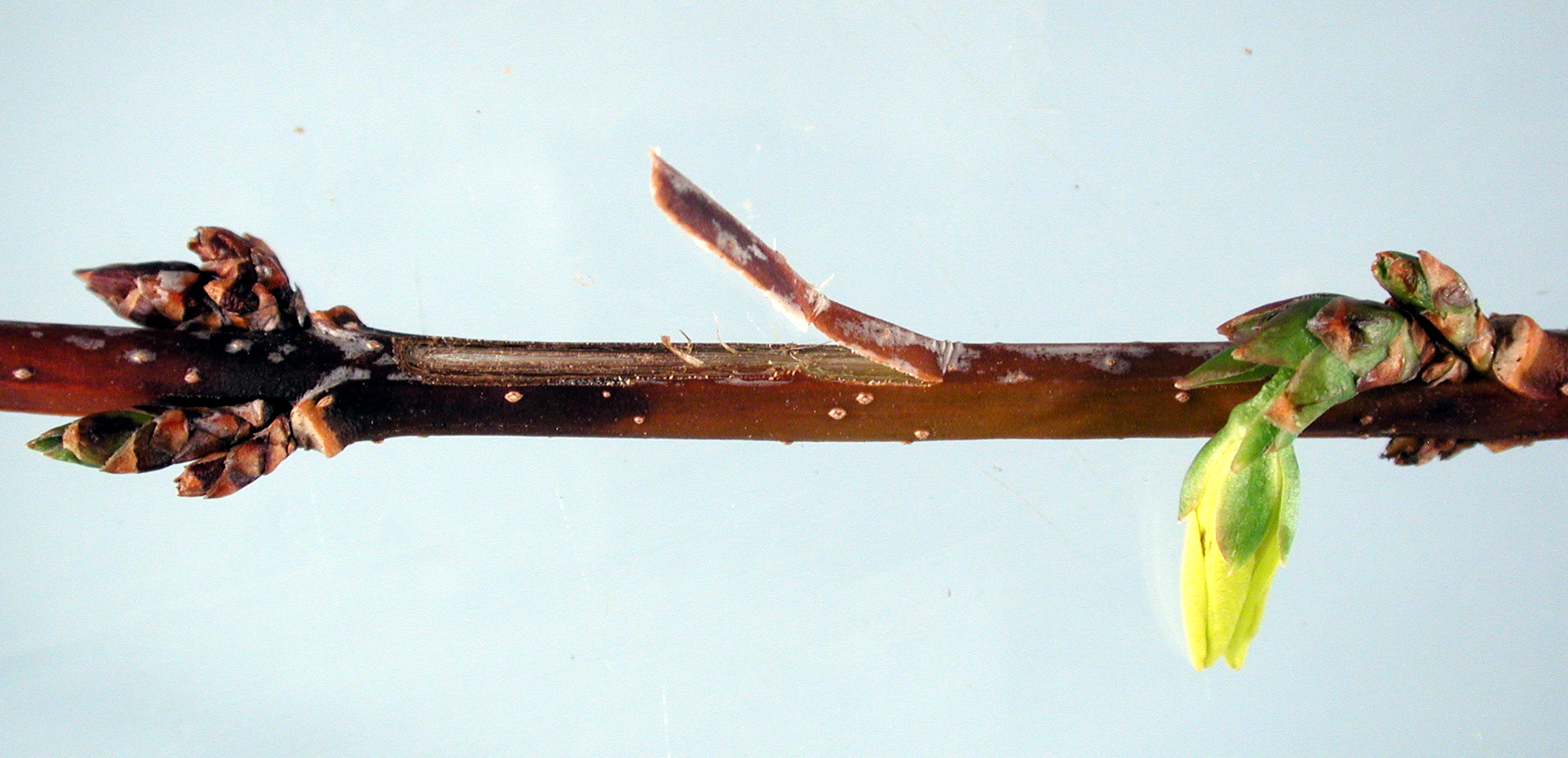
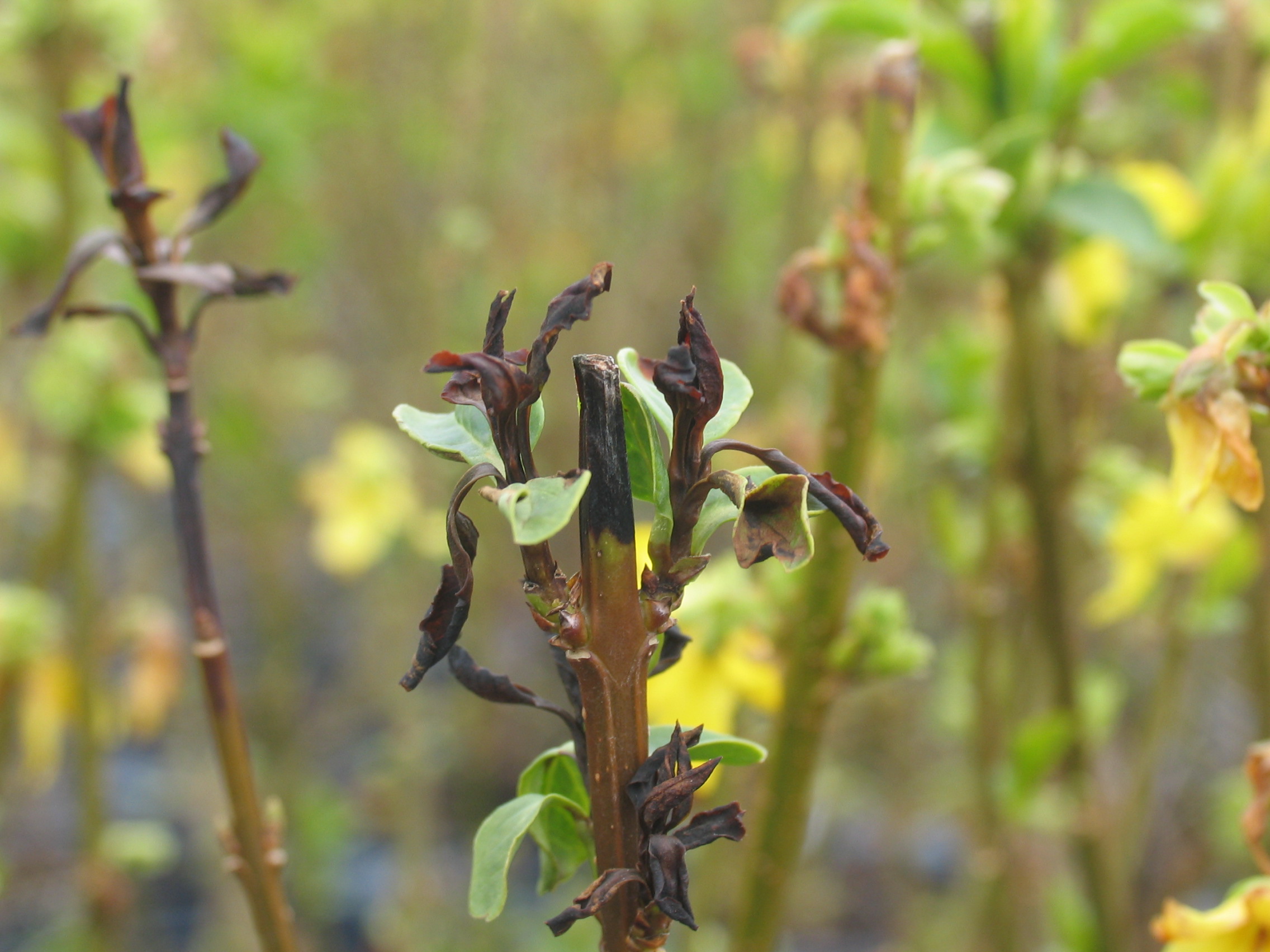
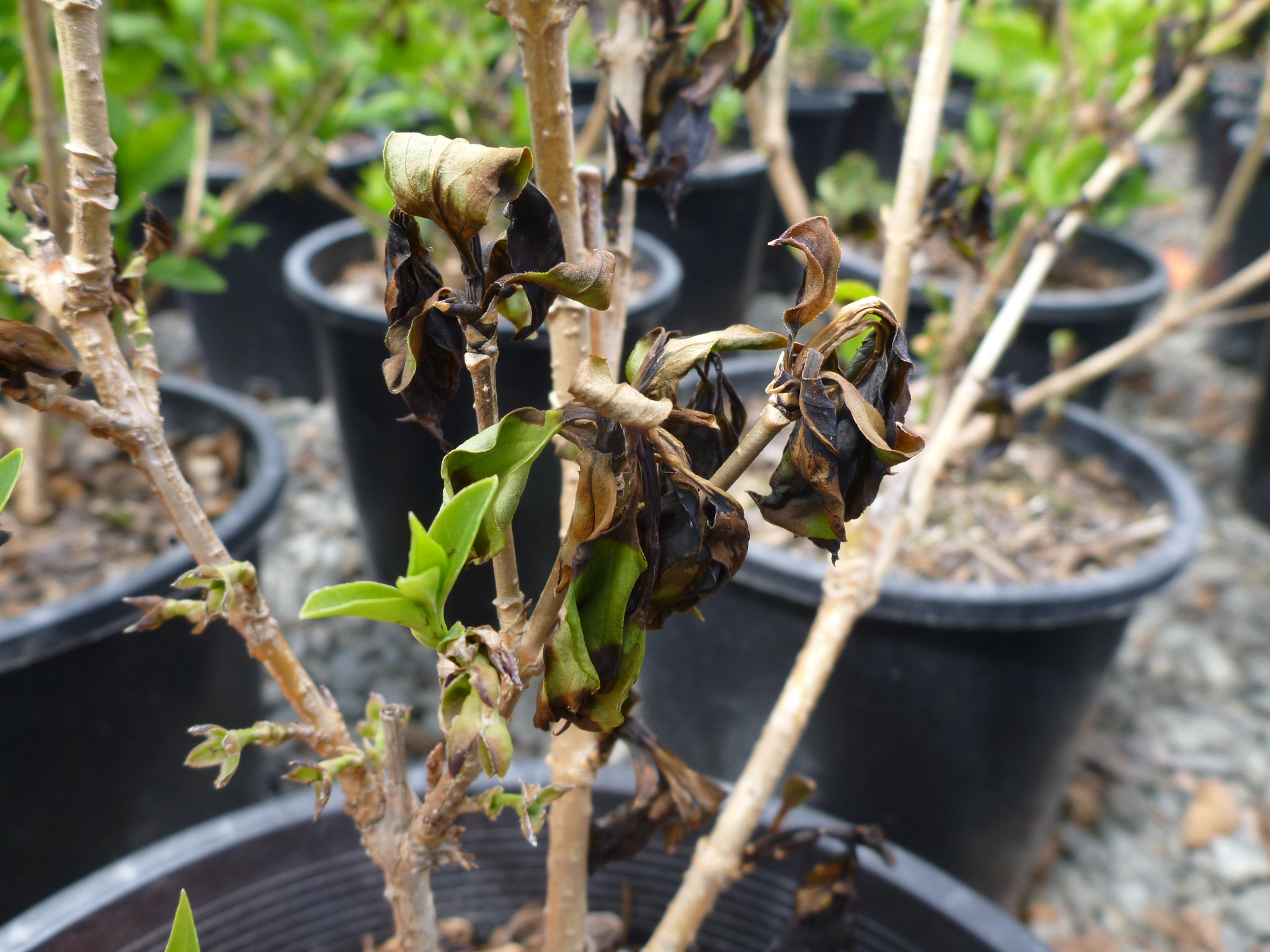
Cause Pseudomonas syringae pv. syringae, a bacterium. Environmental factors play an important role with diseases caused by this bacterium. Rainy weather, winter or frost injury, and poor growing conditions favor disease development. Although the bacteria survive on the outside of the plant they must get inside and multiply in the space between plant cells (apoplast) to cause disease.
This plant had shoot tip dieback and bud death.
OSU Plant Clinic Image, 2013.
Dieback from Pseudomonas sp. on cultivar 'Show Off'.