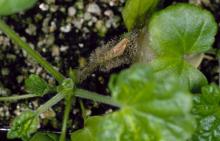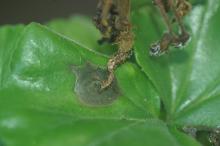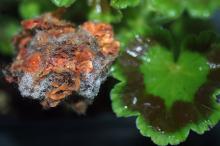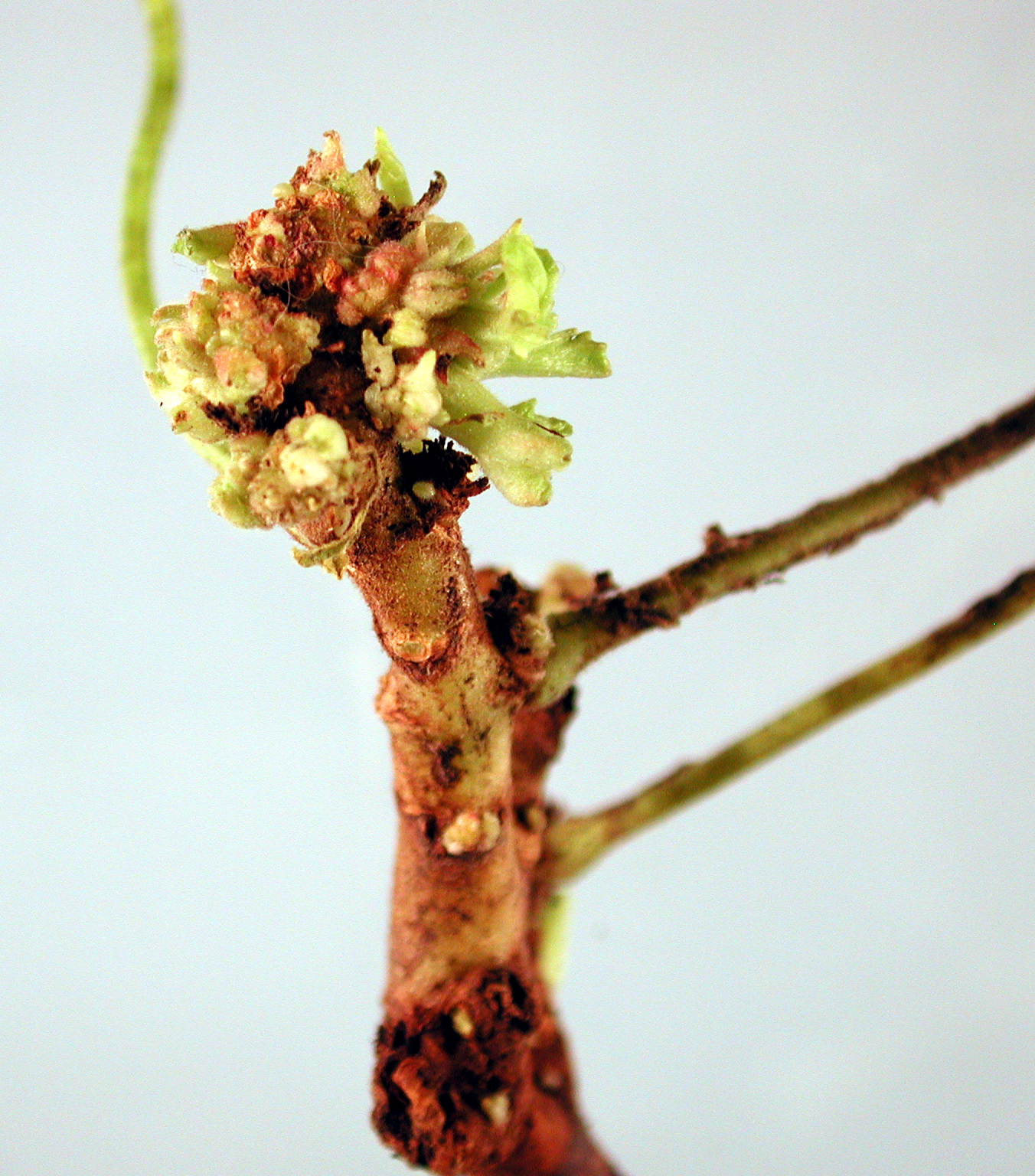
Cause Several species of Penicillium, including P. hirsutum (syn. P. corymbiferum), P. aurantiogriseum (syn. P. cyclopium), P. citrinum, P. digitatum, P. expansum, and P.
See:
Onion (Allium cepa) - Fusarium Basal Rot
Go to:
Chickpea (Garbanzo Bean) (Cicer arietinum)
Fungicides, Bactericides, and Nematicides
Greenhouse Plants, Ornamental - Impatiens Necrotic Spot
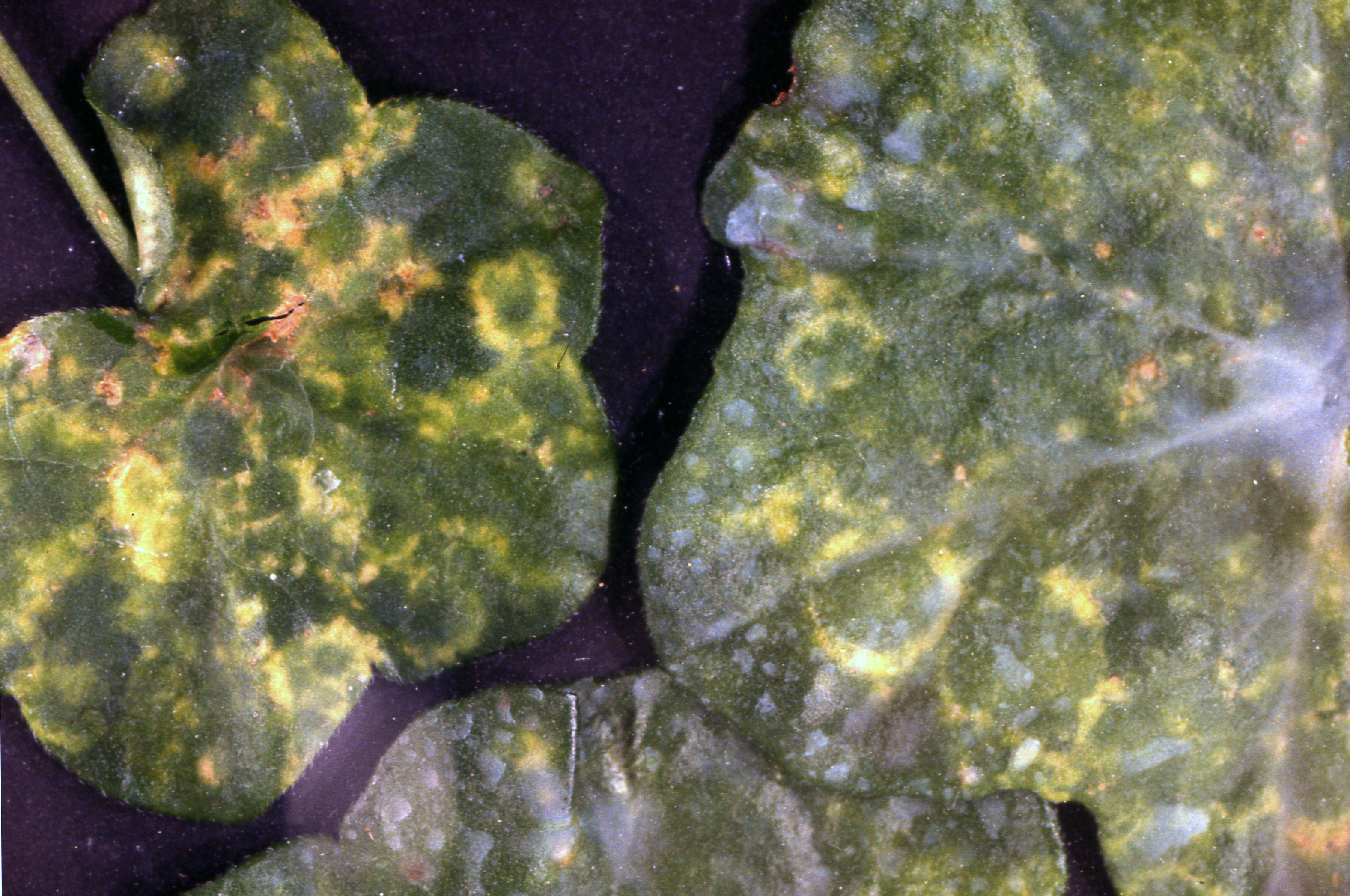
These necrotic lesions are due to the virus.
OSU Extension Plant Pathology Slide Set, 1990.
An entire plant may die from this virus disease.
OSU Extension Plant Pathology Slide Set.
Fir, True (Abies spp.) - Rusts
Numerous uredia on the underside of this leaf.
Jay Pscheidt, 2007.
Few symptoms other than a few uredia can be seen on these leaves.
Green island effect where the fungus keeps the area just around the infection green with chlorophyll while the rest of the leaf becomes chlorotic.
Greenhouse Plants, Ornamental - Pythium Seed Rot, Damping-off, and Root Rot
Greenhouse Plants, Ornamental - Gray Mold
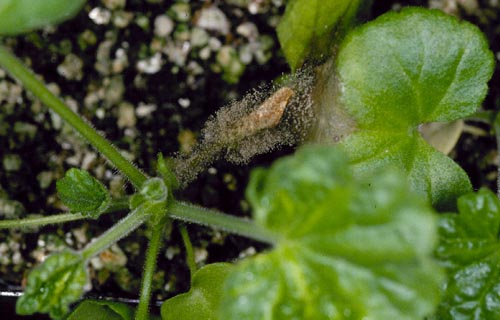
Sporulation of the fungus can be seen on the stem to the left.
OSU Plant Clinic Collection, 2011.
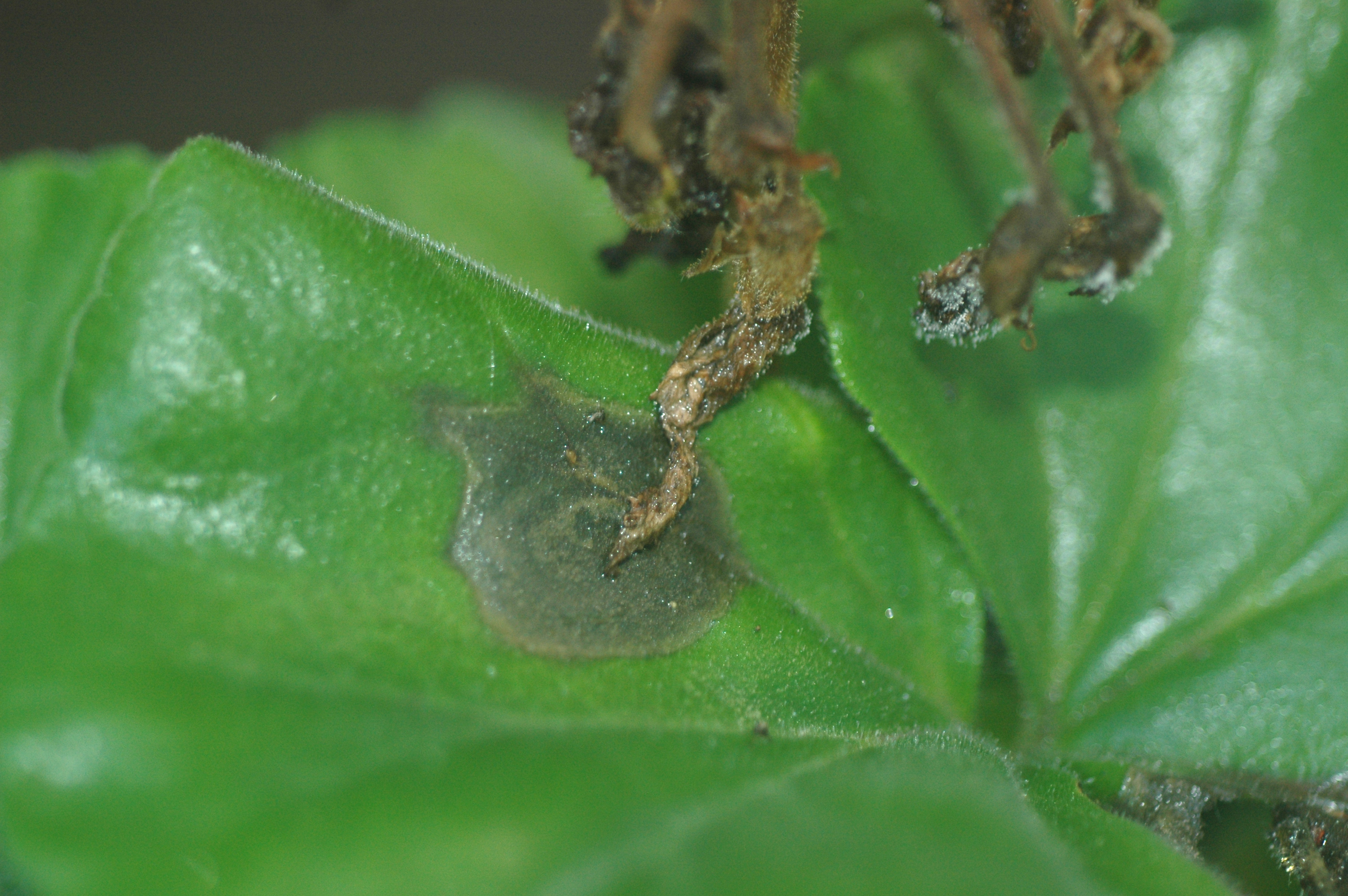
Leaves with water soaked symptoms resulting fromBotrytis infection.
OSU Plant Clinic Collection, 2016.
Greenhouse Plants, Ornamental - Black Root Rot
Note Out of dozens of samples there have been 5 that were diagnosed with black root rot by the OSU Plant Clinic.
Stunted growth and blackened sections of root define this disease.
Foxglove (Digitalis spp.) - Anthracnose
Leaf spots look similar to one another. This leaf produced Ramularia-like spores on the underside of leaves.
Jay W. Pscheidt, 2016.