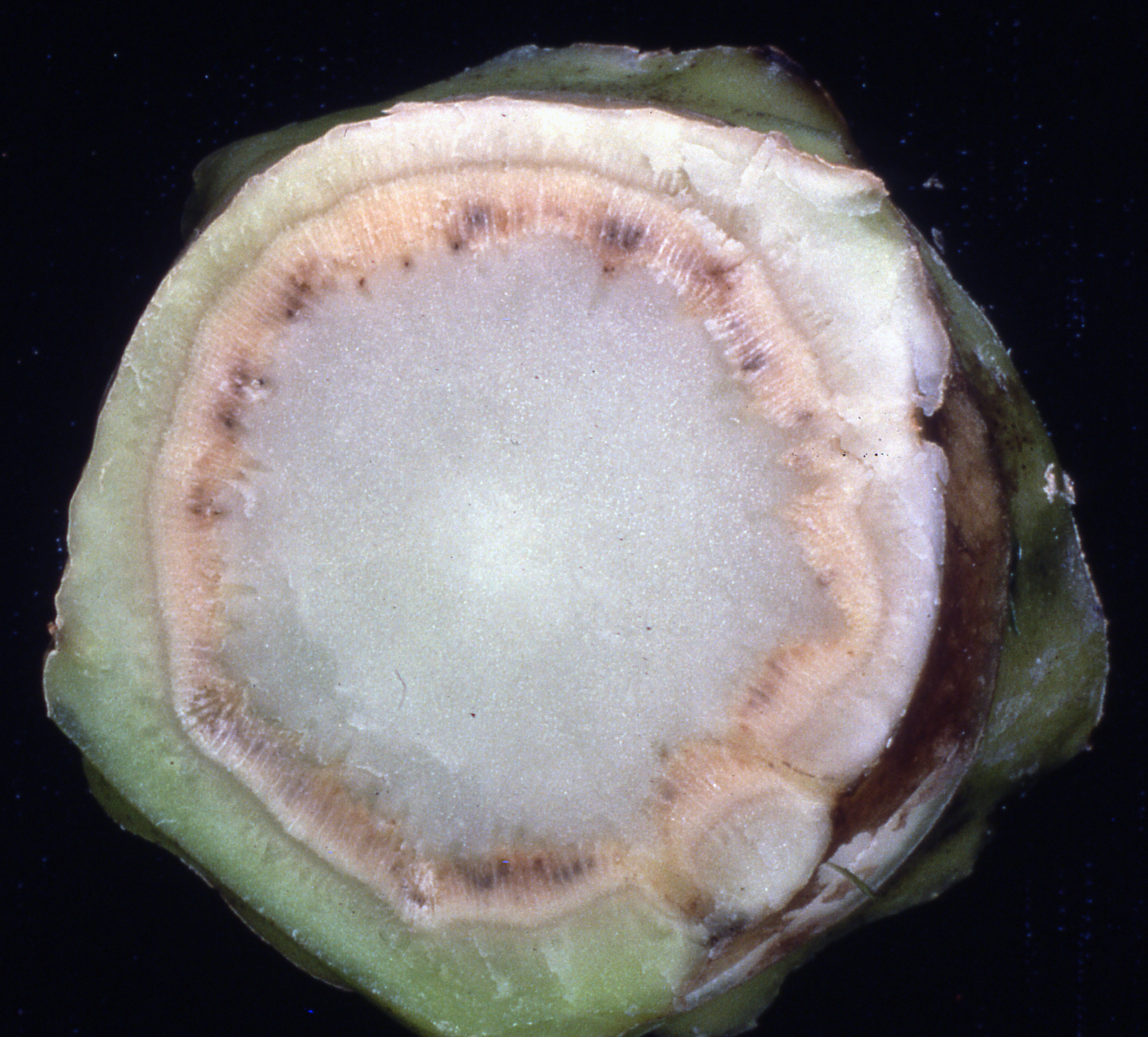
This is a cross section through the stem showing discolored dark vascular bundles.
Albert Paulus
Cause Phytophthora capsici, a fungus-like microorganism. This soil-inhabiting organism causes root rot in pepper and eggplant and is most active in moist, warm weather (75°F to 91°F). Disease is generally seen in the wettest areas of a field.
Cause Cercospora melongenae, a fungus that survives at least one year in infected plant debris or in soil. Wet leaves and a high relative humidity favor disease development.
Cause Colletotrichum coccodes (formerly C. atramentarium), a fungus that is saprophytic part of its life cycle and may survive from year to year in the soil and infected crop residues. Solanaceous crops and weeds are all hosts. Seed may also be infected. Free moisture and mild temperatures are conducive for disease with 68°F to 76°F being optimum for infection.
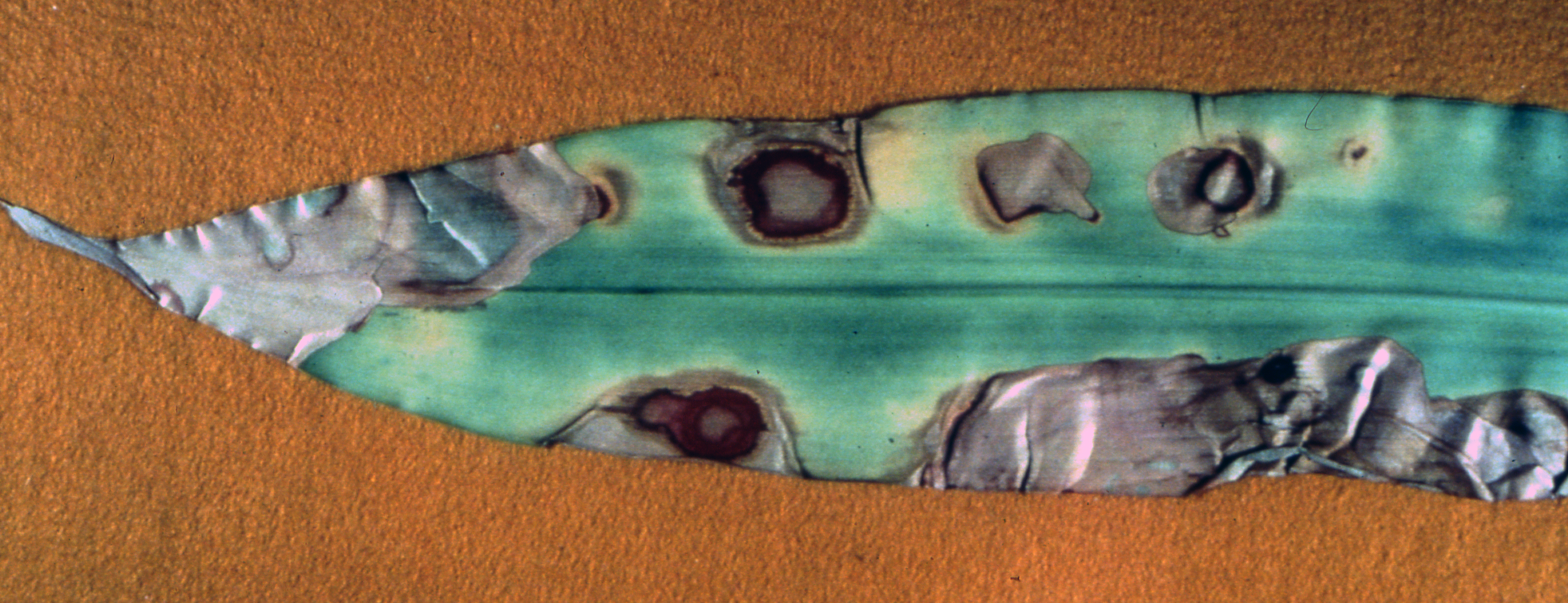
Cause Many fungi and bacteria cause a leaf spot on Dracaena spp., but Phoma draconis (formerly Phyllosticta draconis) is most common. Peperomia also is susceptible. Wet, humid conditions favor disease development. Yellow spots can also be from magnesium deficiency.