Cause The fungus, Rhizoctonia solani, which can survive in soil for at least several years. The fungus has a broad host range and can be spread by movement of infected plant debris. Disease is favored by warmer soil temperatures.
A portion of a hemp plant infected with Golovinomyces ambrosiae, the powdery mildew fungus that typically occurs on hemp.
Photo by C.M. Ocamb, Oregon State University, 2021.
Hemp leaf showing the small, mostly diffuse, powdery, white colonies that are characteristic of Golovinomyces sp.
Photo by Cynthia M. Ocamb, Oregon State University, 2020.
A hemp branch infected with Podosphaeria macularis, the fungus that causes powdery mildew on hop plants. These powdery mildew colonies typically exhibit a more dense hyphal growth and sporulation than colonies incited by Golovinomyces spp.
Photo by Taylor A. Bates, Oregon State University, 2020.
Cause Phytophthora cinnamomi, P. cactorum, P. cryptogea,and P. drechsleri, fungus-like microorganisms found under wet conditions such as prolonged periods of soil saturation.Generally called water molds because they produce a swimming spore stage (zoospore) that is attracted to roots.
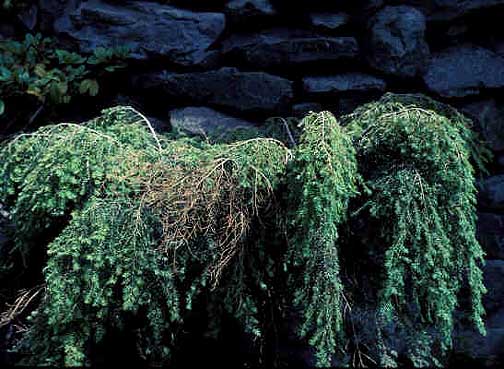
Note the dead lower branches on this hemlock.
Photo by Rich Regan
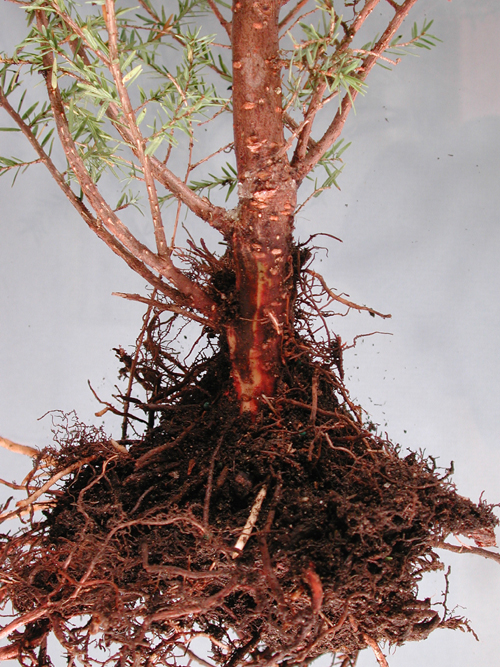
A pocket knife was used to cut away the bark and reveal the discolored cambial tissue below.
Photo by Rich Regan
Dead or nonfunctional roots result in general dieback of above-ground parts.
Photo by Ralph S. Byther
Discoloration of the vascular system was exposed at the base of this plant.
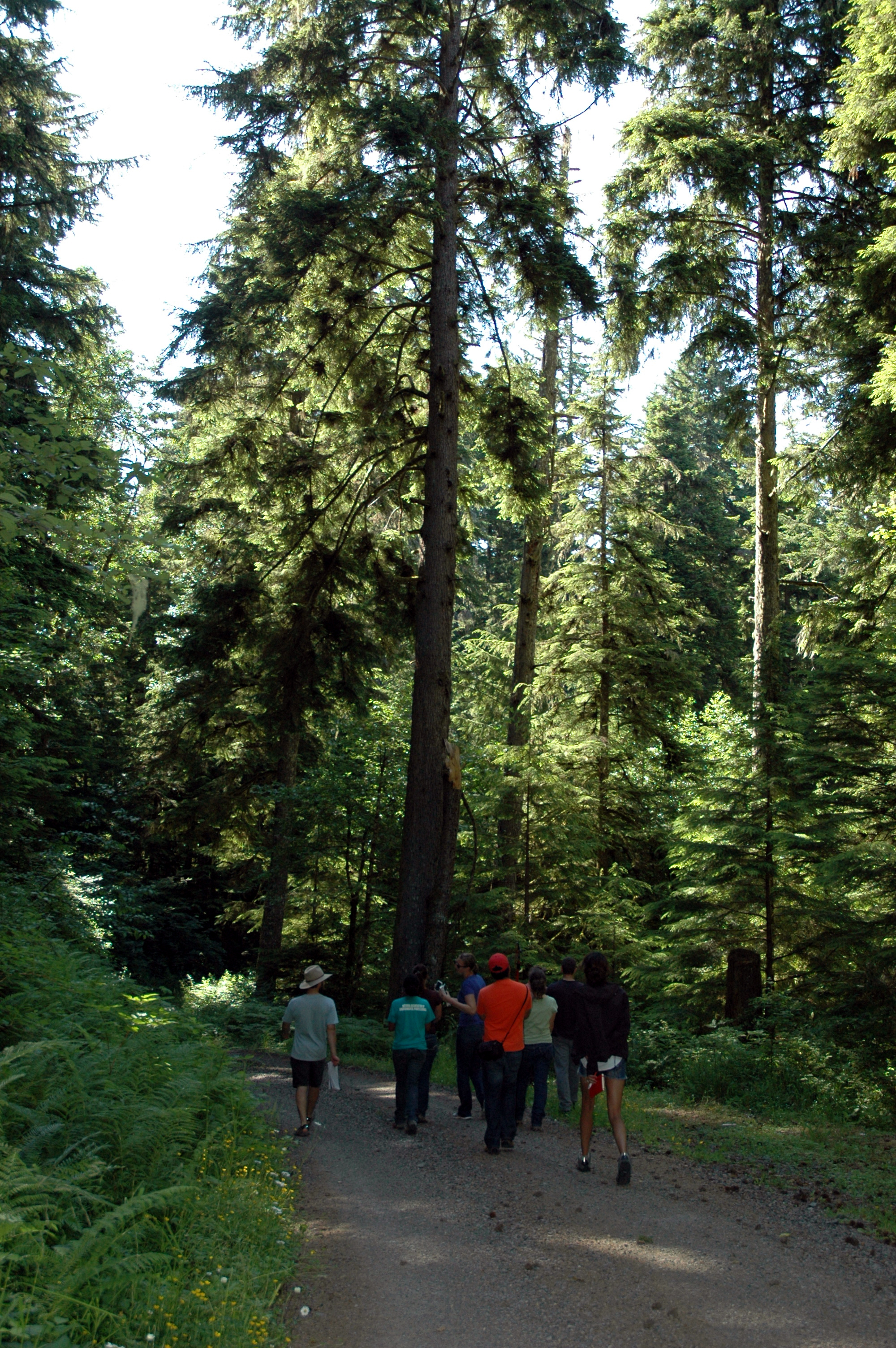
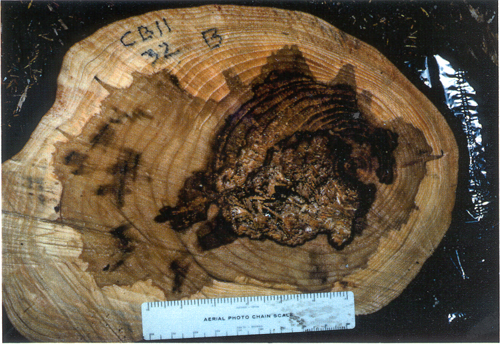
Note Heterobasidion root rot is mostly a butt or trunk rot in hemlock that becomes important when trees are 60 to 80 years old.
Note the staining of the wood. The wet looking outer area was 'wetwood' where no decay fungi were present. The blackish central area and dark stain within the wetwood is where the fungus was cultured.
Dave Shaw
Cause Coniothyrium hellebori, a fungus that is favored by wet weather and factors that stress plants. The disease may spread rapidly during wet springs or falls. Found frequently in Oregon and Washington.
Spots often run together and show a concentric zonation pattern.
Photo by Lindsey du Toit, 2003
Leaf spot on Helleborus argutifolius caused by Coniothyrium hellebori from a home garden in Skagit Co., WA.
Photo by Lindsey du Toit, 2003
Note Helleborus may be evergreen but can have a rough time when PNW winters are extreme. Secondary organisms, such as bacteria or fungi, may colonize brown, dead areas caused by cold temperature injury.
No pathogens detected and cold injury was suspected.
Melodie Putnam, 2010.
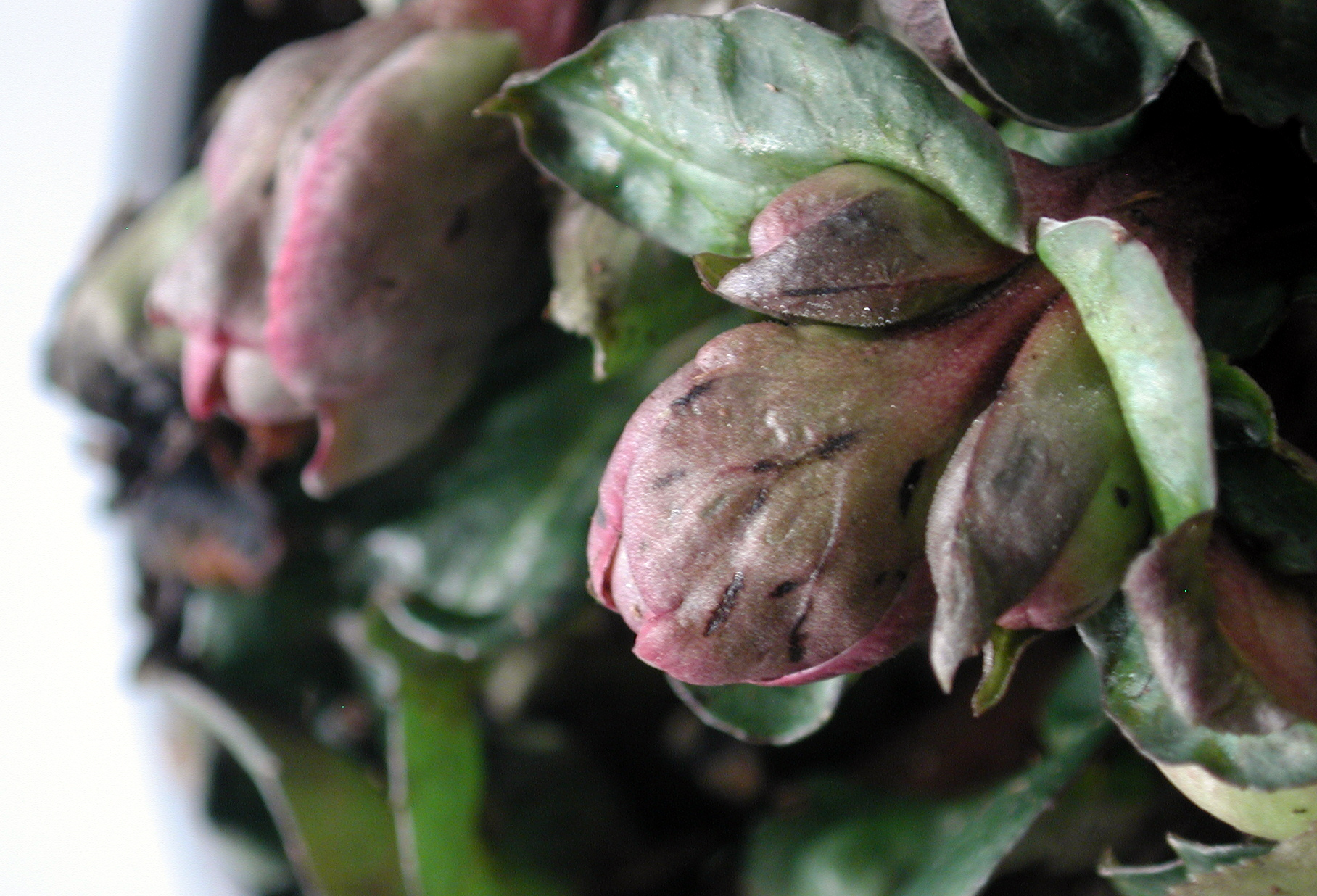
Cause 'Black death' has been reported in a number of states in the western and eastern United States as well as other countries. Although the cause of 'black death' has not been determined definitively, evidence points to a virus as the probable causal agent, specifically a Carlavirus tentatively assigned the name hellebores net necrosis virus(HeNNV).
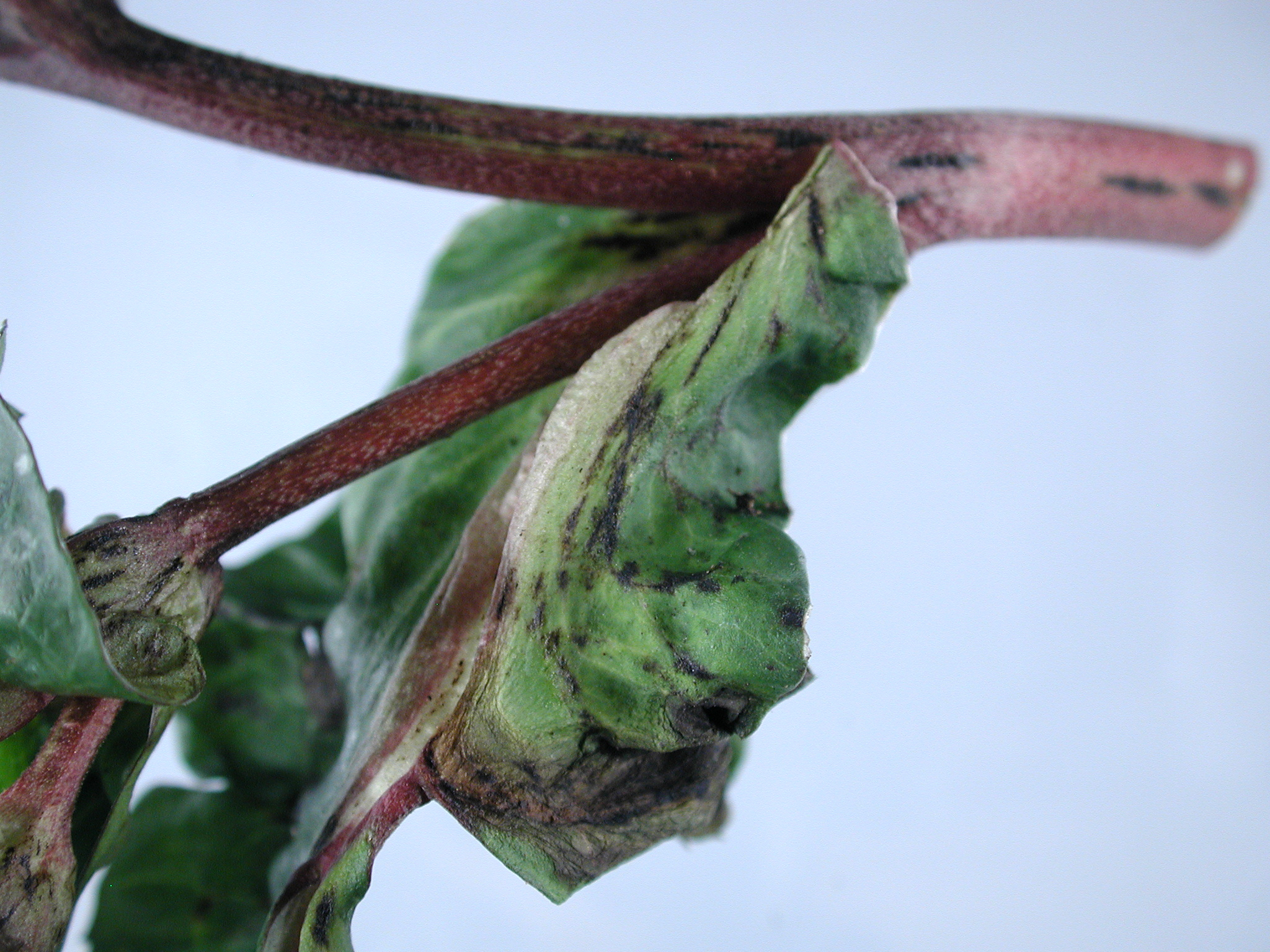
The most common symptom is blackened leaf veins.
OSU Plant Clinic image, 2015.
Black streaks may occur as lines and, when severe, are associated with distortion and stunting of affected plant parts.
OSU Plant Clinic image, 2015.
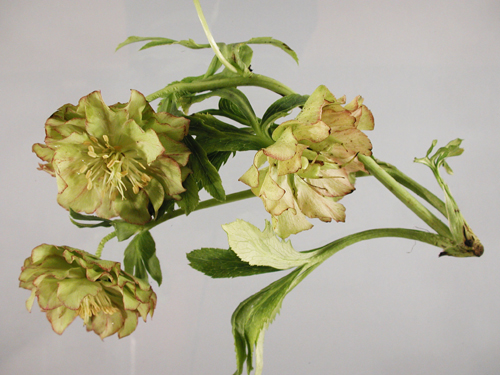
Symptoms include blackened leaf veins, dark brown to black streaks on petioles and black streaks on flower bracts.