Plant Disease Management Handbook

Cause Phytophthora ilicis, a fungus-like microorganism. The disease develops in cool, rainy weather of fall and winter and subsides in warm, dry summer months. It may be very severe in dense orchards where air circulation is poor. In some orchards on the Oregon coast, the disease has caused almost complete defoliation and severe twig blighting, particularly on lower limbs.

Image related to Holly (Ilex spp.)-Phytophthora Leaf and Twig Blight

Cause Green algae. This elementary plant grows on leaves, twigs, and trunks in wet or humid weather. Algal growth on conifer needles is a response to high nitrogen deposition and may be the same for holly.

Symptoms Yellow-green powdery layer on leaf surfaces, twigs, and trunk, usually appearing first on the north side of the lower trunk and gradually spreading up and out to twigs and leaves.

3 holly leaves

See:

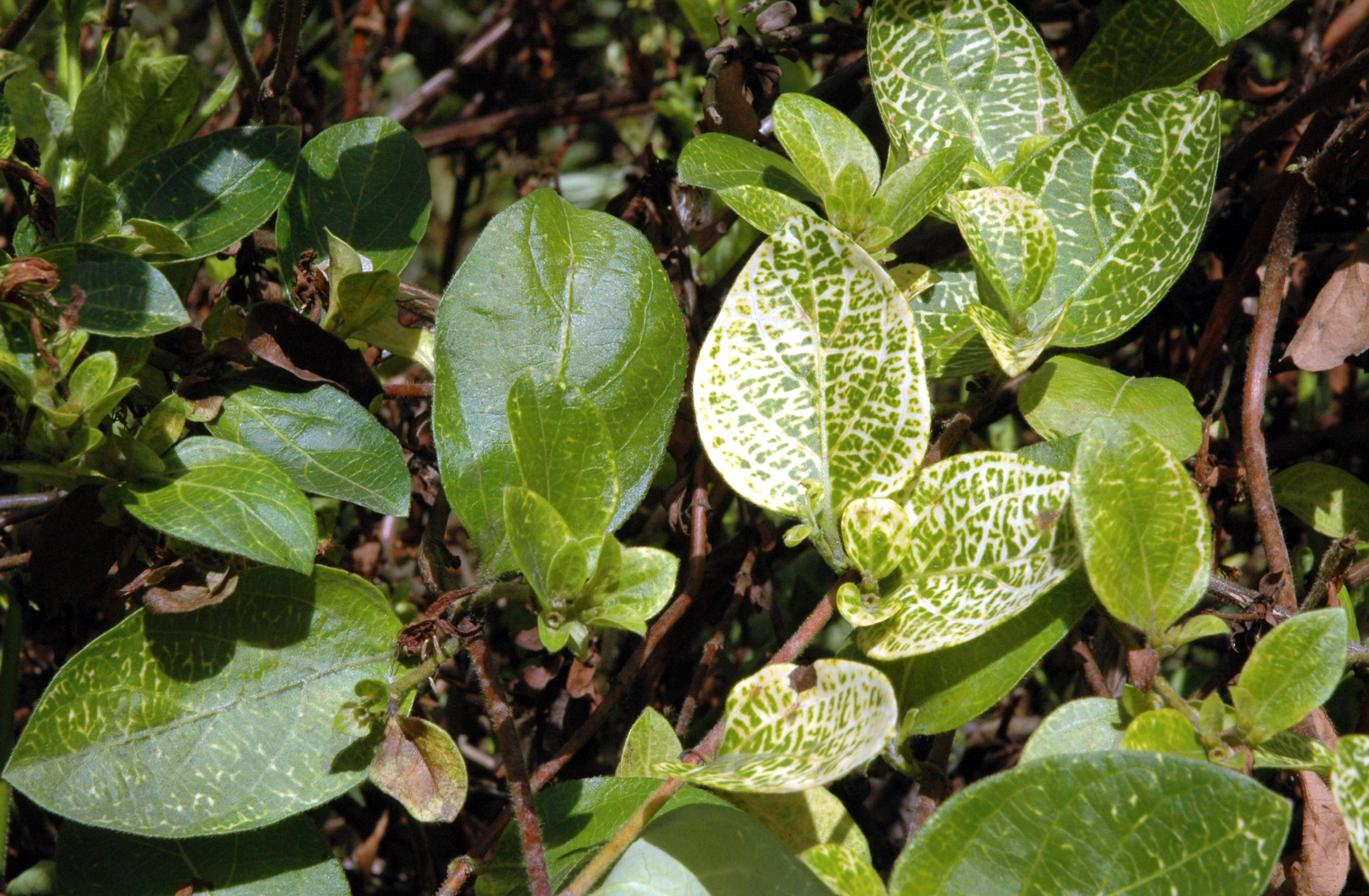
Cause Many commercial holly plantings have incipient boron deficiency. PNW soils west of the cascades are naturally low in boron. Many crops in these areas need supplemental boron.

Cause The fungus, Rhizoctonia solani, which can survive in soil for at least several years. The fungus has a broad host range and can be spread by movement of infected plant debris. Disease is favored by warmer soil temperatures.

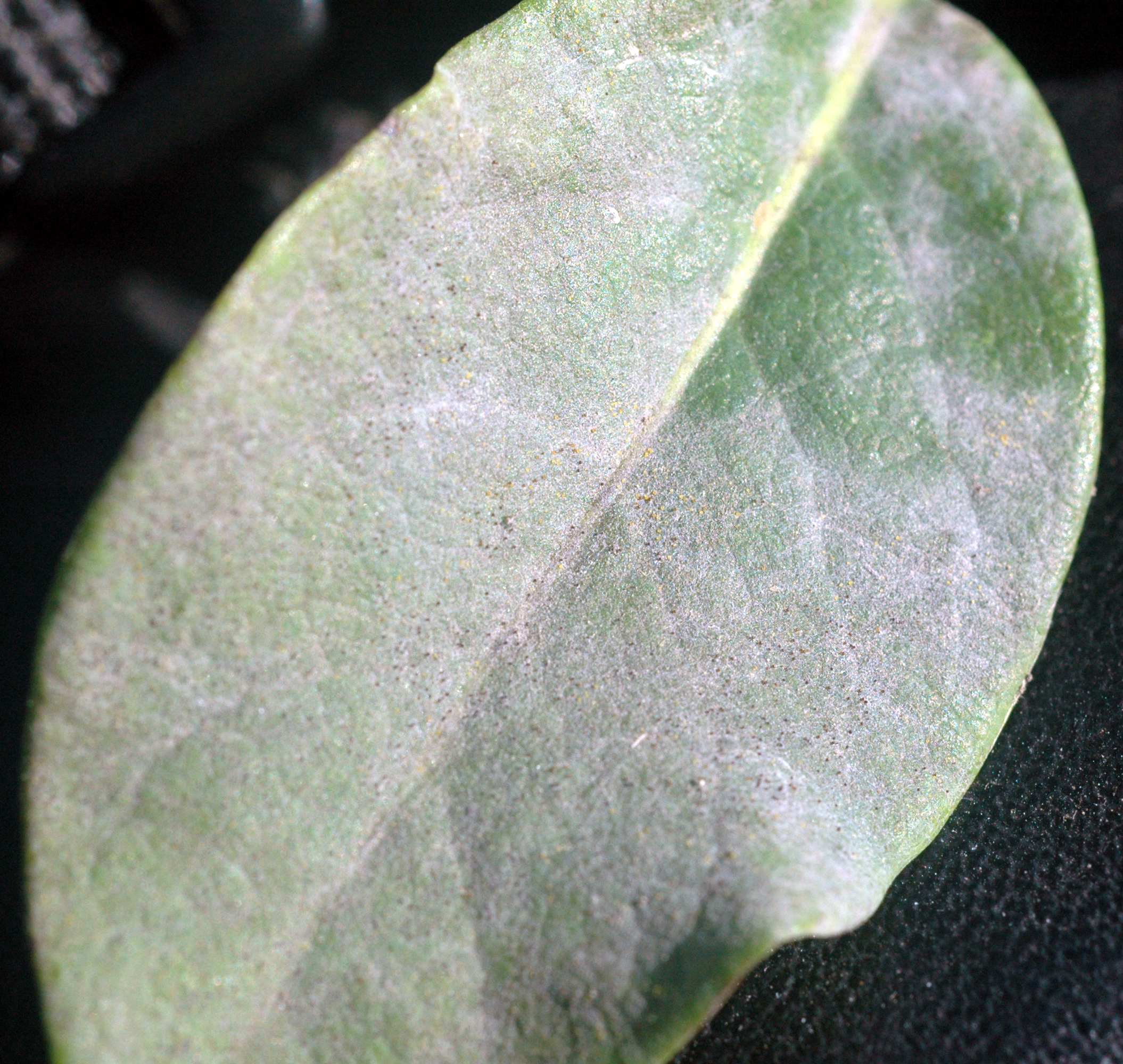
A portion of a hemp plant infected with Golovinomyces ambrosiae, the powdery mildew fungus that typically occurs on hemp.

Cause Phytophthora cinnamomi, P. cactorum, P. cryptogea, and P. drechsleri, fungus-like microorganisms found under wet conditions such as prolonged periods of soil saturation. Generally called water molds because they produce a swimming spore stage (zoospore) that is attracted to roots.

Image related to Hemlock (Tsuga spp.)-Phytophthora Root Rot
Image related to Hemlock (Tsuga spp.)-Dwarf Mistletoe
Image related to Hemlock (Tsuga spp.)-Armillaria Root Rot