Cause Tomato mosaic virus or tobacco mosaic virus, which also affects pepper, eggplant, petunia, and many other plants. Poor sanitation and handling infected plants are the primary means of spread.
Cause Physiological. Oedema (edema) is more prominent when ambient temperatures are lower than soil temperatures and soil moisture and relative humidity are high. Low transpiration rates along with a rise in water absorption increase cell pressure, erupting epidermal cells so that inner cells enlarge and protrude. That causes the inner cells to die and discolor (yellow, brown, or rust), giving the impression that a parasitic organism is involved.
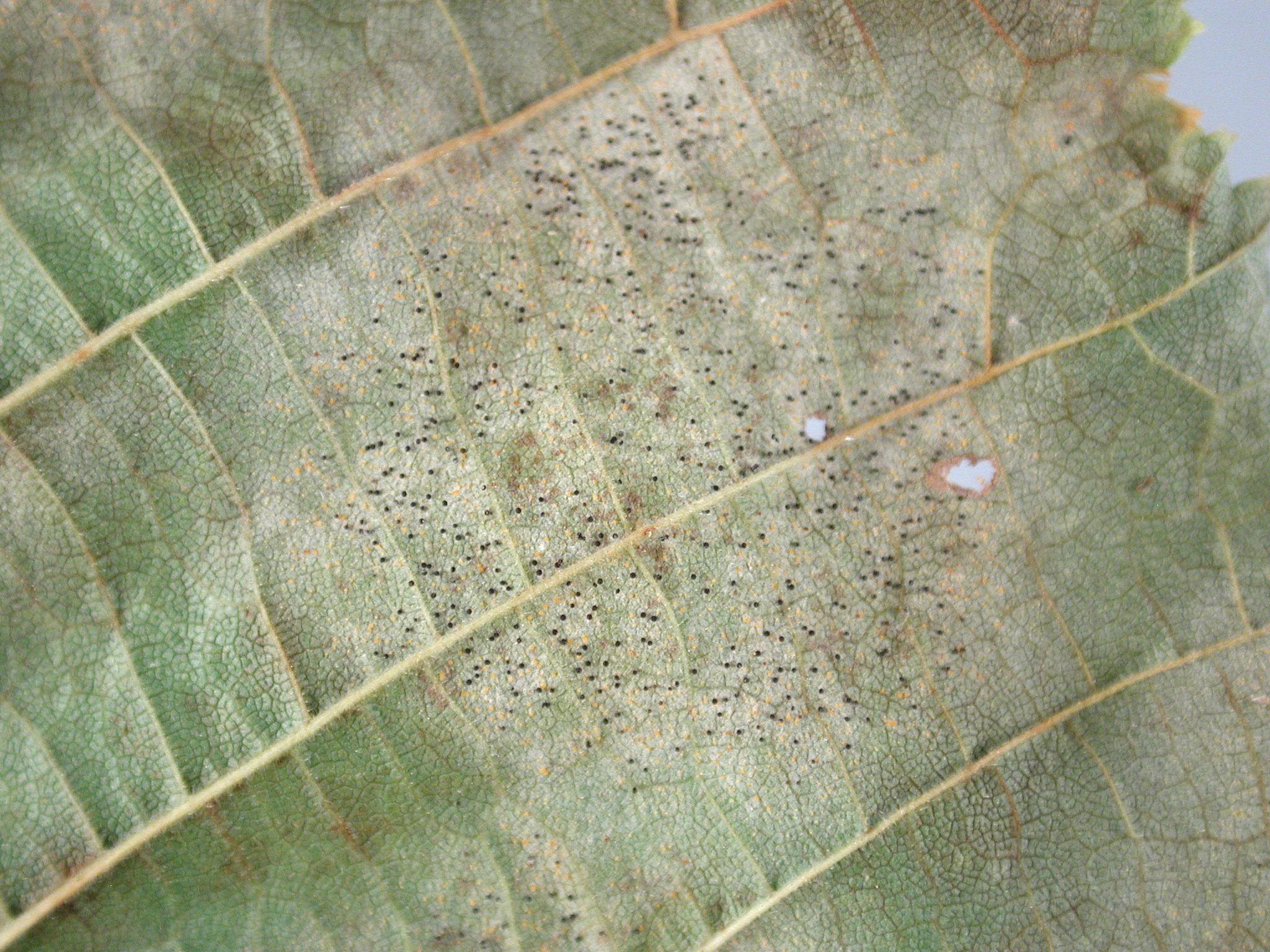
Note what look like strange growths on the underside of the leaf.
OSU Extension Plant Pathology Slide Collection, 19
Cause Passalora fulva (syn. Fulvia fulva, formerly Cladosporium fulvum), a fungus.Spores resist drying and may survive in the greenhouse several months after plants are removed. The fungus is most destructive when humidity is high (90% to 100% at the leaf surface) and the temperature is 65°F to 80°F.
Cause Botrytis cinerea, which also causes gray mold in ornamentals. It can appear on any aboveground plant parts.
A stem canker on greenhouse grown tomatoes.
Photo by Melodie Putnam, 1994.
A greenhouse-grown tomato plant with gray mold. Note the fuzzy, gray growth that is the fungus.
Cathy Turner (University of Alaska), 2007.
Cause The bacterium Rhodococcus fascians is a Gram positive actinomycete. Recent genomic studies have found there are at least 13 different genetic groups of R. fascians, meaning it is a species complex. Pathogenic Rhodococcus are capable of infecting at least 44 plant families and can infect woody and herbaceous plants, including both dicots and monocots. Herbaceous perennials are most frequently affected.
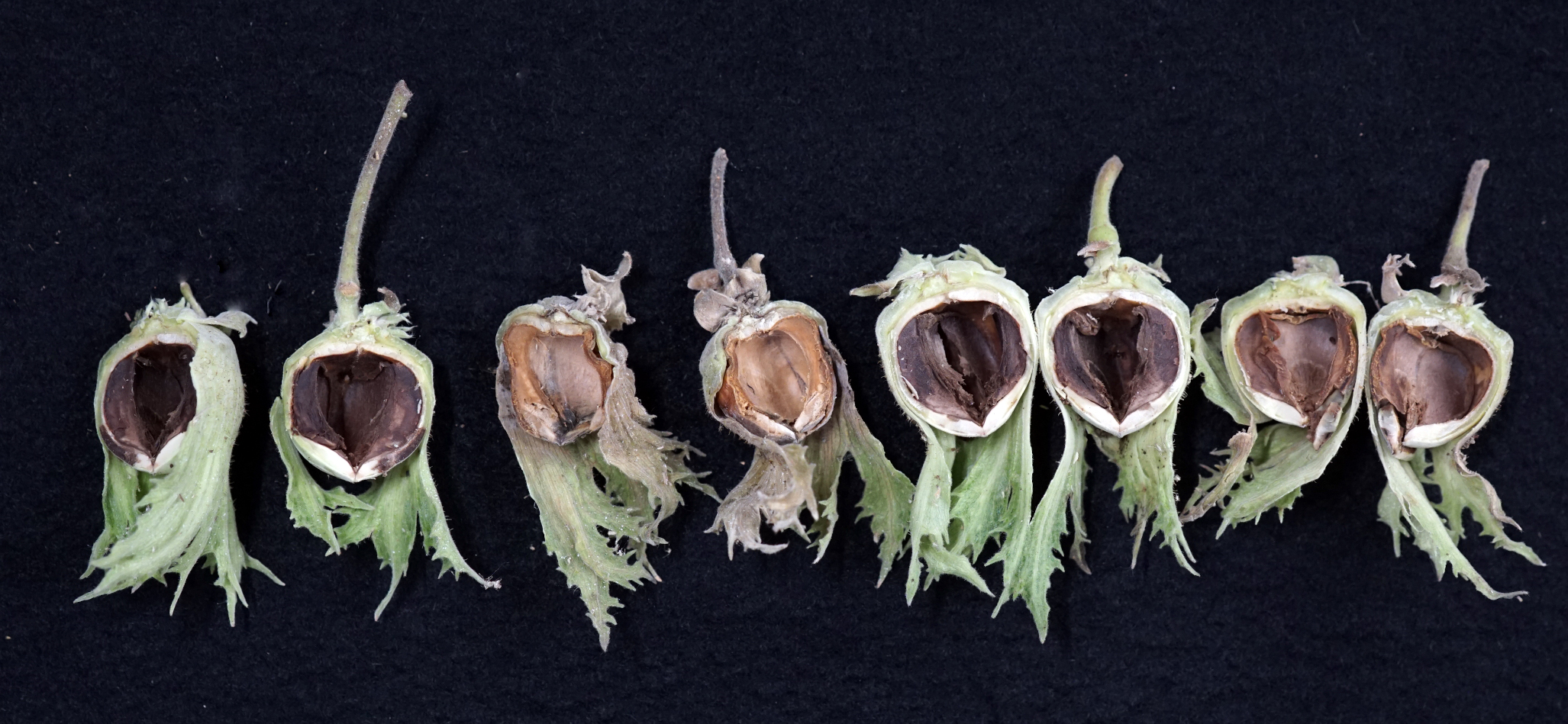
Leafy gall caused by the bacteria Rhodococcus fascians showing multiple buds that only partially expand.
OSU Plant Clinic image, 2008.
Petunia with shoot proliferation.
Melodie Putnam, 2006.
Veronica 'Royal Candles' with shoot proliferation. Infected plant is on the right.