Rhododendron oxidentale with white patches, or colonies, of powdery mildew.
Photo by Jay W. Pscheidt, 1994
Powdery mildew on some azalea cultivars may look like subtle leaf spots that are not white and fuzzy. This symptom is more typical on evergreen Rhododendrons.
Jay W. Pscheidt, 2000.
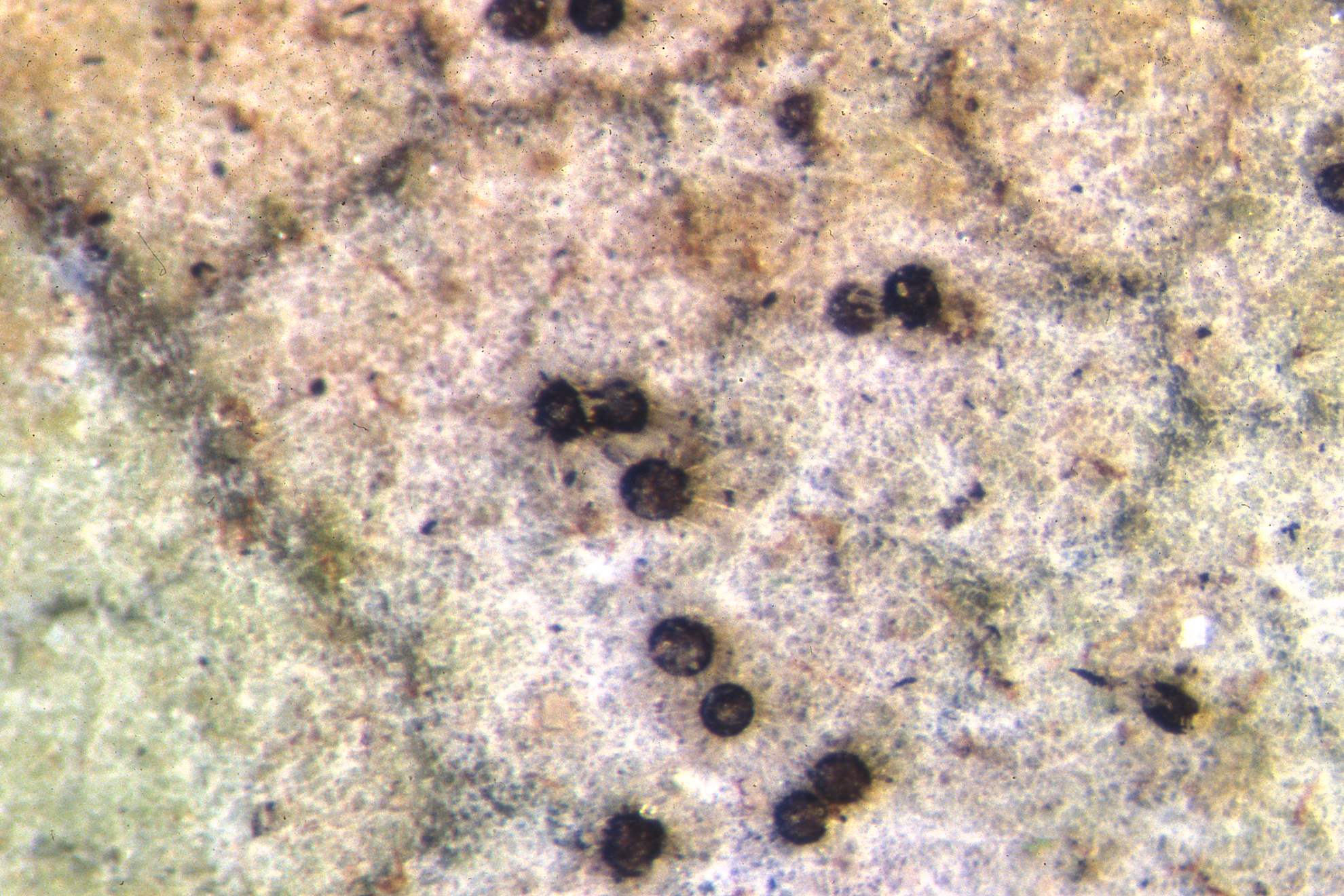
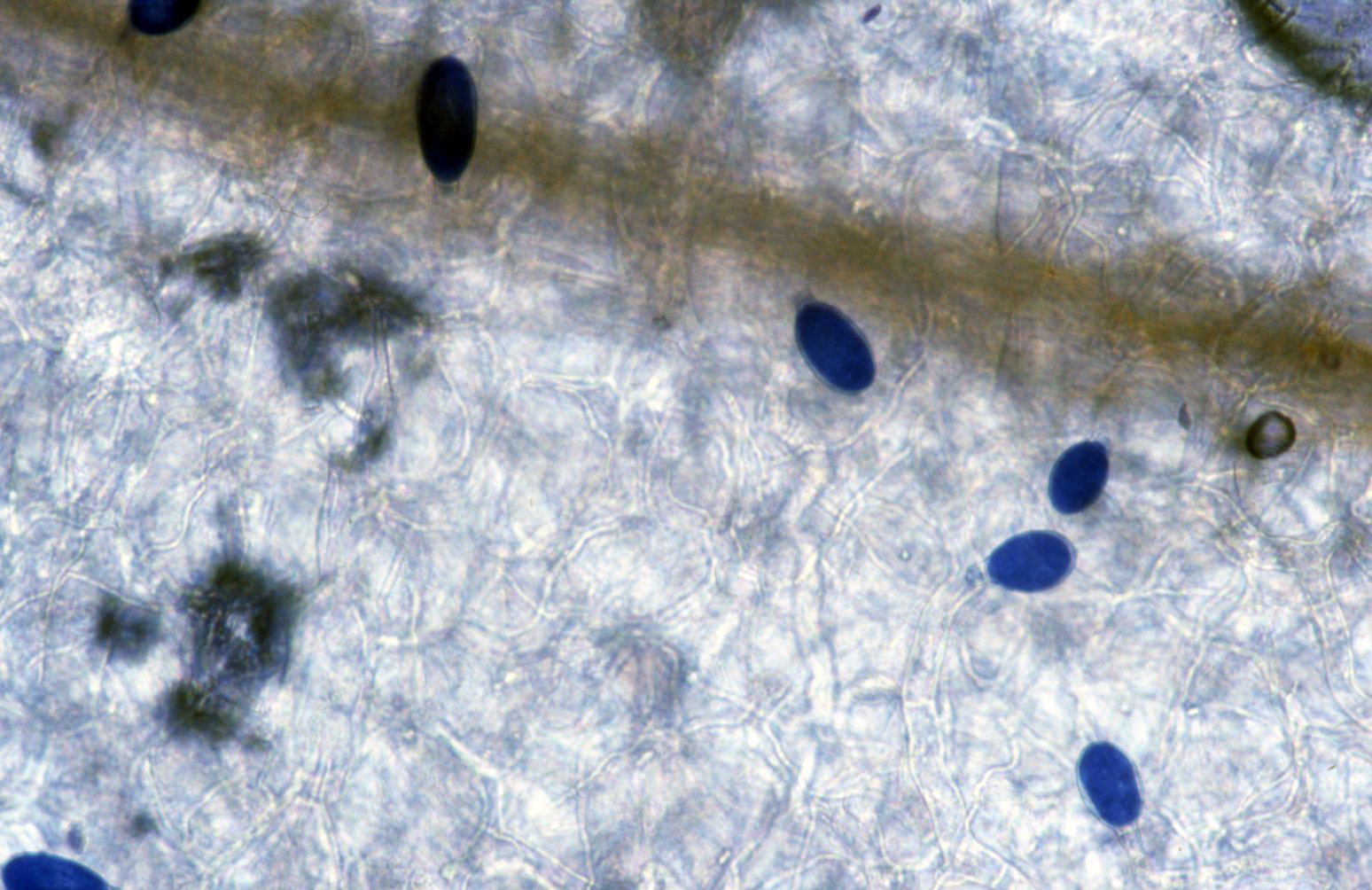
Cleistothecia within a colony of powdery mildew on a leaf surface. Dark color means they are mature and ready for dispersal.
Jay W. Pscheidt, 1994.
Microsphaera vaccinii cleistothecia showing the fewer but longer appendages typical of this species.
Note: Azalea cultivars Formosa, Fakir, Corrine Murrah, Merlin, and Hampton Beauty had the lowest root rot ratings but were not different statistically from 28 other cultivars. R. poukanense is a resistant species.
Rotted roots and branch dieback from Phytophthora.
Early necrotic symptoms are seen on the flower petals.
Photo by Bob Linderman.
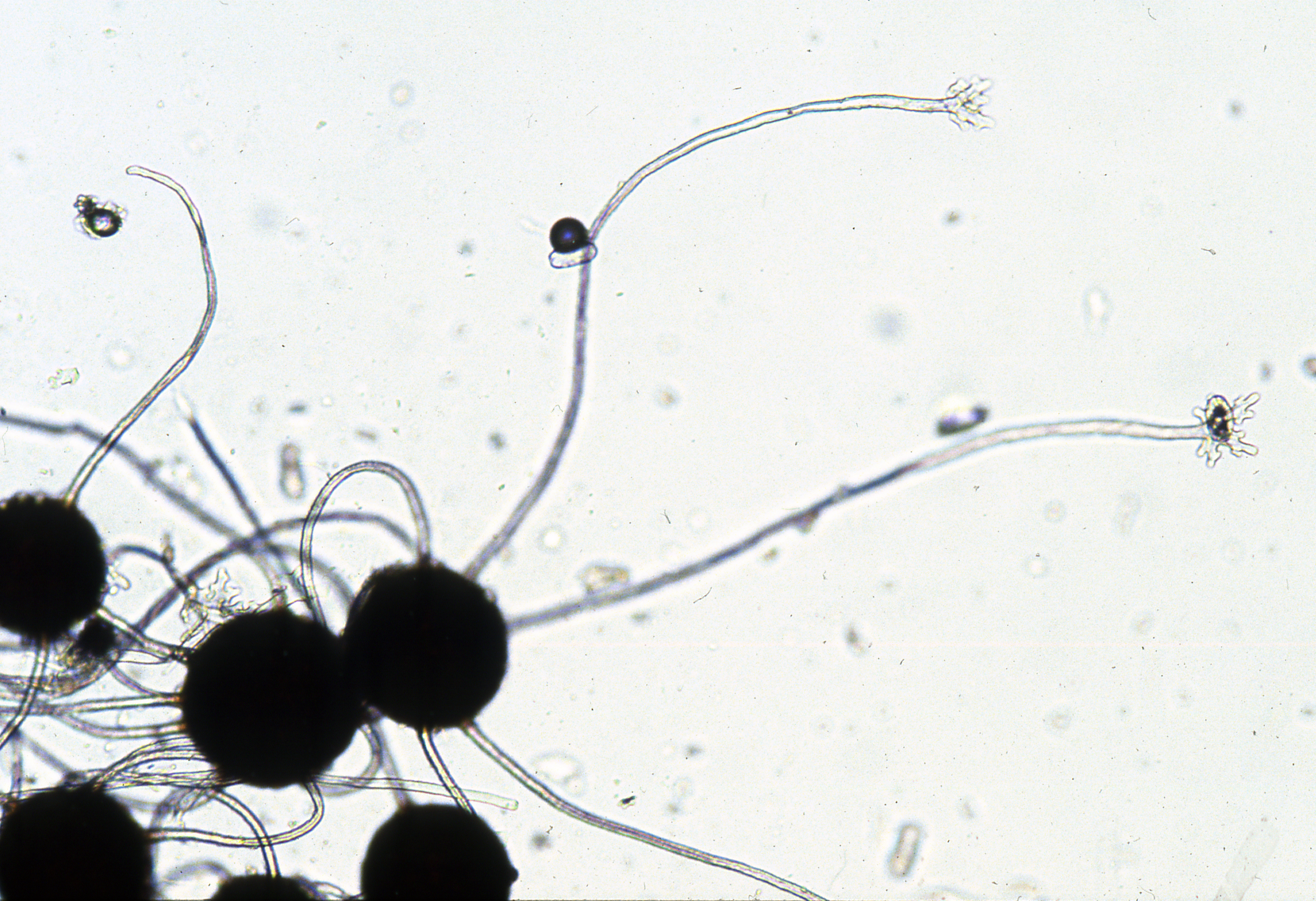
Sporangia of Ovulinia from azalea petal tissue.
Melodie Putnam collection.
Cause Tylenchorhynchus claytoni. The nematode has been found in Oregon azalea and rhododendron plantings, primarily in nursery stock. Rhododendron indicum 'Formosa' was found to be tolerant of the nematode, but R. obtusum 'Hershey Red' was stunted. The nematode attacks the feeder roots. Stunt nematodes are migratory ectoparasites and found only in soil. Therefore, send only a soil sample for nematode analysis.
Cause Sphaerulina azaleae (formerly Septoria azaleae), a fungus that overwinters on dead azalea leaves or in infected leaves on plants in the greenhouse. It may cause infection by gaining entry through stomata. Wet leaves encourage spore germination and infection.