Plant Disease Management Handbook

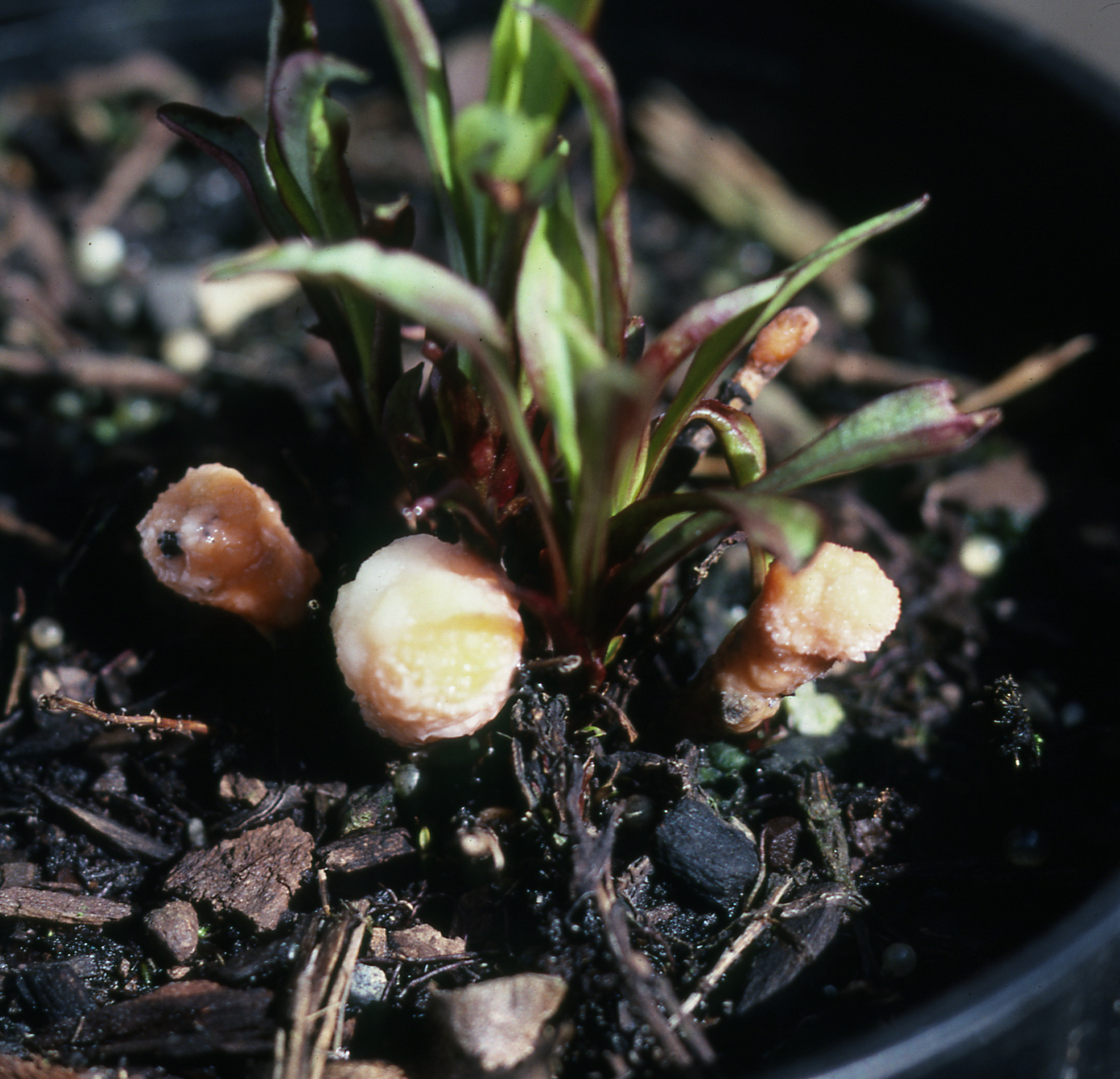
Cause Cylindrocladium scoparium, (sexual Calonectria morganii), a fungus but other species can be involved. The disease has been a problem only in greenhouses. Microsclerotia that form in plant tissues can survive many years in soil or media. New infected cuttings from other facilities can also bring in inoculum. Cuttings may have small inconspicuous leaf spots. High humidity and high temperatures (85°F) favor fungus growth.

Image related to Azalea (Rhododendron spp.)-Cylindrocladium Blight and Root Rot

Cause Candidatus Phytoplasma asteris formerly referred to as a mycoplasma-like organism. This organism has a wide host range. Some of the 170 plant species that may be affected are: anemone, calendula, chrysanthemum, coreopsis, cosmos, delphinium, daisy, marigold, gladiolus, golden-glow, petunia, phlox, and statice. Many vegetables also are affected including carrot, squash, and tomato. The main vector of this organism is the six-spotted leafhopper.

See:

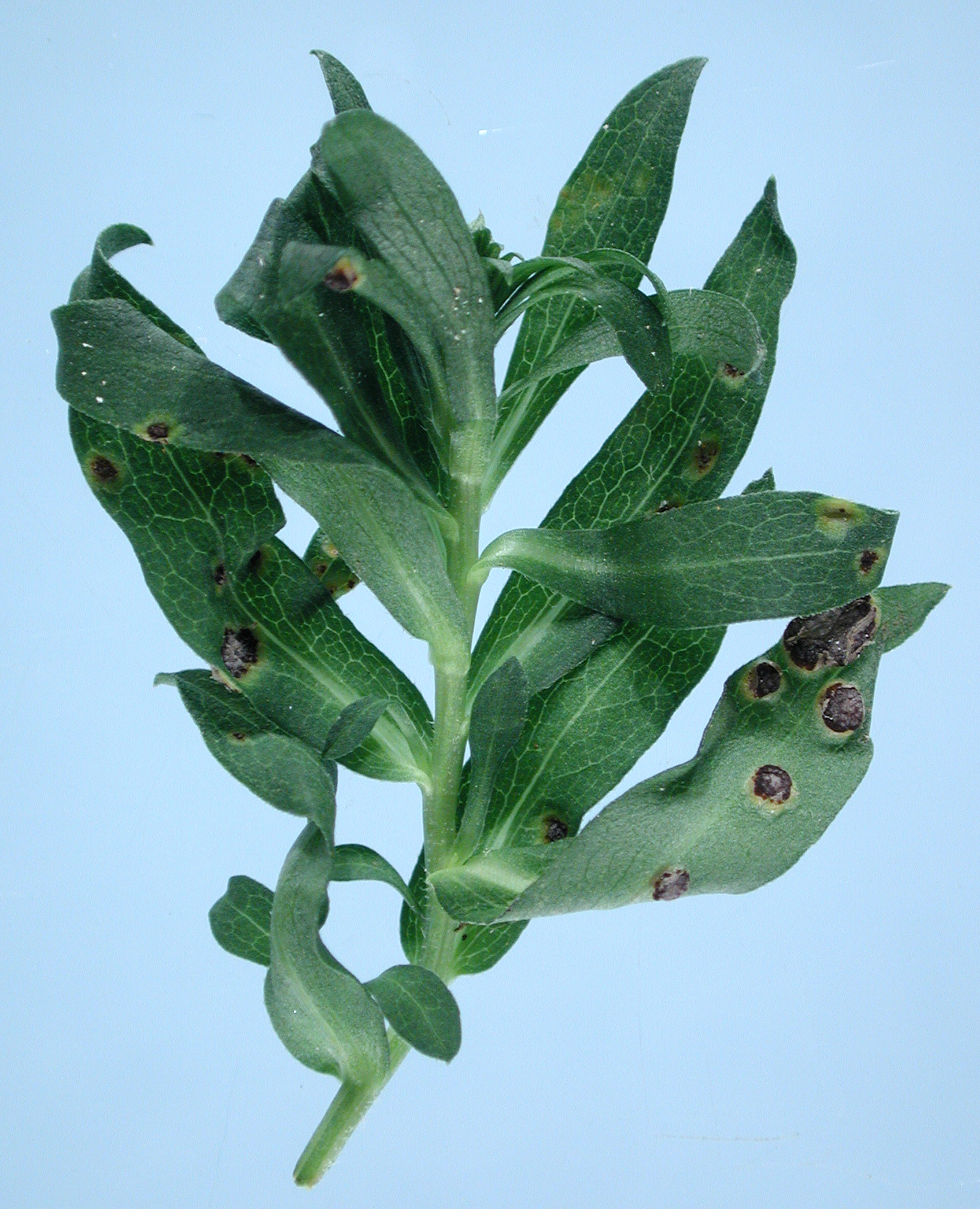
Symptoms Both Tomato spotted wilt and Impatiens necrotic spot can result in necrotic spots and rings on the foliage of aster. Chlorosis of tip growth has also been observed in plants with Impatiens necrotic spot.

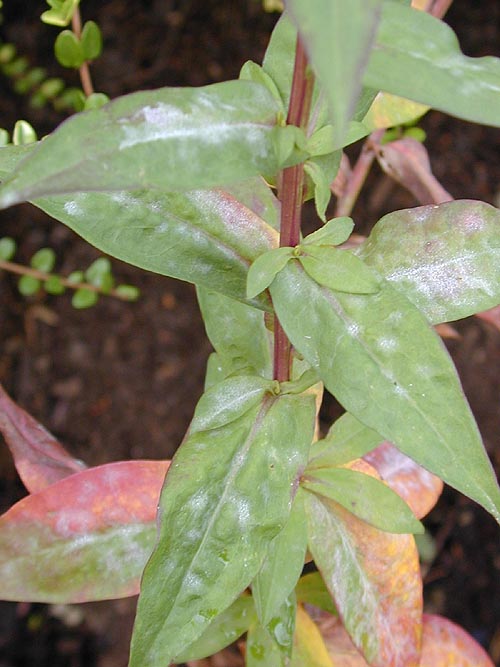
Cause Golovinomyces asterum var. asterum (formerly Erysiphe cichoracearum), a fungus that overwinters in plant debris such as old stems and leaves. This fungus is favored by conditions that produce high humidity but dry leaves. The Podosphaera xanthii complex has also been reported worldwide. These fungi are favored by conditions that produce high humidity but dry leaves.

Image related to Aster-Powdery Mildew
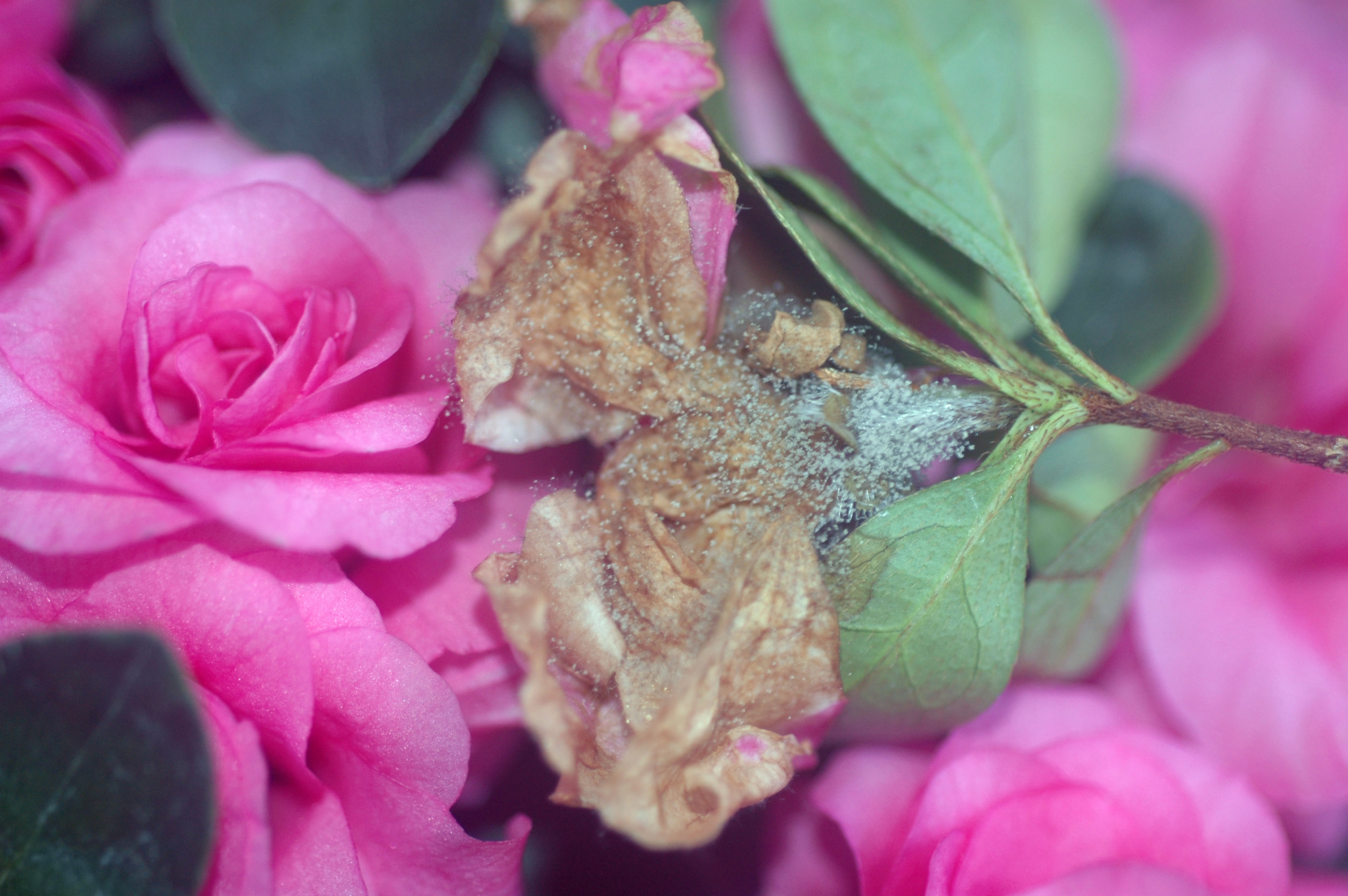
Image related to Aster-Botrytis Blight