Plant Disease Management Handbook

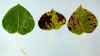
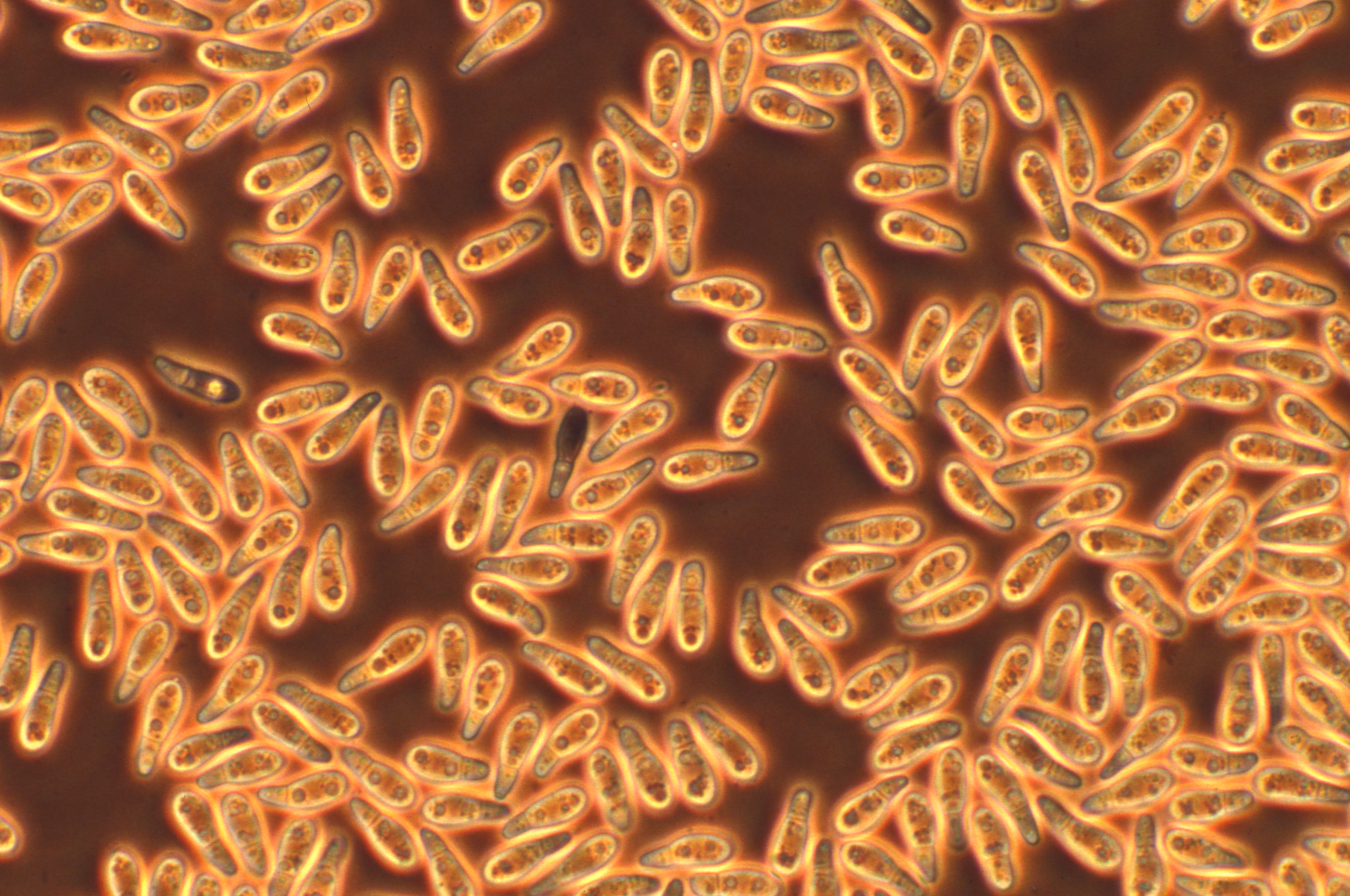
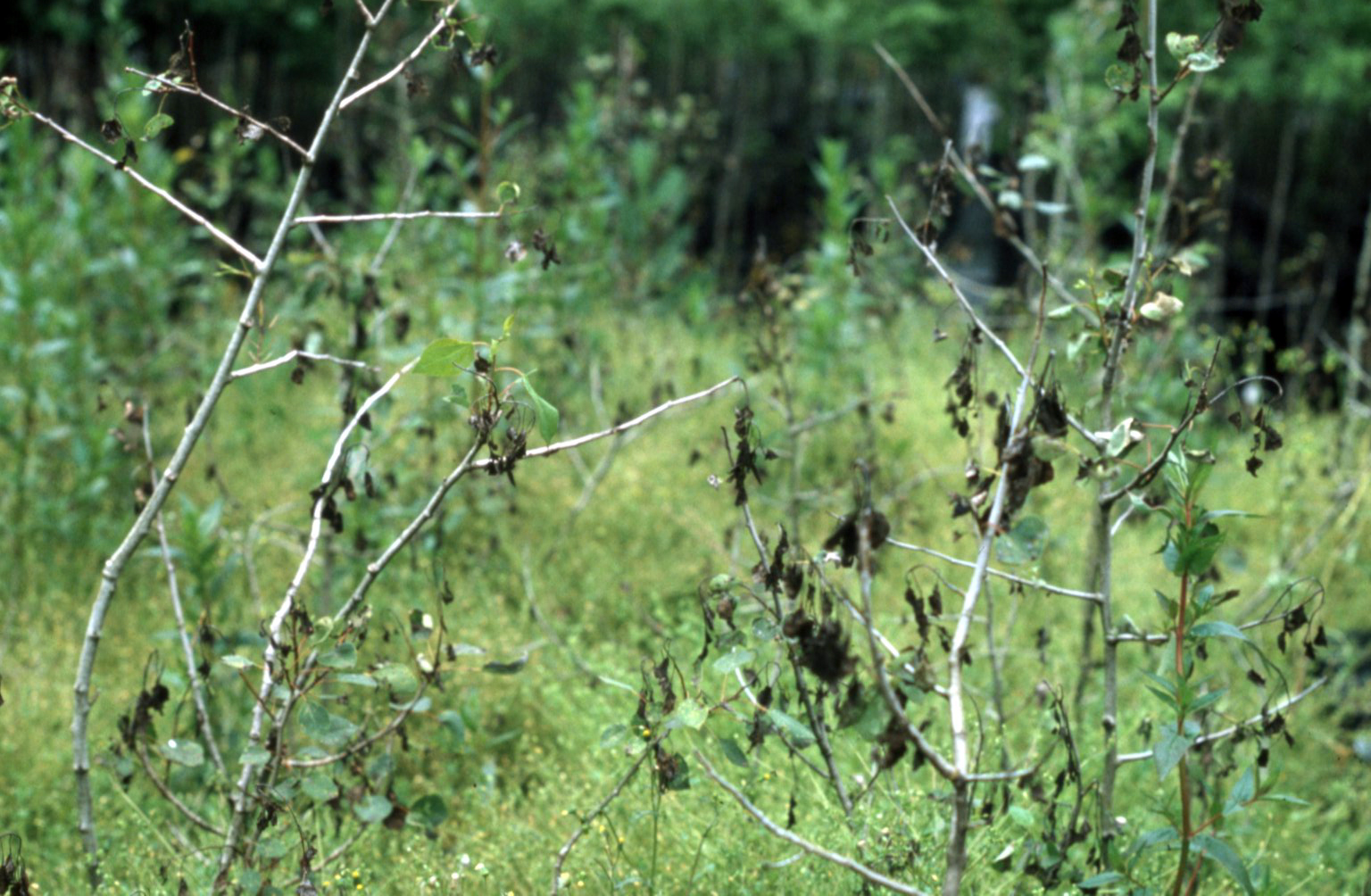
Image related to Aspen (Populus tremuloides)-Marssonina Leaf Spot

See:

Note Melampsora medusae (formerly M. albertensis) affects aspen.

See:

Note Venturia macularis (formerly V. tremulae) is found on aspen (P. tremuloides).

Cause The fungus Ciborinia whetzelii (formerly C. bifrons) incites this fairly common foliage disease. The fungus overwinters as sclerotia after falling from leaves. An apothecium emerges in the spring to shed spores that blow onto healthy foliage. Infection occurs during wet spring weather as new leaves are expanding. Brown foliage develops about a month later. Incidence is greatest in dense stands in the lower canopy of tall trees.

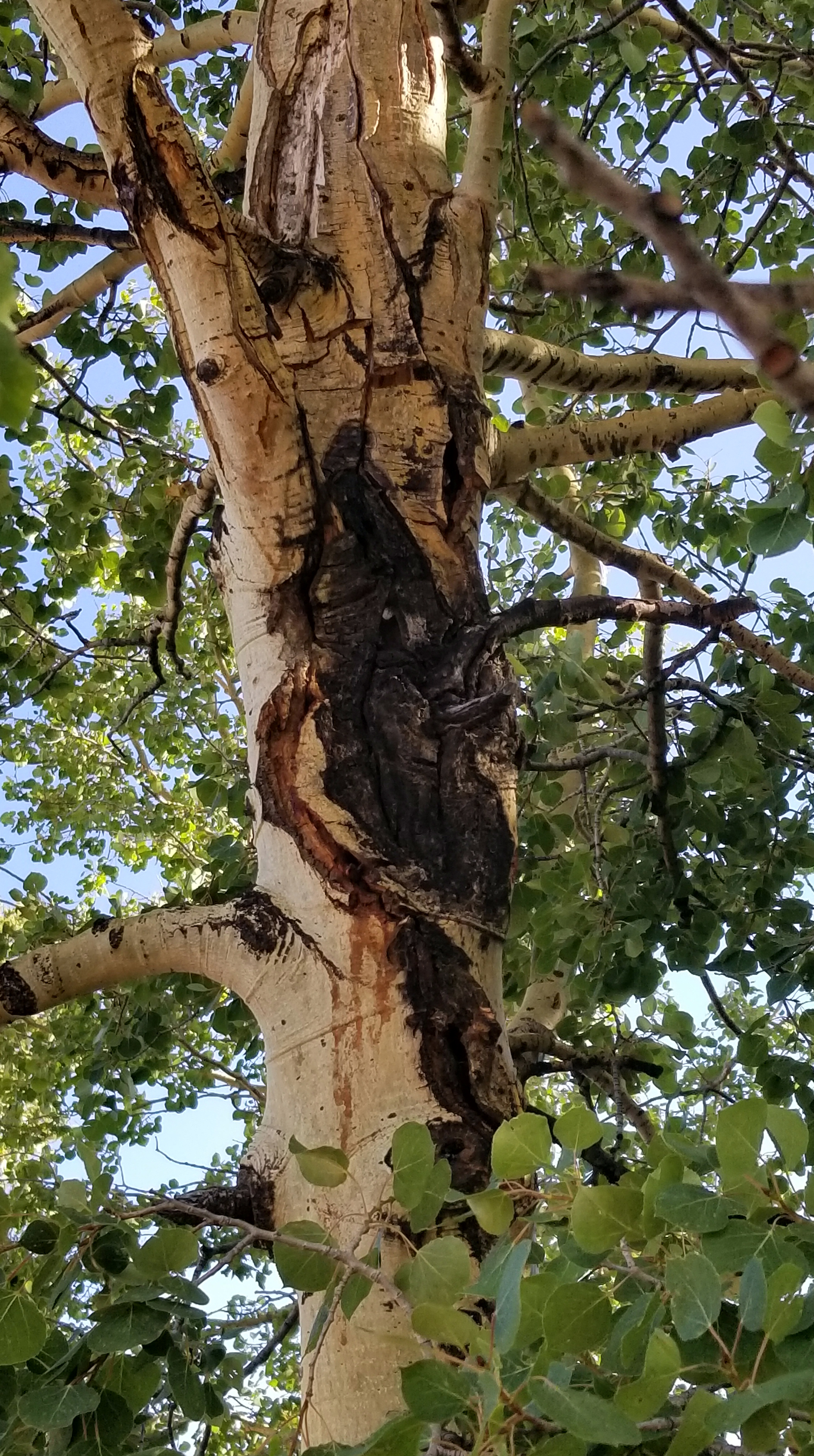
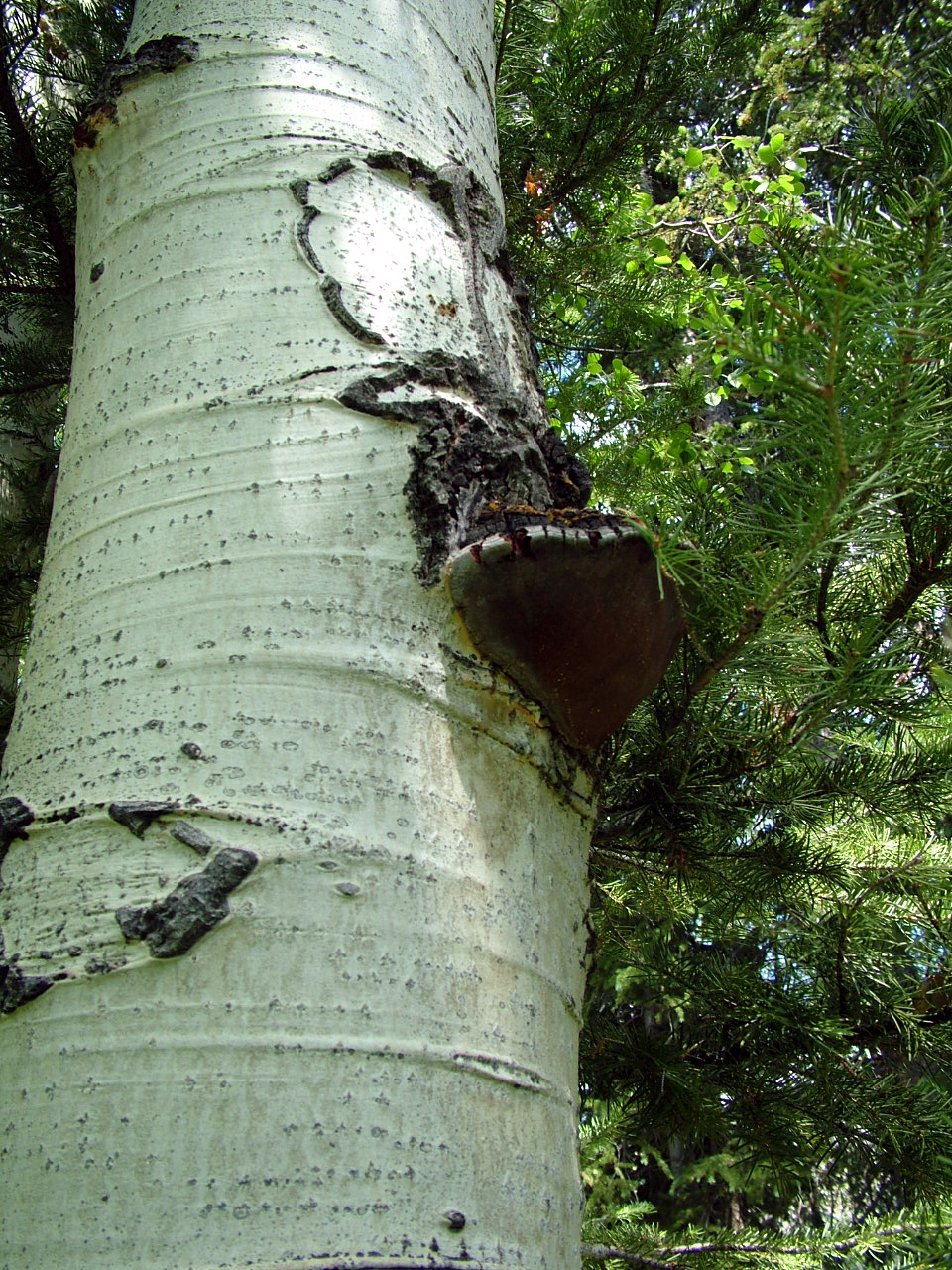
Cause The fungus Phellinus tremulae incites a common heartrot of aspen, which can be found in just about every PNW grove. It is critically important for wildlife tree-cavity formation. Studies in drier forests of the PNW indicate that aspen groves are hotspots for wildlife habitat, with a major "cavity nest web" that develops, started by primary excavating woodpeckers, and then including swallows, nuthatches, bats, and other mammals, etc.

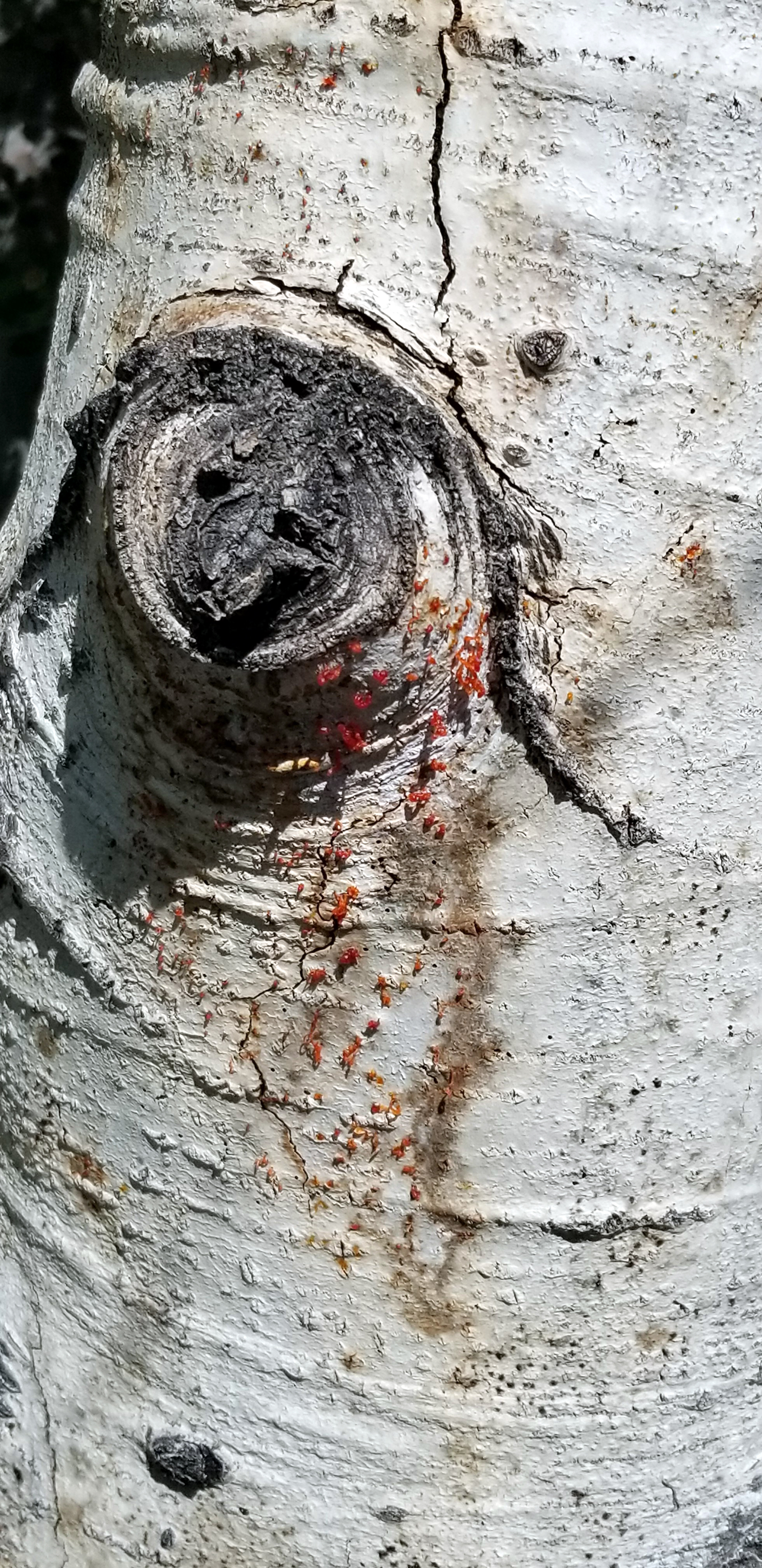
Image related to Aspen (Populus tremuloides)-Aspen Trunk Rot

See:

Note In western North America, Armillaria species are common on dead aspen, but less commonly associated with disease of living trees than in eastern North America.