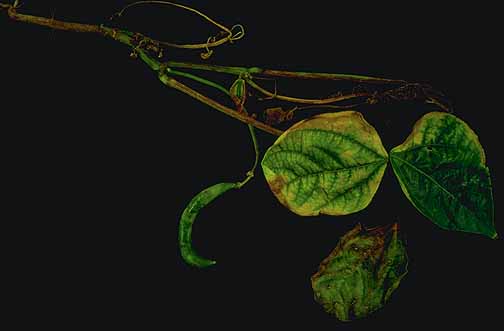
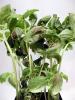
Cause Bean yellow mosaicvirus (BYMV) is transmitted by aphid but not by seed. The disease is fairly widespread. The virus persists in crop and wild host plants including sweet clover, crimson clover, red clover, and gladioli.
Necrotic strain of BYMV.
Photo by Kathy Merrifield.
See:
Bean, Dry Varietal Resistance to Bean Common Mosaic
Cause Bean common mosaic virus (BCMV) is transmitted by both seed and aphids. The virus occurs wherever beans are grown and many strains of the virus exist. Some varieties are resistant to several strains of BCMV but no commercially available variety is resistant to all strains.
Melodie Putnam 2007, Oregon State University
Cause The fungus, Fusarium oxysporum f. sp. basilica, causes a wilt of basil in many regions of the world, including the Willamette Valley of Oregon. This soilborne fungus can persist for years in soil or plant debris. The disease is spread by air or soil and can be seedborne.
Plant in the forefront has wilting symptoms on the left side of the plant. Plant to it's left is dead from wilt diesase.
Photo by Cynthia M. Ocamb, 2005
Wilted portions of basil plant from home garden.
Photo by Cynthia M. Ocamb, 2005
Cause An oomycete, Peronosporabelbahrii, that can be spread through contaminated seed and produces airborne spores, which can disperse and spread disease. The first United States report (October 2007) was from the Southeastern United States. Basil downy mildew was found in many states, including California, during 2009 and by 2011, it was discovered in Oregon. By 2014, it was reported in 35 US states.
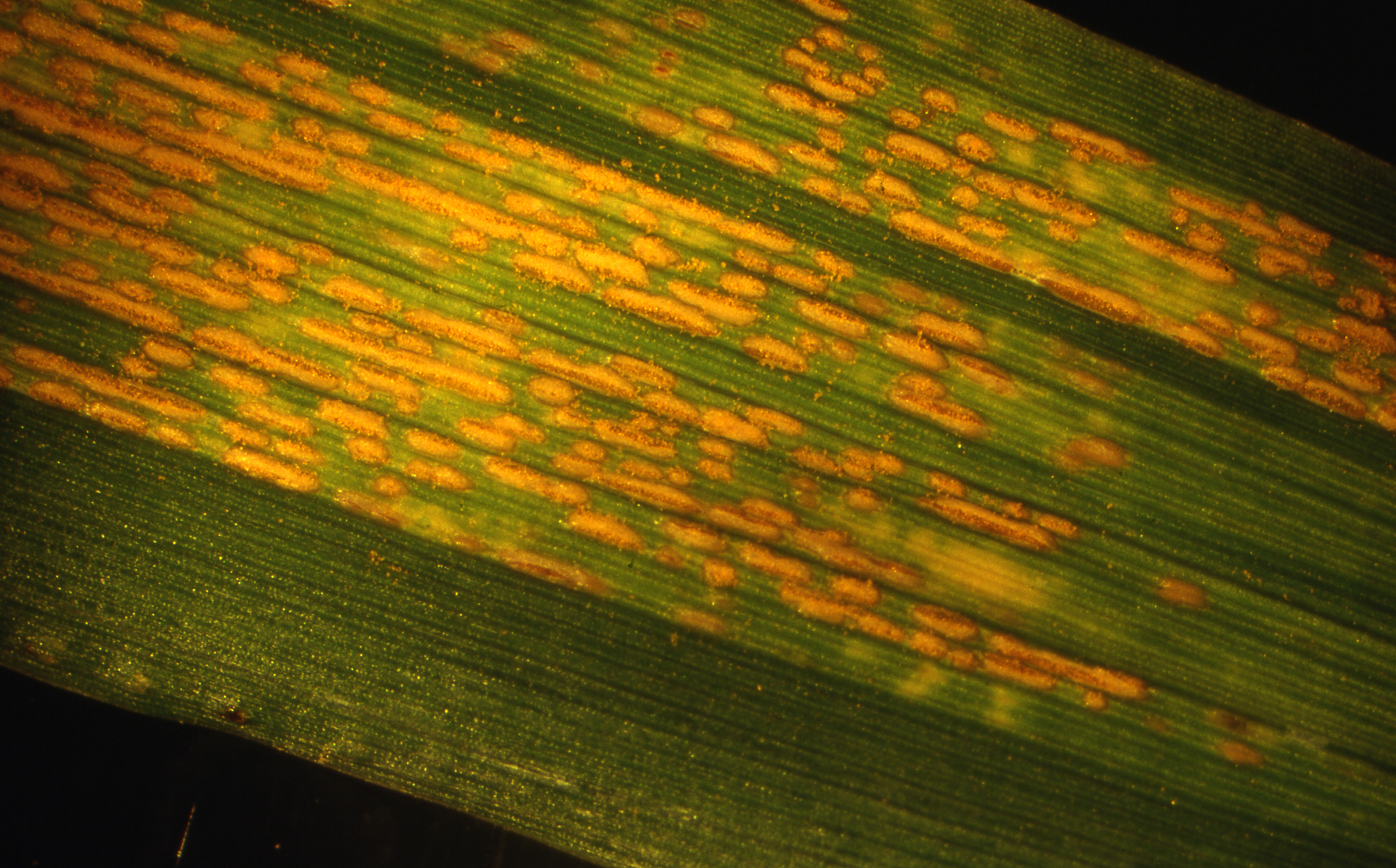
Linear, orange-yellow pustules appear on leaves then coalesce to form long stripes between leaf veins.
Phil Hamm, 1996.
Cause A fungus, Puccinia graminis, that overwinters on stubble, straw, certain wild grasses, wheat, rye, triticale, and volunteer barley. Alternate hosts are species of barberry. The disease is not usually a problem in Oregon or Idaho.
Cause The fungal pathogen, Bipolaris sorokiniana (syn. Cochliobolus sativus), may be carried on seed or overwinter on infected plant residues or as spores in soil.
Note the roundish, dark-brown spots, forming blotches over large areas of the leaf.