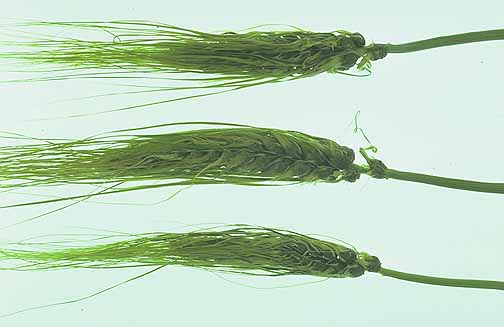
Cause The fungus, Ustilagohordei. Spores can overwinter on barley seeds or in soil. Infection is favored by high soil moisture over a wide range of temperatures.
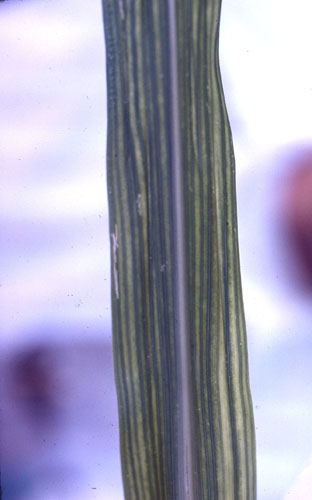
Cause Barley stripe mosaic virus is transmitted by pollen, seed, and leaf contact. Wheat and oats also are affected. Tests are being conducted on varietal resistance. The disease has been found in the Klamath area of Oregon.
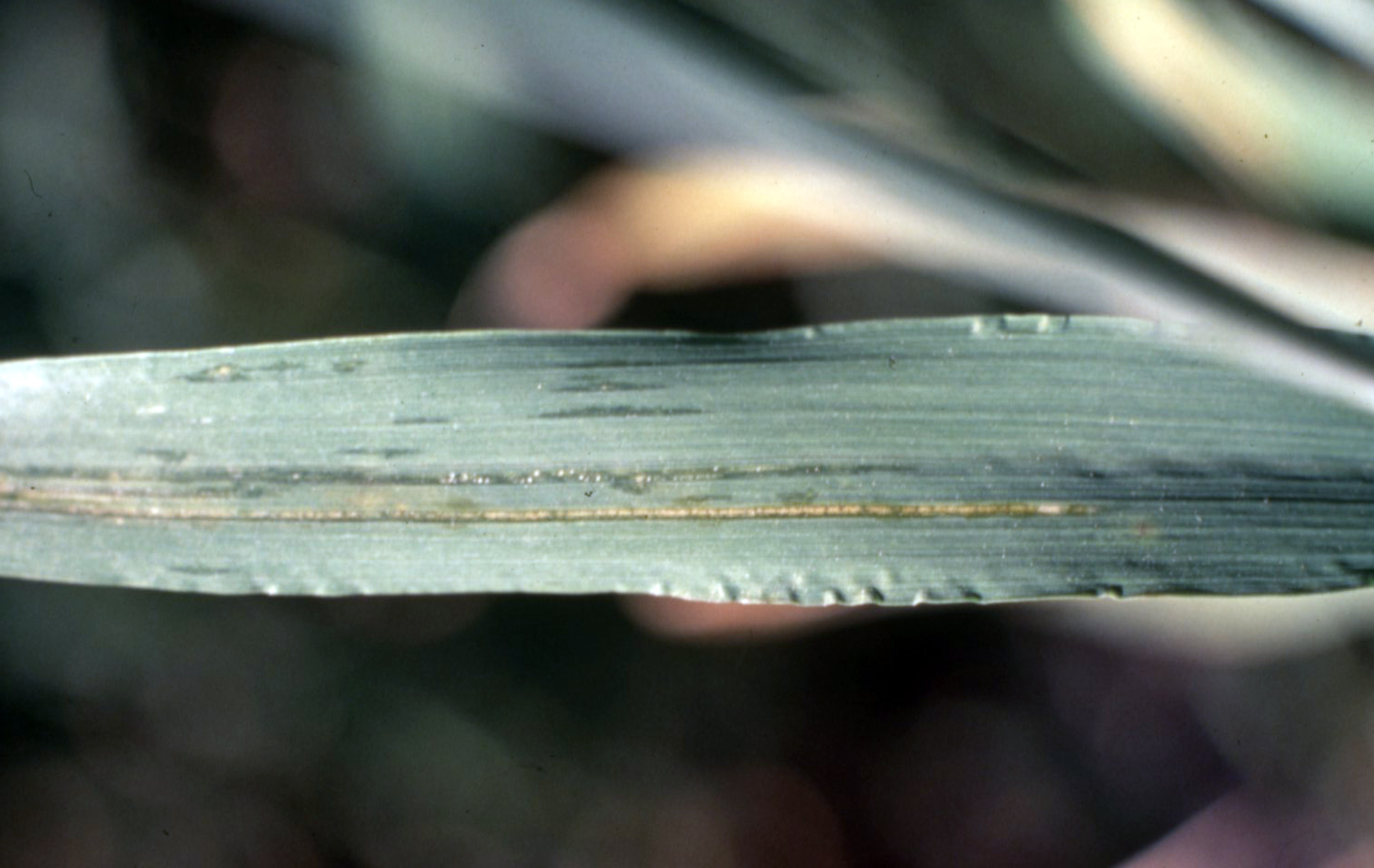
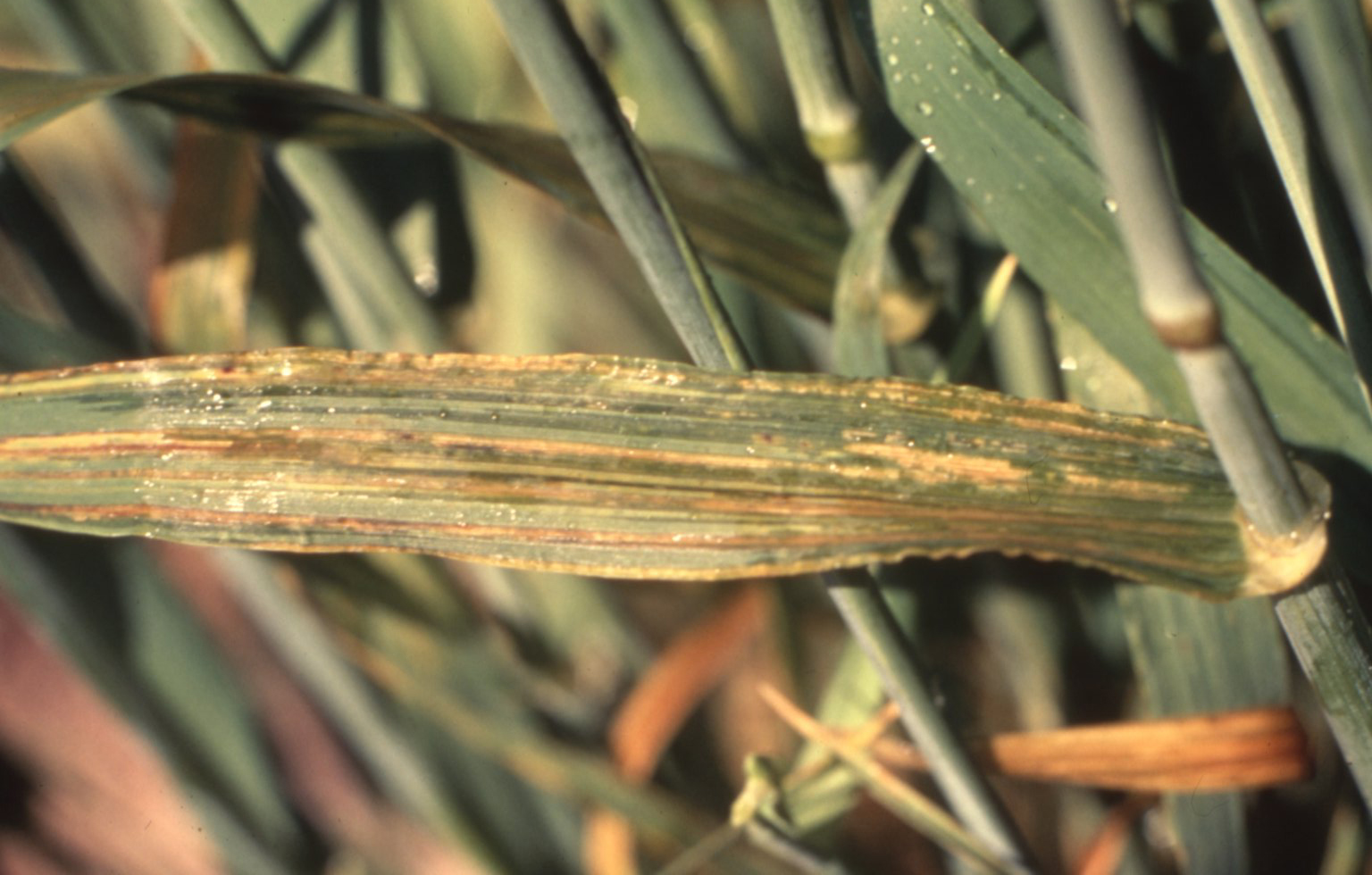
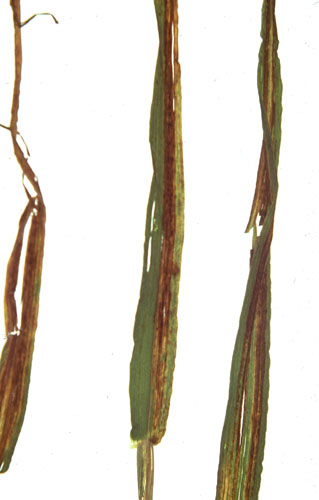
Cause The fungus, Pyrenophora graminea (asexual stage: Drechslera graminea), survives exclusively on or in seed but is not in all seed lots. Infected seeds can appear healthy. Soil temperature and moisture level during germination and emergence are important in determining whether infected seeds result in seedling infection. Infection is enhanced by intermediate moisture levels and temperatures below 60°F.
Orange-colored aecia of the wheat stem rust fungus, Puccinia graminis on leaves of common barberry, Berberis vulgaris.
Tim Murray.
Bottom side of common barberry leaves with close-up view of aecial cups of the stem rust fungus, Puccinia graminis.
Tim Murray.
Cause Pseudomonas syringae pv. berberidis, a bacterium. The disease is favored by cool, wet weather in spring. Although the bacteria survive on the outside of the plant they must get inside and multiply in the space between plant cells (apoplast) to cause disease. These pathogenic bacteria inject several proteins and small-molecule toxins to get past host immune mechanisms.
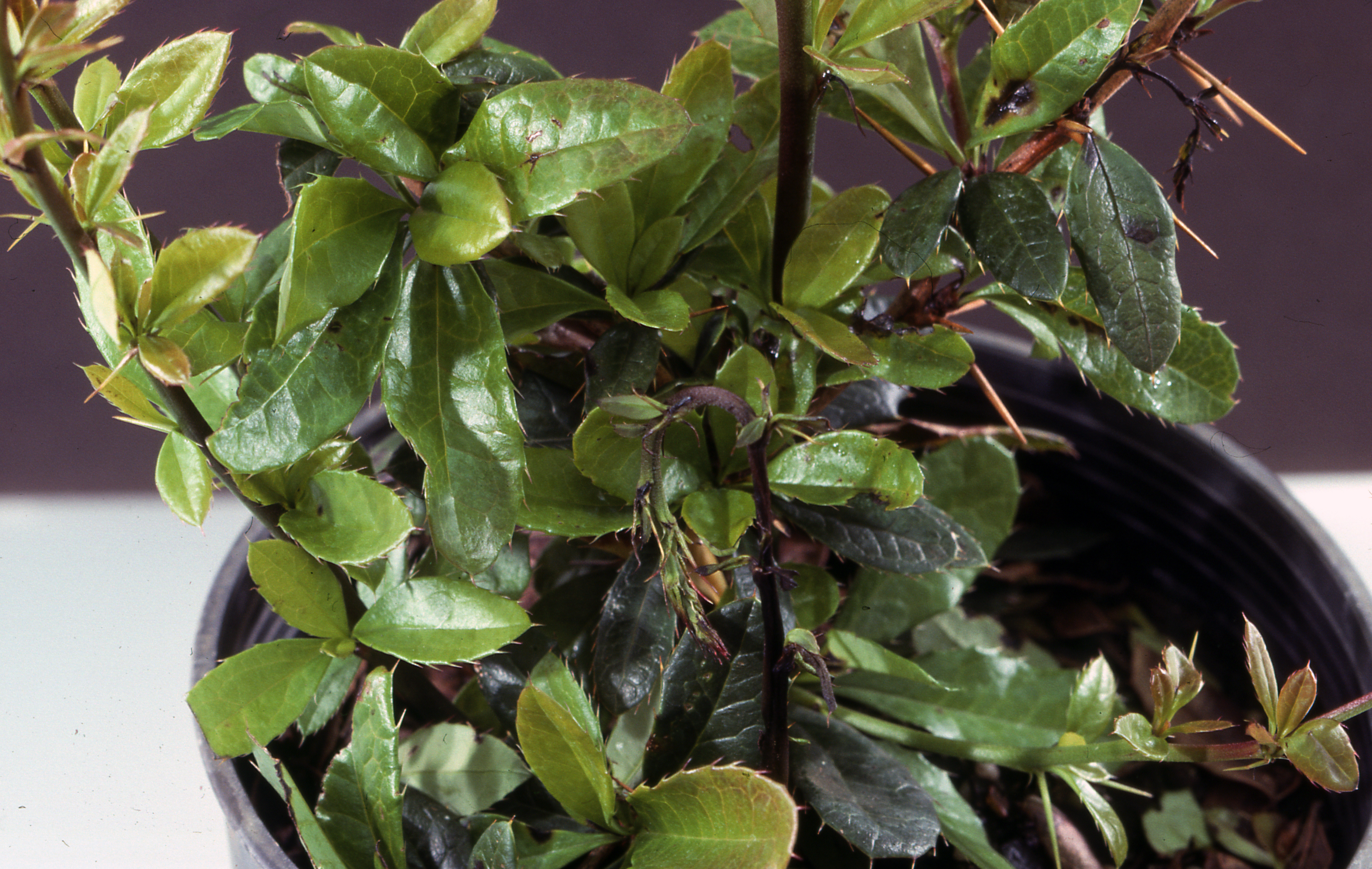
A few leaf spots but also a wilted shoot (dieback) near the center of the picture.
Photo by Stacey Fischer, 1990.
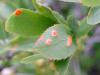
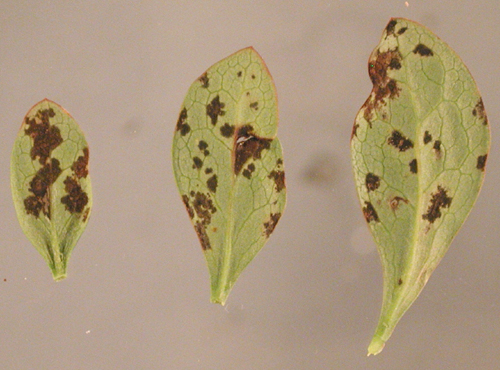
Leaf spots may be irregular in shape.
Melodie Putnam, 2008.
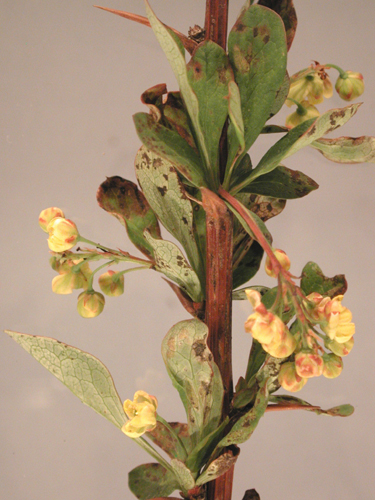
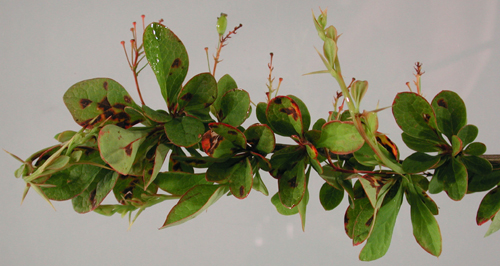
Several leaf spots can be seen if you look closely.