Cause A fungus, Rhynchosporium secalis, which overwinters in infected residues, weeds, grasses, volunteer barley, and seed. This fungus produces spores on residues, which are spread by splashing water.
Note the oval to elongate spots with light centers and dark-brown to black edges.
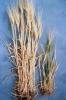
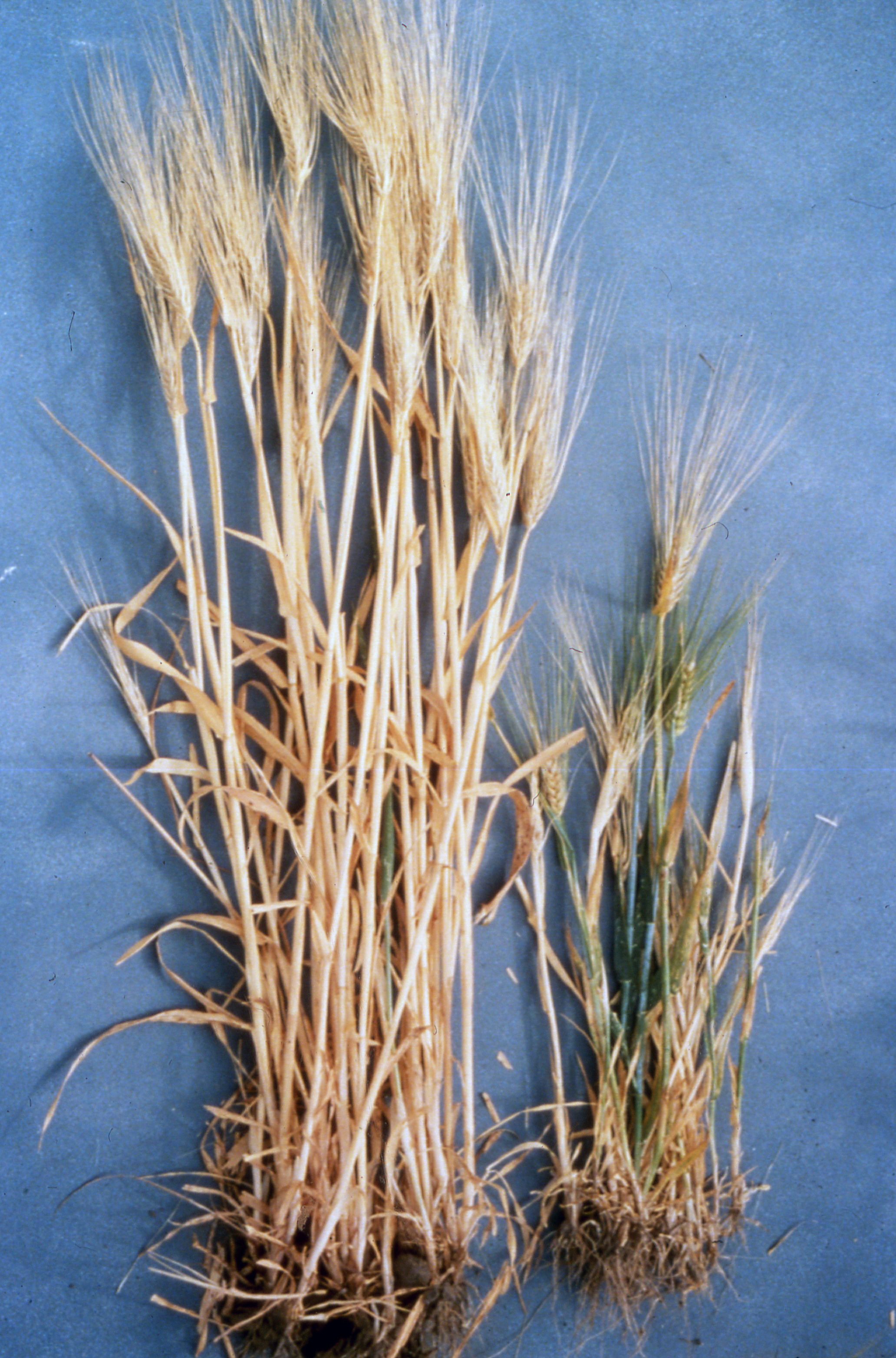
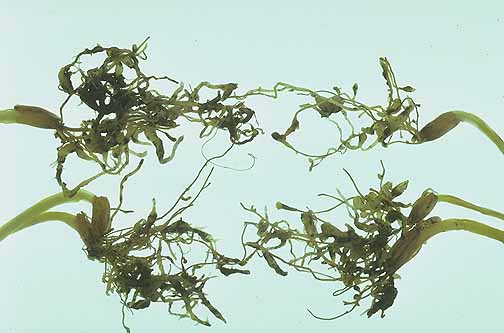
Cause Two fungi, Rhizoctonia solani and R. oryzae, that survive in soil and crop residues. Various factors favor this disease including heavy straw residues on or near the soil surface during fallow years; no-till cropping systems; and annual cropping of small grains.
Stunted plants on the right with Rhizoctonia.
Richard W. Smiley
Cause A fungus, Blumeria graminis (= Erysiphe graminis f. sp. hordei), that overwinters on stubble and straw or volunteer barley and certain wild grasses. Heavy, succulent growth favors mildew development. Not usually a problem in Oregon or Idaho. Dense stands, over-application of nitrogen, high humidity, and low temperatures favor disease development.
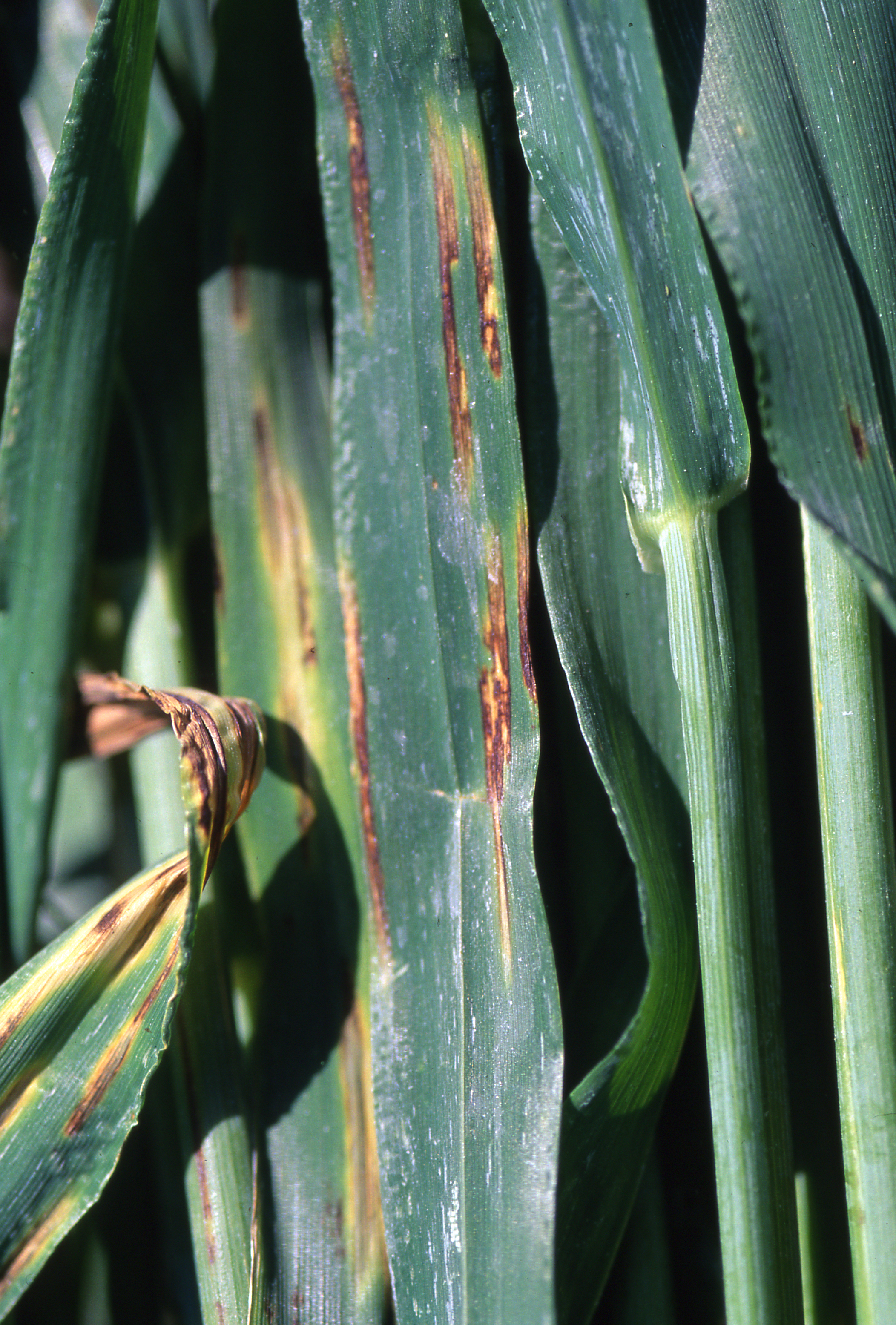
Cause The fungus, Pyrenophora teres (asexual stage: Drechslera teres), causes net blotch. The pathogen soverwinters on barley residues and can also be transmitted by seed. Infection is favored by long periods of high humidity or moisture.
Note the narrow, dark brown stripes extending across and down the leaf.
Photo by Paul Koepsell, 1987.
Lesions enlarge into narrow, dark brown stripes extending down the leaf.
Cause A fungus, Puccinia hordei (= P. anomala). Until recently, most varieties grown in the United States had resistance to leaf rust. Disease is promoted by moderate (59°F to 71°F) temperature and wet conditions.