Plant Disease Management Handbook

Cause Pratylenchus penetrans and P. vulnus. Root-lesion nematodes are migratory endoparasites where part of the population is in soil and part in roots at all times. Root-lesion nematode infection does not usually cause specific symptoms as damage is associated with high nematode numbers in the soil, decreasing root function and root death.

Image related to Cherry (Prunus spp.)-Nematode, Root-lesion
Image related to Cherry (Prunus spp.)-Necrotic Rusty Mottle (Lambert Mottle) and Rusty Mottle

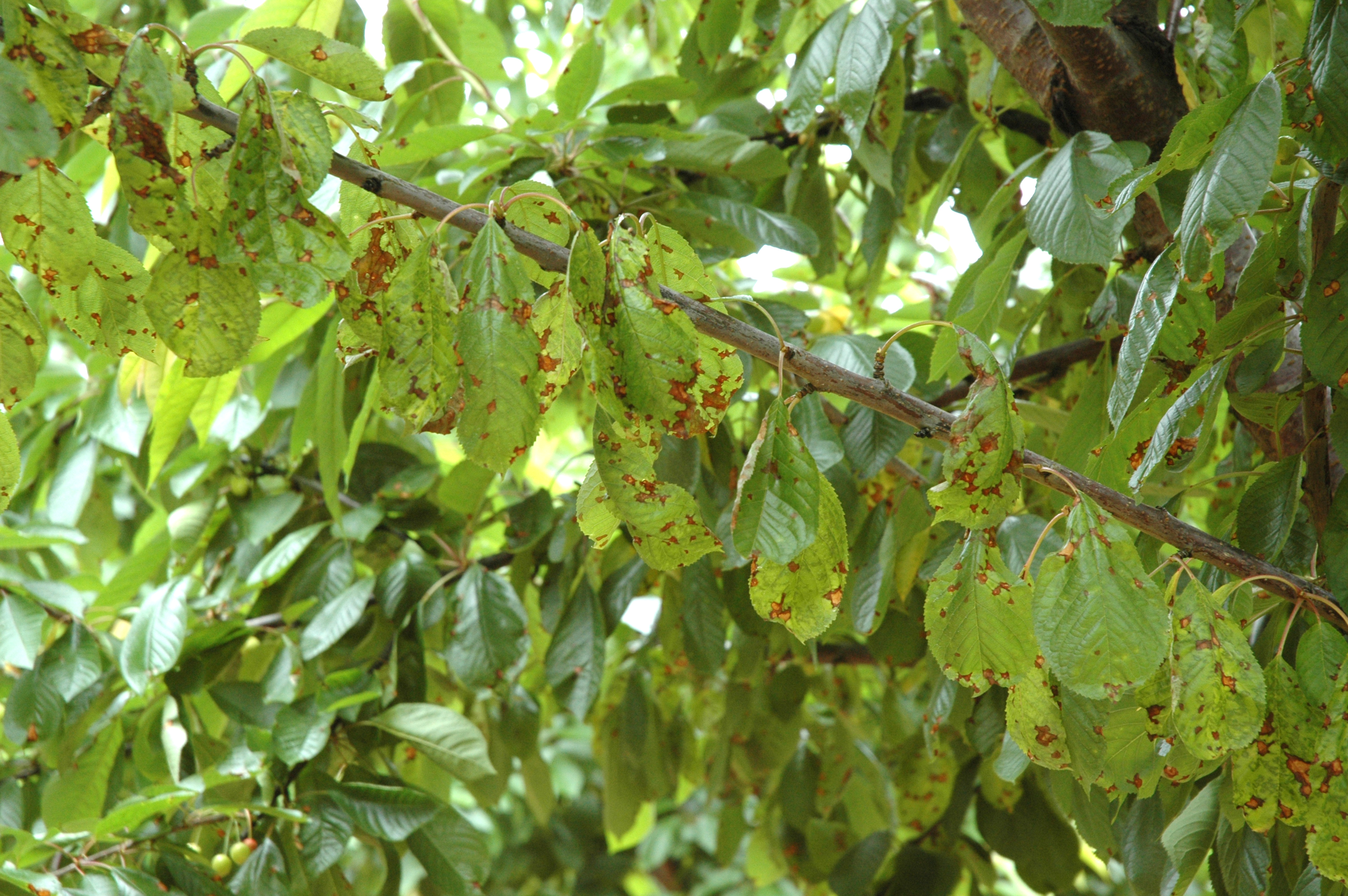
Cause Blumeriella jaapii (formerly Coccomyces hiemalis), a fungus.

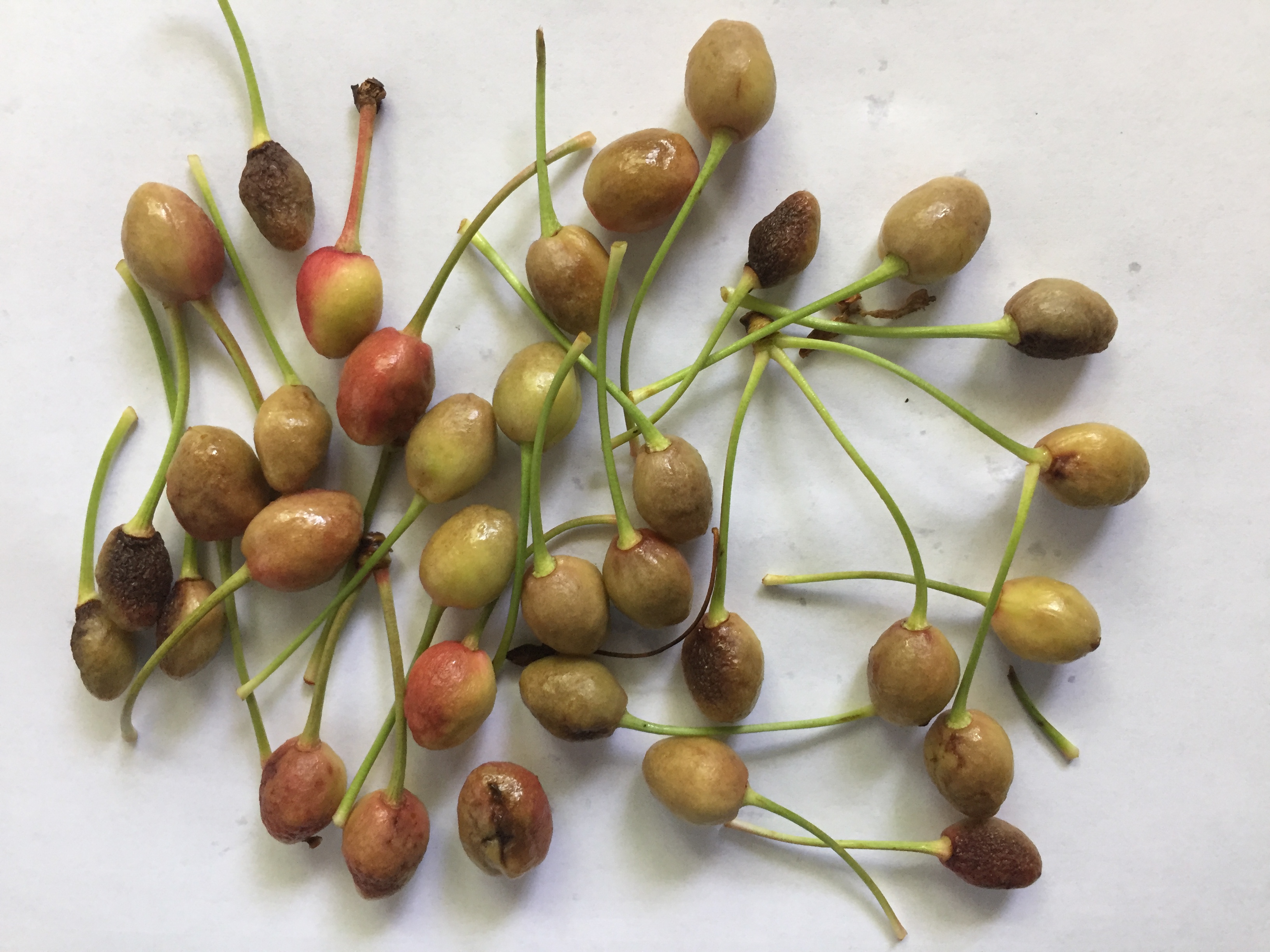
Cause The normal abscission of fruits that occurs before pit hardening. Also called "Cherry Run Off" in Europe. A certain percentage of fruit will drop due to lack of fertilization. Some cultivars, such as Sweetheart, shed more than other cultivars and some years are worse than others. There are 3 stages of drop. The first occurs about 2 to 2.5 weeks after full bloom, the second about a week later, and the third drop of a relatively few fruit about 3 weeks after the second drop.

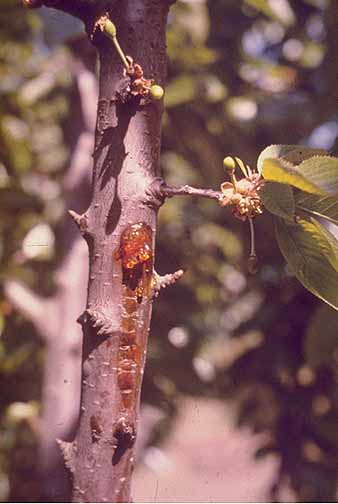
Cause Mechanical injury, winter injury, chemical injury, insect damage, fungal diseases, or improper growing conditions. Gumming often follows brown rot, shothole (peach, apricot), or twig infections. Botryospheria spp and wood decay fungi can also result in gummosis (among other symptoms) and yield reductions of 12% to 22%.

Image related to Cherry (Prunus spp.)-Gumming
Image related to Cherry (Prunus spp.)-Dead Bud