Cause Chrysanthemumstuntviroid. Contaminated cutting knives can spread the viroid. Handling infected plants before touching healthy plants can also spread this disease. The viroid has a large host range and may be symptomless in some plants. Infected plants may not flower correctly in response to controlled photoperiod. Symptoms may become more severe when temperatures reach 80°F to 84°F.
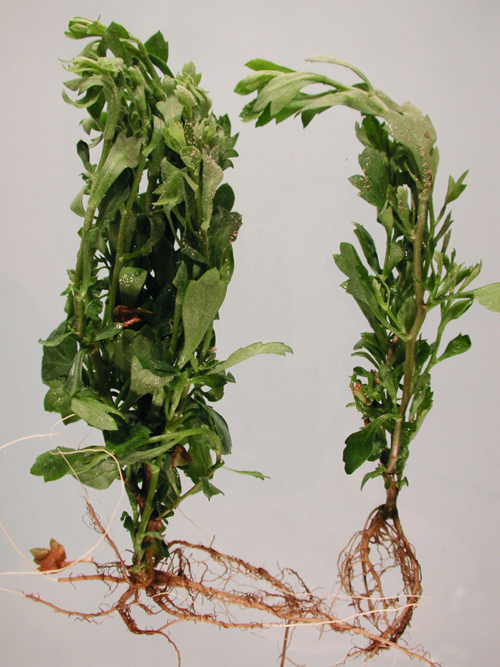
Chrysanthemum 'Jacqueline Yellow' with stunt symptoms. (Visual diagnosis only.)
Cause Golovinomycescichoracearum (formerly Erysiphecichoracearum), and G.chrysanthemi, fungi reported from Washington that produces airborne spores only on living chrysanthemum plants. High humidity, crowding, and cool weather favor the disease.
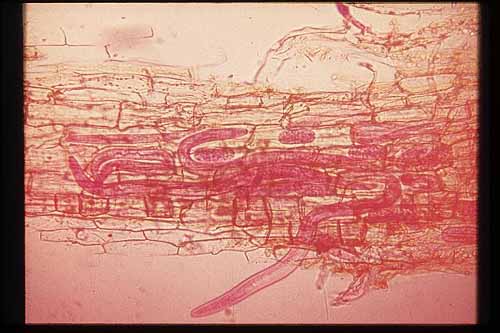
Stained Pratylenchus penetrans in a chrysanthemum root.
Photo by Harold Jenson (c/o Russ Ingham)
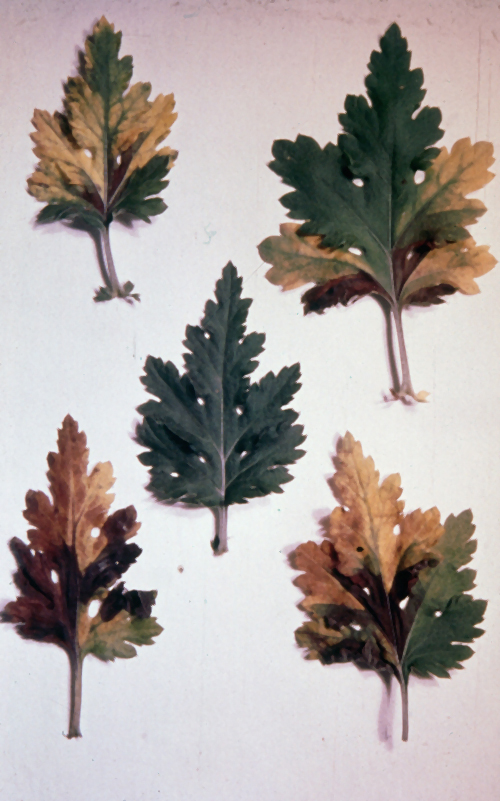
Cause Aphelenchoidesritzemabosi, a foliar nematode generally found in buds and leaves of chrysanthemum although it may be detected in soil as well. Can attack related composites such as aster. Some plants can be symptomless carriers. Plants are not systemically infected. Spread can be rapid even when low-volume spray stakes are used.
Nematodes find it difficult to get across the main veins so lesions look angular.
Collapse of flowers and gray sporulation of the fungus on these garden mums 'Eternal Red'.
Jay W. Pscheidt, 2013.
Spores of the fungus are gray in mass and can extend out from infected tissue giving it a fuzzy, moldy look.
Jay W. Pscheidt, 2013.
Infected flowers can drop onto leaves, which can start leaf infections.
Jay W. Pscheidt, 2013.
Cause Candidatus Phytoplasma asteris, formerly referred to as a mycoplasma-like organism (MLO), which is spread naturally by a leafhopper insect. Leafhoppers may take several days to acquire the phytoplasma while feeding on infected plants. It takes several more days or up to a month before they can spread the pathogen to healthy plants. Once in the plant the organism is restricted to the phloem where it can be picked up by other leafhoppers.