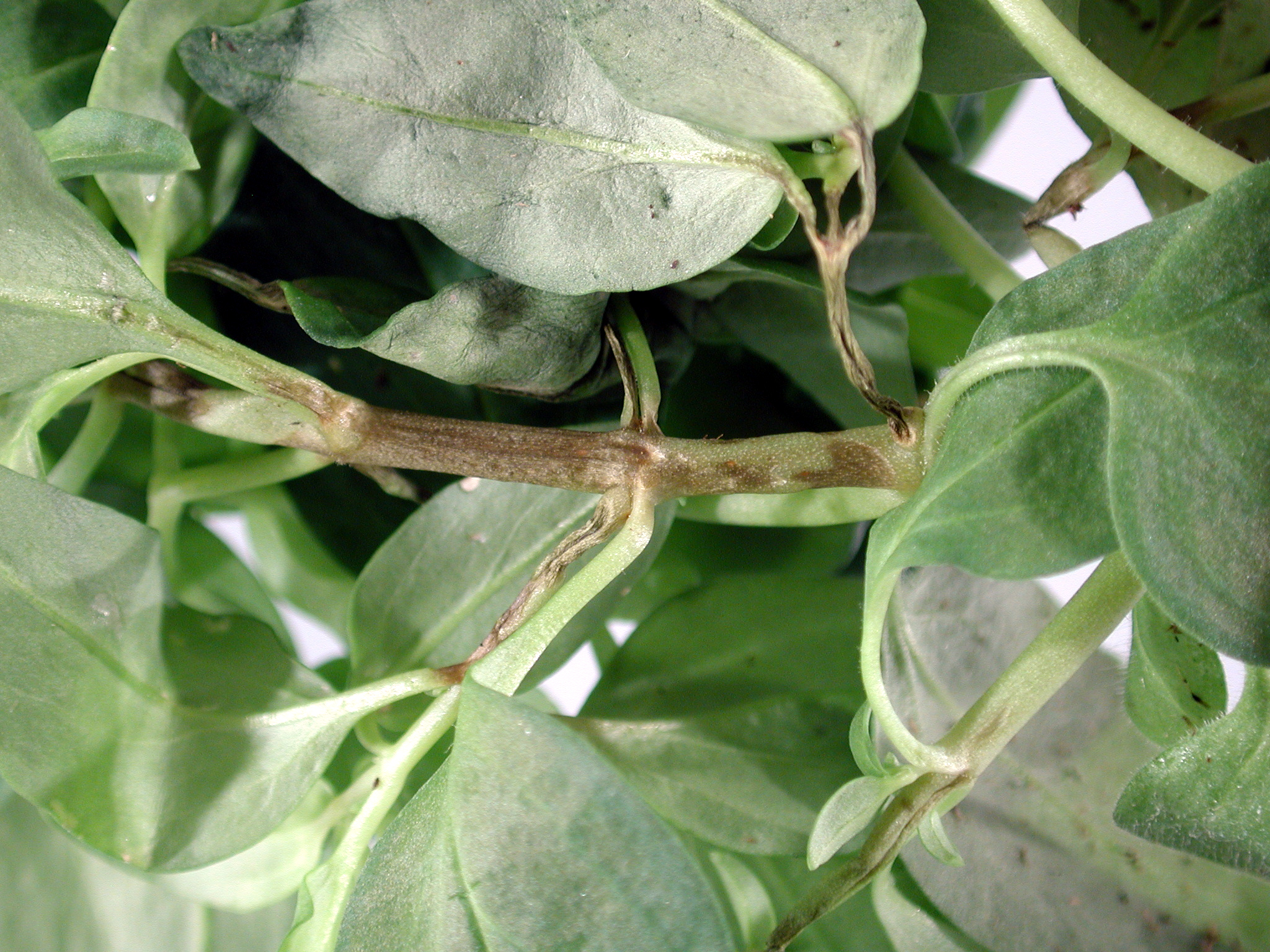
Spent flowers get water soaked spots and eventually develop the gray sporulation of Botrytis.
Jay W. Pscheidt, 2020.
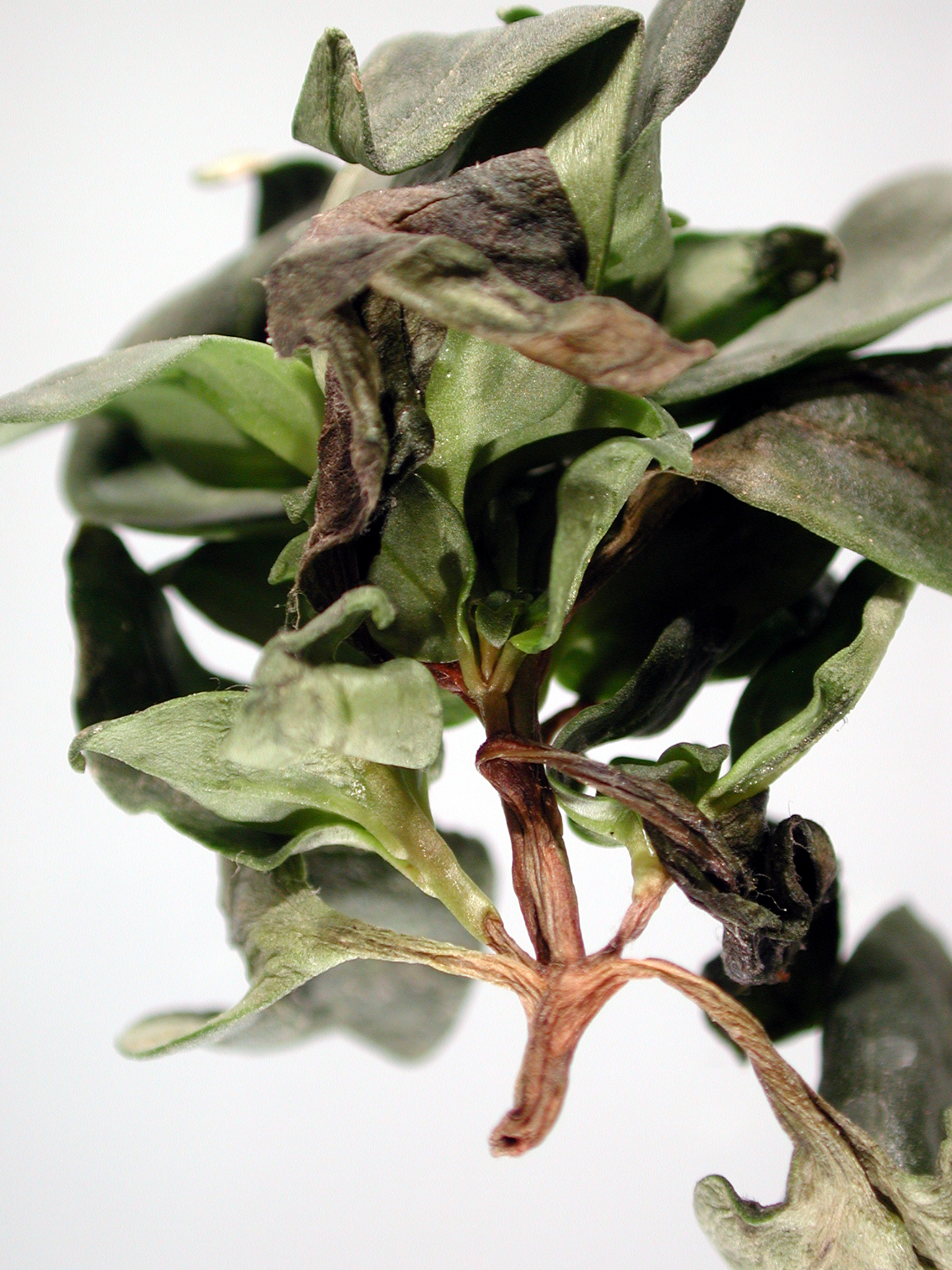
Shoot blight due to Botrytis.
OSU Plant Clinic Collection, 2016.
Stem and leaf blight of 'Montego Yellow' snapdragon due to Botrytis sp.
OSU Plant Clinic Collection, 2011.
Cause Verticillium dahliae, a soilborne fungus that affects many annual and perennial plant species. The fungus produces microsclerotia in the tissues of diseased plants. Microsclerotia are released into the soil as plant tissue decomposes and may persist in soil for many years. The microsclerotia germinate, penetrate roots, and colonize the xylem system. Colonization leads to a decrease in the amount of water able to reach the leaves. Found several times by the OSU Plant Clinic.
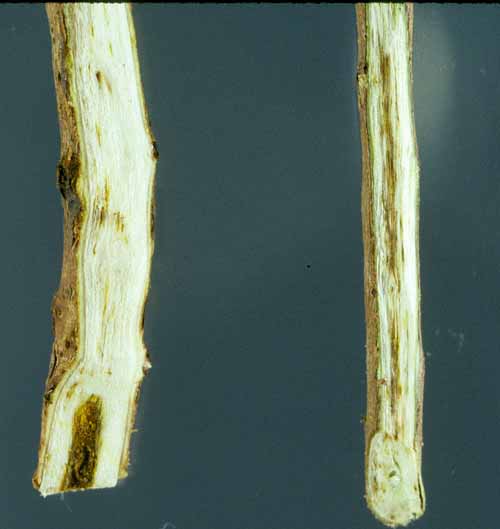
Notice the vascular discoloration where the outer portions of the branch have been removed.
OSU Extension Plant Pathology Slide Collection.
Entire tree may die from Verticillium wilt.
Jerry Weiland
Branches may show wilting and dieback or nothing at all on infected trees.
Jerry Weiland
Not every tree in a row will show symptoms of Verticillium wilt.
Cause The OSU Plant Clinic has found Ascochyta sp. and Pleospora sp. in association with leaf spots of skimmia. Leaves may become wet for extended periods of time in the shade, which is favorable for leaf spotting organisms. These plants are shade loving and may become chlorotic due to poor, dry soil, overexposure to the sun or mites.
Symptoms Size, shape or color have not been recorded or described.
Cause The OSU Plant Clinic has found several soilborne organisms associated with skimmia root problems including Phytophthora sp., Pythium sp., and Fusarium sp. in addition to Armillaria root rot. These pathogens are typically favored by excessive soil moisture and/or poor drainage. Root rots tend to cause plants to wilt rather than become chlorotic.
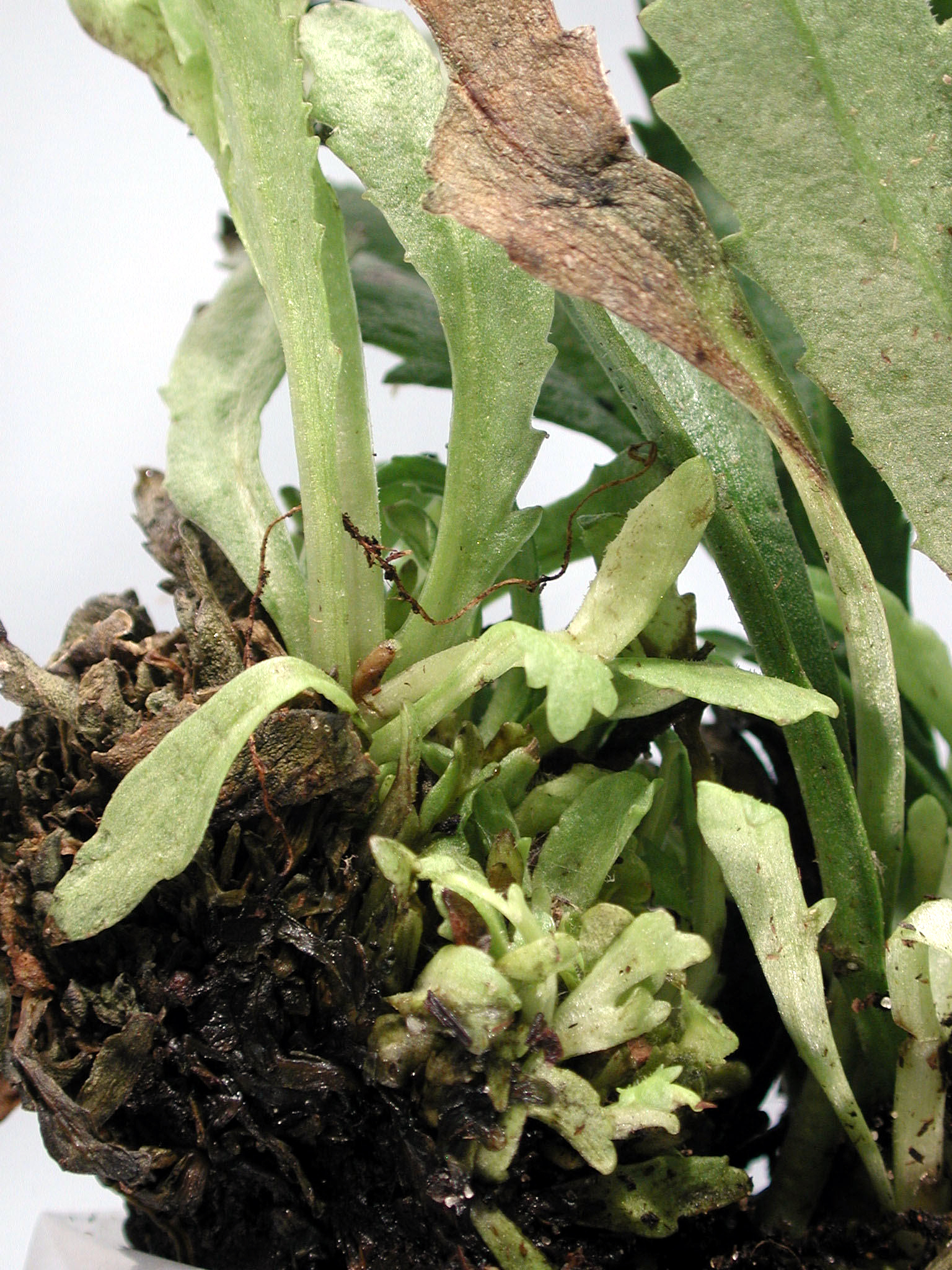
Small plantlets down near the bottom of this plant had Rhodococcus fascians.
OSU Plant Clinic image, 2010.
Cause Septoria leucanthemi, a fungus that overwinters on plant refuse and on living plants. Spores can be spread by splashing water from rain or irrigation. Once on the leaf, spores germinate and enter through stomata. More than 12 hours of wetting is required for spore germination and leaf infection. Optimum temperature for disease expression is 74°F to 79°F. This species has been reported in both Oregon and Washington.
Septoria leaf spot on Shasta Daisy.
Jay W, Pscheidt, 2008.
Necrotic spots and leaf deformation due to Alternaria chyrsanthemi.
Flowers and fruit can be infected early since trees are susceptible starting at bud break.
Jay W. Pscheidt, 2012.
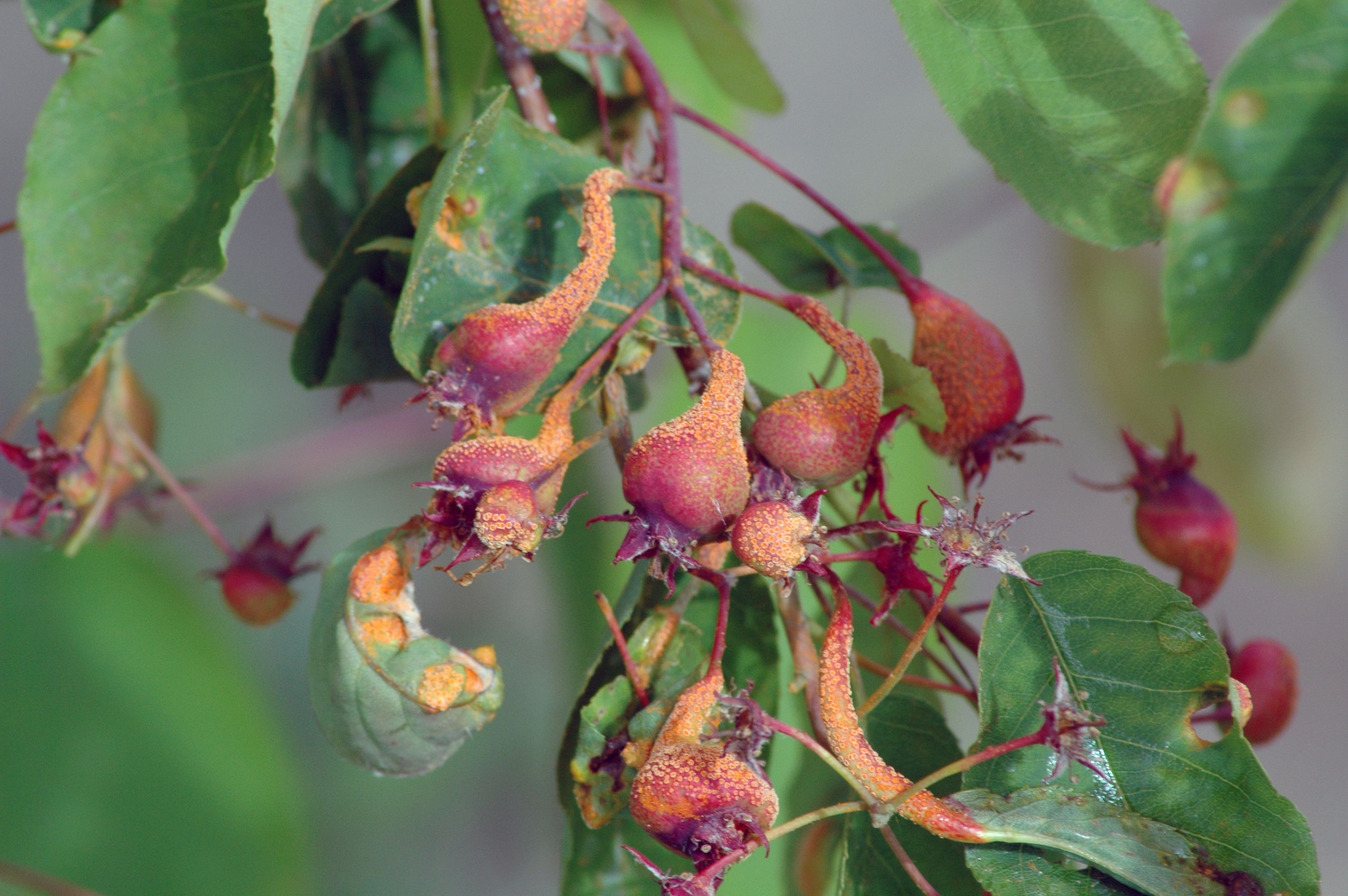
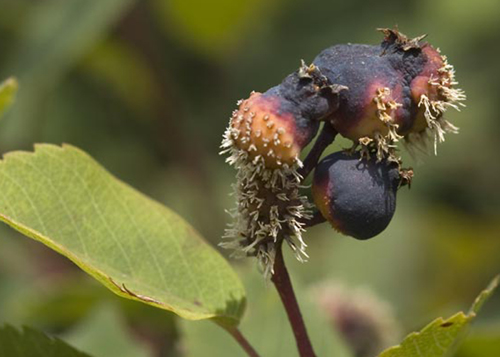
Fruit are often deformed and enlarged with yellow to orange aecia.
Jay W. Pscheidt, 2006.
Amelanchier canadensis is very susceptible often with bright orange pustules on leaves and fruit in the spring.
Jay W. Pscheidt, 2010.
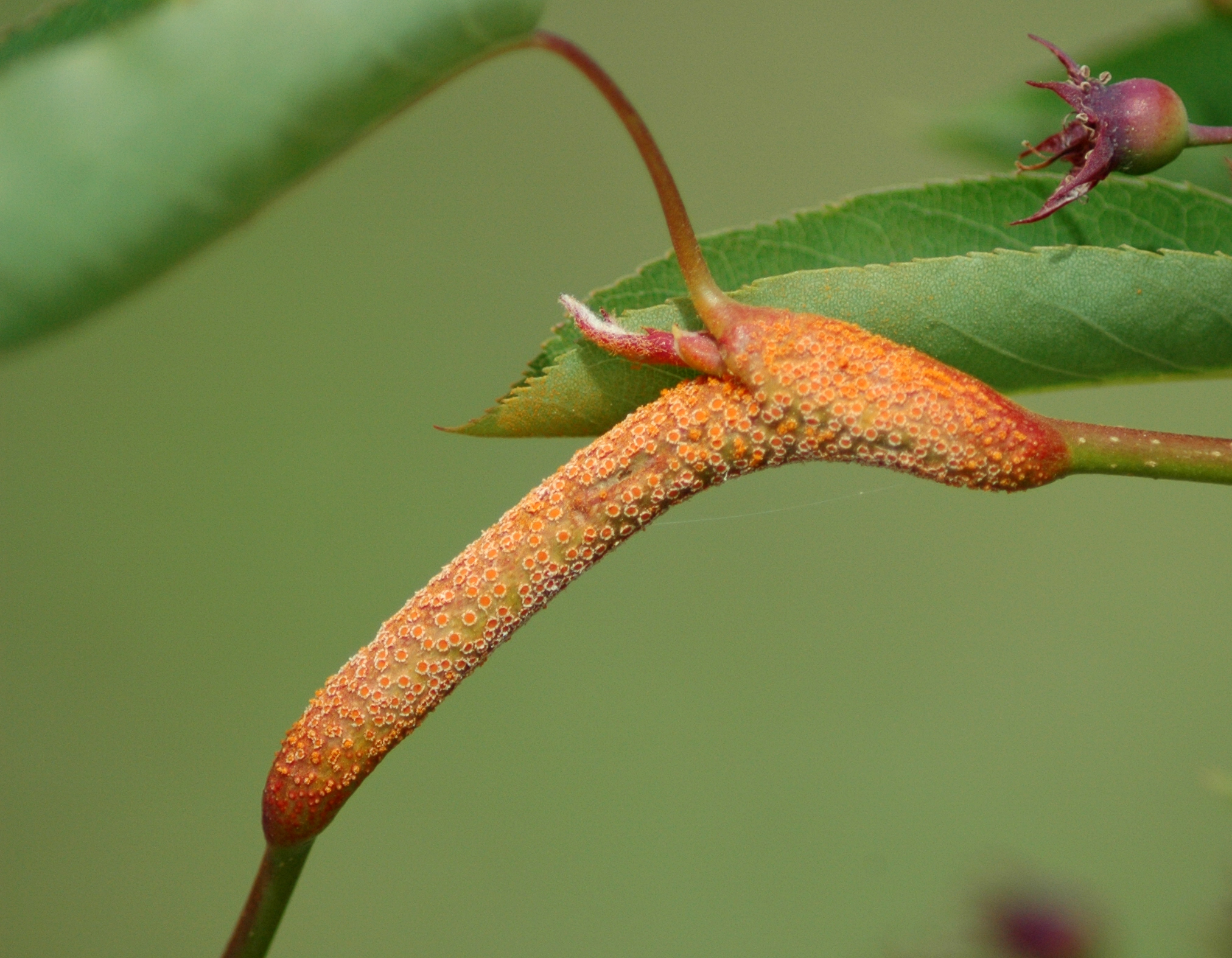
Stem can also be infected becoming swollen, deformed and bright orange with aecia.
Jay W. Pscheidt, 2006.
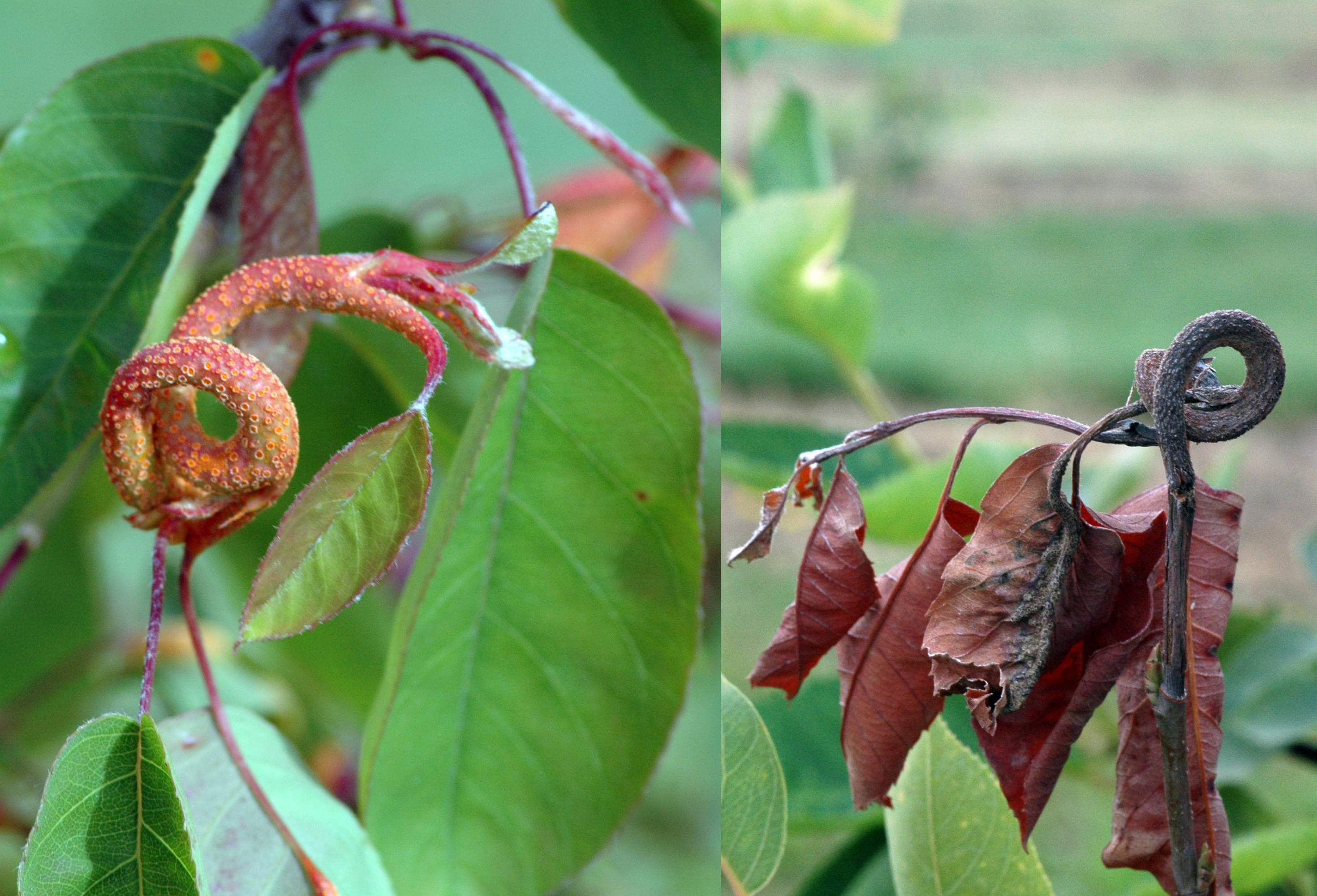
Stems of Amelanchier canadensis can become contorted in the spring (left) but then are girdled by mid-summer with distal portions of the branch dying back (right).
Jay W. Pscheidt, 2006.
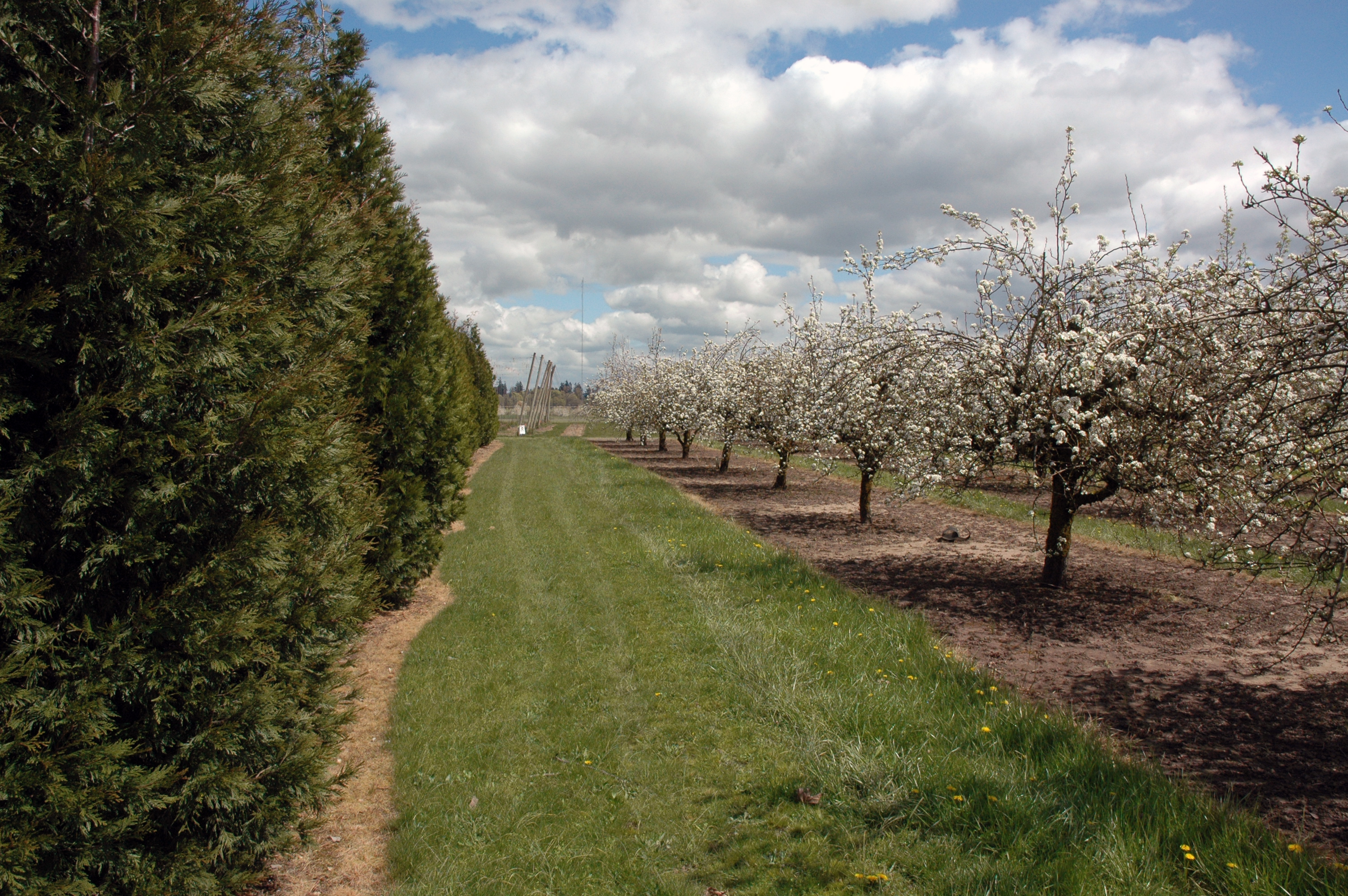
These rust need two hosts to complete their life cycle, a conifer like the Incense cedar to the left and a Rosaceous host like the pears to the right.
Jay W. Pscheidt, 2008.
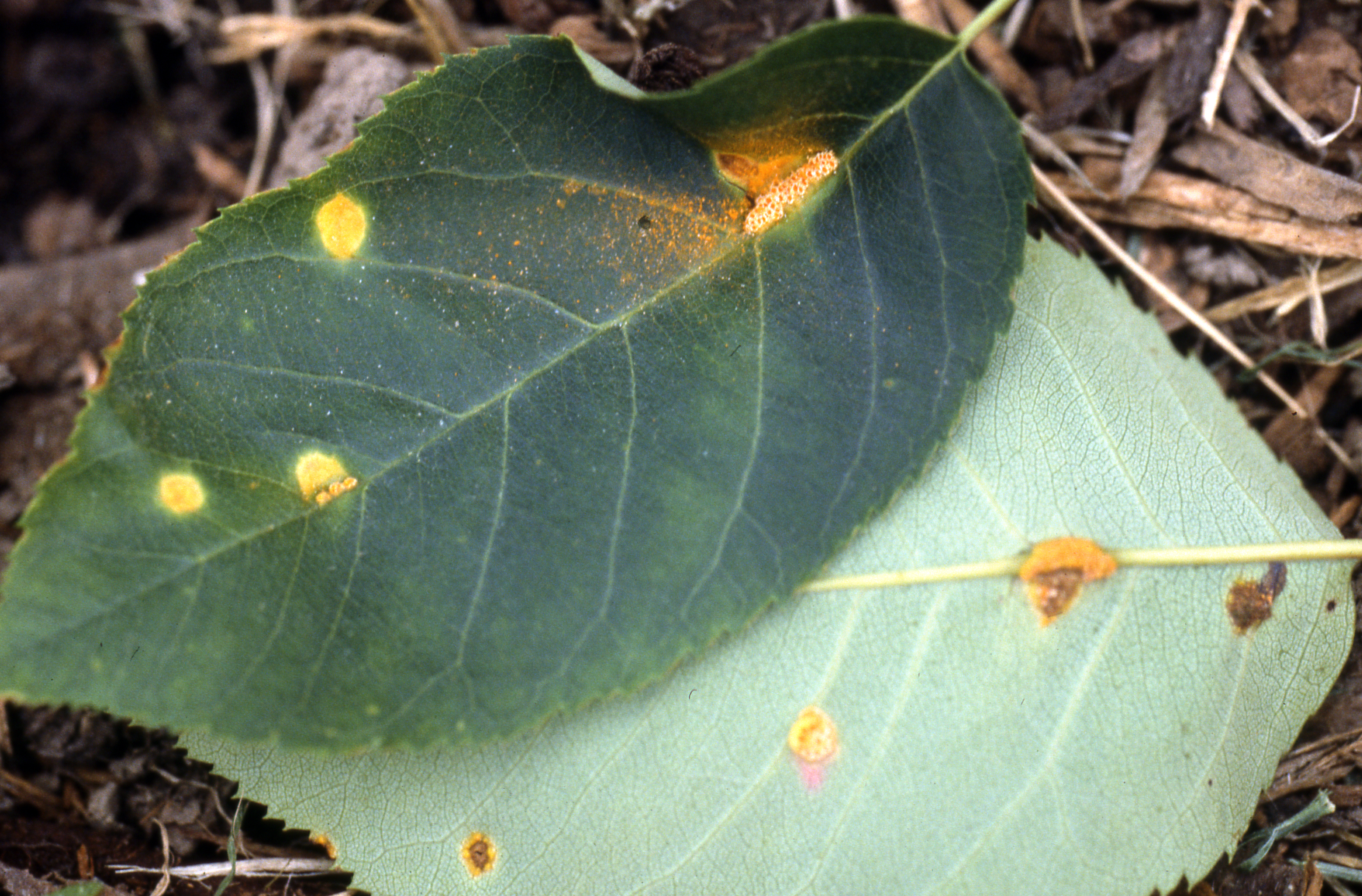
Spermagonia on the top side of the leaf and aecia on the underside of the leaf.
Photo by Jay Pscheidt, 1992.
Another species of Gymnosporangium (possibly nelsonii) on serviceberry.
Bob Ross, 2006.
Cause The OSU Plant Clinic has found Fusarium sp. on dusty miller Jacobaea maritima, formerly Senecio cineraria). It survives in the soil as thick-walled, dormant chlamydospores, which germinate in response to exudates from nearby plant roots. Hyphae then penetrate the roots, colonize the cortex and move into the xylem tissue. Small spores (microconidia) are produced and carried up into the plant.