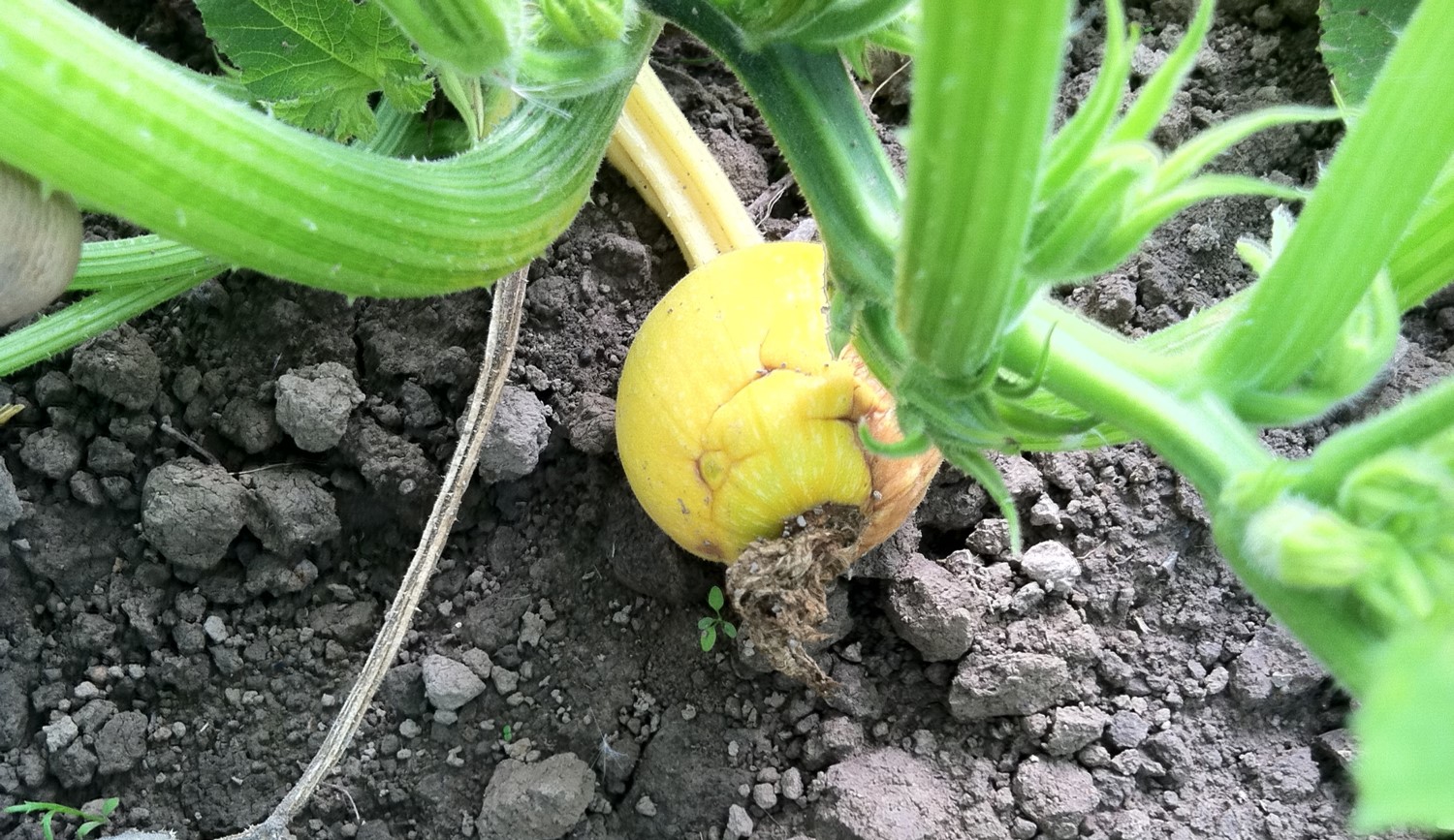
An aborted squash fruit due to pollination failure.
Photo by Cynthia M. Ocamb, 2011.
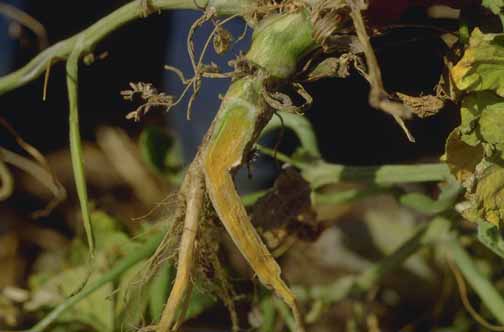
Cause A fungus, Stagonosporopsis caricae (syns. Stagonosporopsis citrulli, Stagonosporopsis cucurbitacearum, Didymella bryoniae, Phoma cucurbitacearum), which overwinters in associaton with infected crop debris for at least two years. This fungus can also be seedborne. Numerous other cucurbits are affected, including cantaloupe, watermelon, cucumber, and pumpkin.
Cause The fungus-like oomycete, Pseudoperonosporacubensis, which survives on living cucurbit hosts and is limited to the cucurbit family. It is dependent on living hosts to survive and reproduce; plants in greenhouses and planstic tunnels can function as local reseviors for infections further afield. Disease is believed to be spread by wind-blown sporangia. There may be potential for seedborne transmission since this pathogen has been reported inside of cucurbit seeds.
Cause The fungi or fungus-like microorganisms, Pythium aphanidermatum, Globisporangium irregulare (formerly P. irregulare), G. ultimum (formerly P. ultimum), Fusarium spp., and Rhizoctonia solani, attack many vegetable seedlings including members of the genus Cucurbita.
Cause Candidatus (Ca.) Phytoplasma asteris is spread by leafhoppers. The organism overwinters on wild weed hosts. Aster yellows also affects carrot, lettuce, endive, tomato, parsley, onion, salsify, many weeds, and several ornamental flowering plants. The disease is rare in Oregon.
Cause Pseudomonassyringae pv.lachrymans, a bacterium that overwinters in diseased plant material and on seed. It is spread by rain, sprinkler irrigation, and on workers' hands and clothing. In recent years, using tolerant varieties has reduced disease incidence.
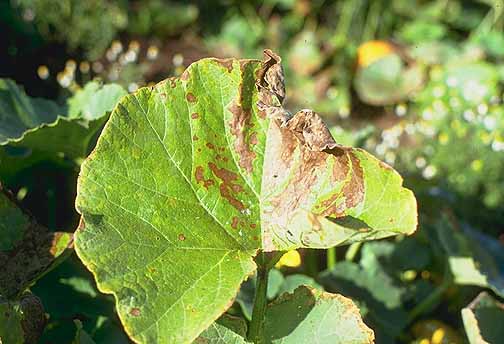
Cause Alternaria cucumerina, a fungus that overwinters primarily in infected plant debris. Alternaria survives for more than a year on infested plant debris. This fungus can also be on the surface of seeds. Conidia form on infested debris and are moved by wind for long distances. Leaf wetness and warm temperatures (79ºF is optimum) promote germination of conidia and subsequent infection.