Cause The fungus Podosphaera euphorbiae can be found in gardens in western Oregon and Washington. It does not seem to be a debilitating problem as plants continue to grow well despite its presence. Shady locations encourage disease development.
Colonies of powdery mildew.
Jay W, Pscheidt, 2009.
Powdery mildew can be heavy under the right conditions.
Note the tubular fungal fruiting bodies that stick out from the needles of this sitka spruce infected with Chrysomyxa piperiana.
OSU Extension Plant Pathology Slide Collection, 1973.
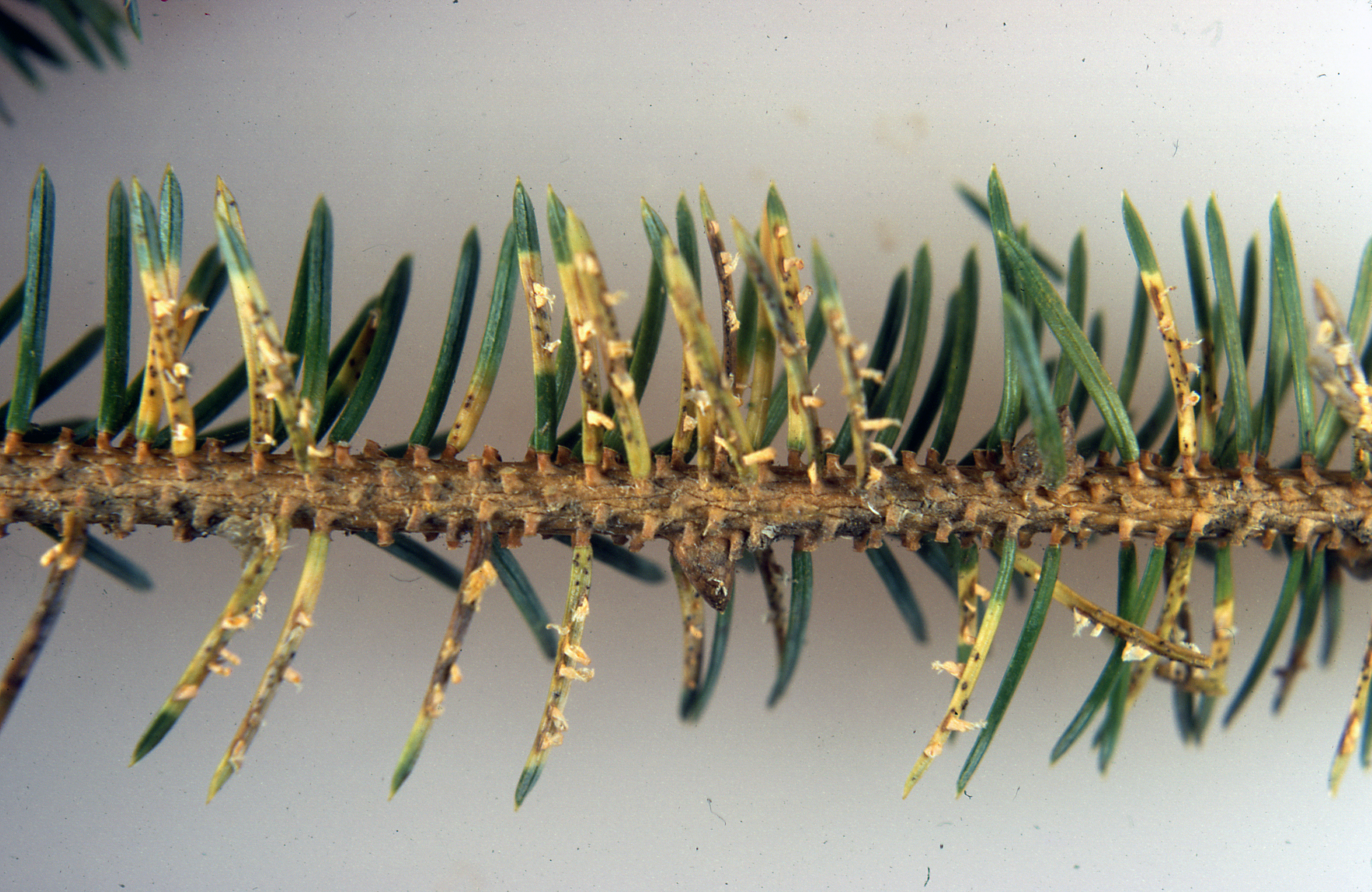
Cause Rhizosphaera kalkhoffii is the most prevalent cause although several other fungi (such as R. pini, Lophodermium sp., Lirula sp.) can cause needle cast diseases on spruce. The fungus overwinters in infected needles attached to the tree or on the ground. Rain-splashed spores spread to current-season needles. Shearing crews also can spread spores if foliage is wet.
Current-season needles mottle yellow then turn brown or purplish brown.
OSU Extension Plant Pathology Collection.
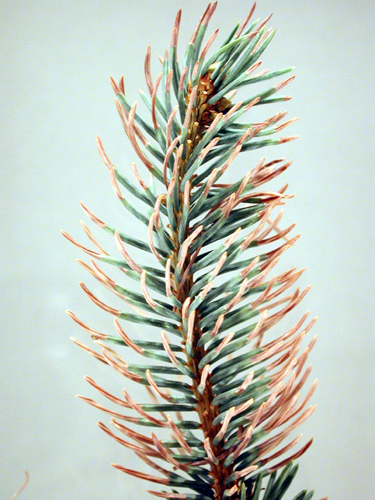
Picea pungens with needle necrosis.
Melodie Putnam, 2006.
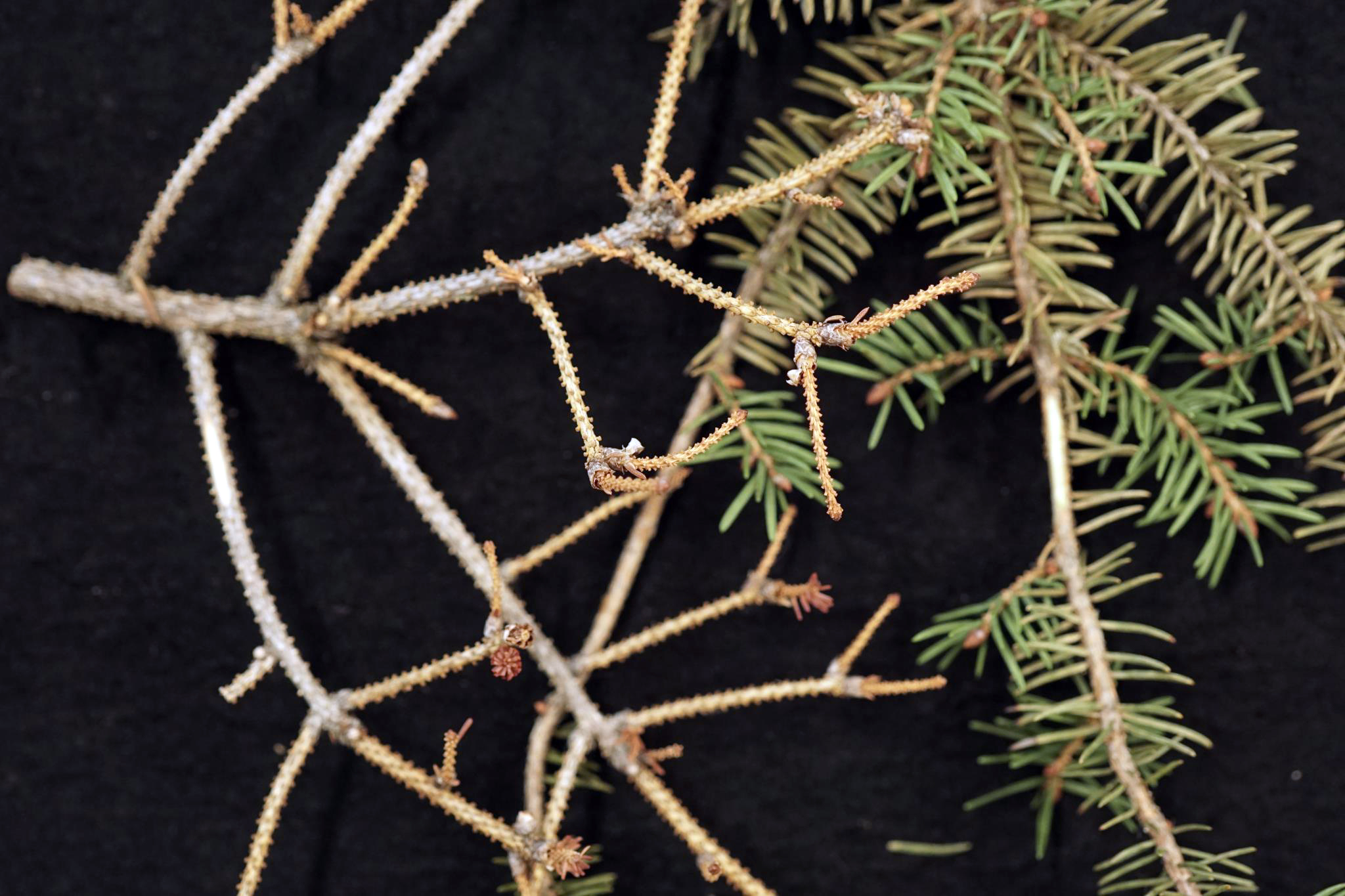
Sudden needle drop symptoms on the left side of this image.
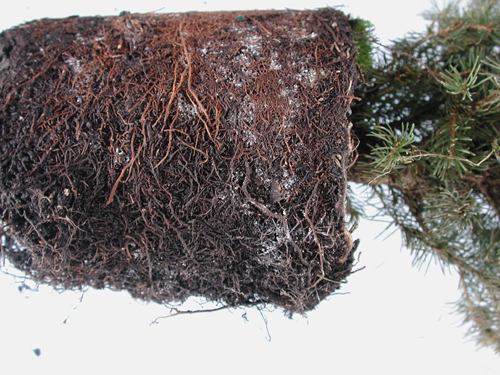
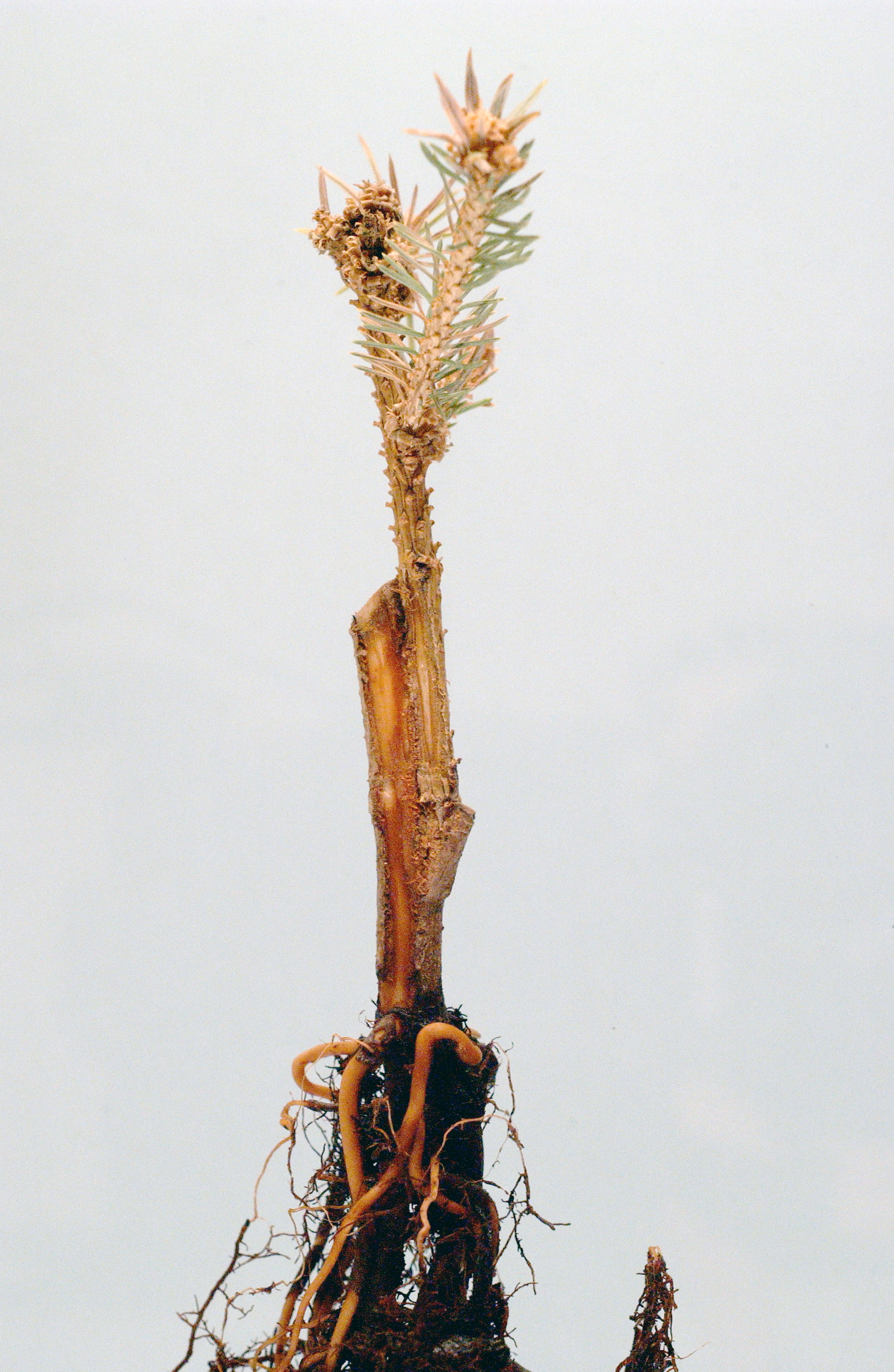
When the bark is cut away you can find necrotic cambial tissue extending into the stem from the roots.
Melodie Putnam, 2008.
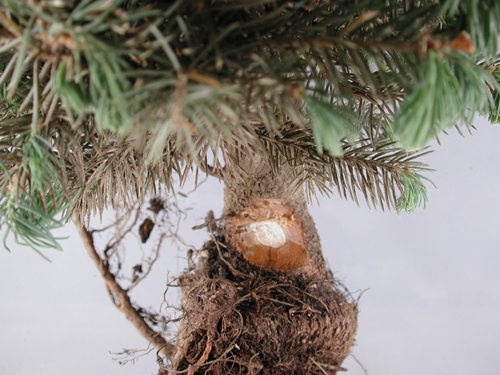
Lack of roots due to root rot means not enough water will get to the needles which show water stress symptoms here. Other causes can give the same symptoms.
Melodie Putnam, 2009.
Branches of this Picea glauca are dying from Phytophthora.
Melodie Putnam, 2010.
Roots of this Picea glauca are dying from Phytophthora.
Melodie Putnam, 2010.
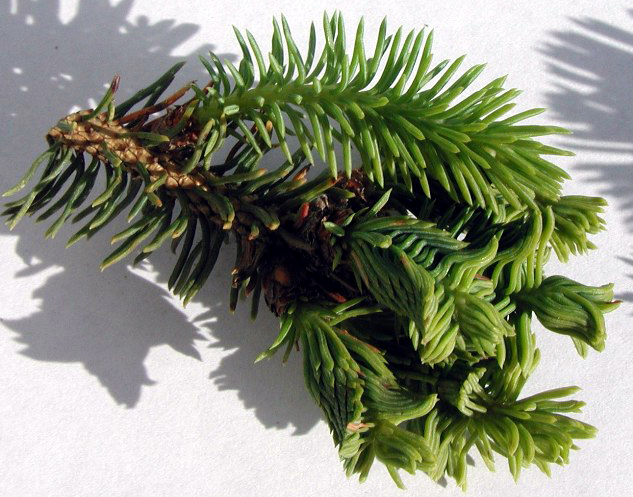
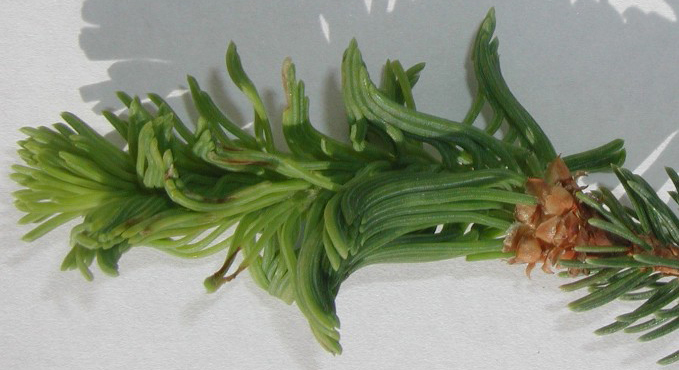
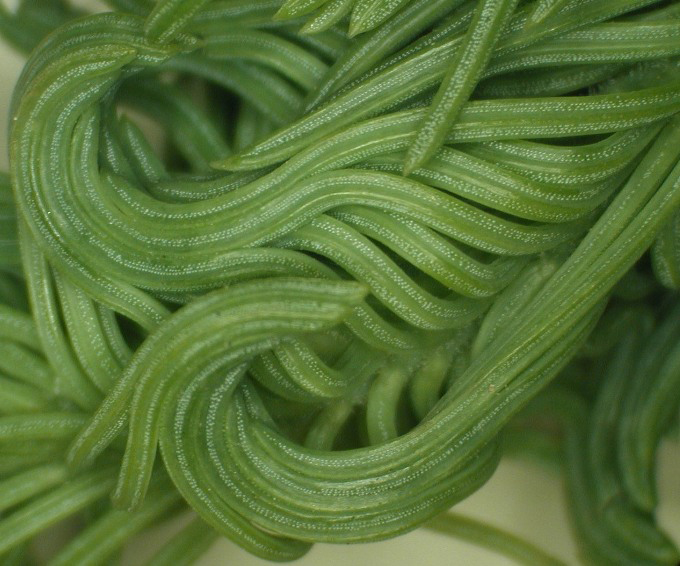
Cause Unknown. Serbian spruce (Piceaomorika) appears to sustain the most damage, but has been observed on a number of different spruce species and cultivars. Examinations of spruce, even before the bud cap has fallen off, have failed to find any signs of fungi, insects (which includes frass or exuvia) or eriophyid mites. Herbicide damage was suspected but the same degree of incidence was observed in treated vs. non-treated plots.
New shoot on top developing normally while rest of shoots are deformed (Picea bicolor).
Spruce with a crown rot due to both Fusarium sp. and Pythium sp.
OSU Plant Clinic, 2020.
Cause Cytospora kunzei (sexual: Valsa kunzei), a fungus that has not been reported in the Pacific Northwest but has been found by the OSU Plant Clinic. The disease is more common in the Northeastern United States. Rain splashes spores to wounded branches. The fungus infects through wounded tissue. Other species infect pine, Douglas-fir, and true firs. They also infect trees weakened by drought, fire, insects, and other diseases, most importantly dwarf mistletoe.
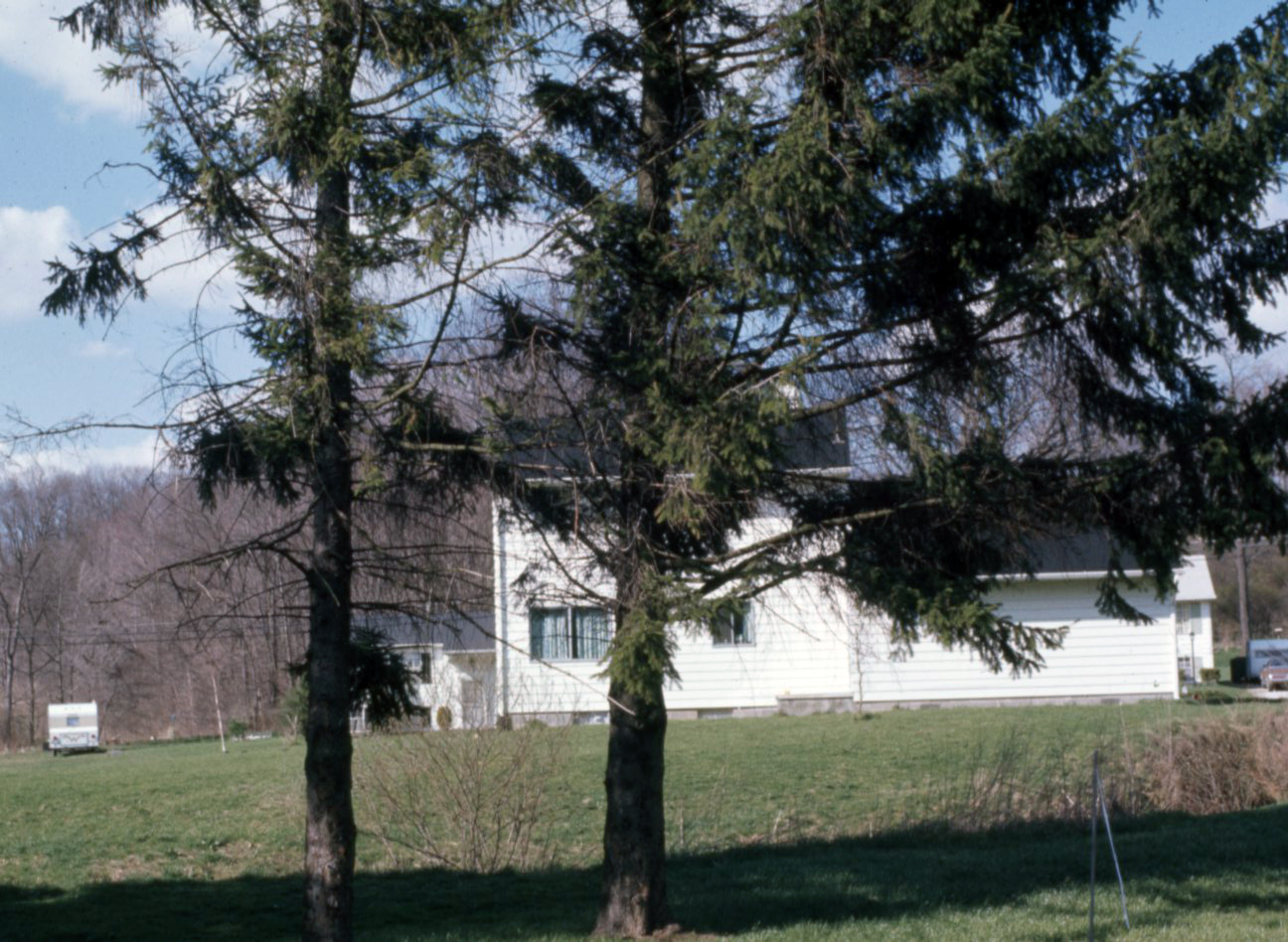
Branches near the ground turn brown and die and over time, more branches continue to die slowly up the tree.
OSU Botany and Plant Pathology slide collection, 1974.
Cankers can occur on trunks as well as branches. This one occurred at a wound site.
OSU Botany and Plant Pathology slide collection, 1974.
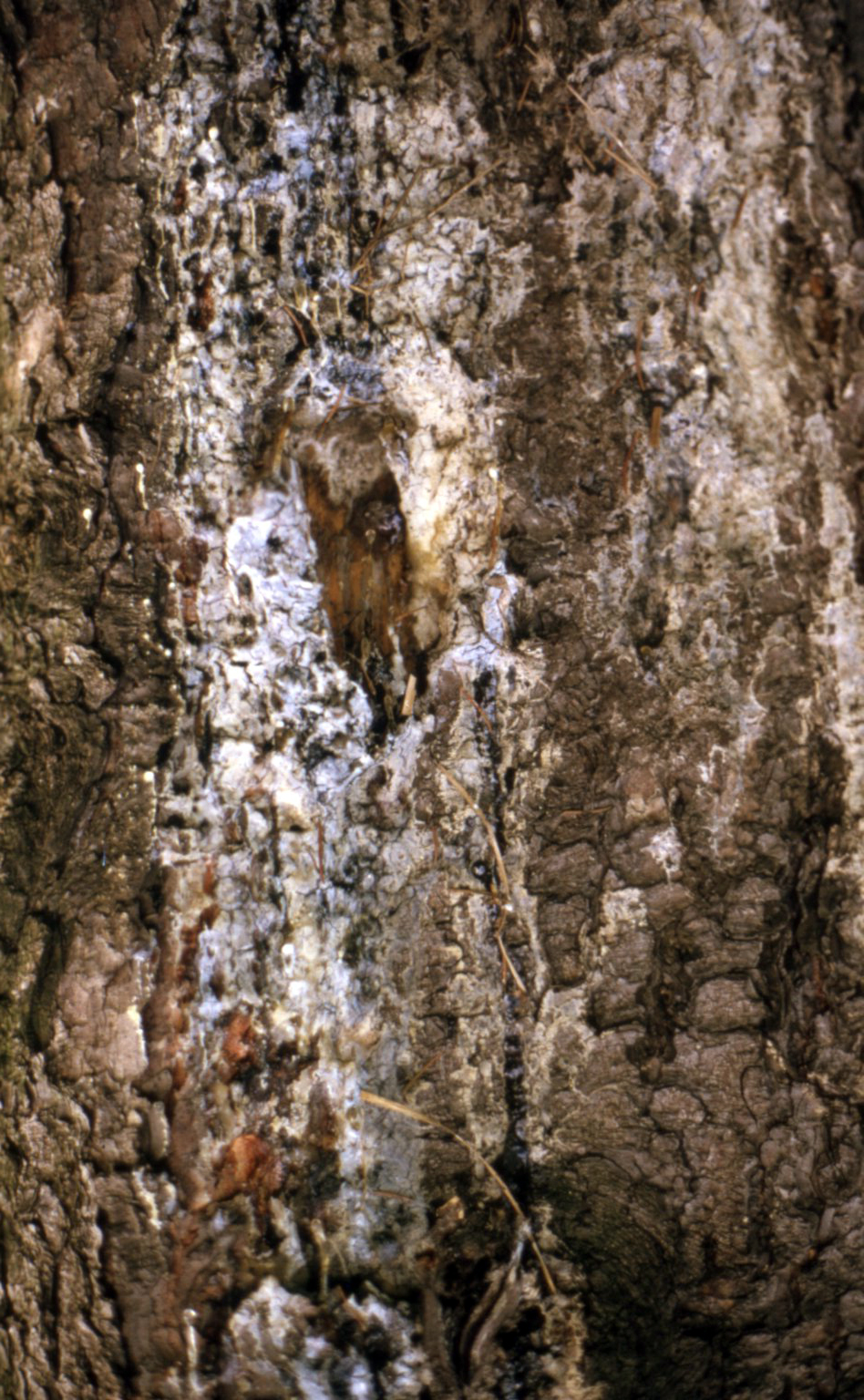
White patches of pitch or resin may appear along the bark of dead or dying branches or trunks.
OSU Botany and Plant Pathology slide collection, 1973.
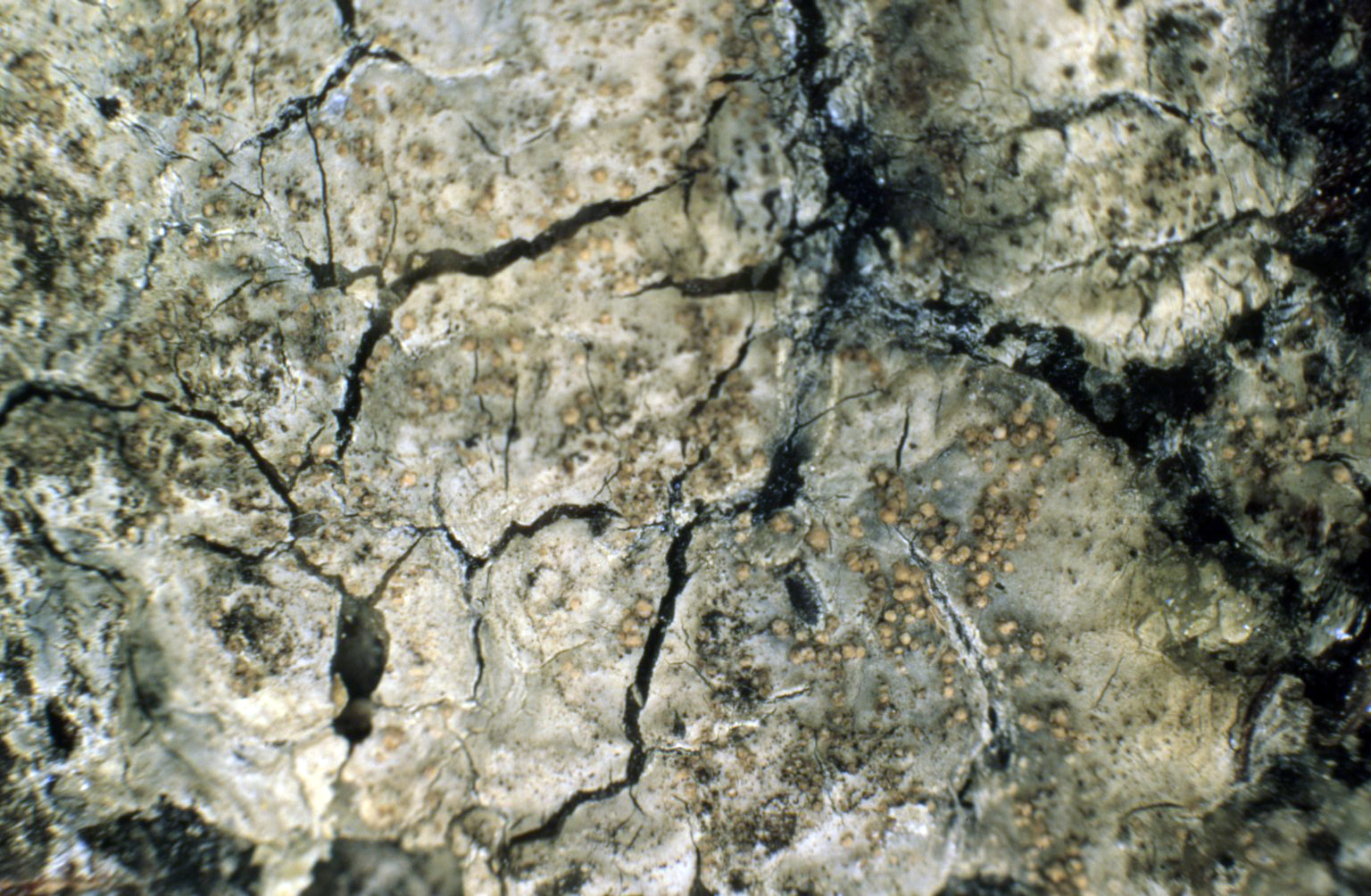
Small black fruiting bodies (pycnidia) of the fungus may be seen in the cankered area.
OSU Botany and Plant Pathology slide collection, 1974.
Cause A physiological disorder that affects the uppermost bud(s) on the terminal shoot (leader) of Colorado blue spruce (Picea pungens). Possibly caused by either a calcium deficiency or by high temperatures the previous growing season. Genetics likely play a role in tree susceptibility.
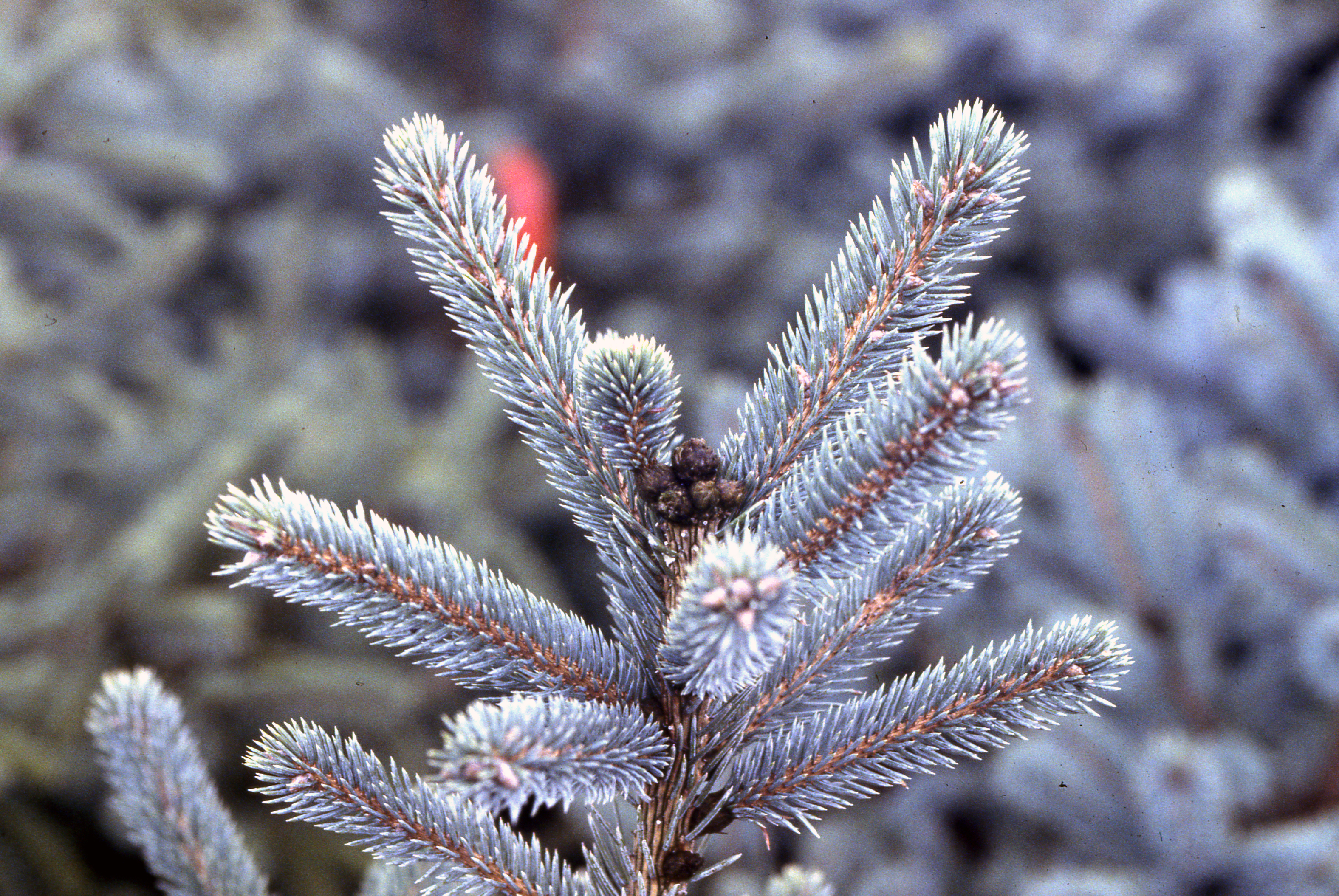
Note the dry, dark, dead terminal buds at center of picture.