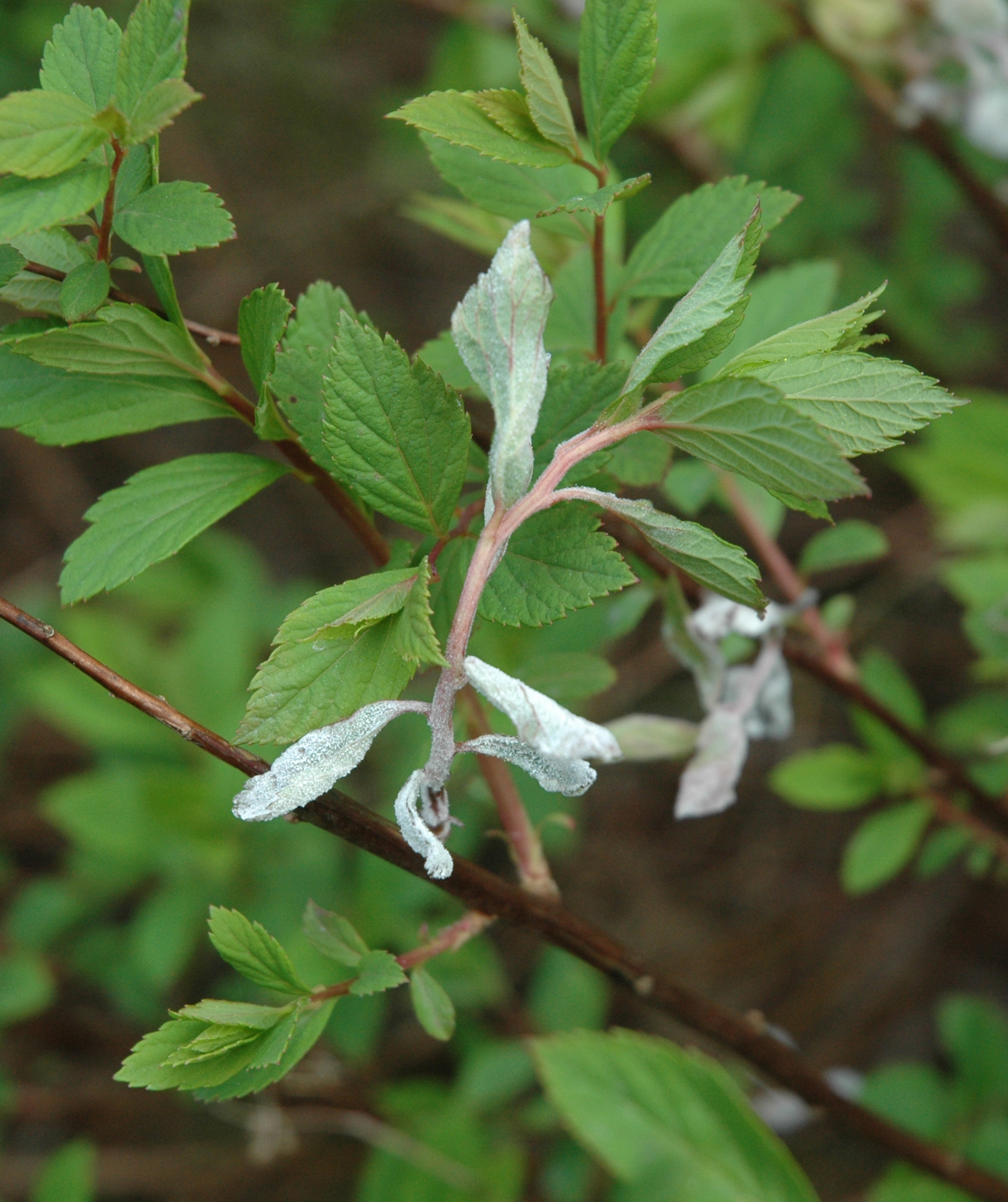
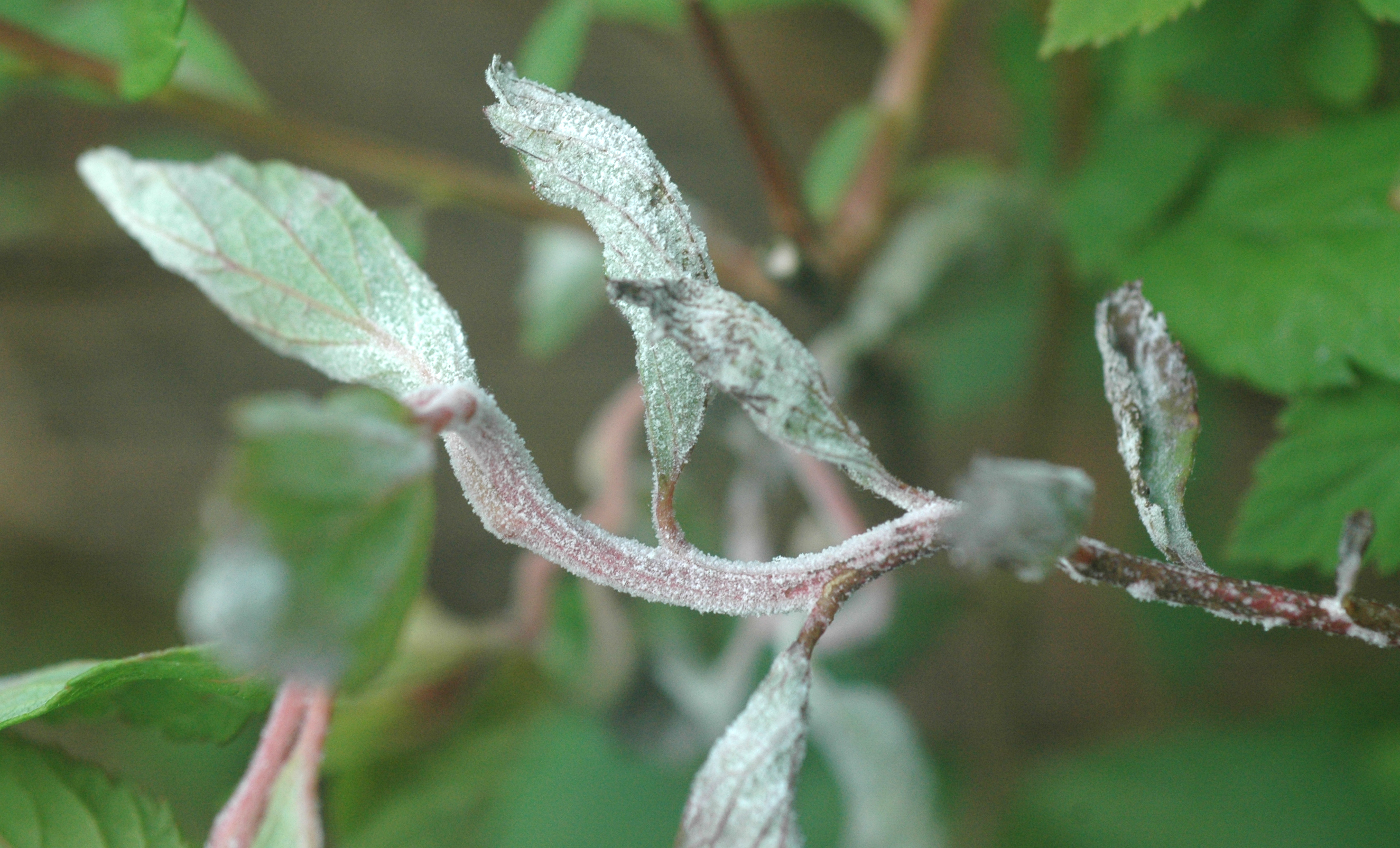
Cause Several fungi have been reported on spirea but only Podosphaera clandestina, P. tridactyla, P. minor var. longissima and P. spiraeae have been reported from the PNW. Podosphaera clandestina is also found on stone fruit trees such as cherry and peach.
Powdery mildew on shoots of Japanese Spiraea (Spiraea japonica 'Crispa').
Jay W. Pscheidt, 2021.
Flag shoots from infections the previous year are easy to find after bud break.
Jay W. Pscheidt, 2018.
Flag shoots have conidia ready to go when they emerge.
Jay W. Pscheidt, 2018.
Cause Beet western yellows virus, an increasingly significant pathogen in western Oregon. The principal vector is the green peach aphid, Myzus persicae; other aphid vectors are likely. After acquiring the virus from infected plants, aphids may have lifelong ability to transmit it. An enormous number of crop and weed species are susceptible to this virus and act as natural inoculum reservoirs.
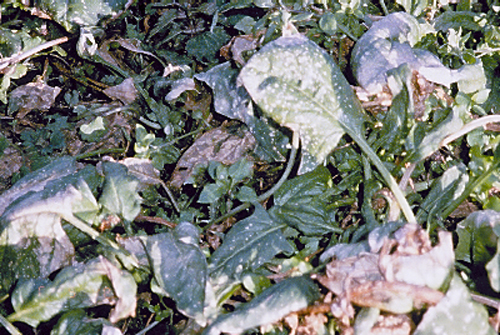
Cause Albugo occidentalis, a fungus that is not uncommon on spinach but usually of minor importance. It also infects weedy species of Chenopodium. Warm days followed by cool, dew-forming nights favor disease.
Symptoms White pustules will develop on the lower, sometimes upper surface of infected leaves as well as on petioles, and the upper leaf surface will be yellowish.
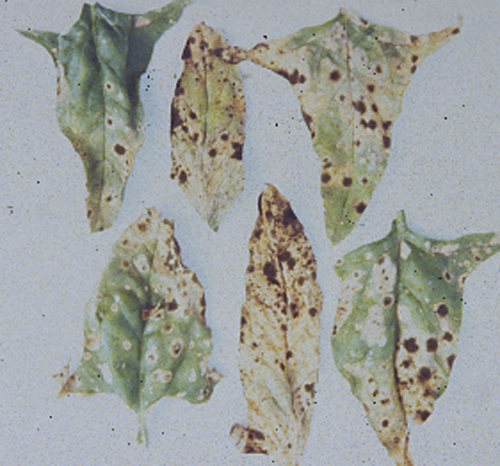
Note the numerous small, circular, white to yellow spots.
Photo by Debra A. Inglis.
Note the irregularly-shaped spots with an olive-black color due to sporulation.
Photo by Debra A. Inglis.
By L.J. du Toit and C.M. Ocamb
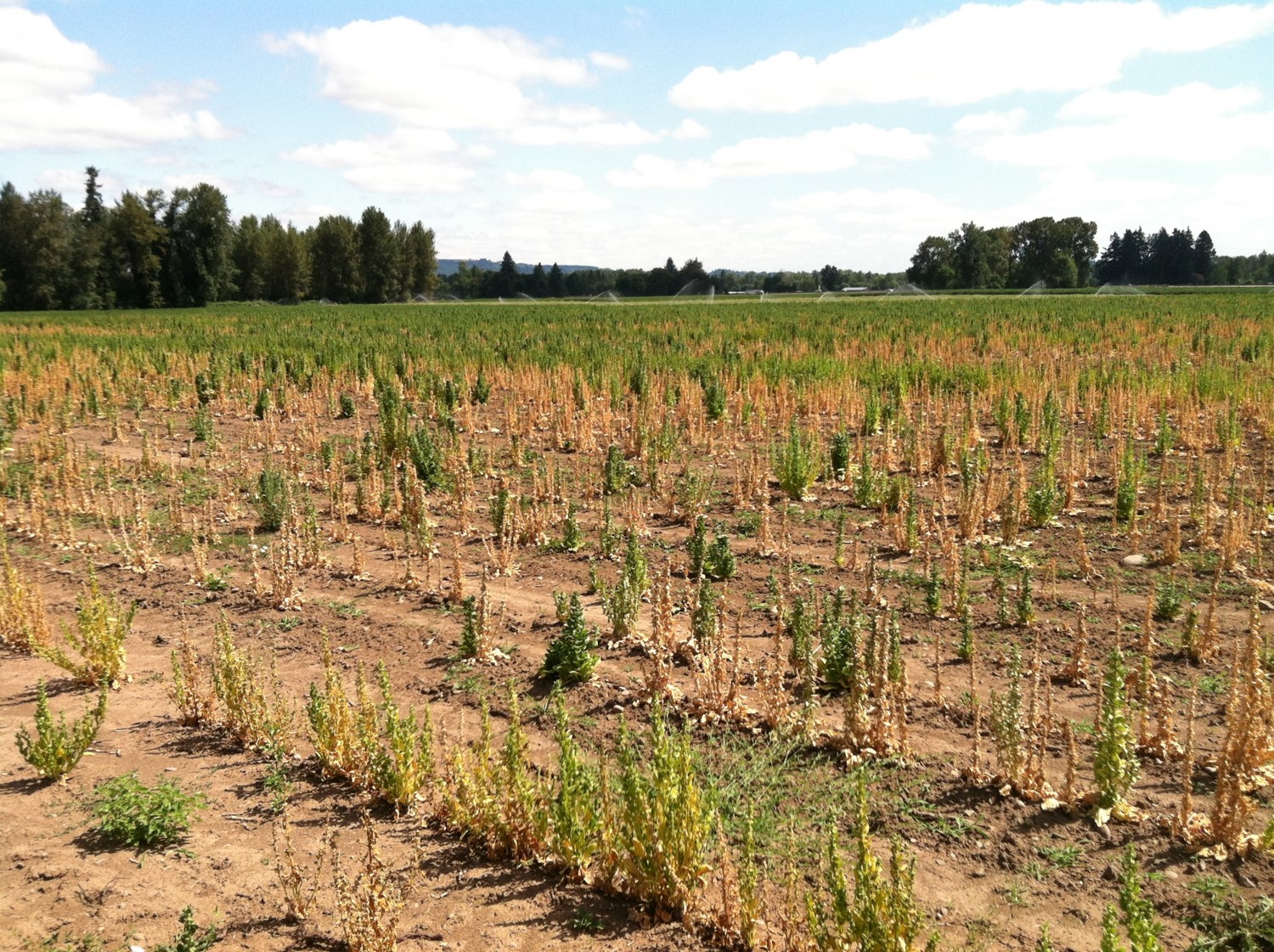
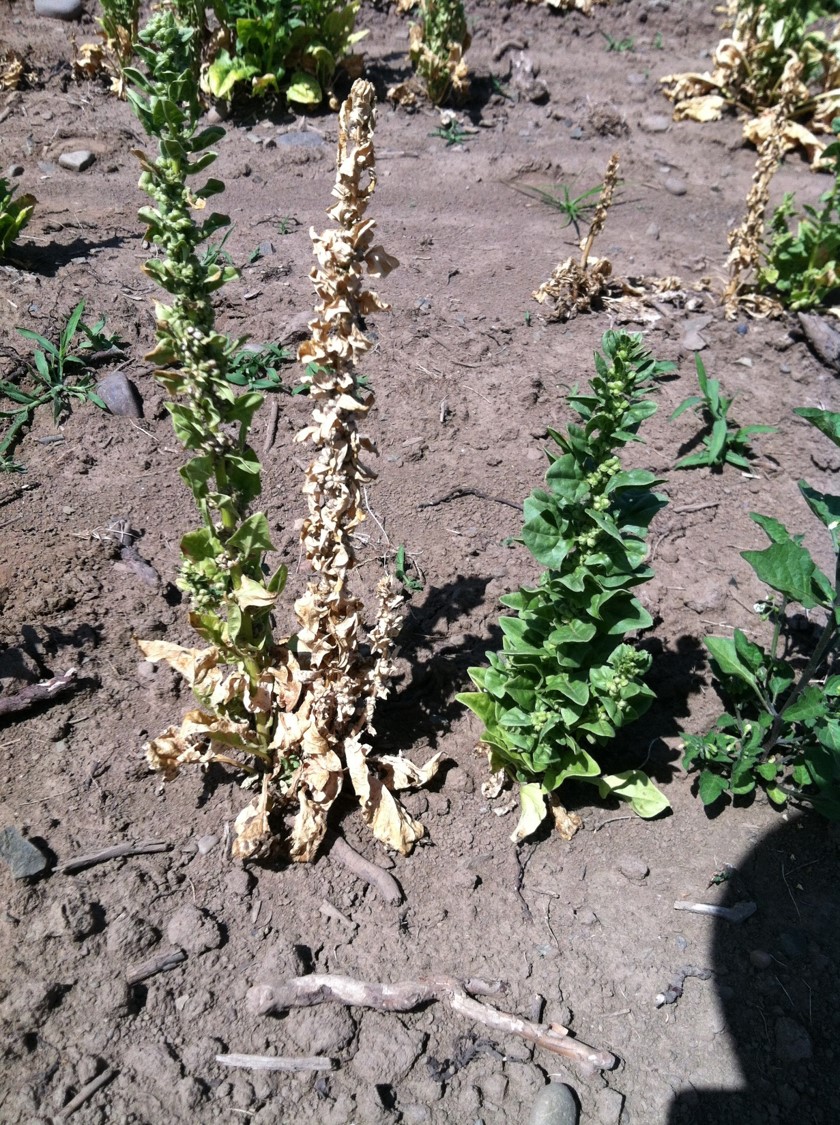
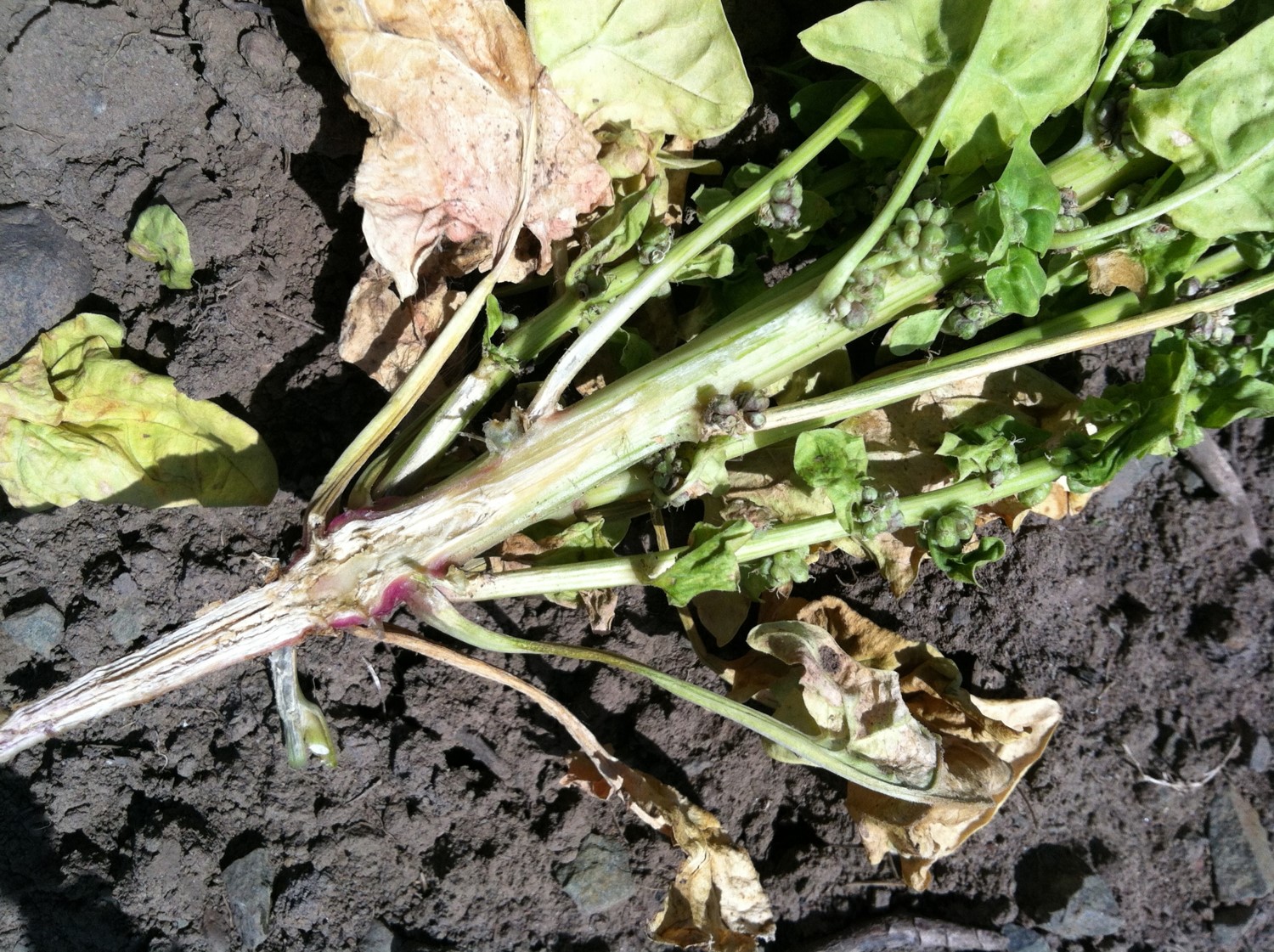
Cause Fusarium oxysporum f. sp. spinaciae, a fungus that can survive many years in soil without a spinach crop. The fungus also can colonize roots of beet and Swiss chard plants, but does not cause disease on these crops. The fungus can survive on seed and cause disease in fields previously free of spinach wilt. Warm, acidic soils favor the pathogen.
A spinach seed field with wide-spread plant die-out due to Fusarium wilt.
Photo by Cynthia M. Ocamb, 2019.
A healthy spinach plant in the foreground on the right, the brown plant in the middle that has died due to Fusarium wilt, and the plant on the left has leaves turning yellow then brown as the affects due to Fusarium wilt take hold.
Photo by Cynthia M. Ocamb, 2019.
A spinach seed plant suffering from Fusarium wilt has been split open longitudinally to show the brown-colored tissues inside the plant that are characteristic of wilt diseases in this crop.
Photo by Cynthia M. Ocamb, 2019.
By C.M. Ocamb and L.J. du Toit
Note the yellowish coloration of the upper surface of the leaves on the left. A downy growth is visible on the underside of the two leaves on the right.
Photo by Melodie Putnam, 2002
A closer view of the downy growth on the underside of a leaf.