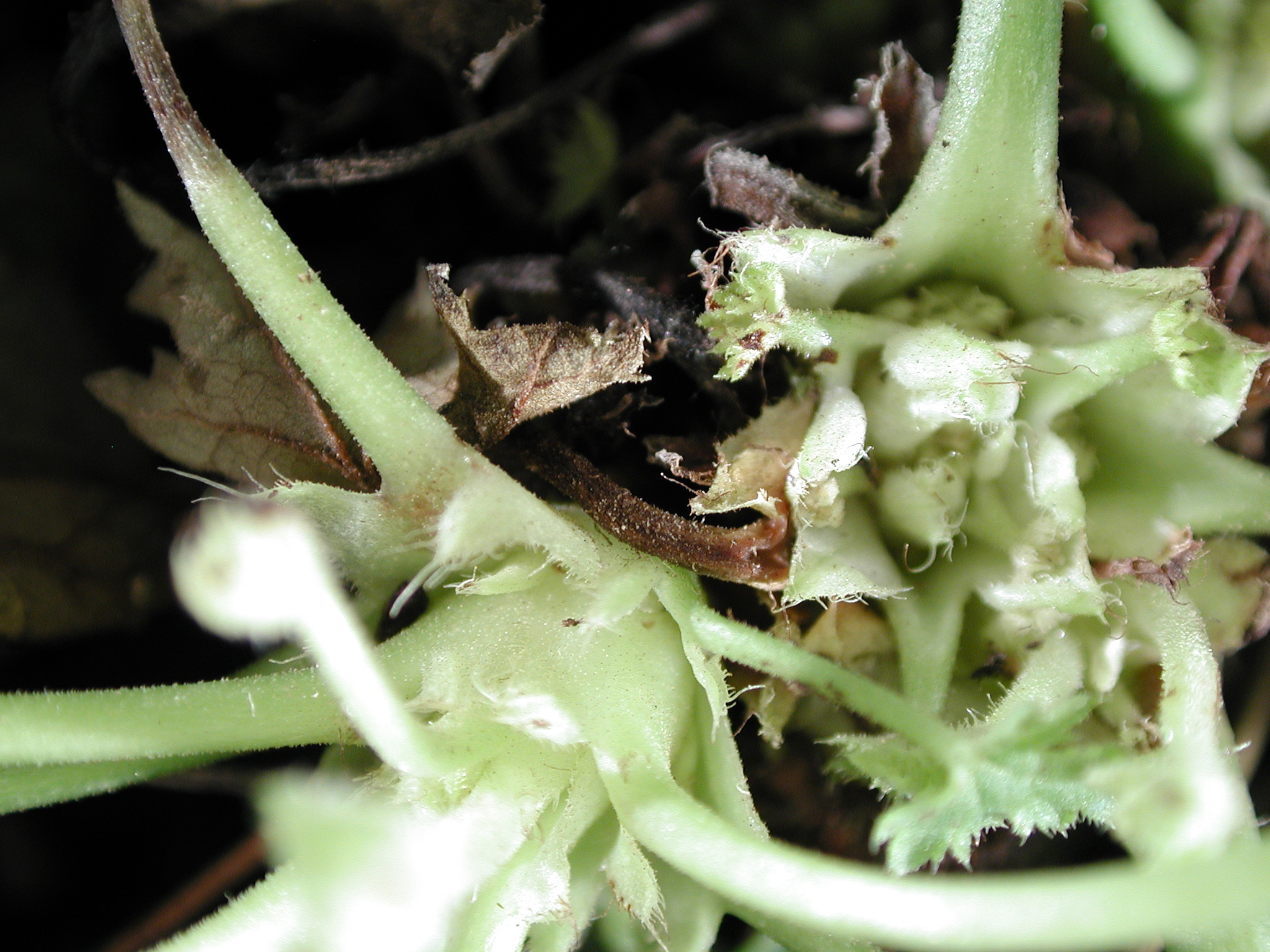
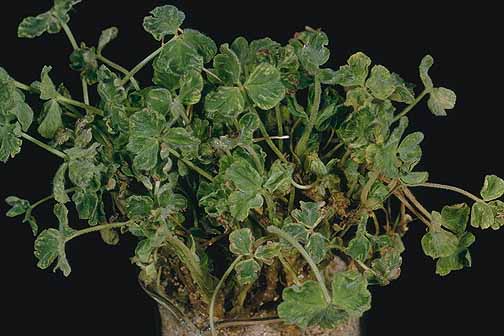
The photo shows a small rosette of young leaves that will not grow to normal size.
Plant Clinic image, 2006.
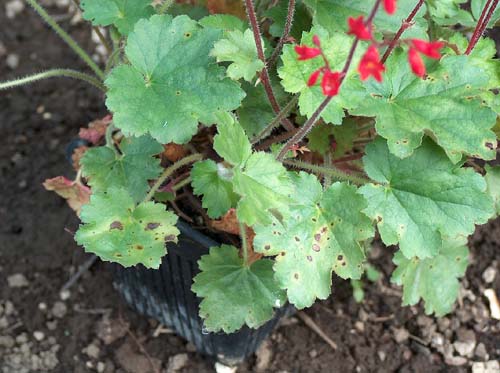
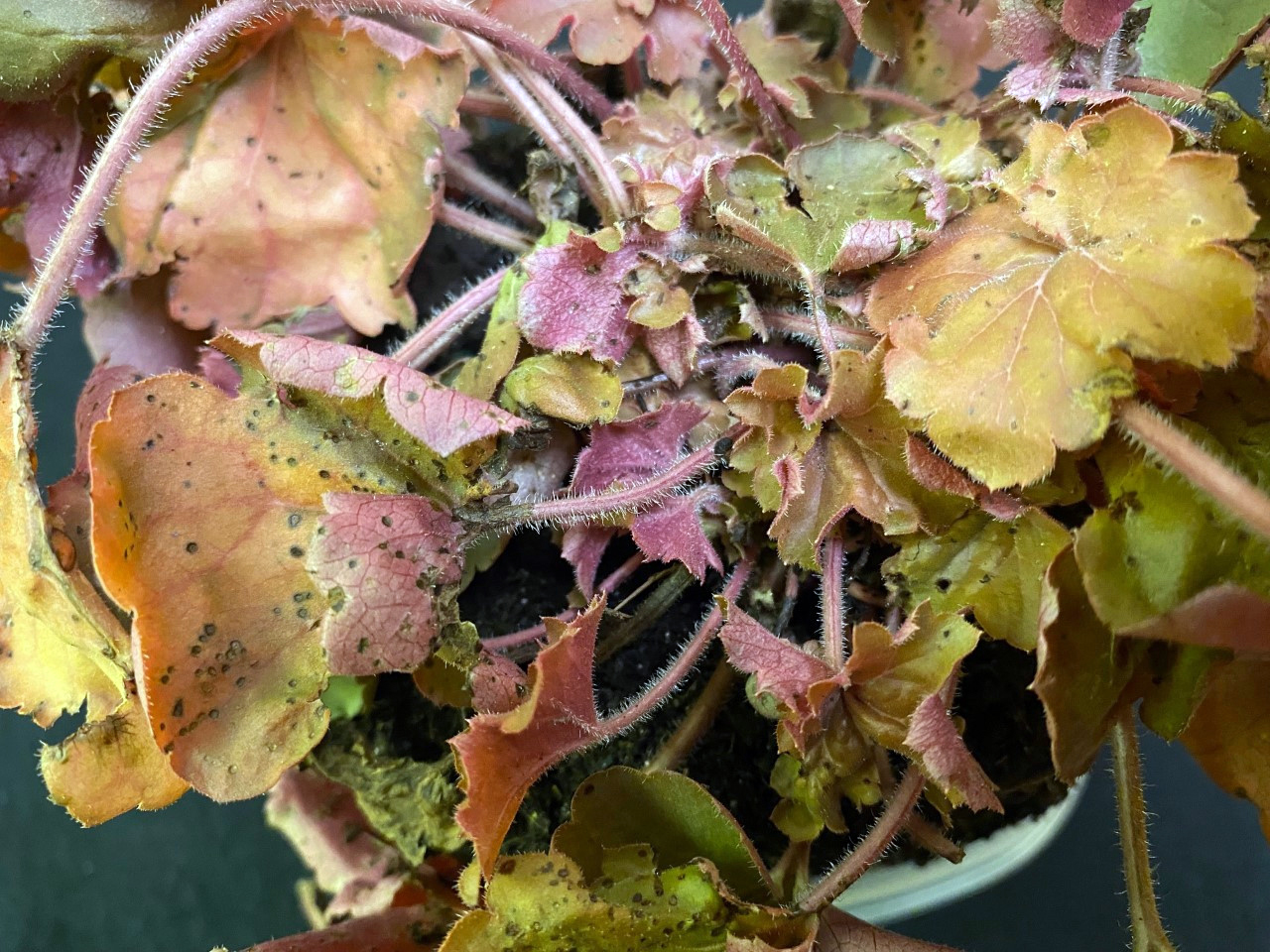
Cause There are many fungi that can cause leaf spots on coral bells.
These spots are due to rust on the upper leaf surface (top) and lower leaf surface (bottom).
Maryna Serdani, 2011
Spots due to Pestalotiopsis sp.
OSU Plant Clinic Image, 2014.
These leaf spots were due to Pseudomonas sp.
Maryna Serdani, 2011.
These numerous necrotic leaf spots were caused by Colletotrichum sp.
Photo by Jay W. Pscheidt, 2005.
Leaf spots on this plant are due to Botrytis.
Melodie Putnam, 2007.
Heuchera leaf spots due to Colletotrichum sp.
OSU Plant Clinic, 2021.
Cause The fungus Erysipheaquilegiae (Erysiphepolygoni) has been reported from Washington, and the disease has been found by the OSU Plant Clinic. The fungus thrives under humid (greater than 90%) conditions when leaves remain dry. Spores spread by wind and human movement of plant material.
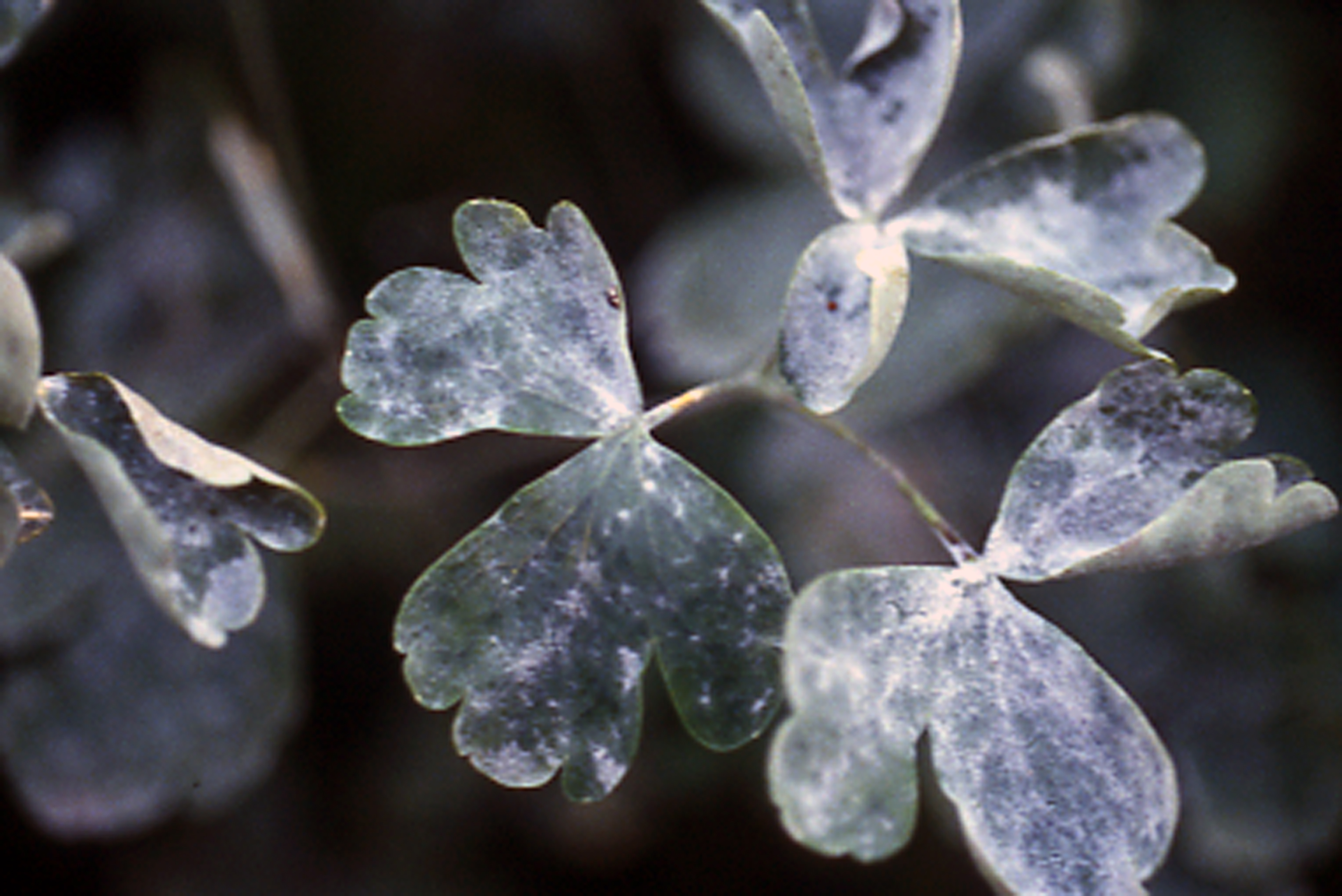
Powdery mildew colonies may cover entire leaflets.
Jay W. Pscheidt, 2018.
Note the white colonies on this leaf.
Photo by Jay W. Pscheidt, 1996.
Cause Fungi: Stagonosporopsisaquilegiae (formerly Ascochytaaquilegiae) has been reported from Idaho and found by the OSU Plant Clinic; Cercosporaaquilegiae has been reported from Oregon, but Septoriaaquilegiae has not been reported from the Pacific Northwest.
Symptoms Round, brown leaf spots and/or zonate spots or rings. Other symptoms can include leaf mottle, stem or petiole lesions, and irregularly shaped necrotic lesions or plant stunting.
Round, brown leaf spots and/or zonate spots or rings.
OSU Plant Clinic Image, 2014.
Round, brown leaf spots and/or zonate spots or rings.
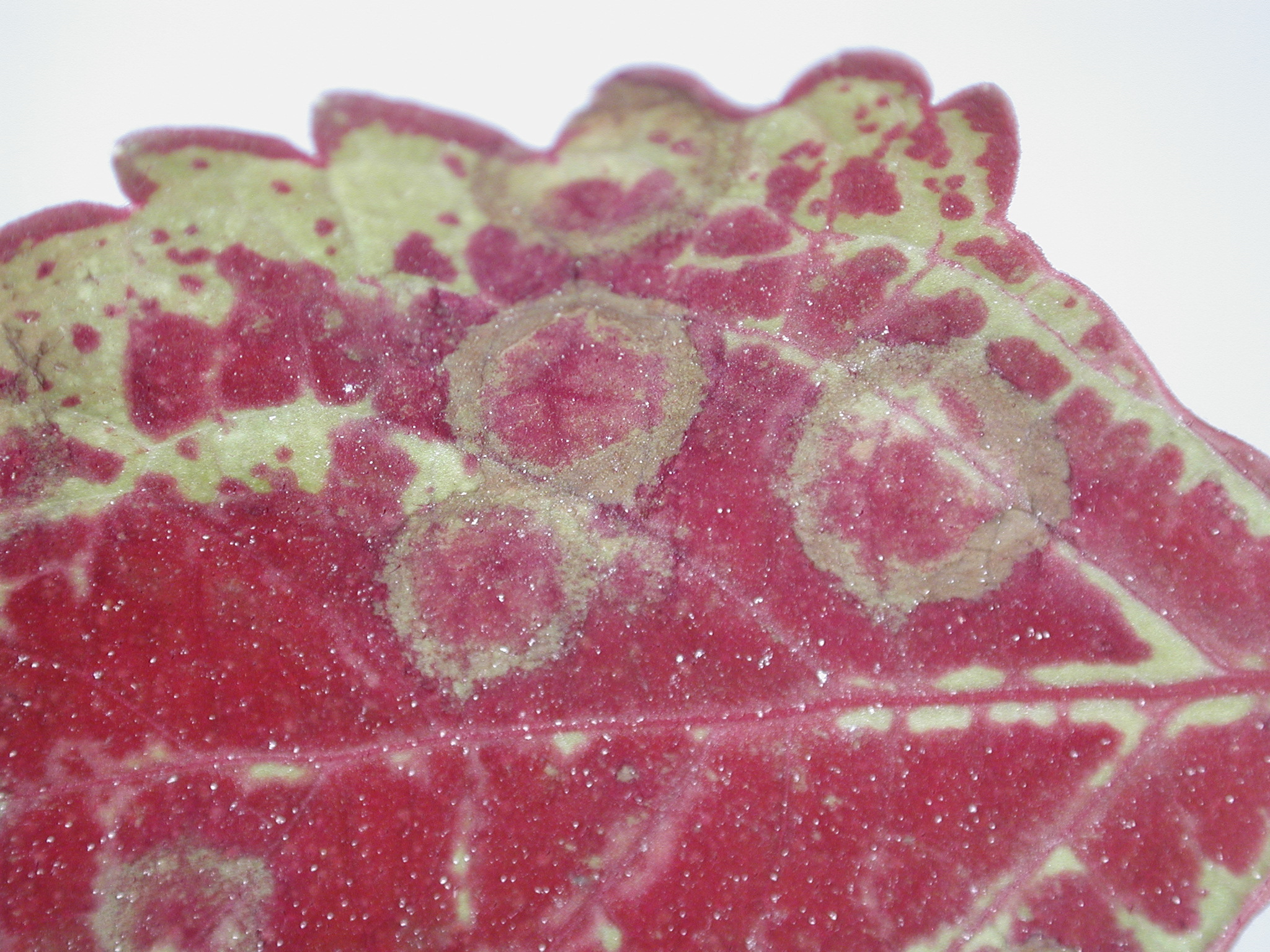
These symptoms or downy mildew have progressed to a point that the leaves have become necrotic.
OSU Plant Clinic Image, 2015.
Same leaf with the top side on the left and bottom side on the right.
OSU Plant Clinic Image, 2009.
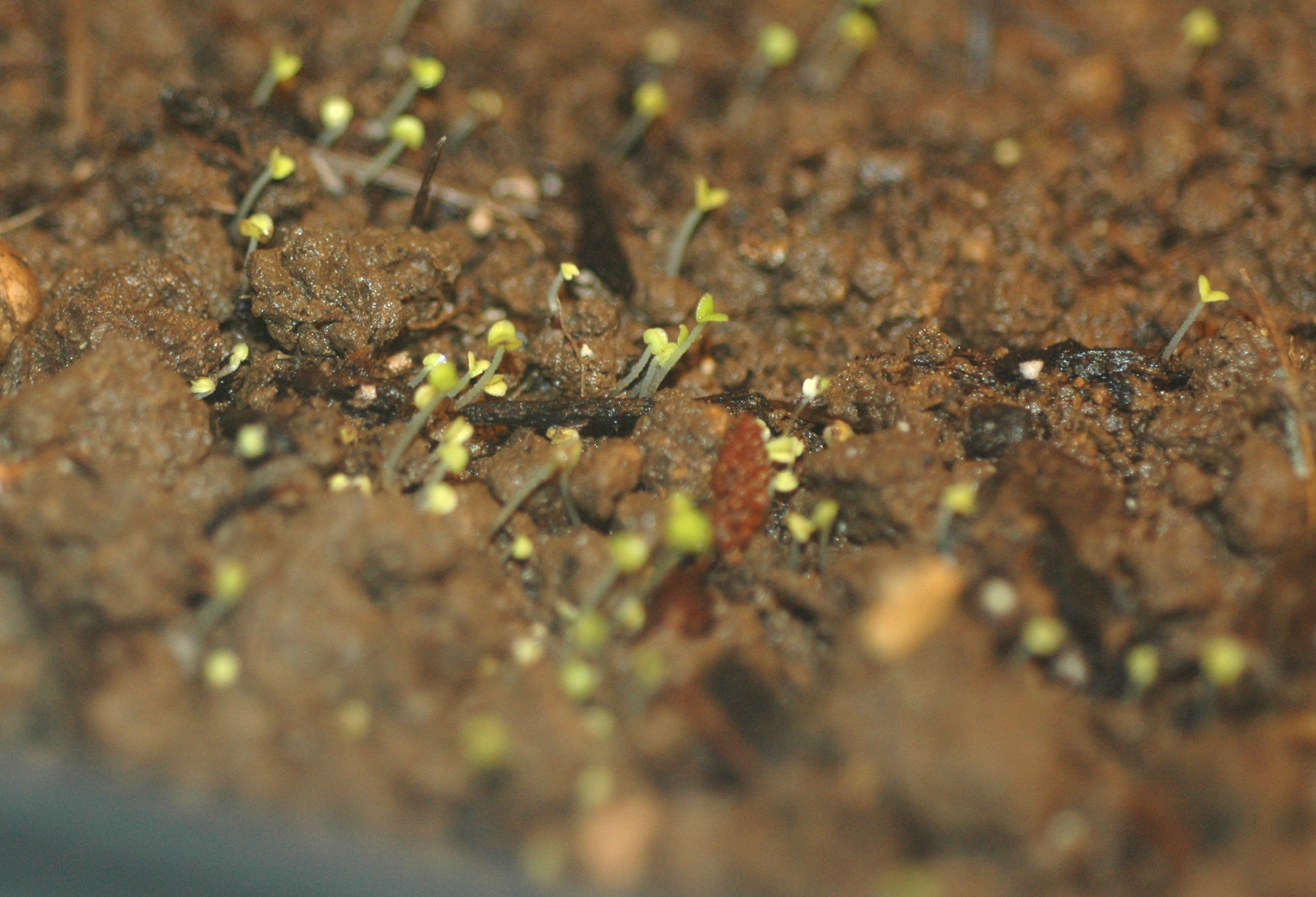
Cause Both Pythium spp. and Rhizoctoniasolani can cause pre- and post-emergence damping-off. Pythium is favored by cool and overly moist soil conditions.
Poor germination or stand development can indicate pre-emergence damping-off where seeds rot in the media prior to emergence above ground.
Senescent leaves that are touching the ground or media can develop water soaked lesions and then the gray sporulation of this fungus.
Jay W. Pscheidt, 2020.
Stem lesion on this Coleus caused by Botrytis resulted in the wilting and collapse of the stem above the canker.
Jay W. Pscheidt, 2020.
Cause Several viruses are able to infect clovers including bean yellow mosaic virus, alfalfa mosaic virus, clover yellow mosaic virus, pea streak virus, red clover vein mosaic virus, and white clover mosaic virus. Some of these viruses are transmitted by aphids, some by clipping equipment, and some are seedborne.
Enation Mosaic Virus on crimson clover.
Photo part of OSU Extension Plant Pathology Slide
Cause A fungus, Phomapinodella (= P.medicaginis var.