Plant Disease Management Handbook

Cause A fungus, Sclerotinia trifoliorum, that can affect alfalfa, birdsfoot trefoil, crown vetch, and clover. The fungus produces small, black sclerotia within infected tissue and these will fall to the soil. During the fall or winter, the sclerotia produce small mushroom-like structures called apothecia. The apothecia produce spores (ascospores) that are blow by wind to susceptible plants. Plants of all ages are susceptible and colonized by the fungus.

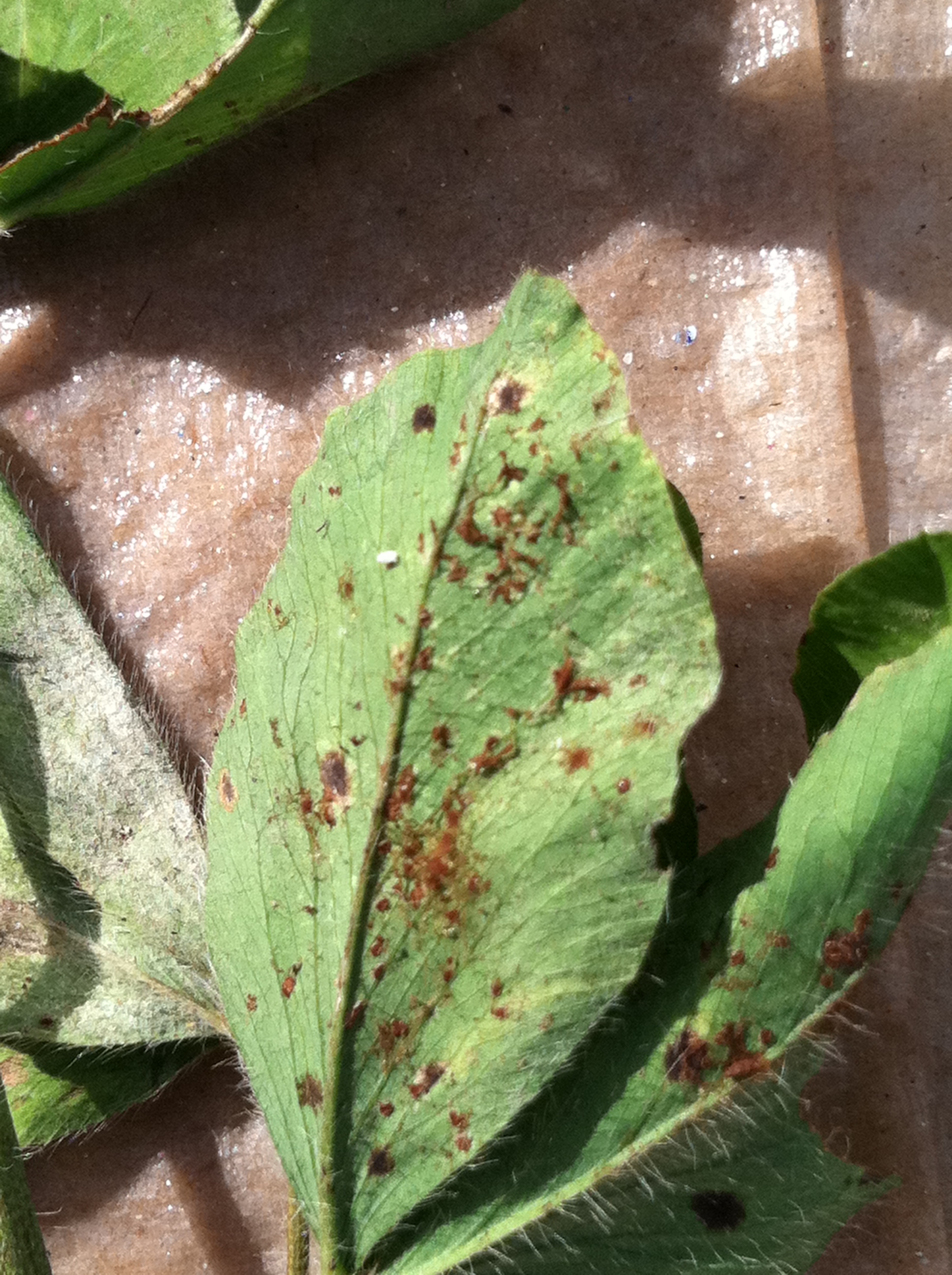
Cause A fungus, Uromyces trifolii var. fallens, that is favored by cool, wet weather. Disease usually appears later in the growing season, so it does not usually cause economic losses. Rust was found in an Oregon red clover seed field during 2011, a growing season with cooler- and wetter-than-normal weather.

Image related to Clover (Trifolium spp.)-Rust

Cause A fungus, Erysiphe trifoliorum (formerly E. polygoni), which overwinters on the plant and on diseased crop residue. It seldom seriously reduces seed production, but it can reduce forage yield and quality. The disease is common on red clover and occasionally on white and alsike clovers.

Image related to Clover (Trifolium spp.)-Powdery Mildew

Cause Clover phyllody phytoplasma, formerly known as a mycoplasma-like organism. This organism is transmitted by a leafhopper. It is a problem on the variety, Ladino, and on red clover.

Symptoms The characteristic symptom is the reversion of floral parts into leaf-like organs. Plants also may be stunted, chlorotic, or bronzed. Nodulation may be reduced, and no seed is produced.

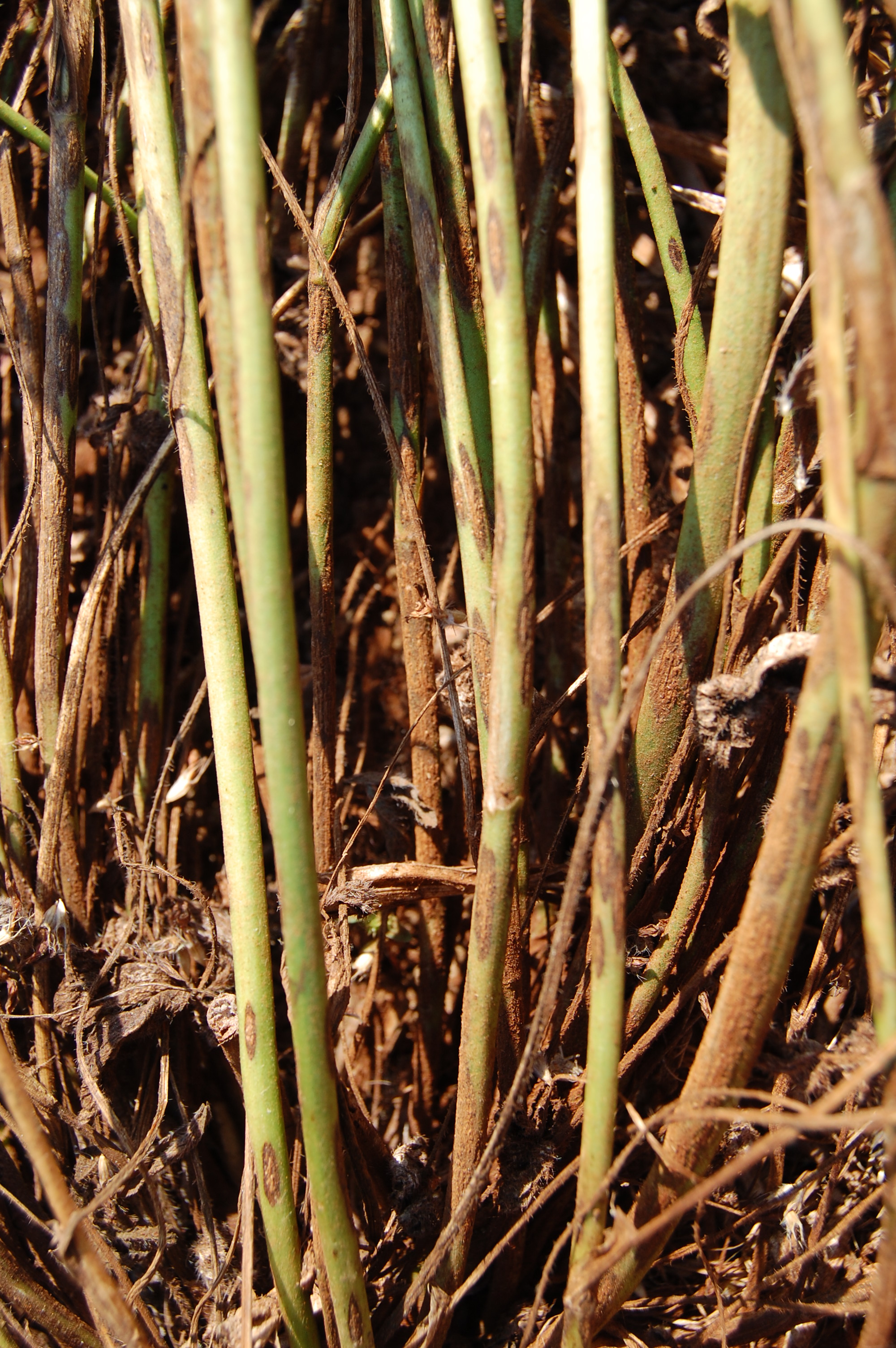
Cause A fungus, Kabatiella caulivora, that overwinters on diseased crop residue and may be carried on or in seed. The clover root borer also is a vector of this disease. Cool, wet weather favors disease spread and development. Many clover species are very susceptible.

Image related to Clover (Trifolium spp.)-Northern Anthracnose

Cause Ditylenchus dipsaci. The nematode lives mainly in red clover stems and buds; it attacks all red clover varieties now in use.

Image related to Clover (Trifolium spp.)-Nematode, Stem

Cause Meloidogyne hapla, a nematode that also attacks many vegetable crops. Root-knot nematodes are sedentary endoparasites. Only second-stage juveniles (the infective stage) and, rarely, adult males are in soil.

Symptoms Areas of stunted plants in the field. Numerous knots or galls are on roots. Do not confuse them with the pinkish red interiors of nitrifying nodules found on roots of leguminous plants.

Cause Heterodera trifolii, a cyst nematode that is a sedentary endoparasite. Although this pest occasionally is found in western Oregon on roots of various legumes, little information about it is available. Ladino clover and hairy vetch are infected frequently.

Symptoms Plants look unthrifty and generally stunted. Under magnification, brown females, resembling miniature lemons, can be seen on roots.

Cause Several fungi with the most important in Oregon being Phoma sp., Pseudopeziza trifolii (common leaf spot) and Polythrincium trifolii (sooty blotch).

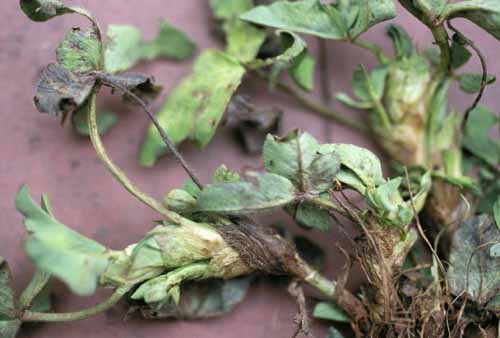
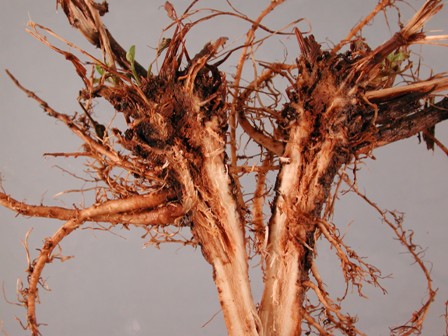
Cause Several fungi, primarily Fusarium spp. Stresses such as frequent cutting, winter injury, nutrient deficiencies, and wounding favor development of this disease. Fungal rots often are associated with insect injury caused principally by the clover root borer and clover root curculio. Damage increases as a stand ages. The disease can severely limit red clover production.

Image related to Clover (Trifolium spp.)-Fusarium Root and Crown Rot