Cause Many fungi are associated with various ear rots and kernel rots of corn. In sweet corn, principal pathogens include Fusariumverticillioides, Penicilliumoxalicum, Rhizopusstolonifer, Aspergillus spp., and Nigrosporaoryzae.
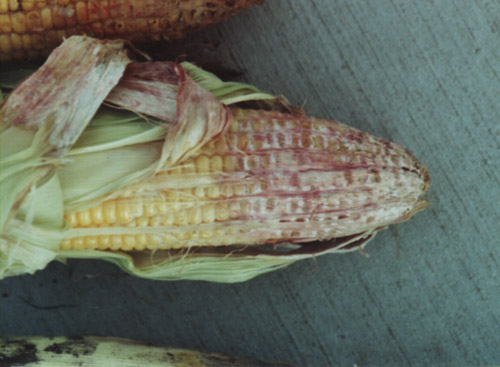
An ear of corn showing symptoms of Fusarium ear rot. Note the pinkish-red coloration characteristic of Fusarium spp. infections.
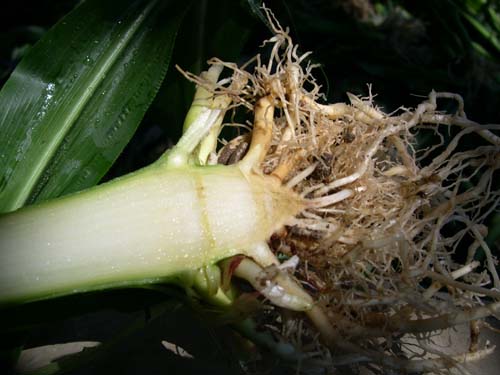
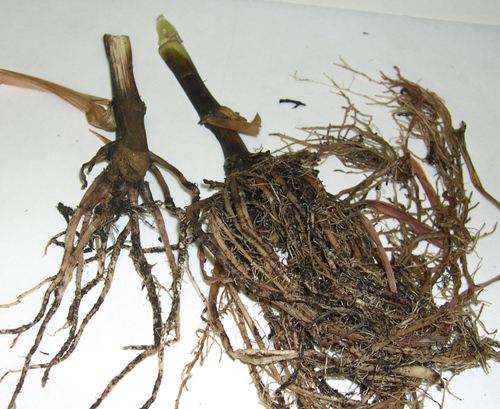
A sweet corn plant with Fusarium crown and stalk node rot. Note the dark rot in the crown region and stalk node with rot.
Cynthia M. Ocamb, 2002
The plant above has a healthy-looking crown.
Photo by Cynthia Ocamb, 2002.
Sweet corn plants at the 2-leaf stage showing dark discoloration in crown region, a symptom of Fusarium crown and stalk node rot disease.
Photo by Cynthia M. Ocamb, 2019.
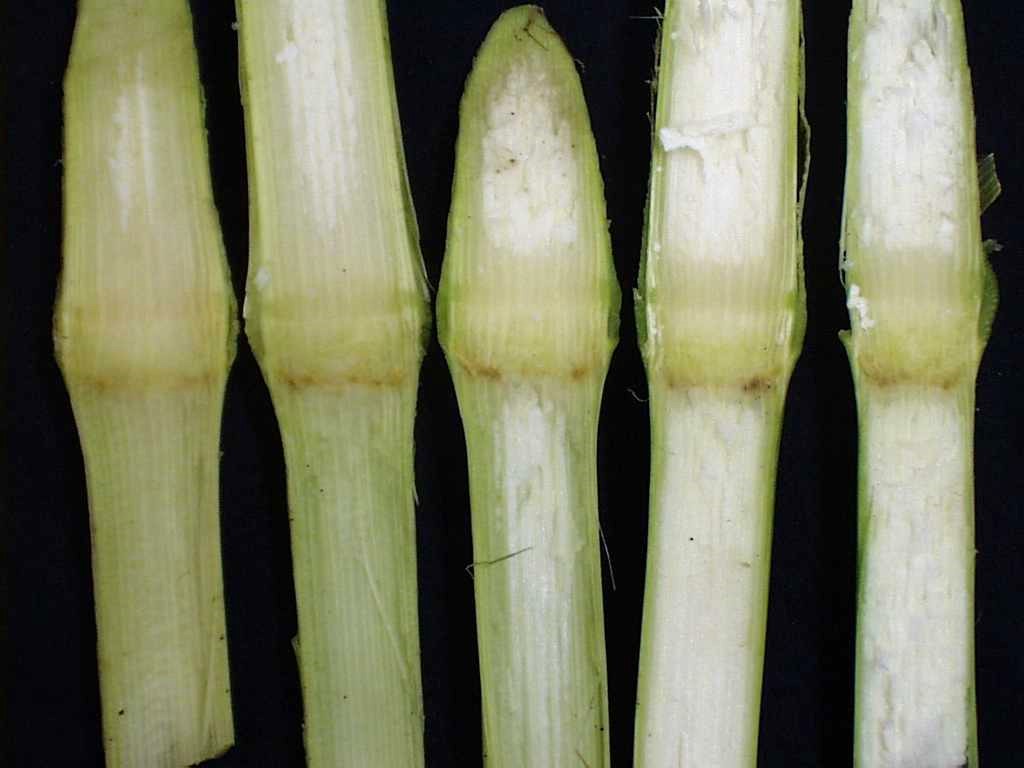
A set of node portions from a single sweet corn plant showing the discoloration in the stalk due to Fusarium crown and stalk node rot. The pair of stalk portions on the far right are from nodes associated with ear development.
Photo by Cynthia M. Ocamb, 2001.
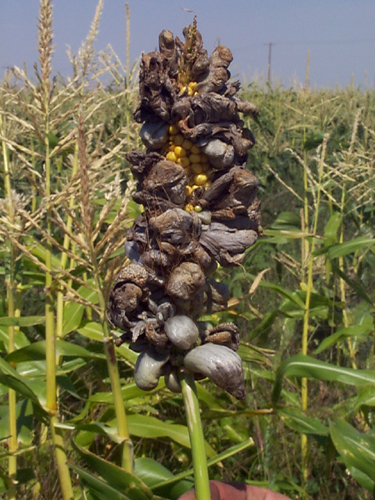
Cause The fungus, Ustilagomaydis (syn. = U. zeae), overwinters in soil as teliospores. Spores may survive 2 or 3 years. When cattle feed on corn stalks, spores are carried through into the manure. Spores may be wind-blown long distances. In the Pacific Northwest, the fungus attacks only corn. Younger plants are more susceptible. After ears form, plants are resistant. Any aboveground plant part may become infected.
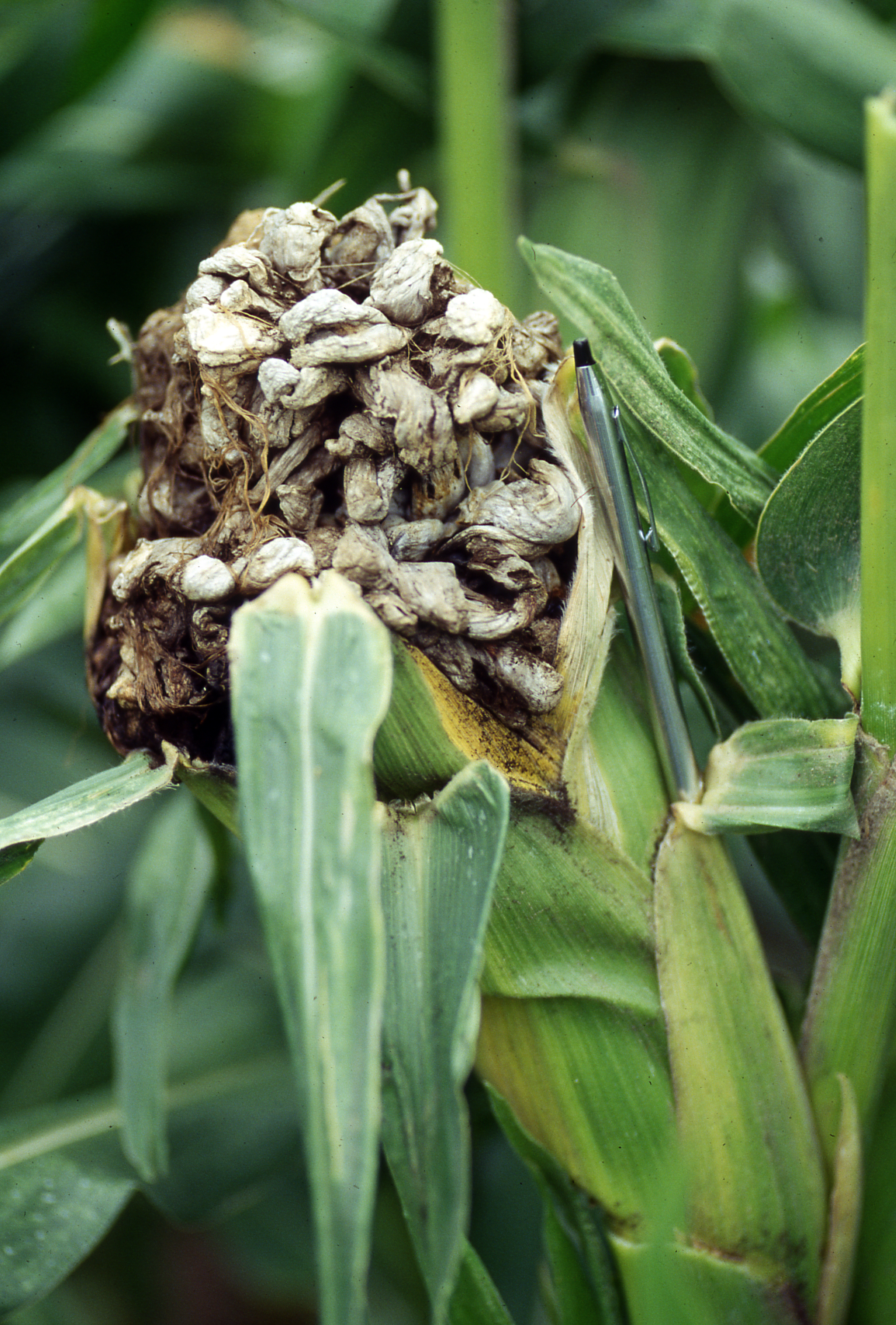
Sweet corn ear infected with common corn smut.
Photo by C. M. Ocamb, 1999
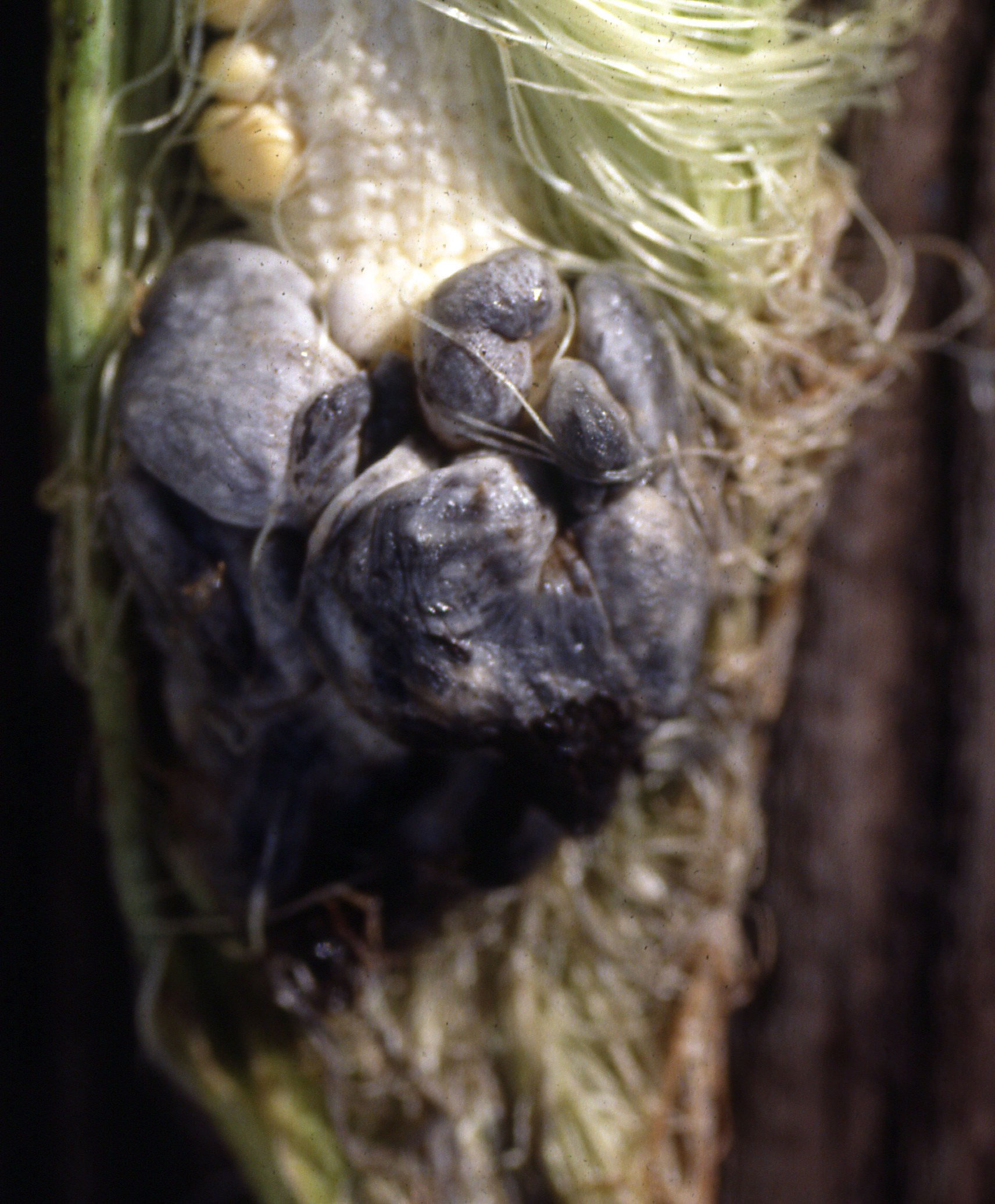
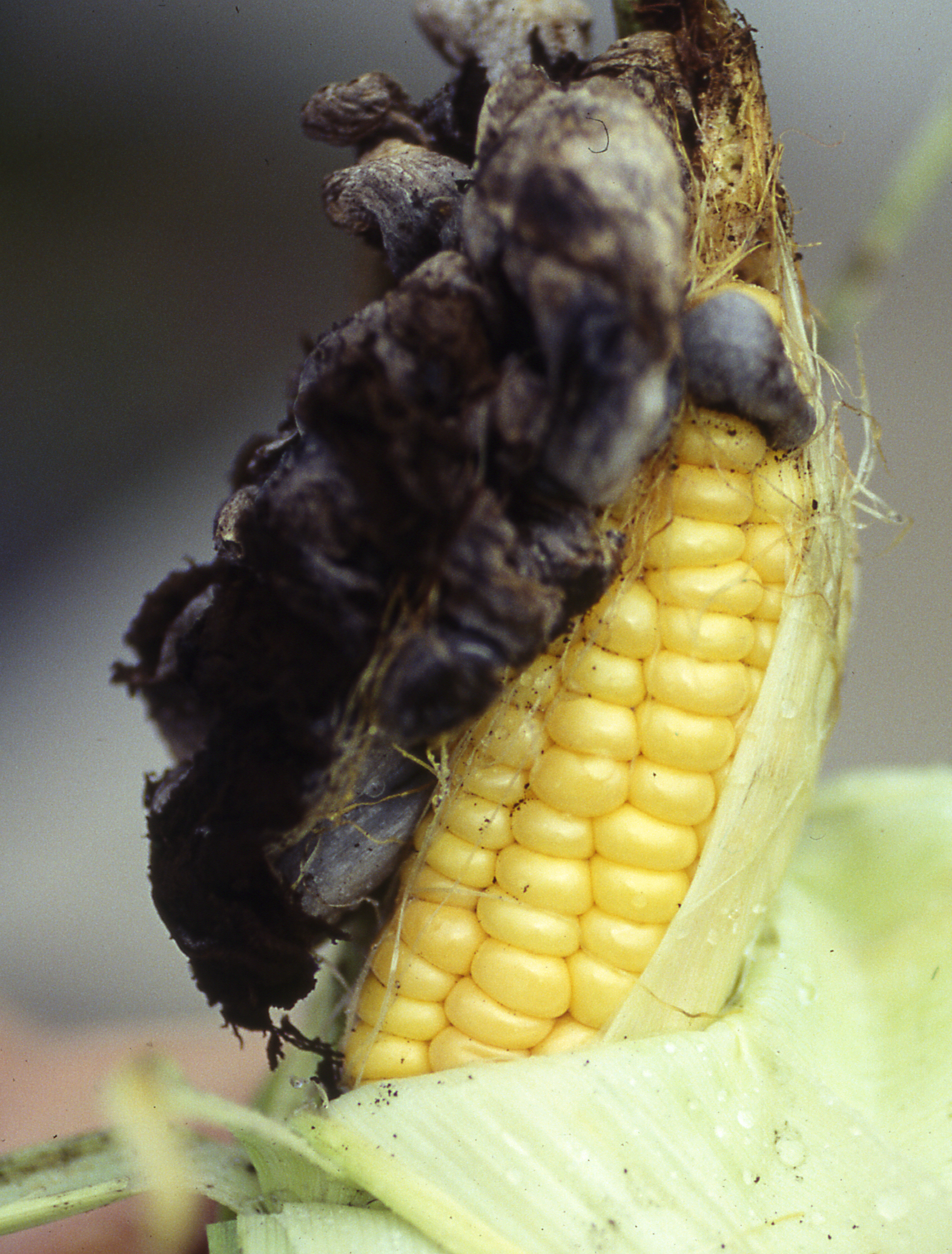
Another sweet corn ear infected with common corn smut, some healthy kernels are visible.
Photo by C. M. Ocamb, 1999
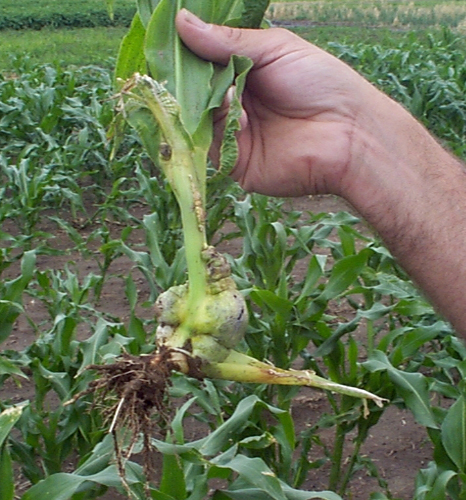
Sometimes common corn smut will infect corn seedlings at the base of plants and such infected plants may die.
Photo by C. M. Ocamb, 1999
Common smut on sweet corn
Melodie Putnam, 1991.
Common smut on corn.
Melodie Putnam, 1997.
Common smut on corn.
Melodie Putnam, 1997.
Cause The fungus, Pucciniasorghi, is seen only occasionally in the Pacific Northwest. Common rust overwinters as teliospores, which are resistant to weathering. Spores germinate in spring to produce basidiospores, which infect wood sorrel (Oxalis spp.). Spores produced in those infections complete the life cycle of the fungus by infecting corn. Cool (66°F optimum) humid weather favors the disease.
Cause Erwiniachrysanthemi pv.zeae (syn. = Dickeyazeae=E.carotovora f. sp.zeae), a bacterium that persists on crop residues in soil.
A sweet corn plant showing a top rot due to Erwinia.
Photo by Cynthia M. Ocamb, 2012.
Stalk of corn with bacterial stalk rot, note the water-soaked, brown appearance of the lower stalk.
Photo by Cynthia M. Ocamb, 2007
Cause A fungus, Septoriapetroselini, which can be seedborne affects both cilantro and parsley. Infected seed can have reduced germination and emergence. Once this fungus is introduced to a field, it survives on non-decomposed plant debris and produces conidia under a wide temperature range (50°F to 86°F). Spread occurs under moist conditions (wind-driven rain, dew drips, irrigation) and by mechanical means (tools or workers).
Note the necrotic lesions on the root of this parsley plant.
Photo by Stacey Fischer, 1991.
Cause The fungus, Rhizoctoniasolani (sexual stage: Thanatephoruscucumeris), has been found to cause root rot and crown disease on cilantro in California but has not yet been found to cause disease on cilantro in Oregon.
Cause Pythium spp., Rhizoctoniasolani, and Fusarium spp. Pythium and Rhizoctoniasolani have been detected on diseased cilantro in Oregon; Fusarium has been implicated in diseased cilantro growing in Canada, Puerto Rico, and other regions overseas.
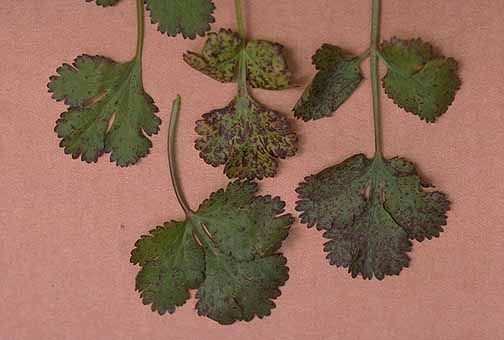
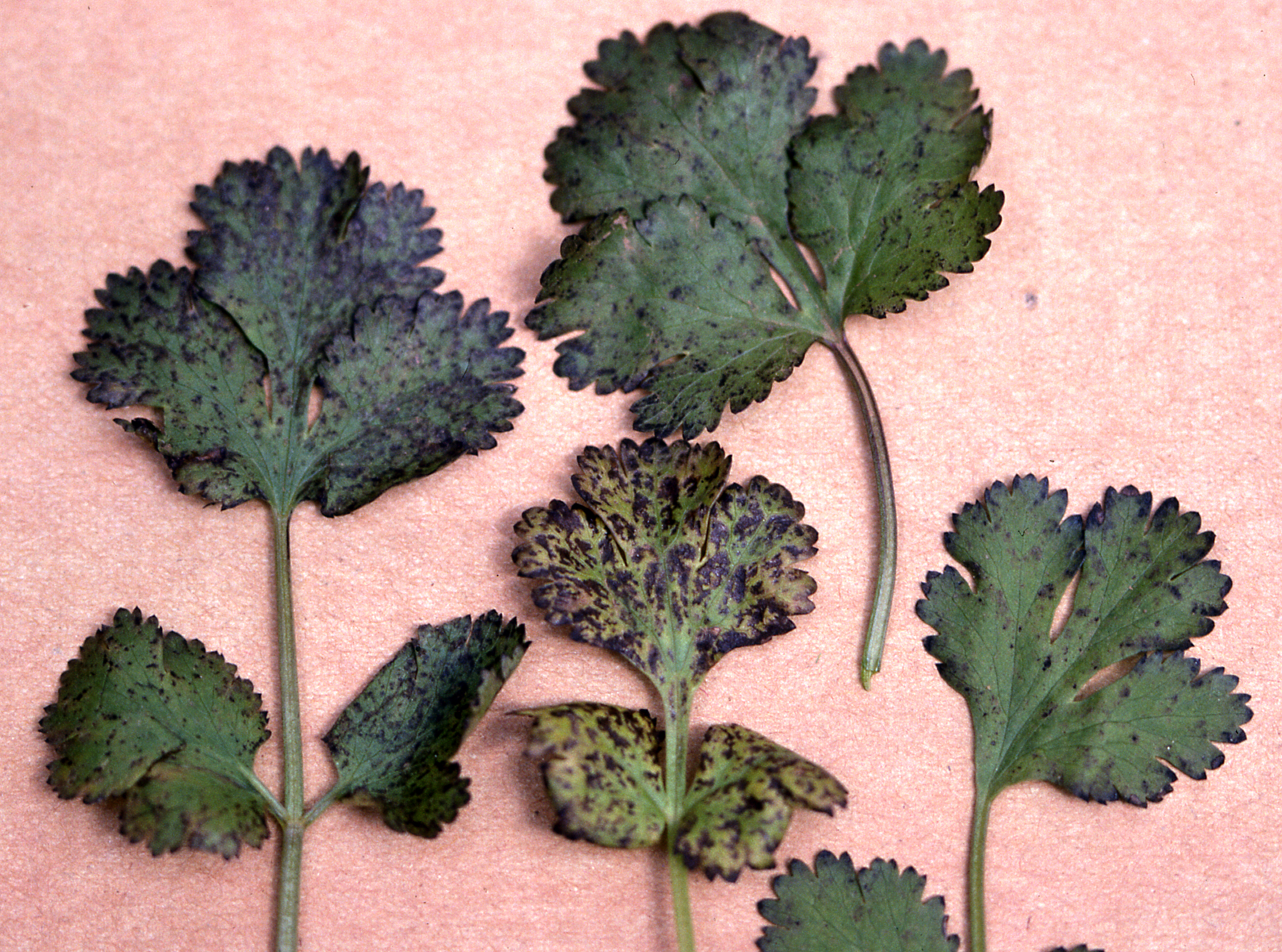
Numerous necrotic leaf spots on cilantro.
Photo part of OSU Extension Plant Pathology Slide
Cause The bacterium, Pseudomonassyringae pv.coriandricola, is common; Xanthomonascampestris pv.coriandri and X.hortorum pv.carotae