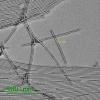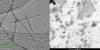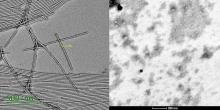
Virus particles can be rod shaped, like TMV on the left or isometric (spherical) as on the right.
Teresa Sawyer, Electron Microscope Facility. Images taken with the Titan ChemiStem made by FEI CO in Hillsboro OR.
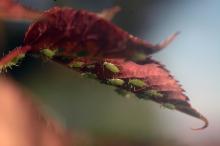
Aphids feed on plants using a stylet that pierces plant cells. Viruses may be simply picked up in and/or on the stylet when an aphid feeds on a virus-infected plant. The virus can then be moved when the aphid feeds on a healthy plant.
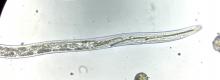
Nematodes, such as this Xiphinema spp. juvenile, can transmit plant viruses. An identifying characteristic of this plant-parasitic nematode is multiple stylets where one is lost after each stage of molt. The stylet is used to feed on plant root tissue where the nematode can acquire and transmit viruses.
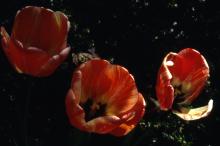
Note the irregular break in red color of these tulip flowers. This can be due to any of several viruses including Tulip breaking virus, Tulip band-breaking virus, Tulip top-breaking virus, Rembrandt tulip-breaking virus and Lily mottle virus.
Note the irregular break in red color.
Photo by Kathy Merrifield, 1991.
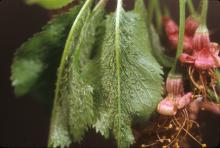
Note the numerous enations on the underside of this cherry leaf due to Cherry rasp leaf virus.
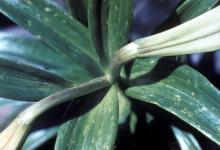
Fleck is characterized by white or yellowish spots on these lily leaves which barely are noticeable in the youngest leaves but conspicuous in older ones.
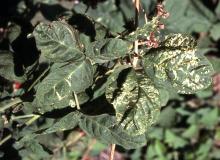
Blackberry Calico Virus on Marionberry. Note the striking yellow line patterns on the leaves.
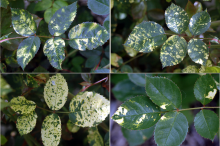
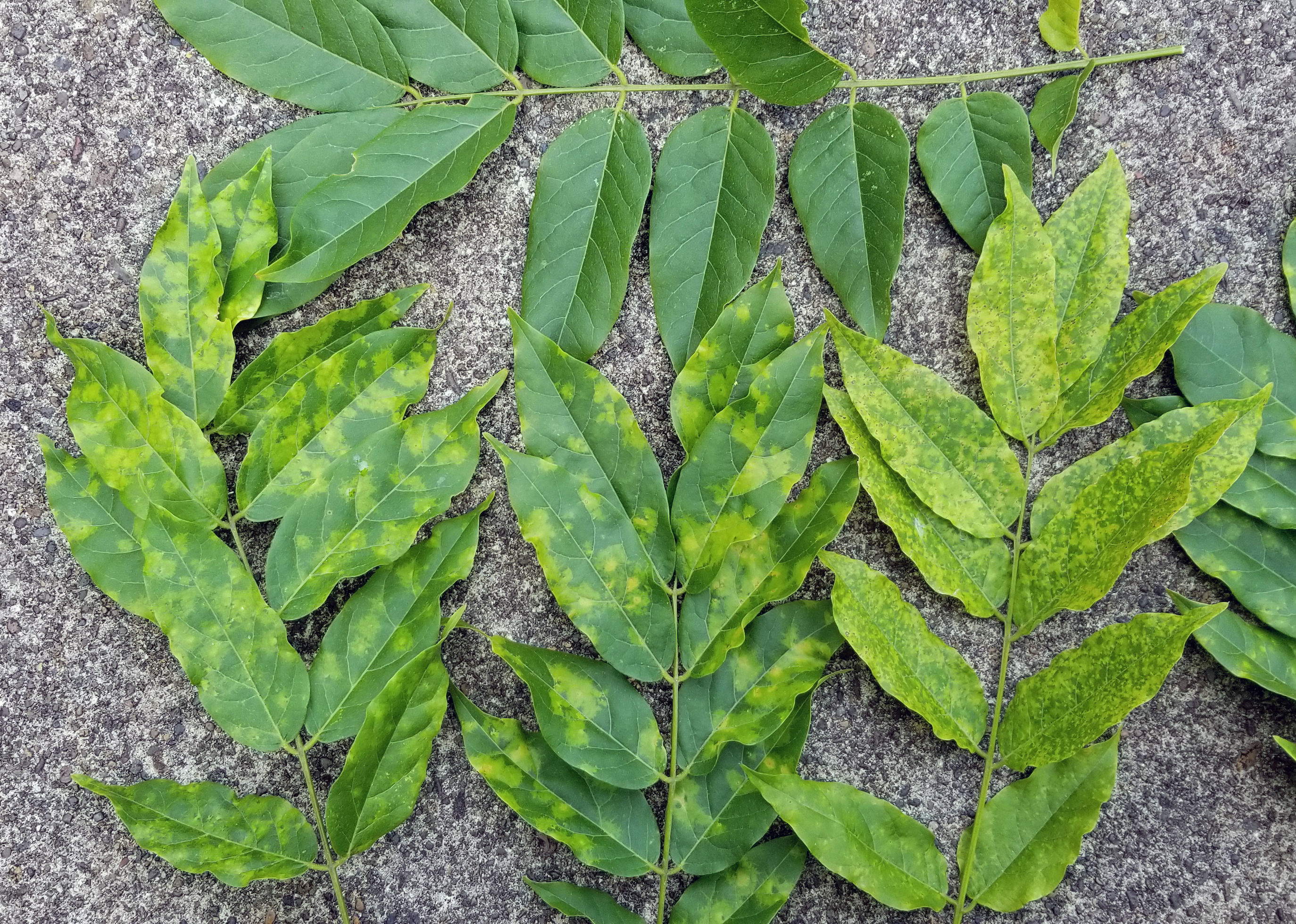
Mosaics are patches of dark green, light green or white on leaves of affected plants. Symptoms are not evenly distributed as each of these leaves were from the same rose plant with Rose mosaic disease.
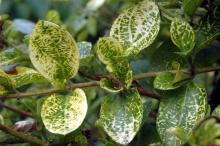
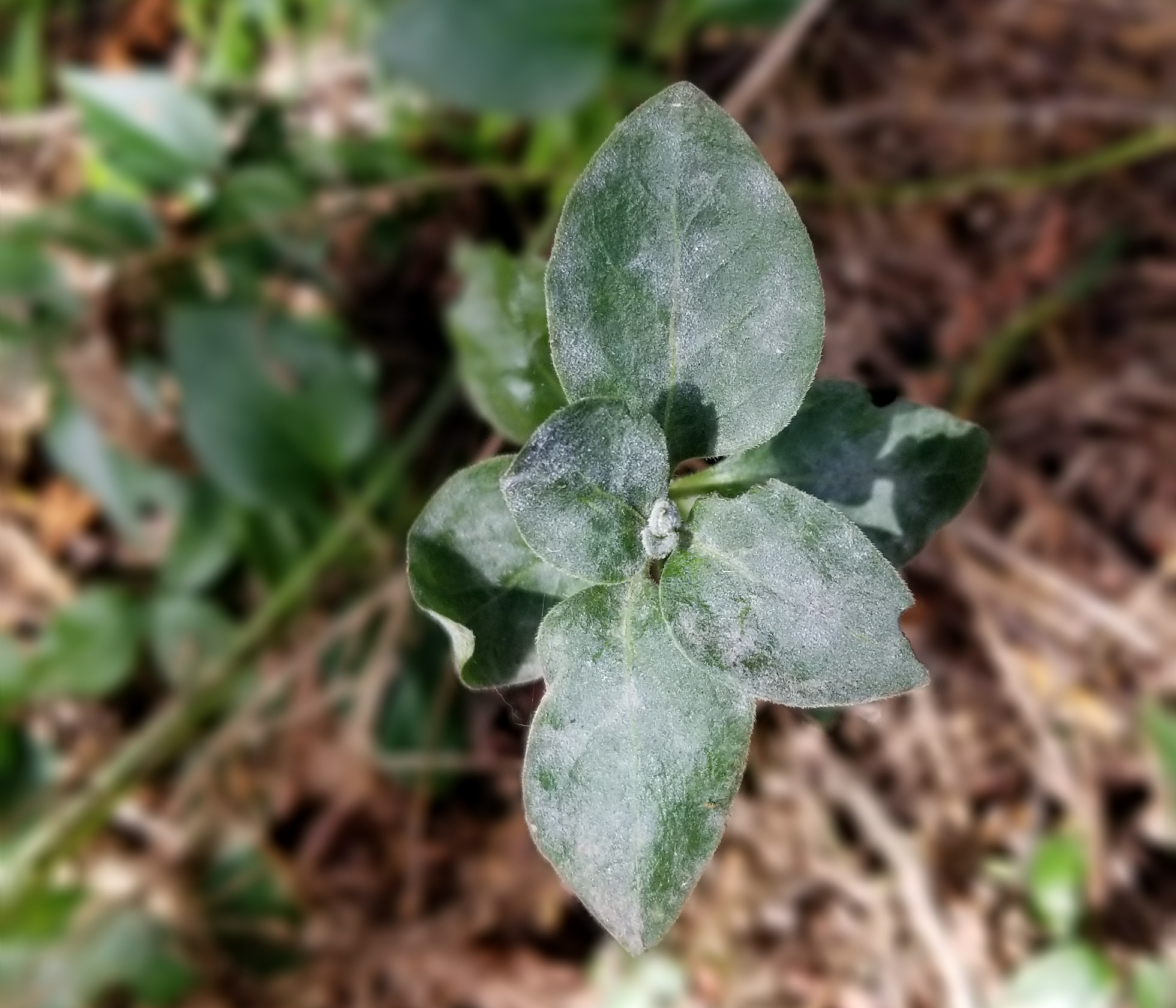
Leaf veins turn yellow or almost white on these honeysuckle plants with Honeysuckle yellow vein mosaic virus or Honeysuckle yellow vein virus. Not every leaf has the exact same pattern.
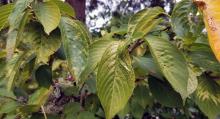
Several virus symptoms can occur on the same plant. Ringspots on the left side, vein clearing in the center (yellow rather than green leave veins) and in the bottom right you can see a leaf with a line pattern (wavy or zig-zag line across the leaf blade) on this flowering cherry tree.