Cause Albugo candida, a fungus-like microorganism, can cause disease on crucifers in general including arugula, radish, rapeseed (canola), horseradish, leafy brassicas, head and stem brassicas, and wild mustards. In the Pacific Northwest, white rust can be severe on radish seed crops and potentially in other types of cruciferous seed fields including arugula. The pathogen overwinters as oospores in stagheads (galls formed on infected seed heads) or plant debris as well as mycelium in infected hosts.
Cause The fungus, Erysiphecruciferarum (syn. E.polygoni), can infect most crucifer crops and cruciferous weeds, but strains exist that have specificity and will infected only a subset of the crucifers. Stressed plants will be more susceptible to disease. The fungus survives on infected hosts or as chasmothecia (formerly cleistothecia, sexually-produced survival structures) on infected crop debris.
CauseSclerotinia sclerotiorum is a cosmopolitan fungus that occurs across the globe, infecting a very large number of plant species including parsley crops. Other susceptible host plants include bean, carrot, pea, lettuce, potato, green pepper, cucurbits, parsnip, radish, sunflower, herbs including mint, fruit trees including apple, nectarine, and sweet cherry, and a large number of ornamentals both woody and herbaceous. Weeds can also be host to S.
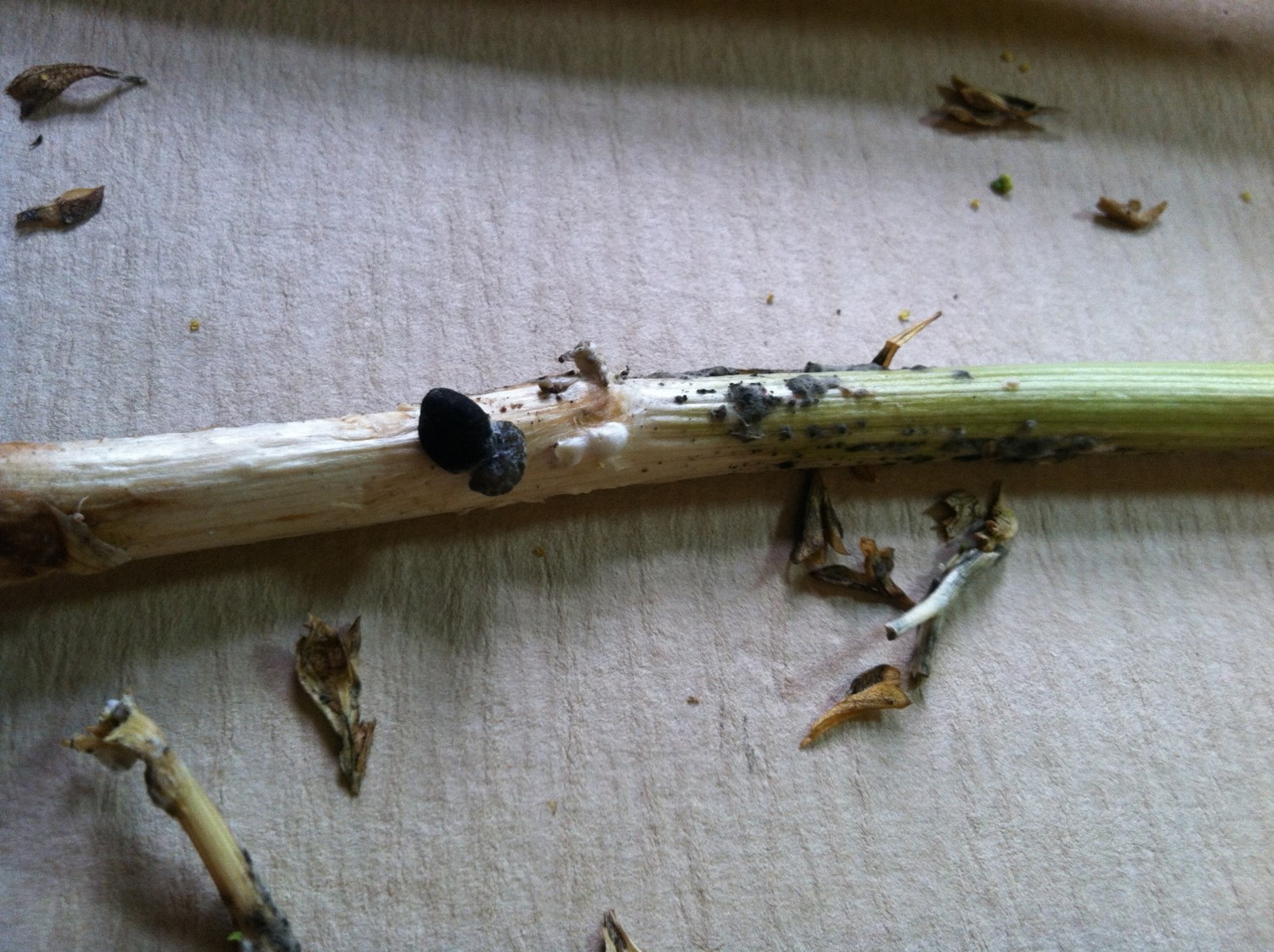
A parlsey plant portion infected with Sclerotinia sclerotiorum. There is a light brown coloration of the infected stem portion and both mature (black colored masses) and immature (white color masses) sclerotia on the infected stem.
Photo by C.M. Ocamb, Oregon State University, 2013.
Notes Several root rots have been sent in on samples of H. calycinum (creeping St. John's Wort) from the PNW to the OSU Plant Clinic. Pathogens found cause common root rot diseases and include the water loving oomycetes Phytophthora and Pythium as well as Rhizoctonia and Fusarium. Some of these pathogens have been reported in California but none from the PNW.
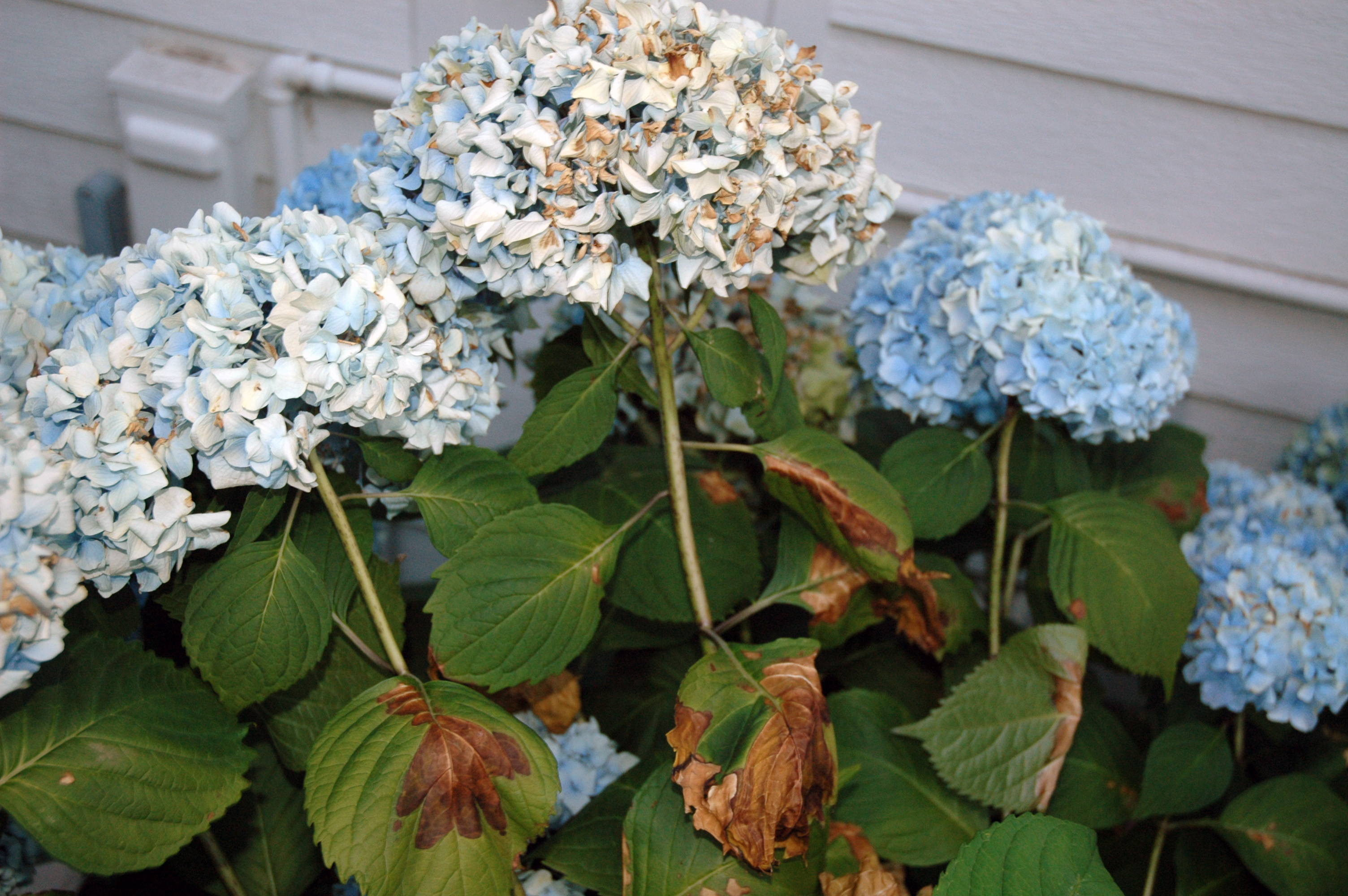
Note:Hydrangea macrophylla is considered a heavy water user and wilts easily under water deficit and/or high heat, though differences among cultivars exist.
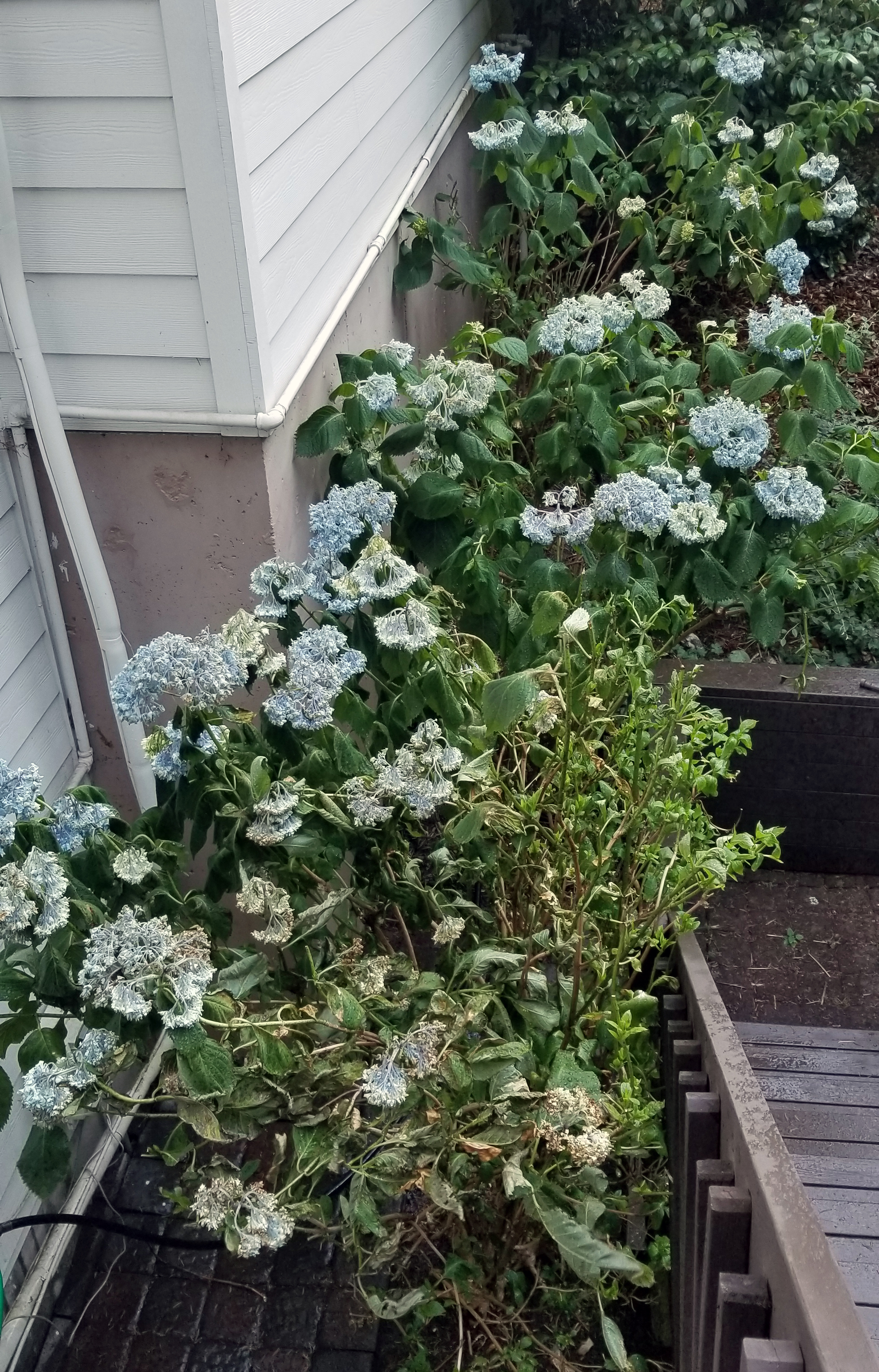
Wilting of these Hydrangeas during the June 2021 heat dome.
Jay W. Pscheidt, 2021.
Sunburn results in necrotic tissue on both flowers and leaves if not water during heat stress events.