Cause Fusarium oxysporum f. sp. conglutinans) causes yellows of cabbage and other members of Brassicaceae. This fungus survives in soil as durable resting structures known as chlamydospores which can survive years between hosts. This pathogen can be spread through soil movement on equipment, tools, and footwear as well as infested soil being windborne or waterborne.
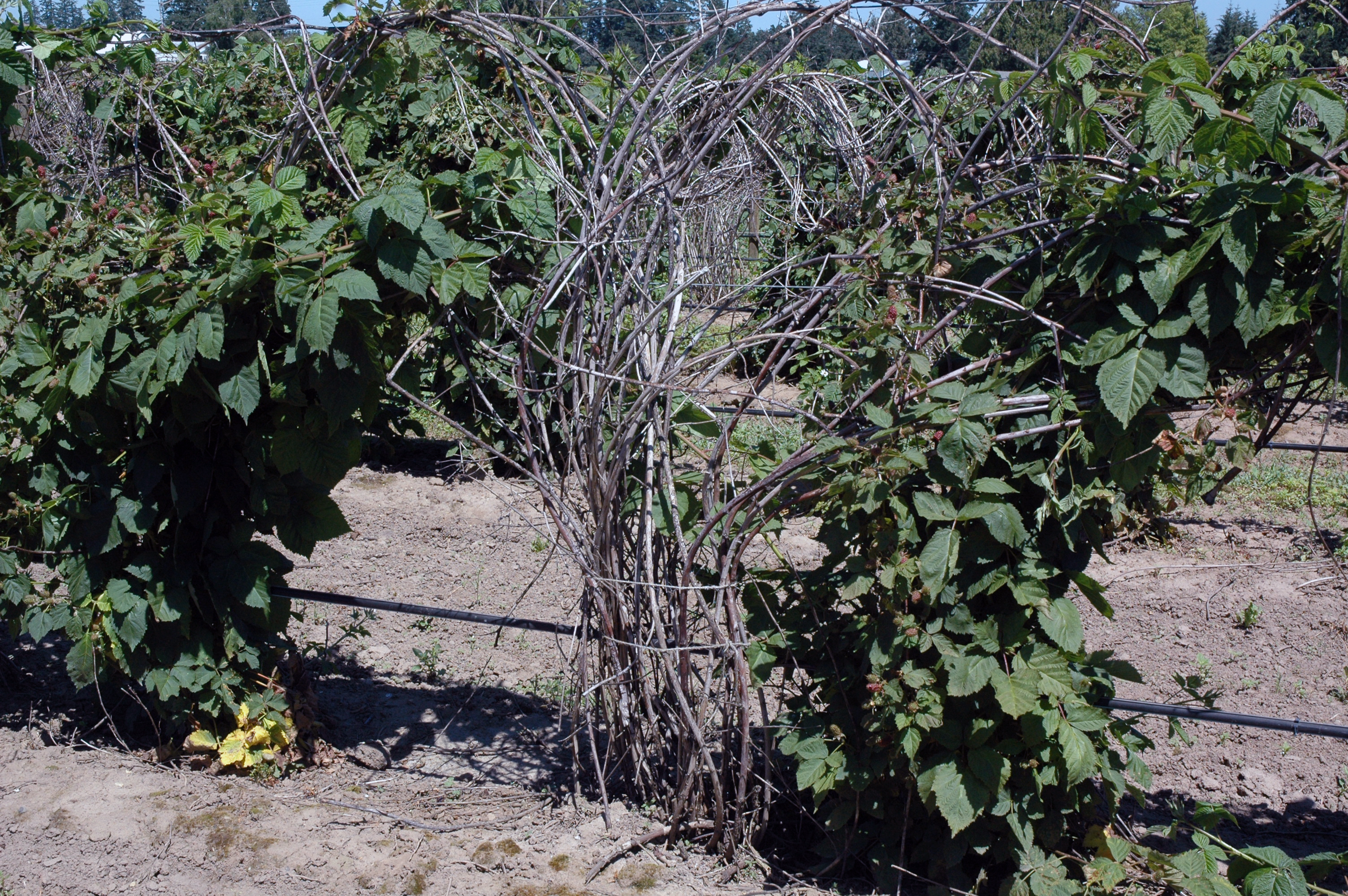
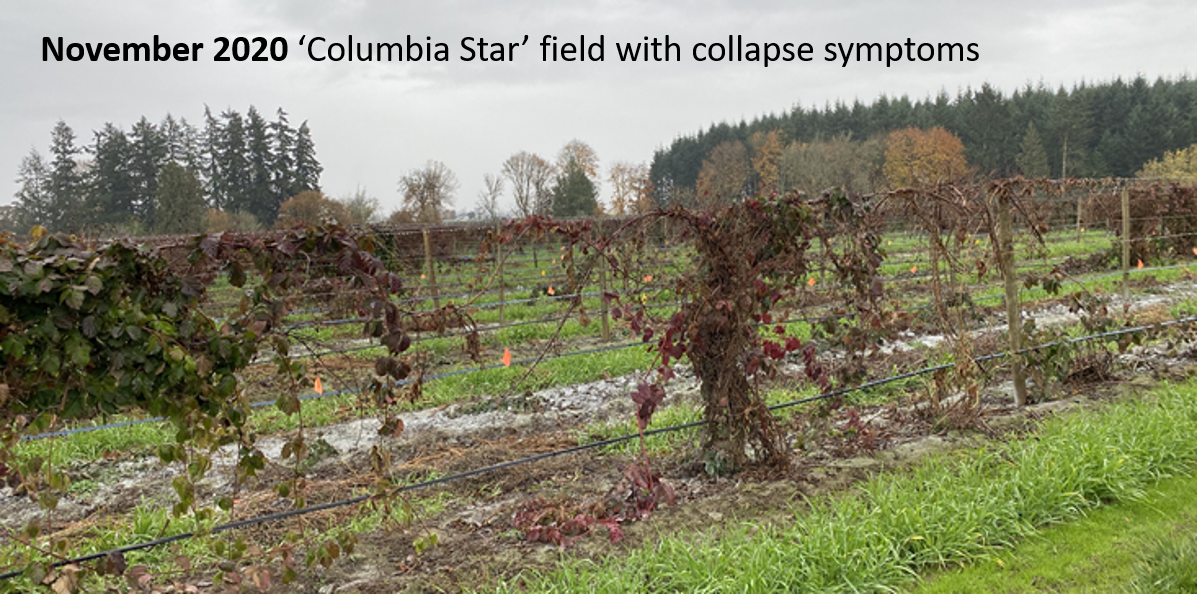
Cause Blackberry collapse has appeared in commercial 'Columbia Star' and 'Black Diamond' fields in the Willamette Valley of Oregon. Other names for this disease may include "cane wilt and canker". The fungus Gnomoniopsis idaeicola has been associated with these collapsed plants but can be confused with other diseases such as those caused by Kalmusia coniothyrium (the cane blight pathogen) and Botrytis sp.
The main symptom is a sudden wilting and death of entire plants.
Jay W. Pscheidt, 2022.
Virginia Stockwell, 2020.
Note There have been very few beech samples sent into the OSU Plant Clinic. One nursery sample had a Phoma leaf spot diagnosis and there was a diagnosis of Phytophthora and another of Phomopsis. Mature trees in the landscape have been noted to decline in droughty or low soil moisture conditions. Overall, beech diseases are not an important issue in the PNW.
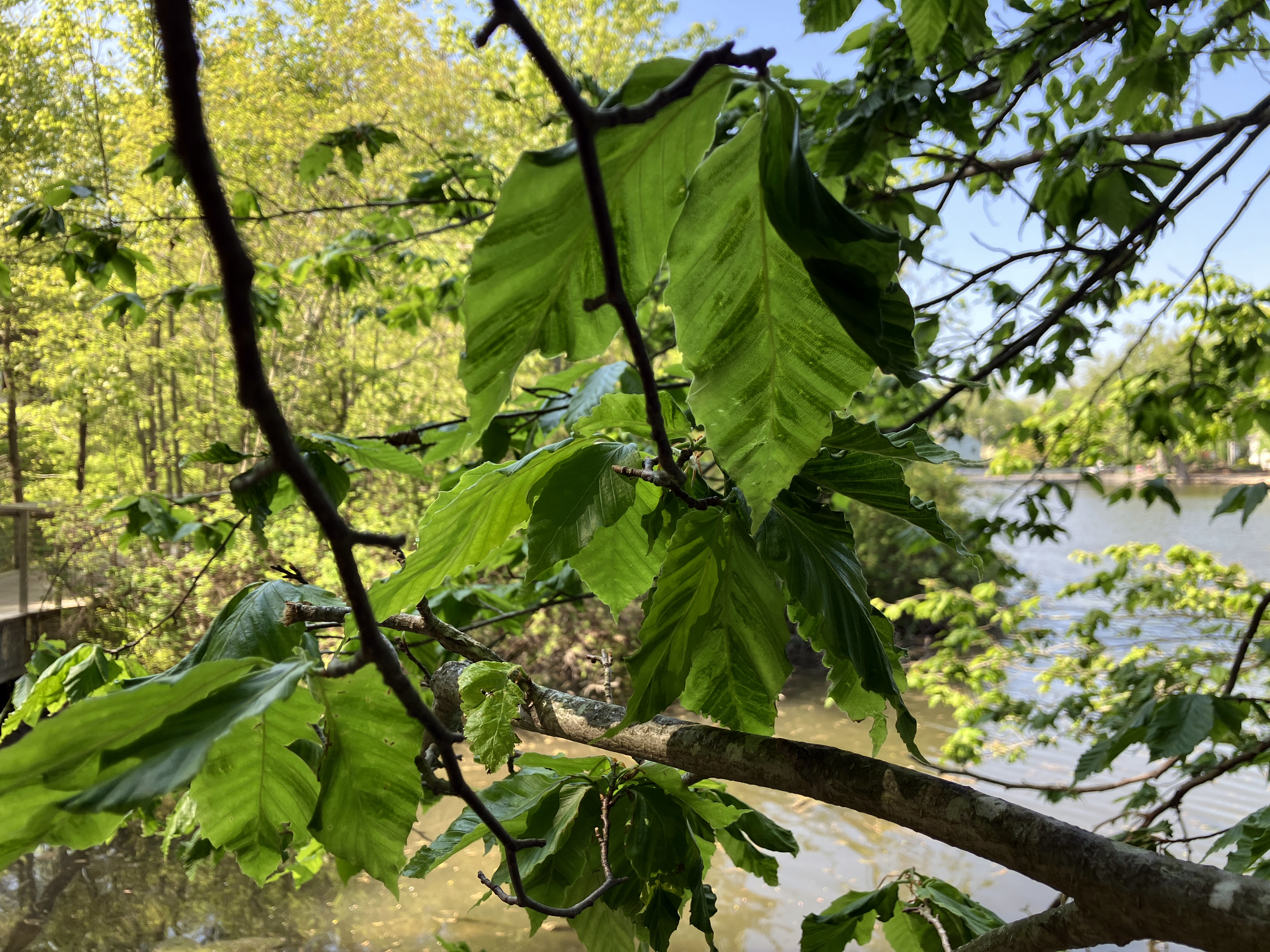
American beech with characteristic banding patterns on the leaves.
Margery L. Daughtrey, NY, 2023.
European beech with characteristic banding patterns on the leaves as well as thickening leaves.
Margery L. Daughtrey, NY, 2023.
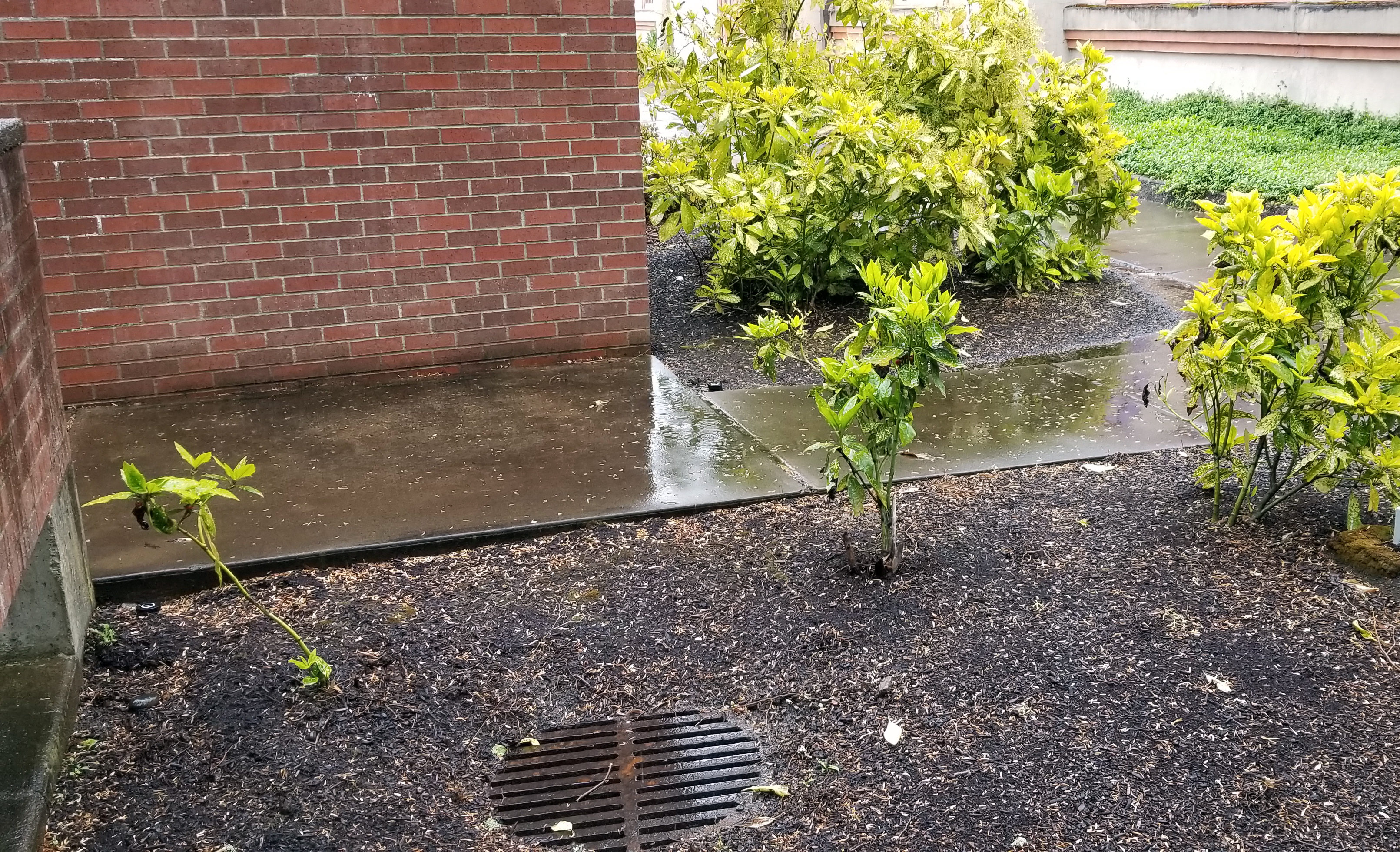
Cause Phytophthora spp., fungal-like organisms that thrive in water saturated soil and/or poor drainage conditions. Several different species have been identified throughout the world on Aucuba. The organism infects at the tips, middle and junctions of lateral root branches. Entire roots become necrotic as the pathogen colonizes the tissue. Depending on the species, the pathogen may continue up into the stems causing the plant to collapse and die.
Note better condition of Aucuba plants as they are planted at increasing distances from the drain.
Jay W. Pscheidt, 2022.
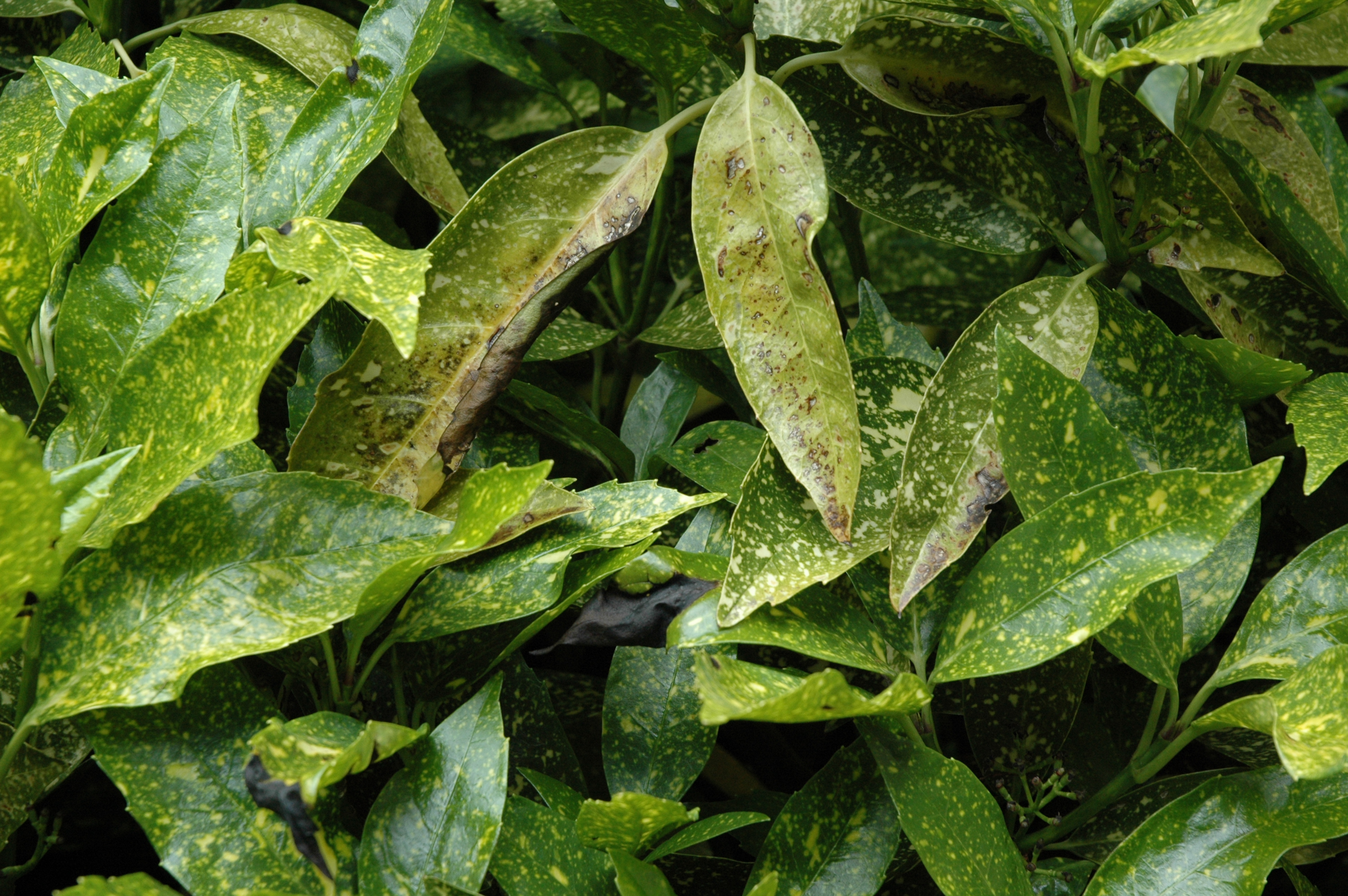
Cause Leaf spots of Aucuba have been a common problem sent into the OSU Plant Clinic. A wide variety of fungi have been isolated and many have been considered secondary invaders (such as Pestalotia sp.) to abiotic issues such as sunburn. The fungi Colleotrichum gloesporeiodes and a Phomopsis sp. have been found by the OSU Plant Clinic and reported from WA.
Note: These are shade loving plants that do not tolerate full sun even for part of the day.
Leaves get a washed out chlorotic look or have marginal or tip necrosis when in full sun.
Jay W. Pscheidt, 2008.
Cause The fungus, Rhizoctonia spp., has been found on Astragalus in Oregon. Rhizoctonia spp. occurs in Oregon on other crops and may incite disease on numerous other crops including arugula, beets, snap bean, clover, peppermint, and brassicas. This fungus also causes damping-off of a wide range of plant species. It overwinters in soil as durable, long-lived structures known as sclerotia, but can also survive in association with infected plant debris.