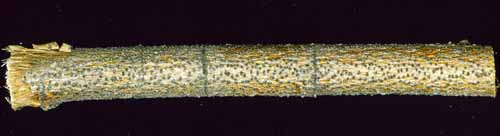
Cause The conidial stage of the fungus Neoerysiphe galeopsidis (formerly Erysiphe cichoracearum) has been found in Oregon. Golovinomycesbiocellatus has also been reported on this host. The cultivars Cambridge Scarlet and Croftway Pink are reported very susceptible in many areas.
Note the gray patches all over these leaves and stems.
Photo by Jay W. Pscheidt, 1994.
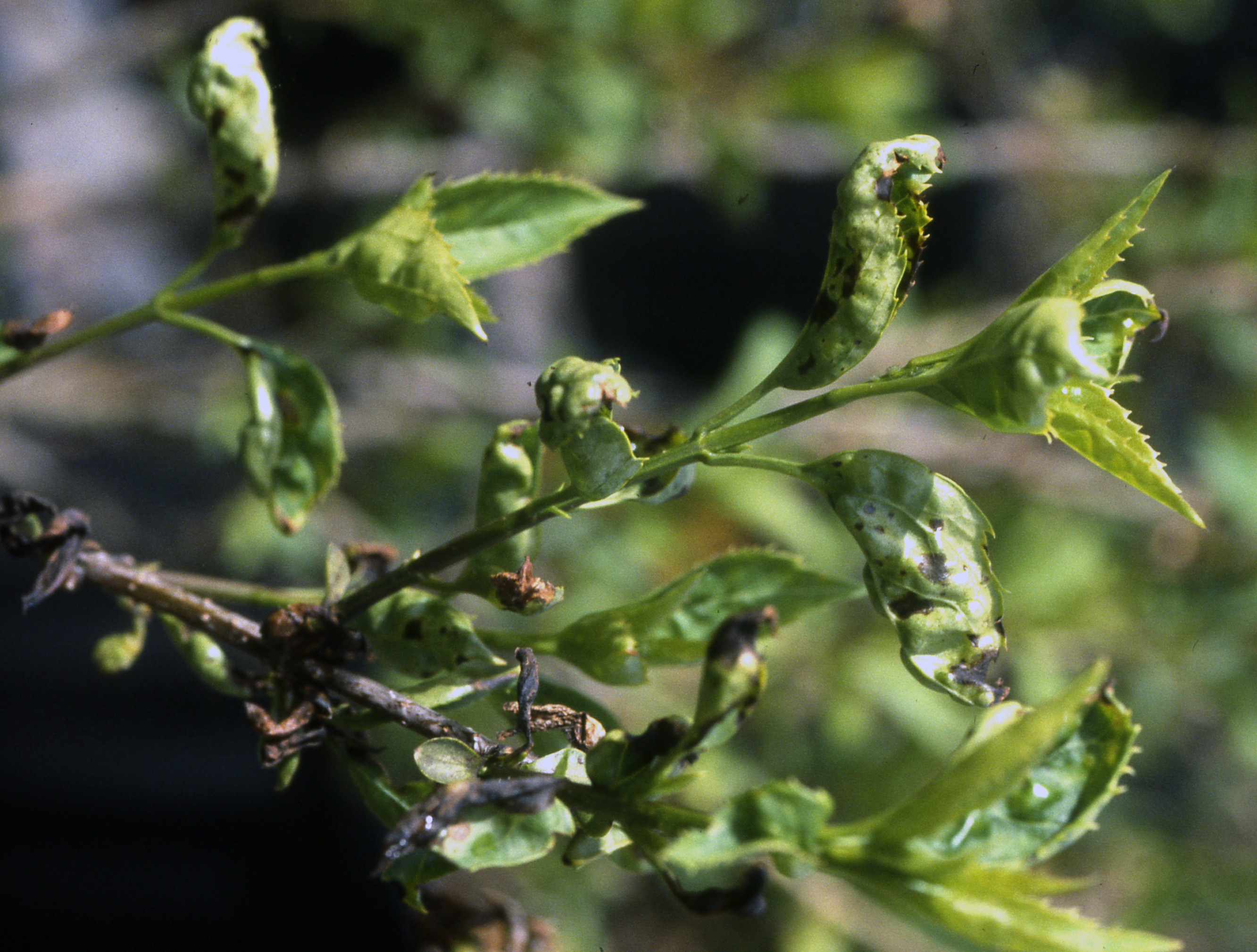
Cause Pseudomonas syringae pv. syringae and P. s. pv. philadelphi, bacteria that overwinter on stems and buds. The disease is often a problem in years when spring weather is cool and wet.
Note the necrotic spots and deformed leaves.
Photo by Jay W. Pscheidt, 1993.
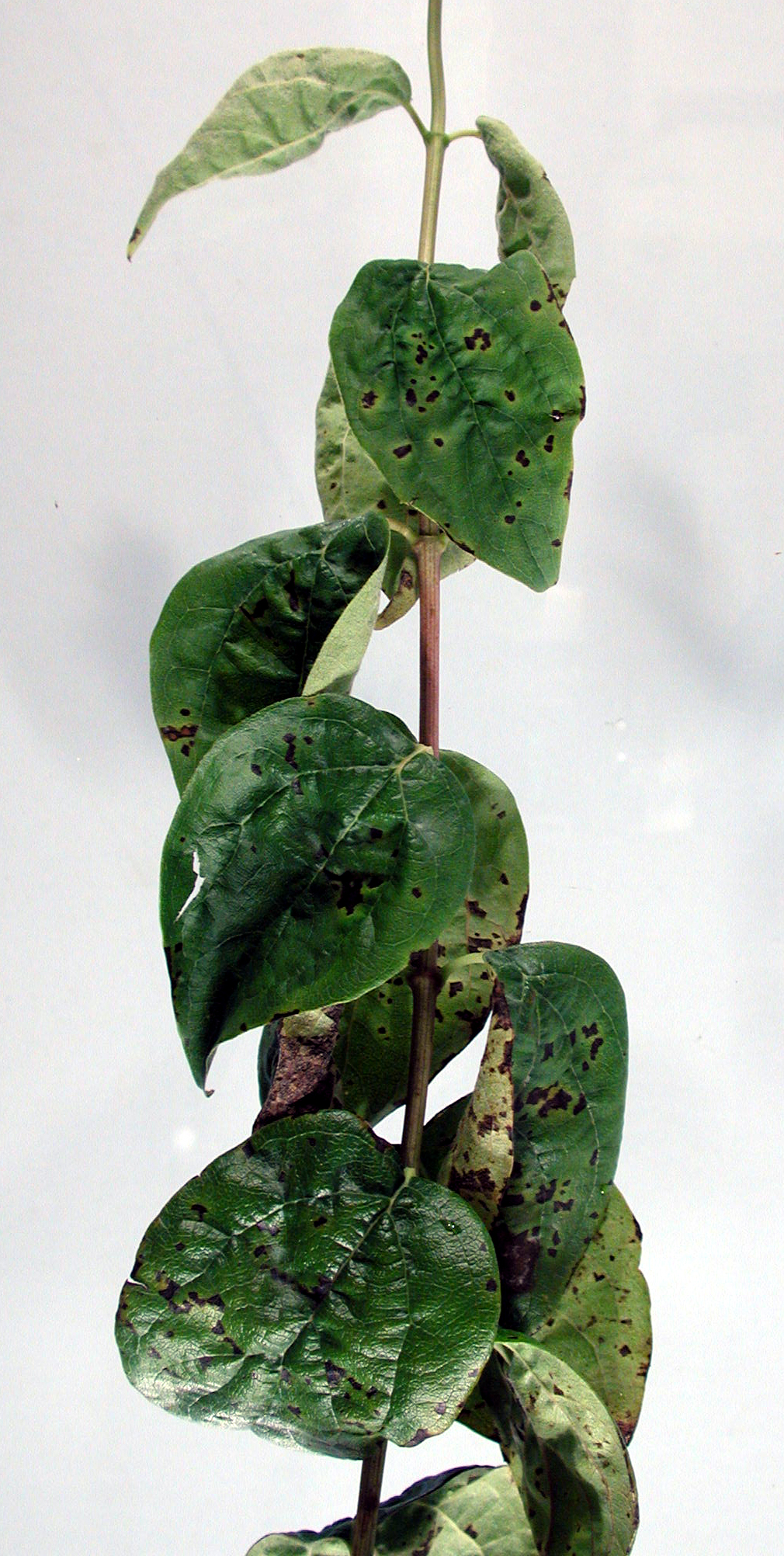
Spots may be angular and have a slight chlorotic halo.
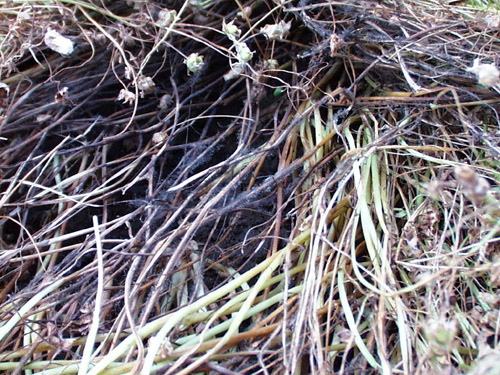
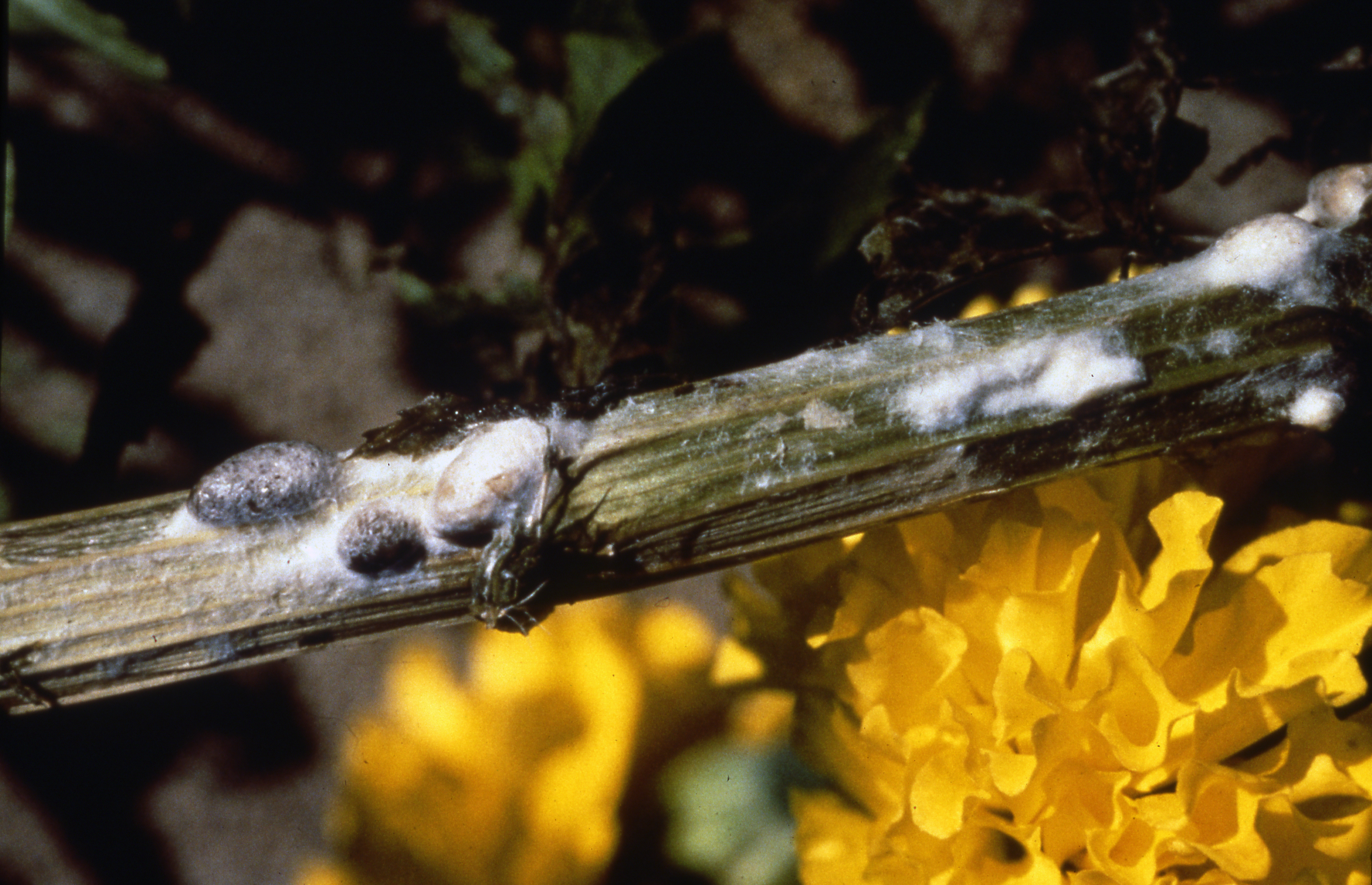
Cause Botrytis sp., a fungus, that has been observed in meadowfoam plantings in Oregon but have never been reported. The disease has been observed in dense plantings with a lush vegetative growth caused by over-fertilization. The disease also has been observed after the crop has lodged due to heavy late-spring rains that matted foliage to the ground.
Note the sclerotia begining to form within the mycelial masses along this stem.
Photo by Stacey Fischer.
Cause Several fungi including Septoria tageticola, Alternaria sp., and Cercospora sp. Although there are no published reports of finding these fungi in the Pacific Northwest, the OSU Plant Clinic has found Alternaria leaf spot. Cultivars of the African marigold (T. erecta) are susceptible to S.