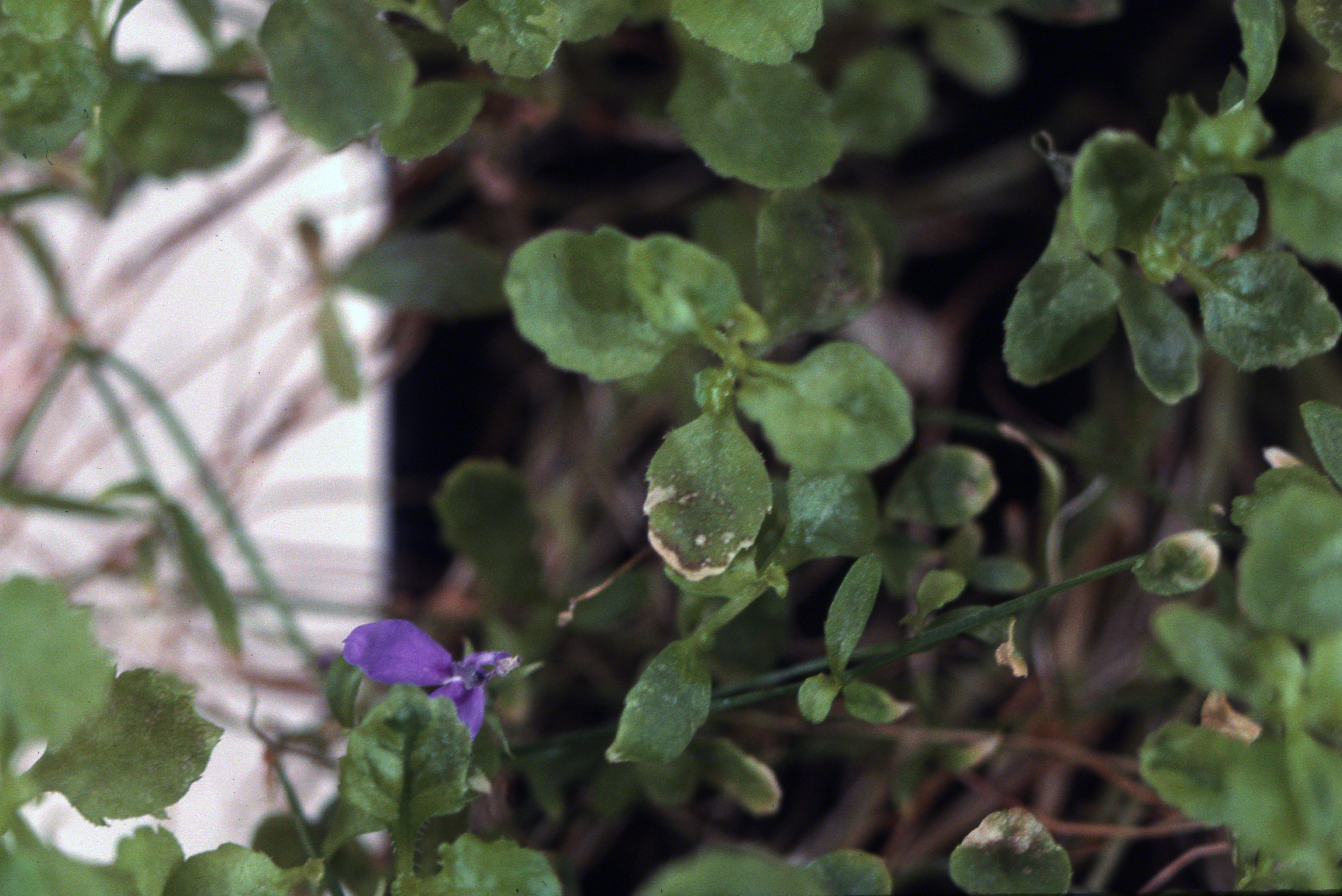
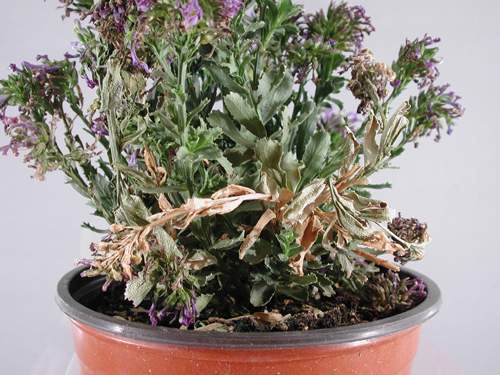
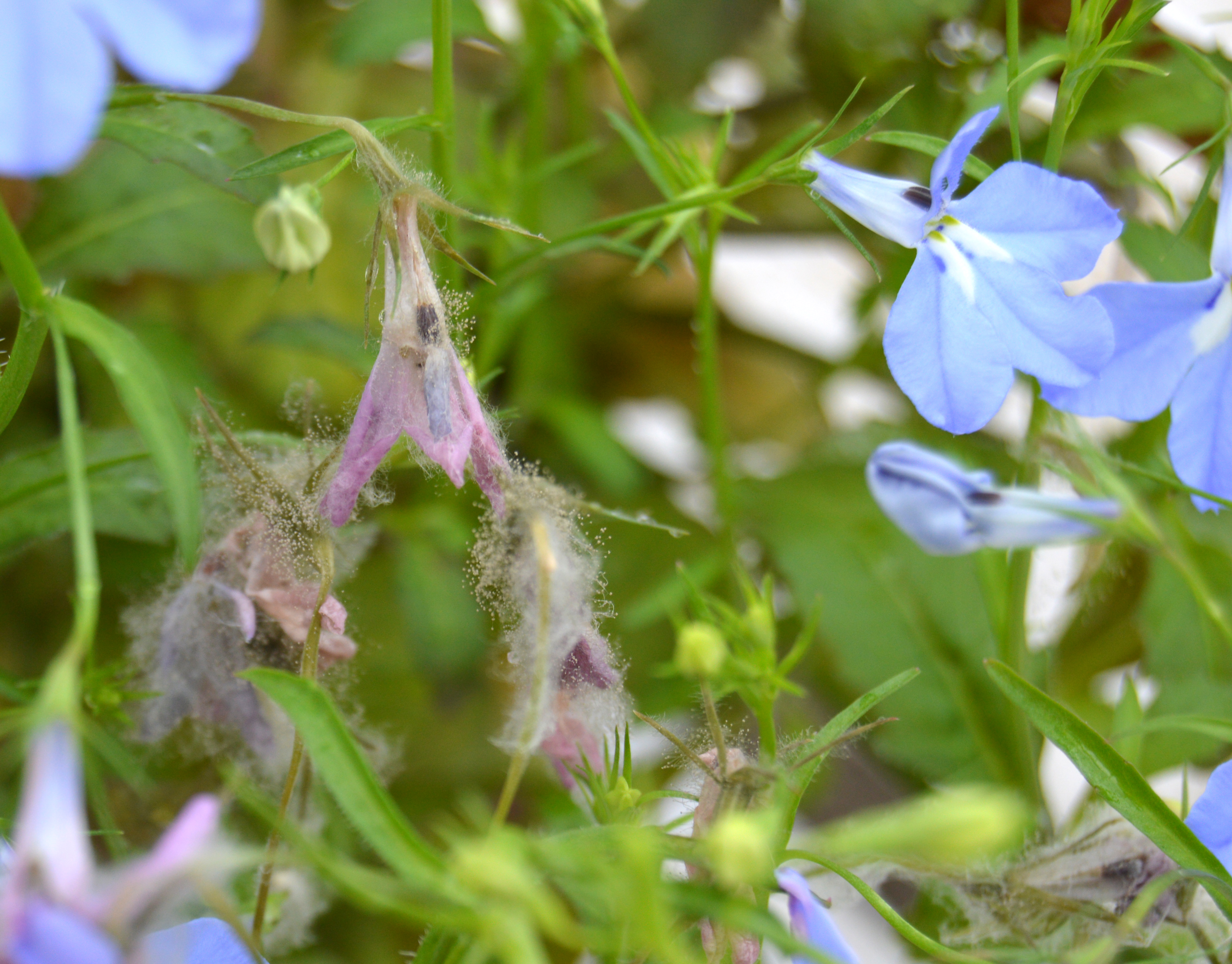
Symptoms Leaves may develop chlorotic flecks that can look like symptoms of chemical phytotoxicity. The plant also generally dies back. Both Tomato spotted wilt virus (TSWV) and Impatiens necrotic spot virus (INSV) can infect Lobelia.
Note the necrotic leaf margin and spots on the center leaf due to INSV.
Photo by Stacey Fischer, 1990.
Dieback due to Impatiens Necrotic Spot Virus.
Melodie Putnam, 2008.
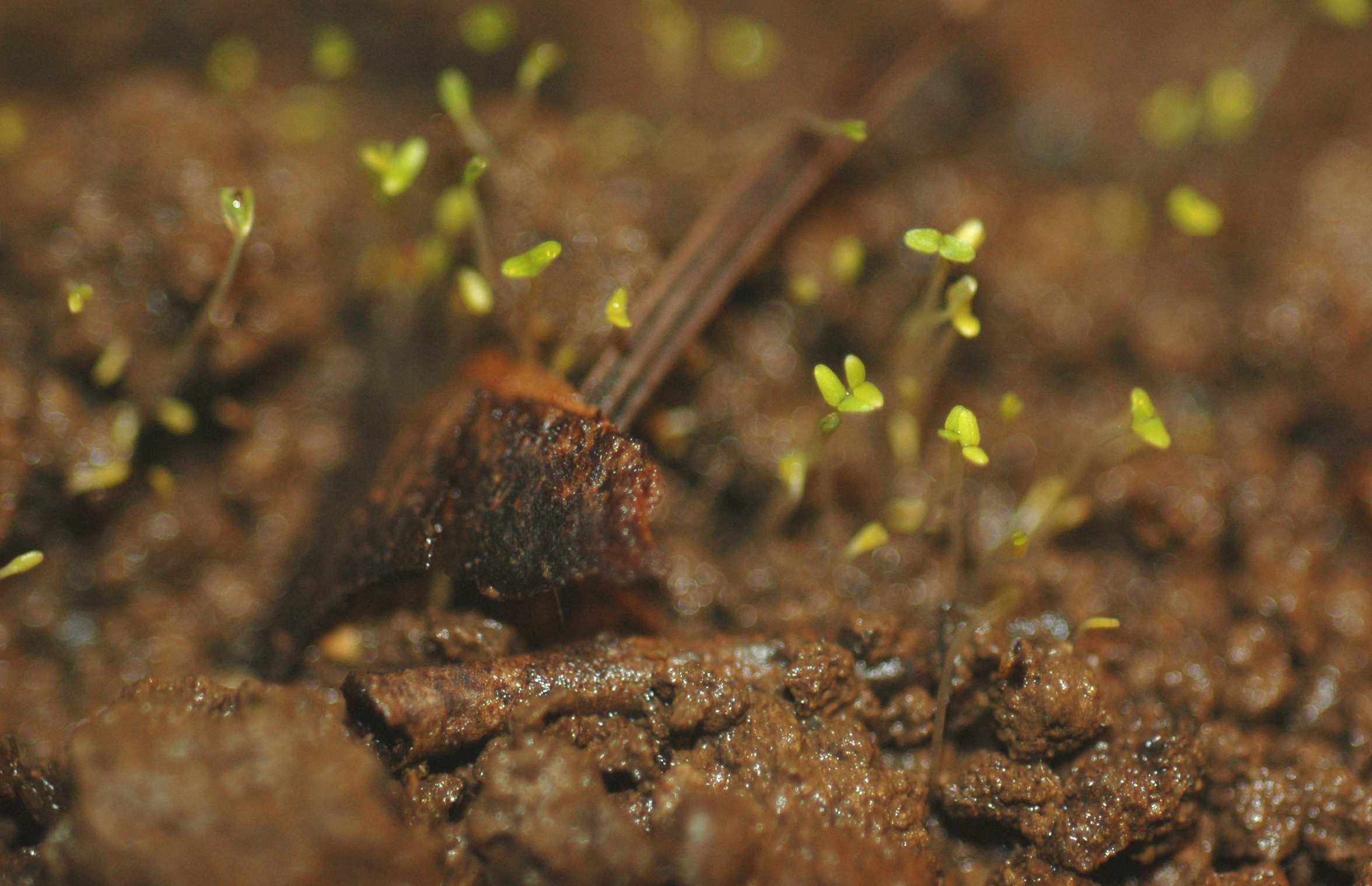
Cause Pythium spp. can cause damping-off and has been found on Lobelia by the OSU Plant Clinic. Pythium is favored by cool and overly moist soil conditions. It survives unfavorable periods in soil and infected plant debris. Under favorable conditions, spores germinate and infect roots. After infection, the fungus-like microorganism spreads mainly in the inner bark tissues of the root and stems.
Slide is labeled Lobelia damping-off.
Melodie Putnam, 1997.
Poor germination or stand development can indicate pre-emergence damping-off where seeds rot in the media prior to emergence above ground.
Dead tops indicate a problem but you still need to check for root rot to confirm the diagnosis.
Jay W, Pscheidt, 2008.
Black sections of these roots characterize this disease.
OSU Plant Clinic collection, 2012.
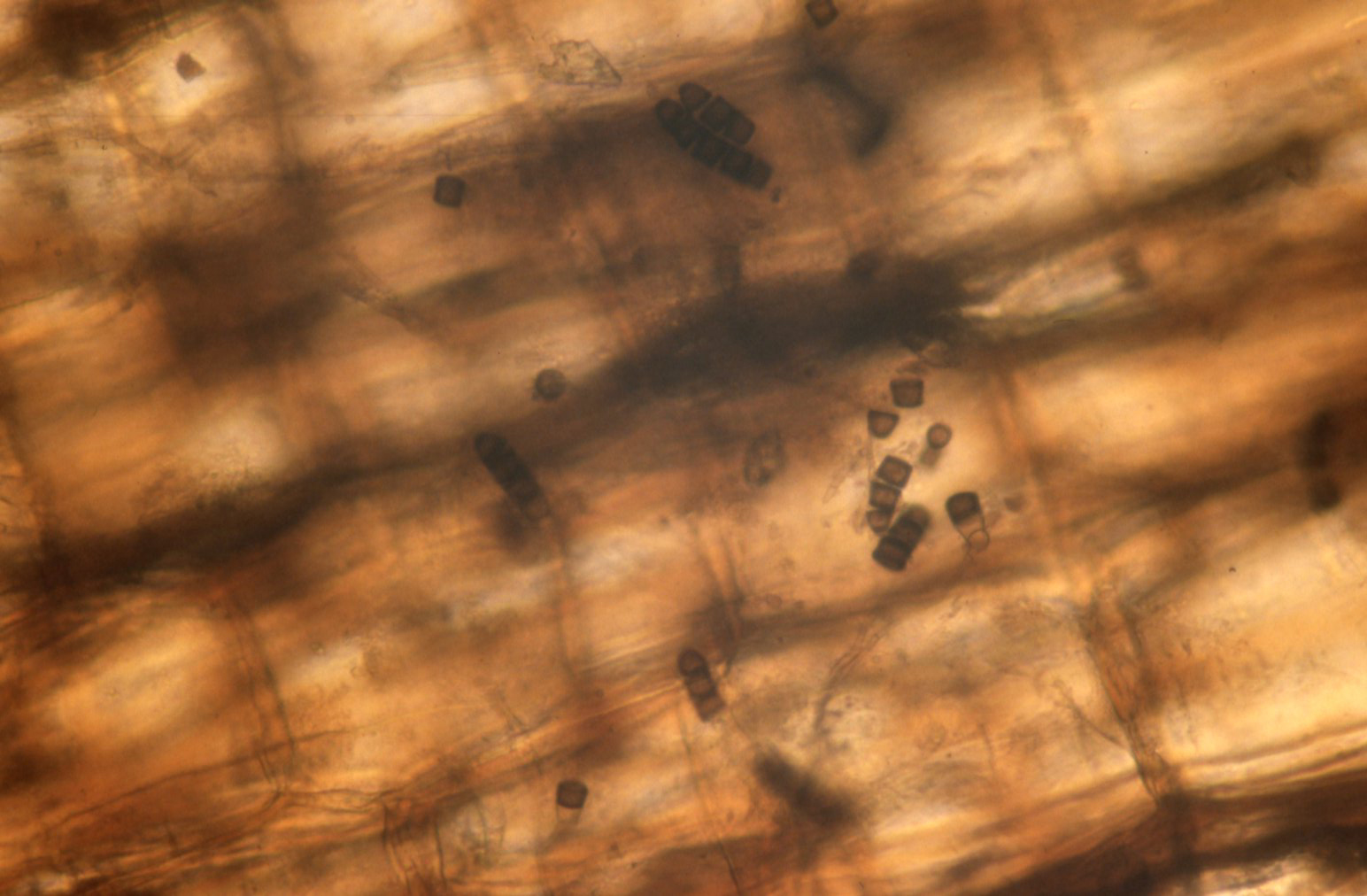
Chlamydospores in the root cortex (64x).
Melodie Putnam, 1994.
Cause Various pathogenic fungi have been found in association with leaf spots and twig blights in Oregon. This includes Allantophomopsislycopodina on the cultivars Erntesege, Erntekrone, and Koralle; Phomopsis columnaris on cv 'Koralle'; Phytophthora citricola and Coleophoma empetri on cv 'Red Pearl'; and Rhizoctonia sp.
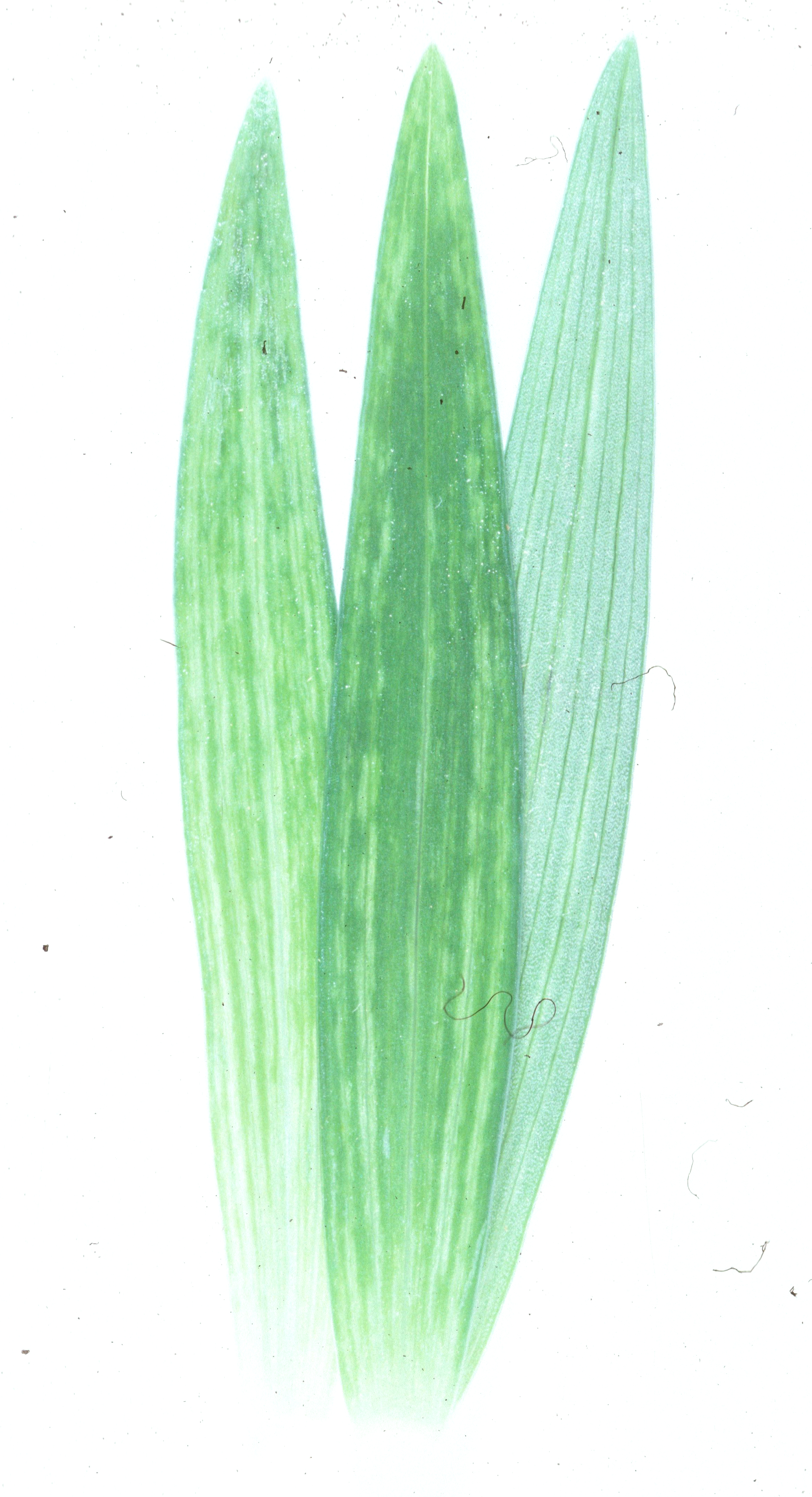
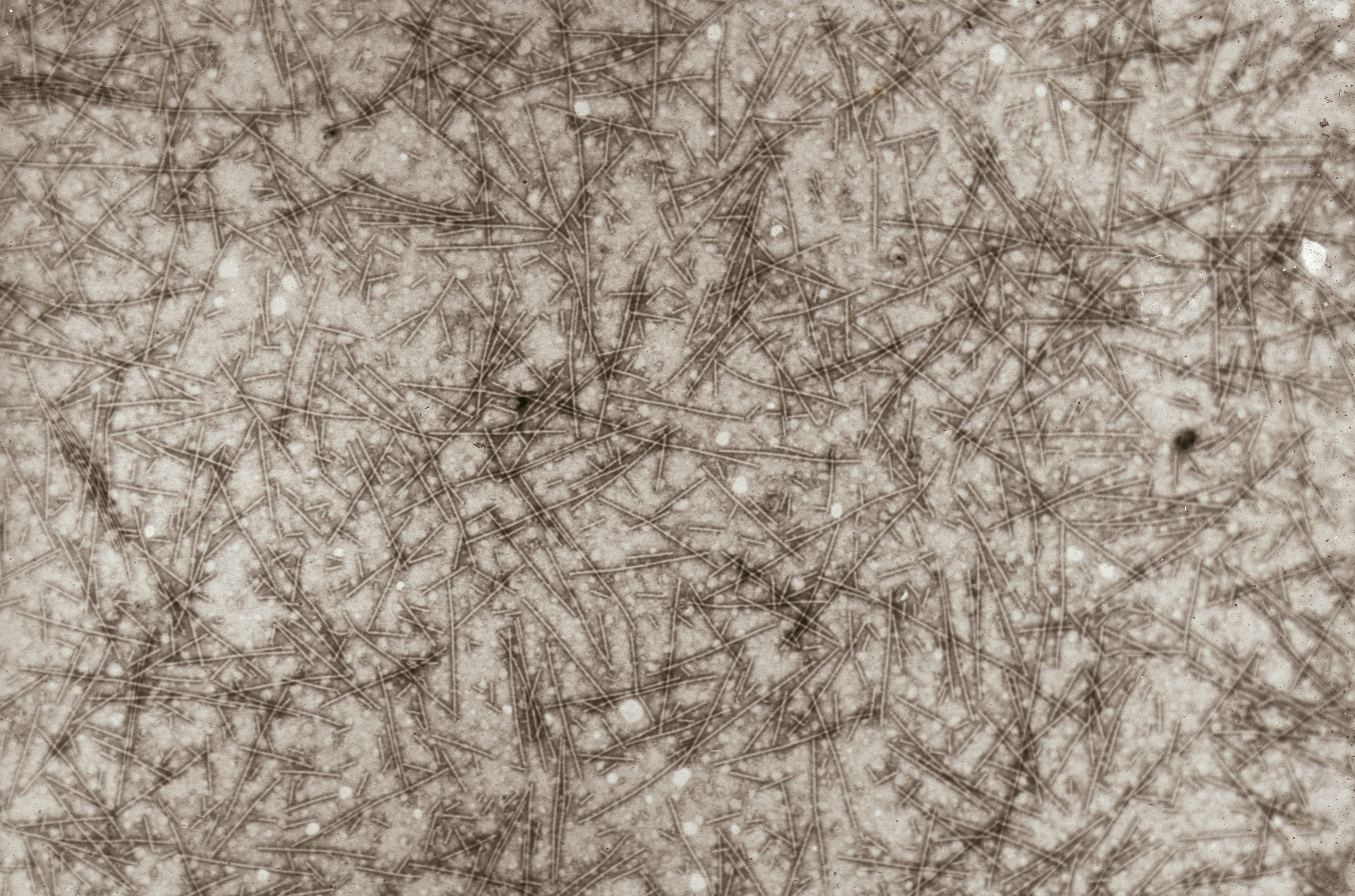
Cause There are more than 11 viruses that can be a problem on lily. Lily symptomless virus (LSV), lily mottle virus (LMV), cucumber mosaic virus (CMV), and tulip breaking virus(streak disease) are common problems. Aphid vectors are effective carriers of each of these viruses and CMV can also be mechanically transmitted. Fleck can occur when both LSV and CMV are in the lily at the same time.
Color break due to virus infection.
Tom Allen Collection.
Note the necrotic blotches on the leaves due to Tulip Breaking Virus.
Photo by Kathy Merrifield, 1992.
Fleck is characterized by white or yellowish spots on leaves which barely are noticeable in the youngest leaves but conspicuous in older ones.
Tom Allen Collection.
Streak is characterized by white fleck spots that may extend several inches along the veins.
Tom Allen Collection.
Line patterns on these leaves but slide not marked with specific virus(s).
Tom Allen Collection.
Electron micrograph of lily symptomless virus long rod shaped particles.