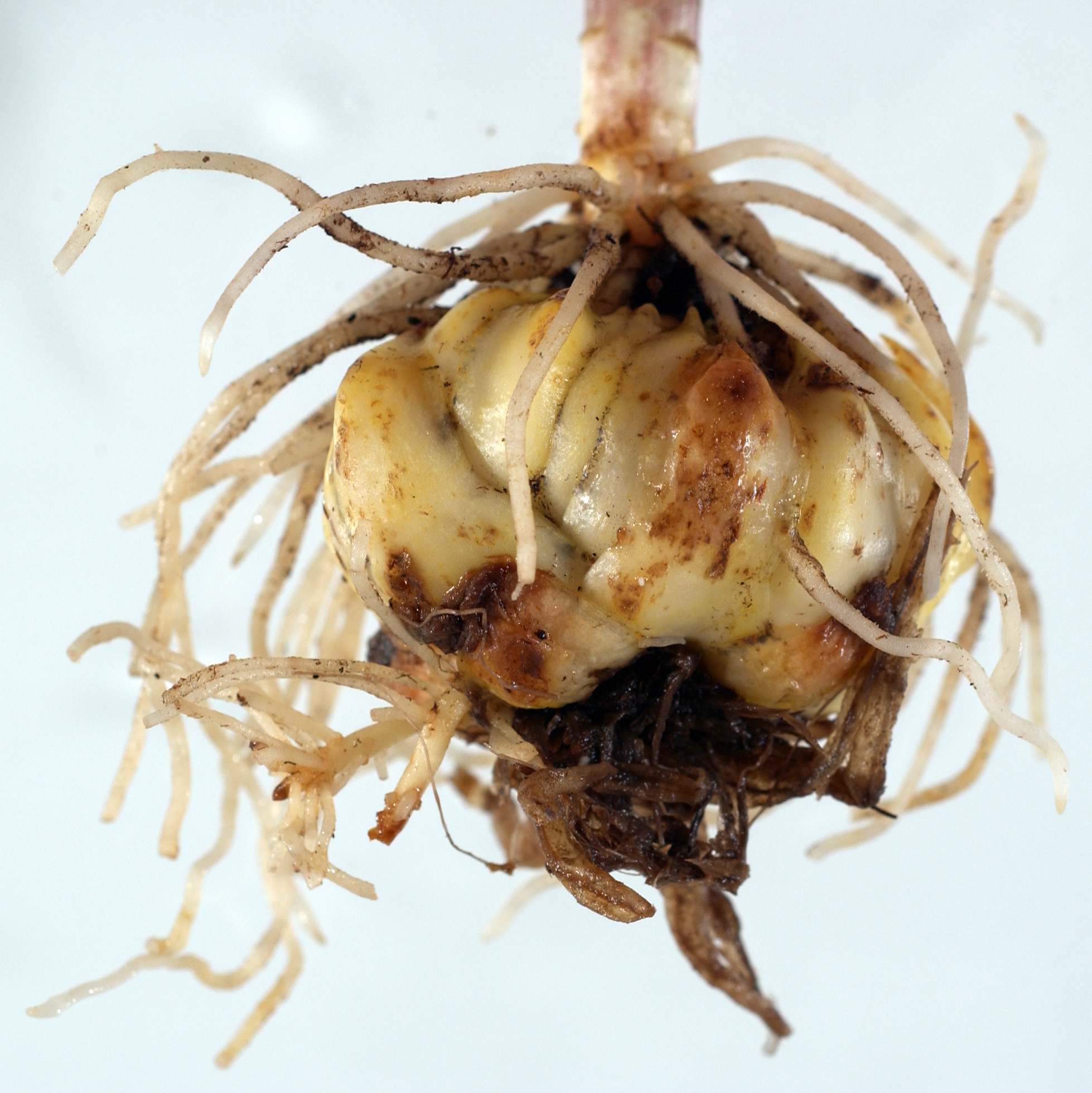
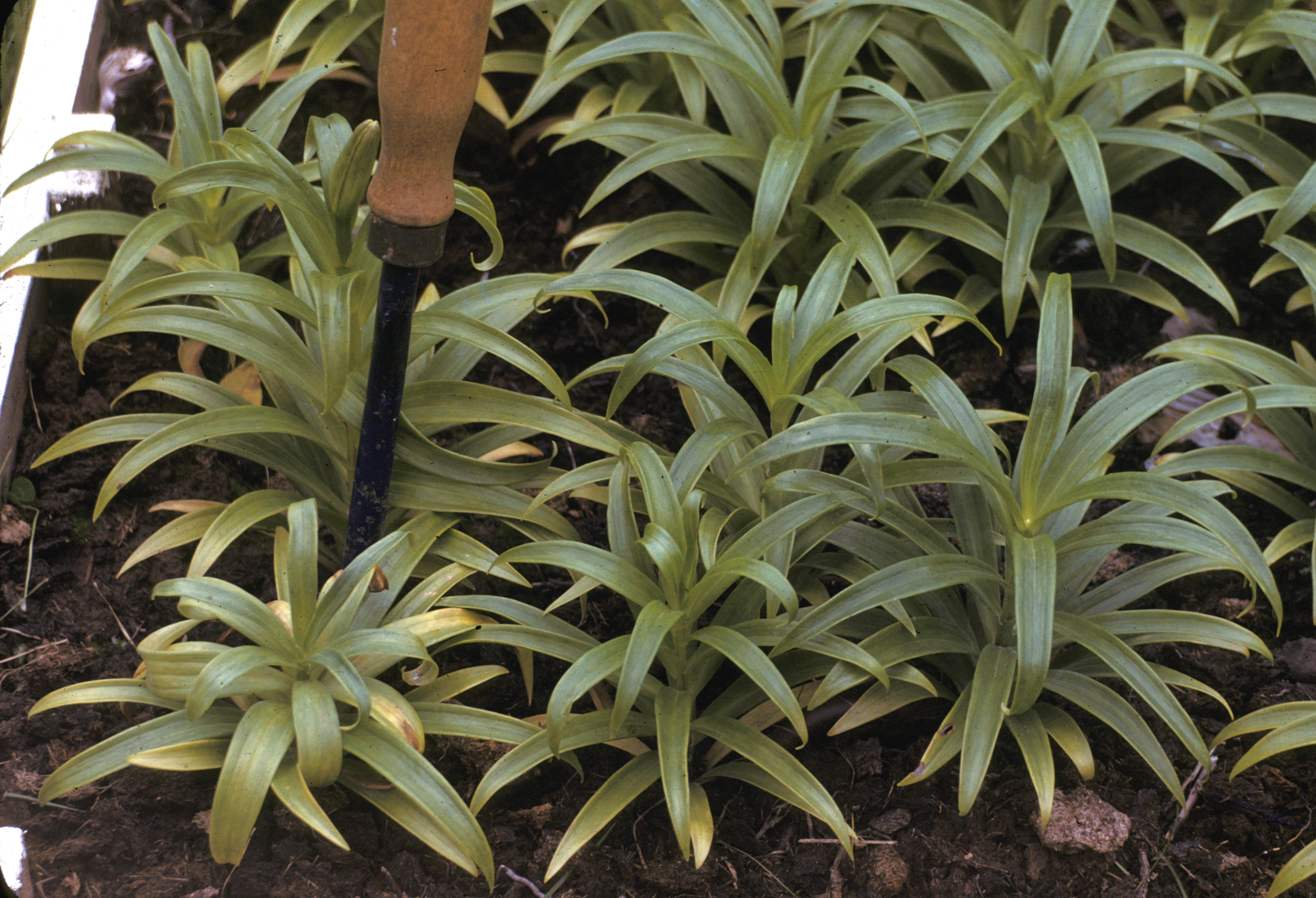
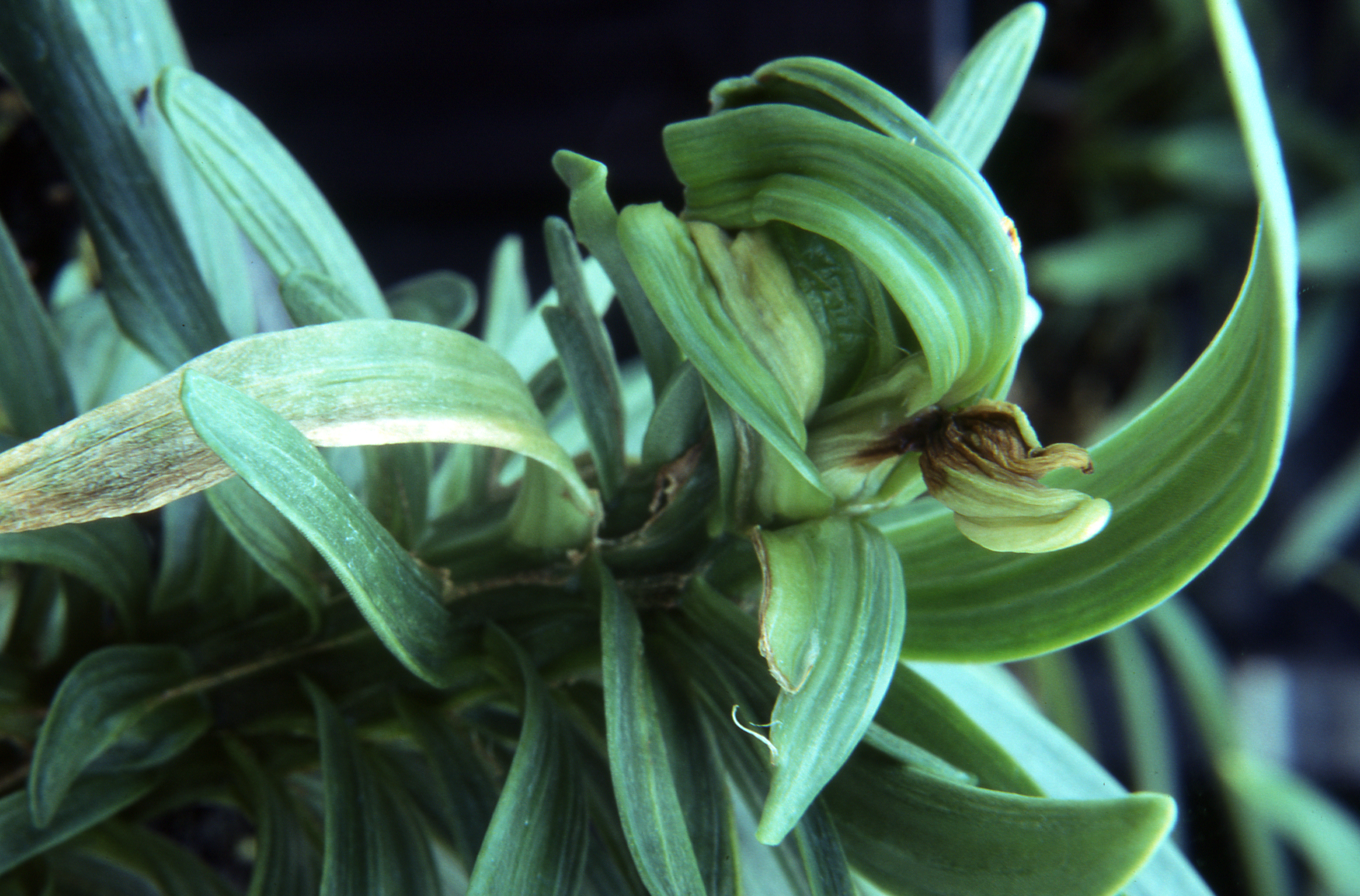
Dead tops indicate a problem but you still need to check for root rot to confirm the diagnosis.
Jay W, Pscheidt, 2008.
Black sections of these roots characterize this disease.
OSU Plant Clinic collection, 2012.
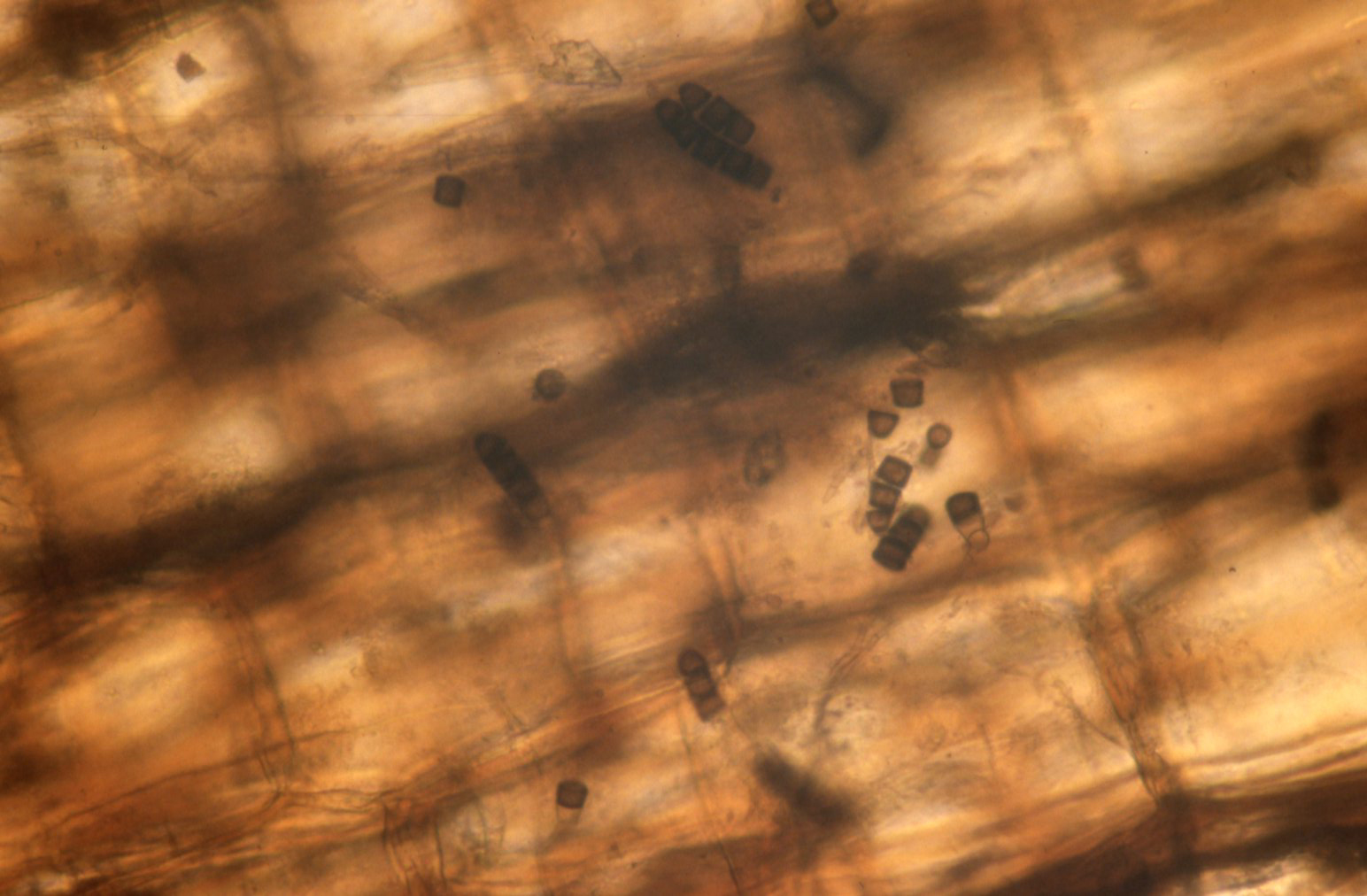
Chlamydospores in the root cortex (64x).
Melodie Putnam, 1994.
Cause Various pathogenic fungi have been found in association with leaf spots and twig blights in Oregon. This includes Allantophomopsislycopodina on the cultivars Erntesege, Erntekrone, and Koralle; Phomopsis columnaris on cv 'Koralle'; Phytophthora citricola and Coleophoma empetri on cv 'Red Pearl'; and Rhizoctonia sp.
Cause There are more than 11 viruses that can be a problem on lily. Lily symptomless virus (LSV), lily mottle virus (LMV), cucumber mosaic virus (CMV), and tulip breaking virus(streak disease) are common problems. Aphid vectors are effective carriers of each of these viruses and CMV can also be mechanically transmitted. Fleck can occur when both LSV and CMV are in the lily at the same time.
Color break due to virus infection.
Tom Allen Collection.
Note the necrotic blotches on the leaves due to Tulip Breaking Virus.
Photo by Kathy Merrifield, 1992.
Fleck is characterized by white or yellowish spots on leaves which barely are noticeable in the youngest leaves but conspicuous in older ones.
Tom Allen Collection.
Streak is characterized by white fleck spots that may extend several inches along the veins.
Tom Allen Collection.
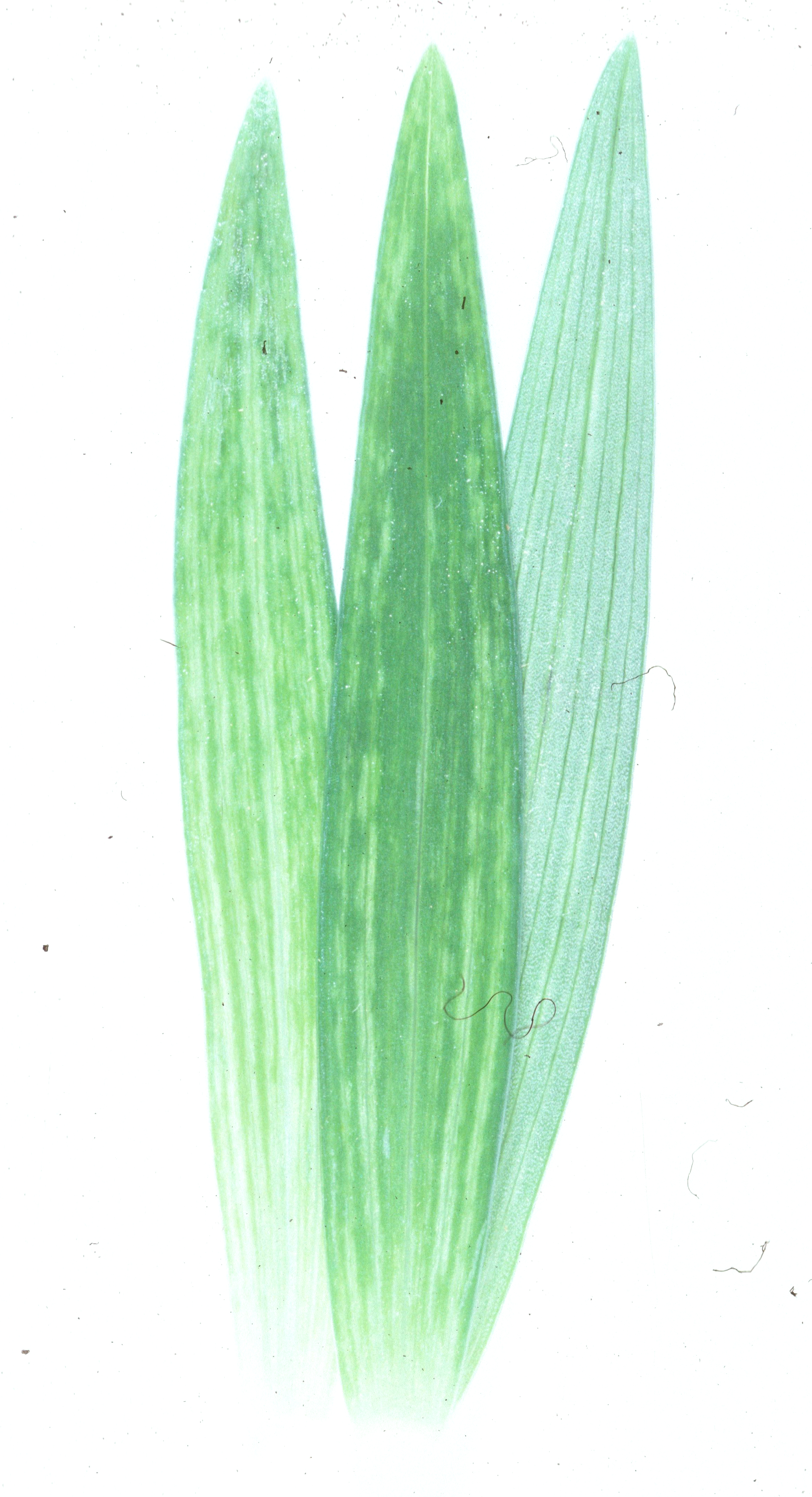
Line patterns on these leaves but slide not marked with specific virus(s).
Tom Allen Collection.
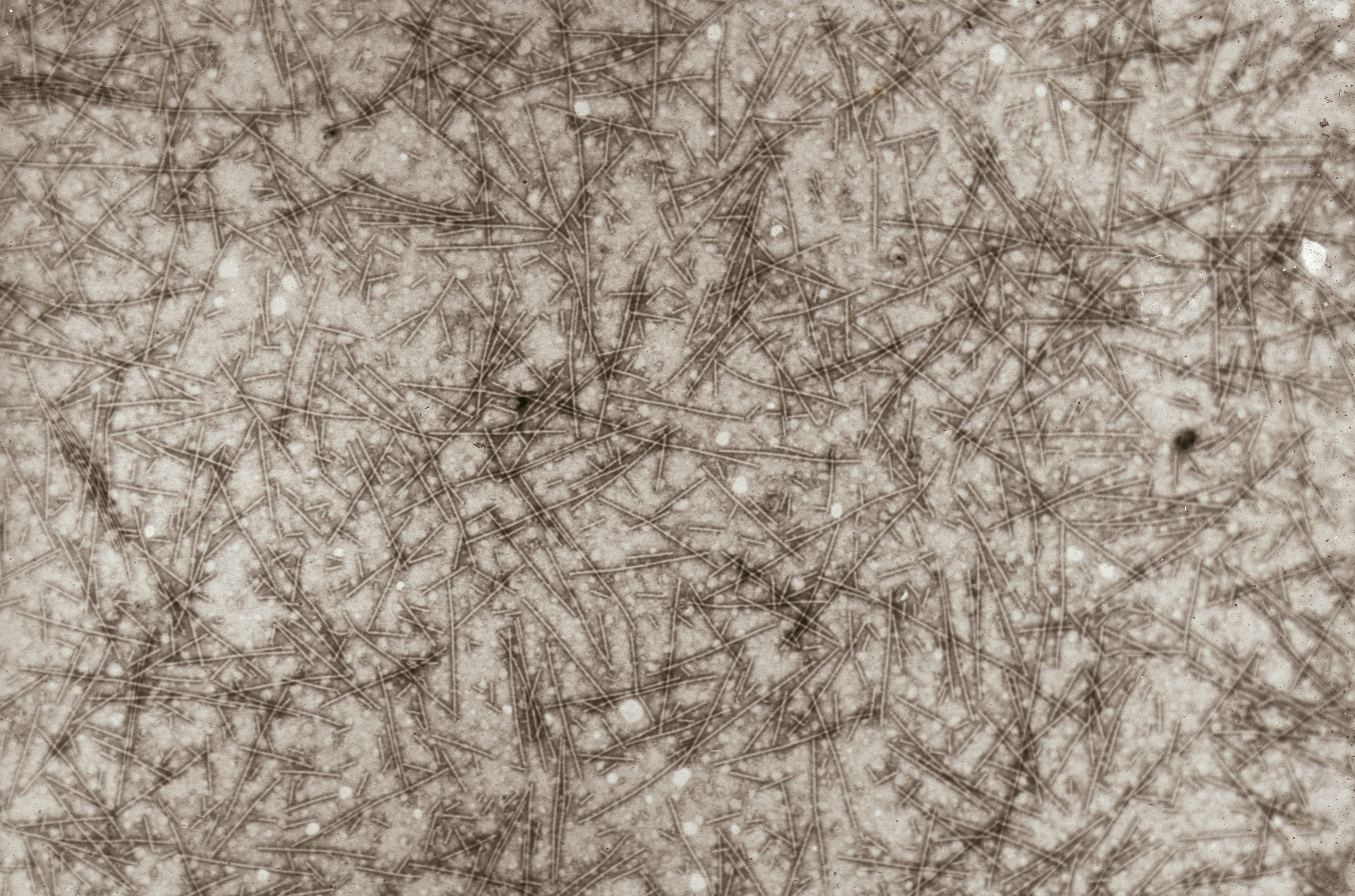
Electron micrograph of lily symptomless virus long rod shaped particles.
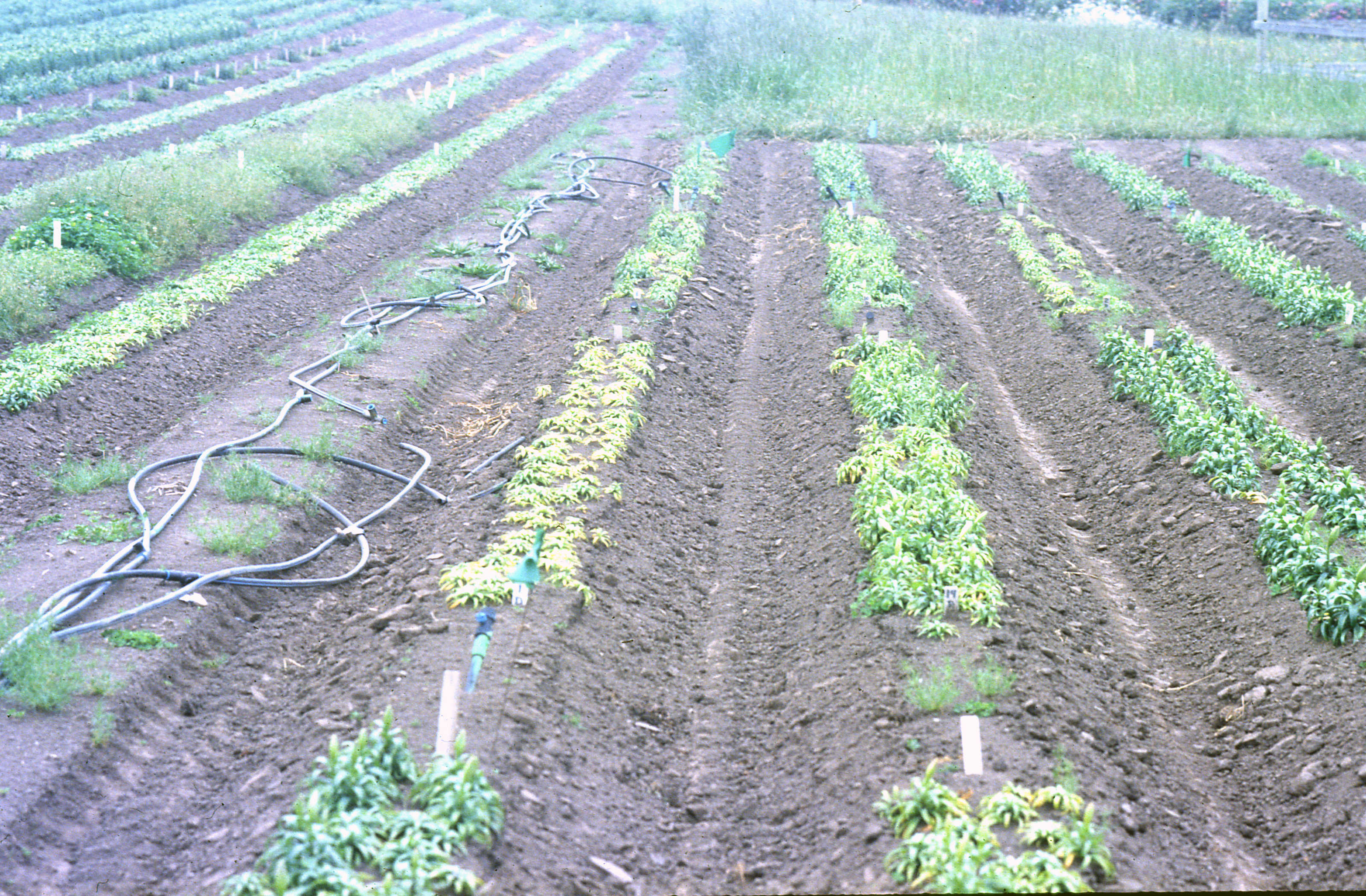
The plants in the row to left of center (shorter row next to tubing) are yellowed and stunted when compared to plants in the row right of center.
Photo by Jay W. Pscheidt, 1990.
Cause Aphelenchoides fragariae has a wide host range (including Anemone, begonia, and phlox) and is a pest of various kinds of lily in northern and southwestern Oregon. Nematode infections are transferred to other areas and from one season to the next in planting stock. Plant-to-plant spread in field and greenhouse plantings occurs especially when plants are close together. Spread can be rapid even when low-volume irrigation spray stakes are used in the greenhouse.