Plant Disease Management Handbook

Cause Erysiphe pisi var. pisi (formerly Erysiphe polygoni), has been reported from the Pacific Northwest; Erysiphe lathyricola (formerly Microsphaera diffusa) has been reported from Oregon. Erysiphe trifoliorum has also been reported from North America.

Cause Verticillium dahliae, a fungus that survives in soil as microsclerotia. Another species V. isaacii has also been isolated from wilted sunflower plants in the Columbia Basin, Washington. Survival structures germinate and developed into mycelium on root hairs, elongation zones, and caps of lateral roots. Within a week, the mycelia colonize vascular bundles of lateral roots and taproots.

Cause Heat or moisture stress can result in a sunburn on the flower heads.

Symptoms Brown or blackened areas on the side of the plant continuously exposed to sun.

Cultural control

  • Maintain adequate irrigation.
Large sunflower leaf

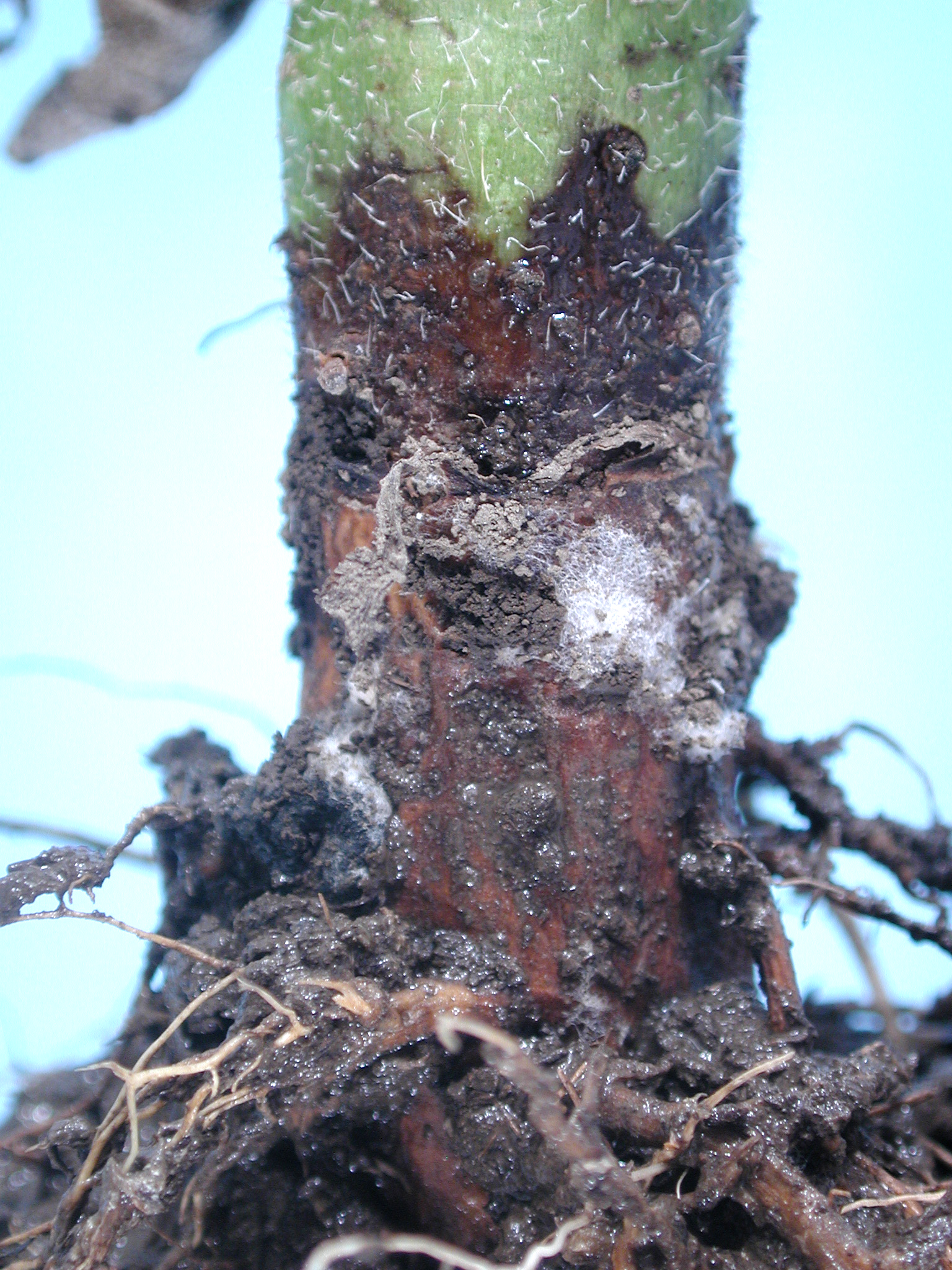
Cause The fungus Sclerotinia sclerotiorum overwinters as black sclerotia in soil, among seeds, and in plant debris for 3 to 7 years. Dry, cool soil conditions favor survival of sclerotia. Sclerotia germinate and infect adjacent roots unless they are buried too deeply. The fungus also can spread from plant to plant by root contact. Sclerotia may also germinate to form small mushrooms (apothecia) that produce a sexual spore stage (ascospores), which are blown by wind and can infect flowers or stems.

Image related to Sunflower (Helianthus spp.)-Sclerotinia Wilt and Head Rot

Cause The fungi, Golovinomyces cichoracearum (formerly Erysiphe cichoracearum), has been reported from Idaho and Washington and G. spadiceus has been reported from Washington. Podosphaera xanthii and G.

Image related to Sunflower (Helianthus spp.)-Powdery Mildew

By O. Nehers and C. M. Ocamb

By O. Neher and C. M. Ocamb

Cause Ramularia beticola, a fungus. Most likely it is seedborne. It is believed to persist in beet debris at least 1 year. The disease is not considered an economic problem.

Symptoms Leaf spots, which occur on older leaves, are light brown and fairly large (4 to 7 mm). As they mature, they develop a gray to white center (sporulation of the fungus) and a dark to reddish-brown margin.

Image related to Sugar Beet (Beta vulgaris)-Ramularia Leaf Spot