Cause Rhizoctonia tuliparum, a fungus that survives in the soil for at least 3 to 5 years as sclerotia. After 10 years there may still be 10% viable sclerotia. Sclerotia germinate and infect bulbs after planting or in the very early spring. Can be transported on diseased bulbs. Volunteer plants from previous bulb crops may help fungus survive from year to year. Primarily a problem on tulip and iris but daffodil, crocus, gladiolus, and lily are also possible hosts.
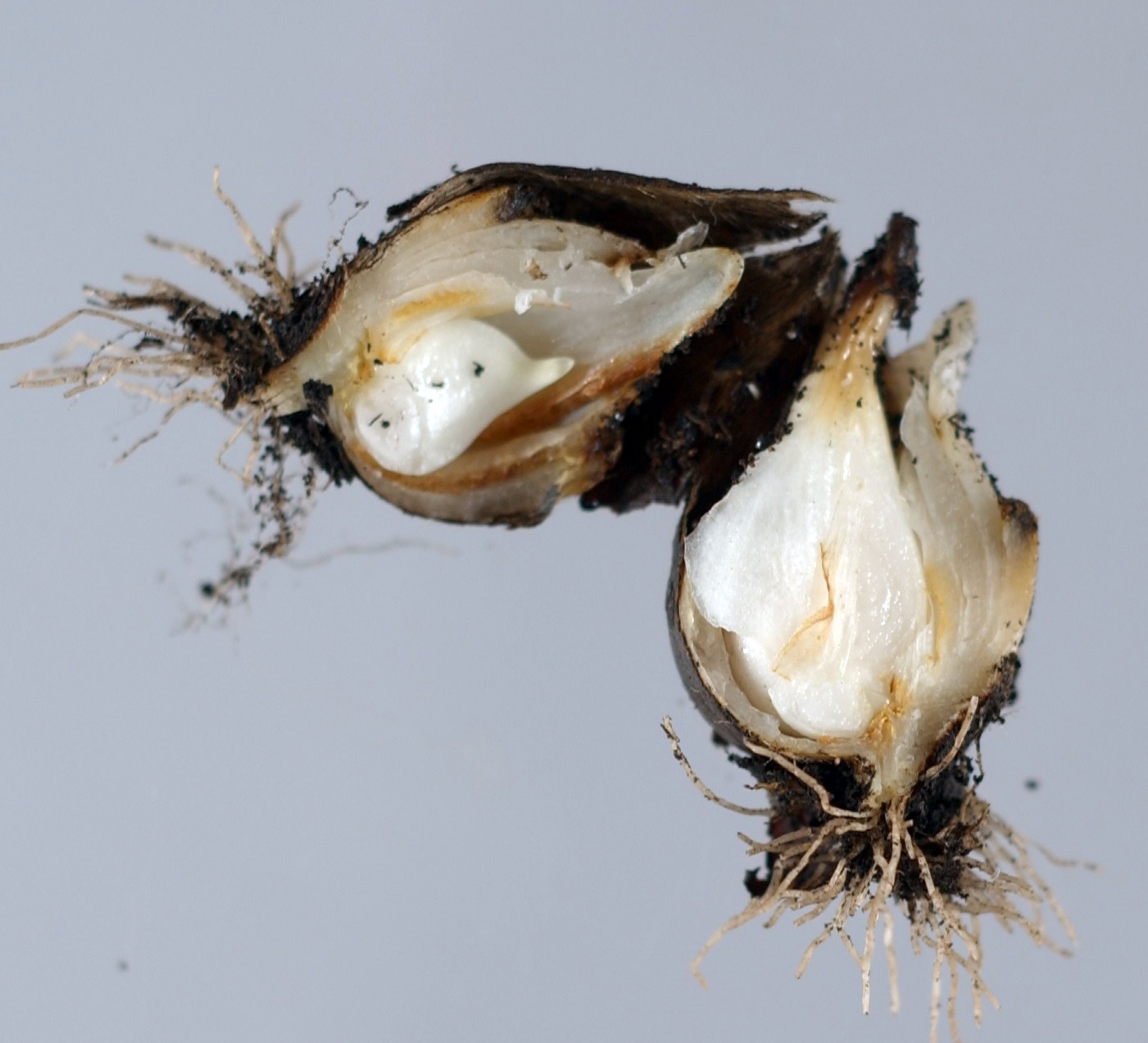
Tulip with Gray bulb rot (Rhizoctonia tuliparum) with outer and some inner scales that were rotting. Sclerotia of the fungus grew on the interior scales after incubating bulbs for several days.
OSU Plant Clinic, 2021.
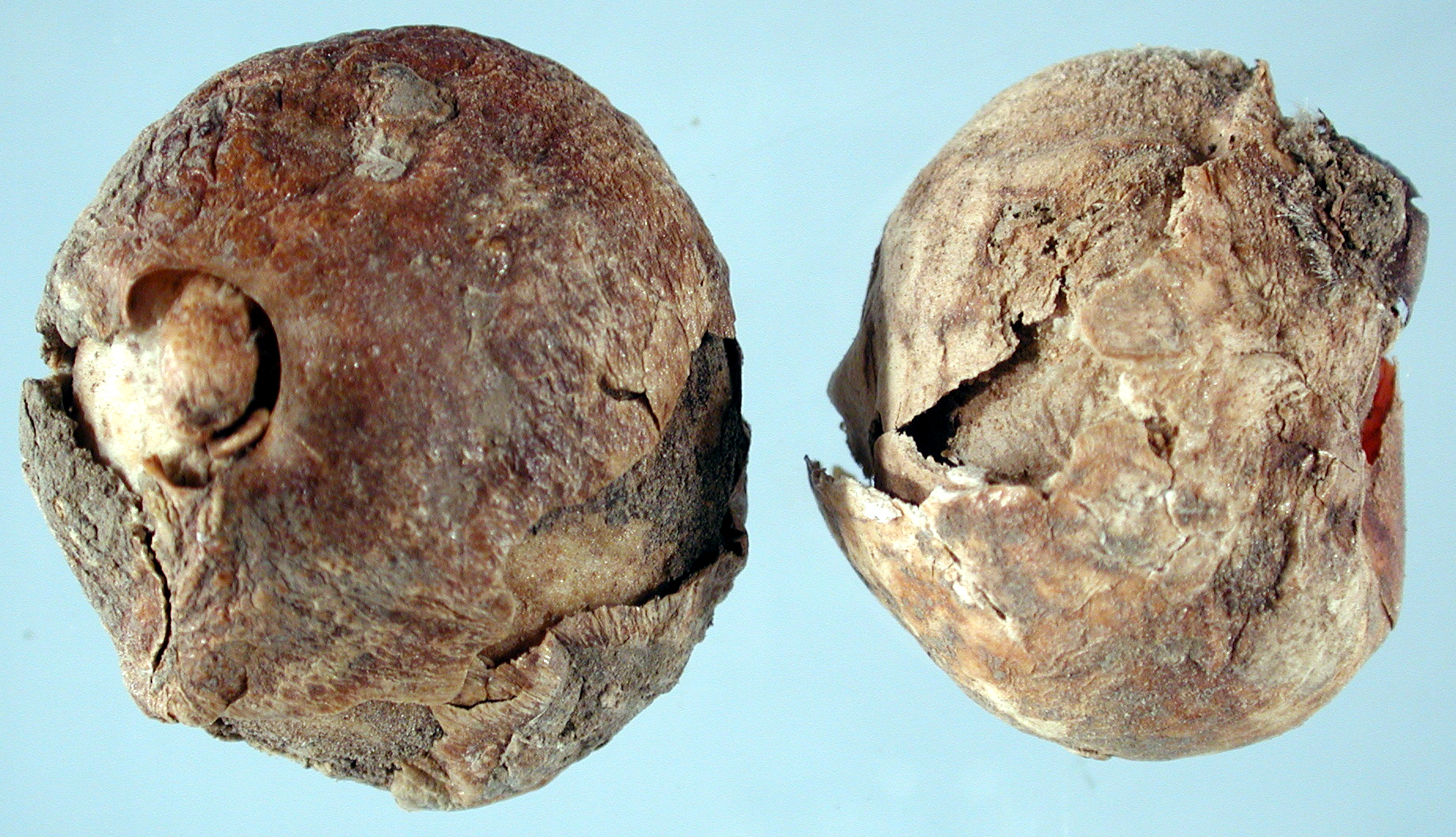
Corm rot on these 'Yellow Mammoth' Crocus had both Rhizoctonia and Fusarium.
OSU Plant Clinic Image, 2017.
Cause Fusarium oxysporum f. sp. tulipae, a fungus that lives in soil and on plant debris. The disease became a problem with shorter rotations that favored buildup of inoculum. The disease is widespread but not as common or severe as Fire (Botrytis blight); it is worse on some tulip cultivars and occurs primarily in storage. Symptoms may be more severe at higher (61°F) than lower (54°F) temperatures.
When diseased bulbs go into storage they become dull white with firm shrunken bases that are usually covered with whitish or pinkish fungal growth.
OSU Plant Clinic Image, 2013.
Fusarium sp. found in these rotted bulbs.
OSU Plant Clinic Image, 2013.
Fusarium was found in this rotting 'Yokohama Yellow' tulips.
OSU Plant Clinic Image, 2017.
Cause Botrytis tulipae, a fungus that overwinters as sclerotia in soil, affected bulbs, and diseased plant residue. Germination of sclerotia and infection of emerging shoots is greatest when soil is 41°F. Flowers are very susceptible to this fungus. Flower petals that drop onto leaves can promote further development on the leaves, especially in the leaf axils and on stems. High humidity, rainfall, and moderate temperatures favor the blight phase of this disease.
Leaves are highly distorted from irregular growth.
Neil Bell, 2013.
Leaves have necrotic edges that prevent them from growing normally.
OSU Plant Clinic Image, 2013.
Sporulation of the fungus on this infected leaf.
Melodie Putnam, 2006.
Cause Sclerotium delphinii, a fungus that can survive many years in soil as sclerotia. Infection usually occurs on the stems near the soil surface. A low percentage of sclerotia survived after only a month in the soil when dried first. The disease is widespread but not as common or severe as Fire (Botrytis blight), yet it can cause serious damage, especially in moist, warm soils. In the Pacific Northwest, crown rot is more common on bulbous iris, tulips and lilies than daffodils.
Cause Break is a disease name for any of several viruses including tulip breaking virus, tulip band-breaking virus, tulip top-breaking virus, Rembrandt tulip-breaking virus and lily mottle virus. Each is in the potyvirus group and is long flexuous rods. These viruses are spread by several species of aphids in a nonpersistent manner. They can also be mechanically transmitted in plant sap. Viruses survive in infected bulbs.
Note the irregular break in red color.
Photo by Kathy Merrifield, 1991.
Cause Possibly high temperatures or exposure to sun. Chlorophyll breaks down more slowly in certain areas of an affected fruit than the fruit areas turning red.
Cause The tomato yellow leaf curl virus was found in California during 2007 and is transmitted by adult silverleaf whiteflies, but not by seed. This viral disease has not been reported in the Pacific Northwest.
Symptoms The margins of tomato leaves turn yellow and a yellow mottling of the leaf area. Leaves cup upwards, may be reduced in size, and flowers may drop.