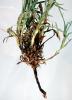
Cause Burkholderiacaryophylli, a vascular, bacterial problem. Bacteria enter the plant through wounds. After infection it may take a month for symptoms to show although the bacteria have already colonized the roots and vascular system. Cuttings from symptomless plants can carry the bacterium. Hands, tools, and splashing water can spread this bacterium.
Cause Alternarianobilis(formerly Alternariadianthi) ,a fungus that has been reported from Washington and found by the OSU Plant Clinic. It survives in plant debris and produces many airborne spores. High moisture, crowded plants and low fertility favor the disease.
Some necrotic spots due to Alternaria sp. on the leaves of this Dianthus sp. 'Barbarini Rose'.
OSU Plant Clinic Image, 2014.
Cause Watermelon mosaic virus 2 has been found in eastern Oregon. Zucchini yellow mosaic virus could be a problem also. Both are transmitted by aphids and also easily by mechanical means. Generally not a significant problem in the Northwest.
Cause Verticilliumdahliae, a soilborne fungus that infects a wide range of crops, vegetables, fruits, and ornamentals. It survives in soil for many years through the production of microsclerotia in infested plant tissue. It infects via roots, invading water-conducting tissue. Cool, moist soil favors the disease. Some varieties have a greater degree of resistance. Young plants can be infected but symptoms won't develop until after fruit-set.
Cause Golovinomycescucurbitacearum (formerly G. cichoracearum and Erysiphecichoracearum) and Podosphaeraxanthii (formerly P.
Cause Fusariumoxysporum f. sp.melonis is a vascular fungus that can survive in soil indefinitely as durable spores (chlamydospores) or in association with plant debris. Seed can also transmit Fusarium wilt, usually by contamination of the seed coat. Melon seeds may have an internal infection just under the seed coat.
OSU Extension Plant Pathology
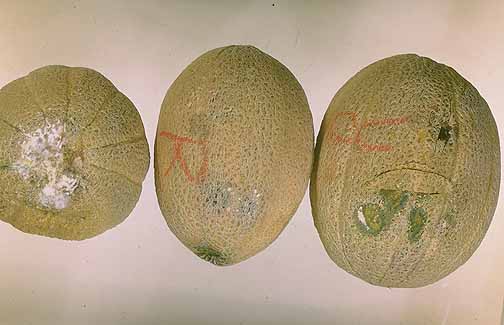
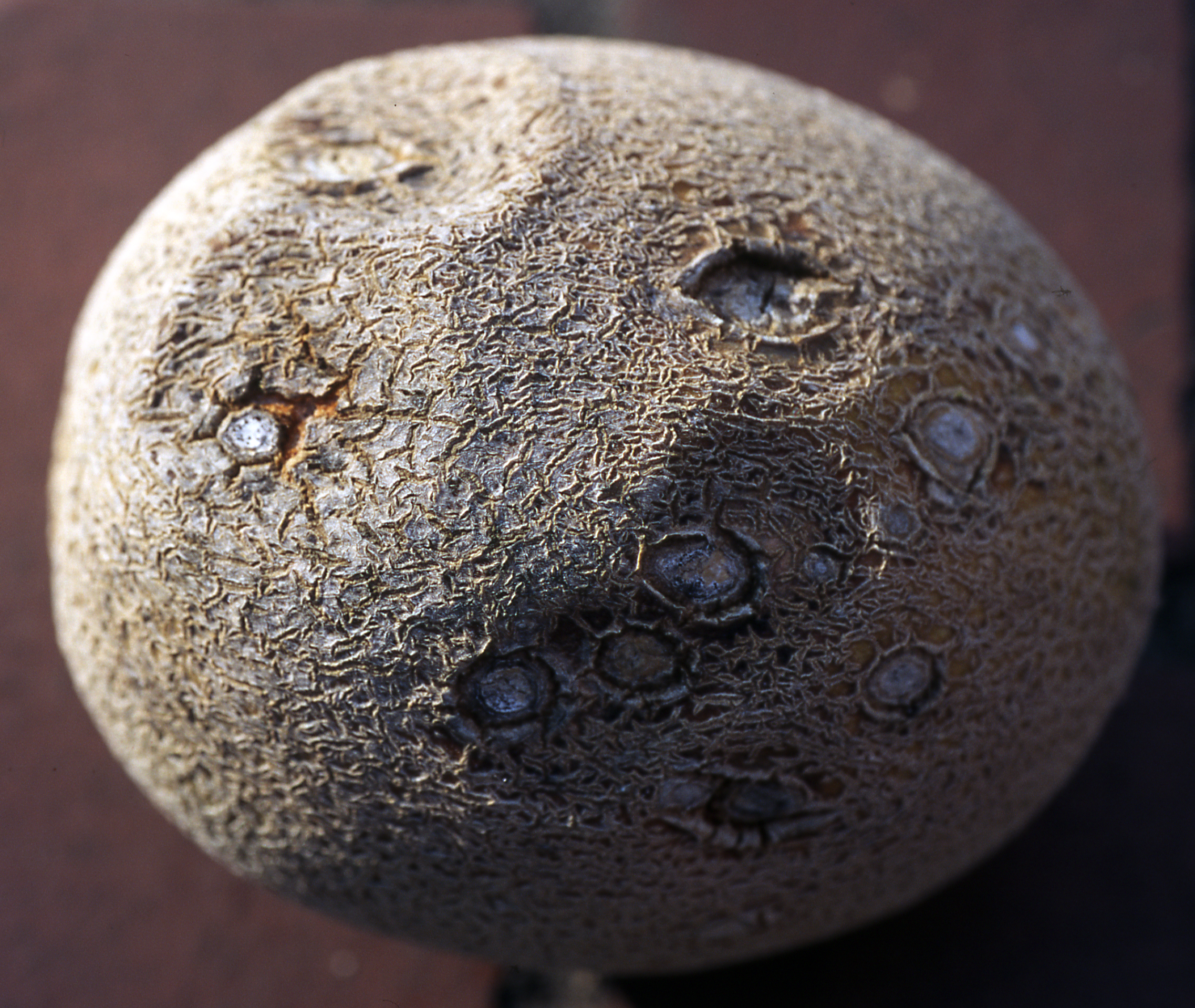
Cause The fungus, Fusariumequiseti, and other Fusarium spp. are commonly encountered soil inhabitants. The disease is associated with cantaloupe grown with plastic mulch. Water puddles under fruit encourage disease development.
Symptoms A tan rot mainly on ripe or nearly ripe fruit. Discolored tissue is easily distinguished from adjacent healthy tissue.
Fusarium rot of the base (left fruit) and spots on the skin of others.
Cause The fungus-like microorganism, Pythium spp., and the fungus, Rhizoctonia solani, are reported on watermelon. Fusarium spp. also are common damping-off fungal organisms. These pathogens are likely to be in any soil. Damping-off frequently attacks almost all kinds of vegetable seedlings just before or after they emerge from the soil.