Plant Disease Management Handbook

Cause The fungus, Pseudoperonospora cubensis, was fairly widespread in commercial fields in certain areas of the PNW during 2009. The fungus survives on living cucurbit hosts and is believed to be spread by wind-blown sporangia. Free moisture and moderate temperatures favor infection and high relative humidity favors sporulation.

Image related to Cucumber (Cucumis sativus)-Downy Mildew

Cause Several fungi or fungus-like microorganisms including Pythium ultimum, Fusarium sp., and Rhizoctonia sp., which live in soil and attack seedlings of many different crops. As seedlings mature, they become resistant to attack. The disease can be a serious problem in cool, wet soils.

Image related to Cucumber (Cucumis sativus)-Damping-off

Cause Beet curly top virus (BCTV) is spread by the beet leafhopper and survives from year to year in perennial weed hosts. There are no known resistant varieties.

Symptoms Growth is retarded, and older leaves take on a tan-yellow color. Terminal leaves sometimes are darker than normal, and the entire plant is stunted and becomes chlorotic. If fruit is produced, it is small, of poor quality, and abnormally shaped.

Cause Erwinia tracheiphila, a bacterium that overwinters in the bodies of the striped and 12-spotted cucumber beetles. In Oregon, the disease is on cucumbers occasionally. The bacterium affects plants only in the cucumber family such as cucumber, muskmelon, pumpkin, squash, white gourd, and a number of wild plants.

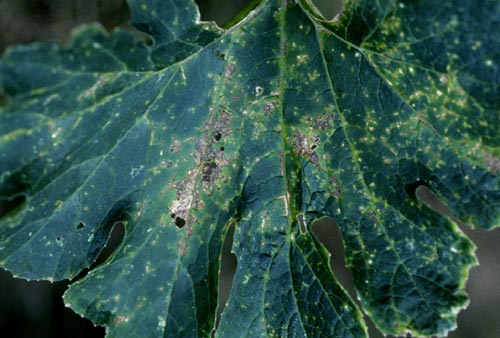
Cause Pseudomonas syringae pv. lachrymans, a bacterium that overwinters in diseased plant material and on seed. It is spread by rain, sprinkler irrigation, and on workers' hands and clothing. In recent years, using tolerant varieties has reduced disease incidence.

Image related to Cucumber (Cucumis sativus)-Angular Leaf Spot

Cause Alternaria cucumerina has been reported in Oregon and Washington, Ulocladium consortiale only in Washington. They are similar in form and disease symptoms and are easily confused. Research in the mid- to late 1970s in Washington showed this disease did not reduce yields under Washington conditions.

Cause Erysiphe australiana (formerly Erysiphe lagerstroemiae) and Phyllactinia guttata, fungi that have not been formally reported from the PNW. Erysiphe overwinters in dormant buds. These buds are covered with conidia in the spring, which start the season's epidemic.

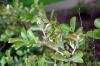
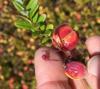
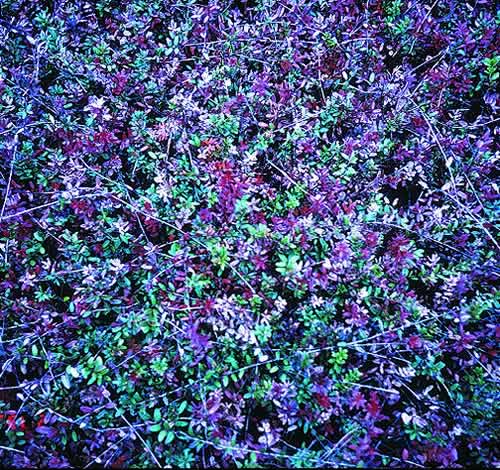
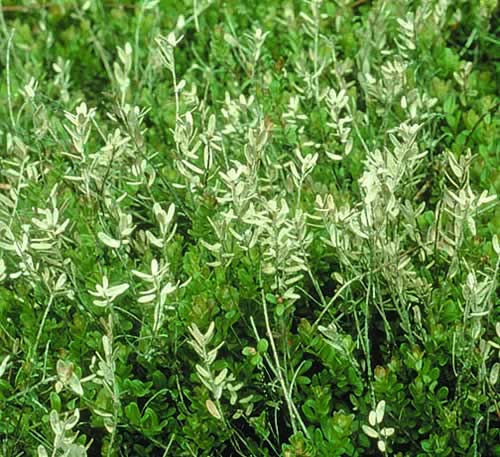
Cause Several virus diseases have been reported on cranberry. A strain of the blueberry red ringspot virus, a caulimovirus, has been associated with symptoms of cranberry ringspot. Although tobacco streak virus (TSV) has been reported to occur in symptomless cultivars, fruit scarring and reduced berry weight and fruit set have been associated with this virus in cranberry. Plants, however, recover from these symptoms the following year. The carlavirus blueberry scorch virus (BlScV) has been described from symptomless cranberry plants.

Image related to Cranberry (Vaccinium macrocarpon)-Viruses

Cause Lophodermium oxycocci (the more common species) and L. hypophyllum, fungi. They overwinter as mycelium in last season's leaves. The spores are ejected forcibly into the air, where wind disperses them. New growth is infected between late June and mid-August, but exactly when varies from year to year. Twig blight may be severe the year after planting.