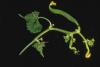
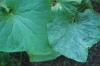
Cause Sclerotiniasclerotiorum, a fungus. This is a widespread but relatively unimportant disease of cucumbers grown in the field but has caused severe losses of vines and fruit in greenhouses.
Cause A fungus, Cladosporiumcucumerinum, that overwinters in cucumber debris and on seed. Spores are disseminated by insects, clothing, and tools, and are blown long distances in moist air. Host penetration occurs less than 9 hours after germination; infection is visible in 3 days. Spore production may occur on the fourth day. The fungus severely injures fruit, which can be infected at all stages of growth but is particularly susceptible while young.
Cause Fusarium oxysporum f. sp. radicis-cucumerinum is a problem in cucumbers, especially in greenhouse crops. It has been reported in Canada and western Europe. Cantaloupe and watermelon are susceptible to this fungus in Canada while squash and pumpkin are more tolerant. The fungus can survive at least 3 years as chlamydospores in soil or plant debris, or longer by growing on the roots of other plants. It can also colonize rockwool.
Cause The fungi, Golovinomycescucurbitacearum (formerly G.cichoracearum and Erysiphecichoracearum), Podosphaeraxanthii (formerly P.fuliginea and Sphaerotheca
Powery mildew has covered the leaf to the right.
Jay W. Pscheidt, 2017.
Close up of powdery mildew on a leaf showing sporulation of the fungus.
Jay W. Pscheidt, 2017.
Cause Meloidogynehapla, a sedentary endoparasite. Only second-stage juveniles (the infective stage) and adult males (which may be rare) are in soil. Root-knot nematodes are found nearly everywhere and are the only known nematode pest of Oregon vegetables grown in the greenhouse. The nematodes usually are introduced with infested soil or mulch materials and in transplants.
Cause A fungus, Stagonosporopsis caricae (syns. Stagonosporopsis citrulli, Stagonosporopsis cucurbitacearum, Didymella bryoniae, Phoma cucurbitacearum), which overwinters in associaton with infected crop debris for at least two years. This fungus can also be seedborne. Numerous other cucurbits are affected, including cantaloupe, watermelon, squash, and pumpkin.