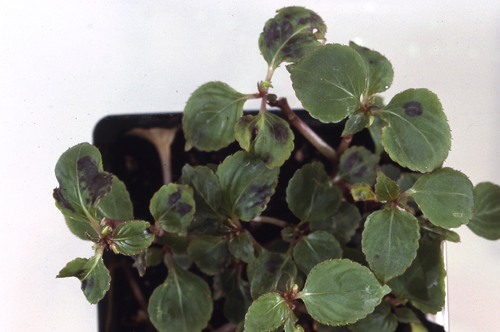
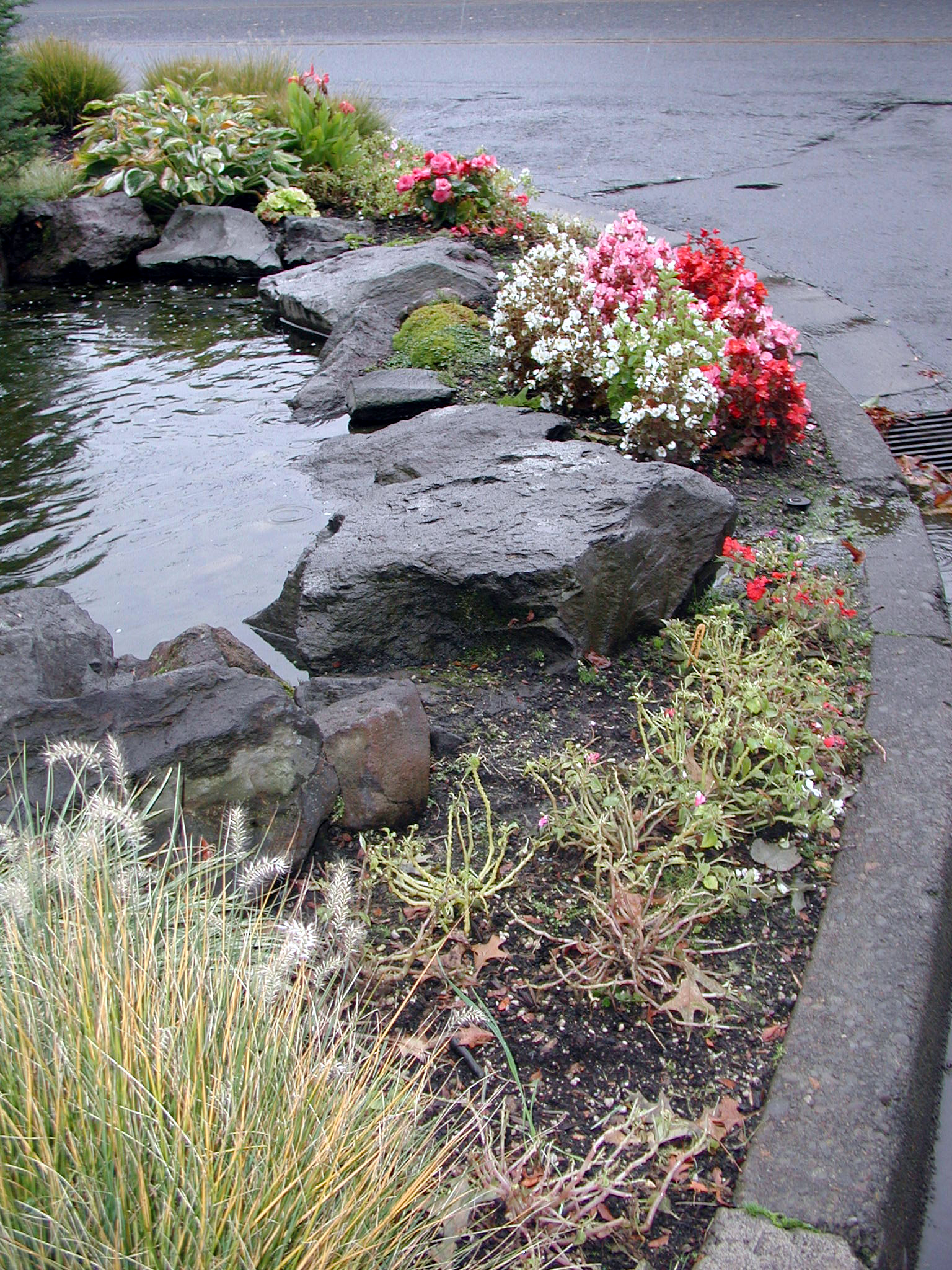
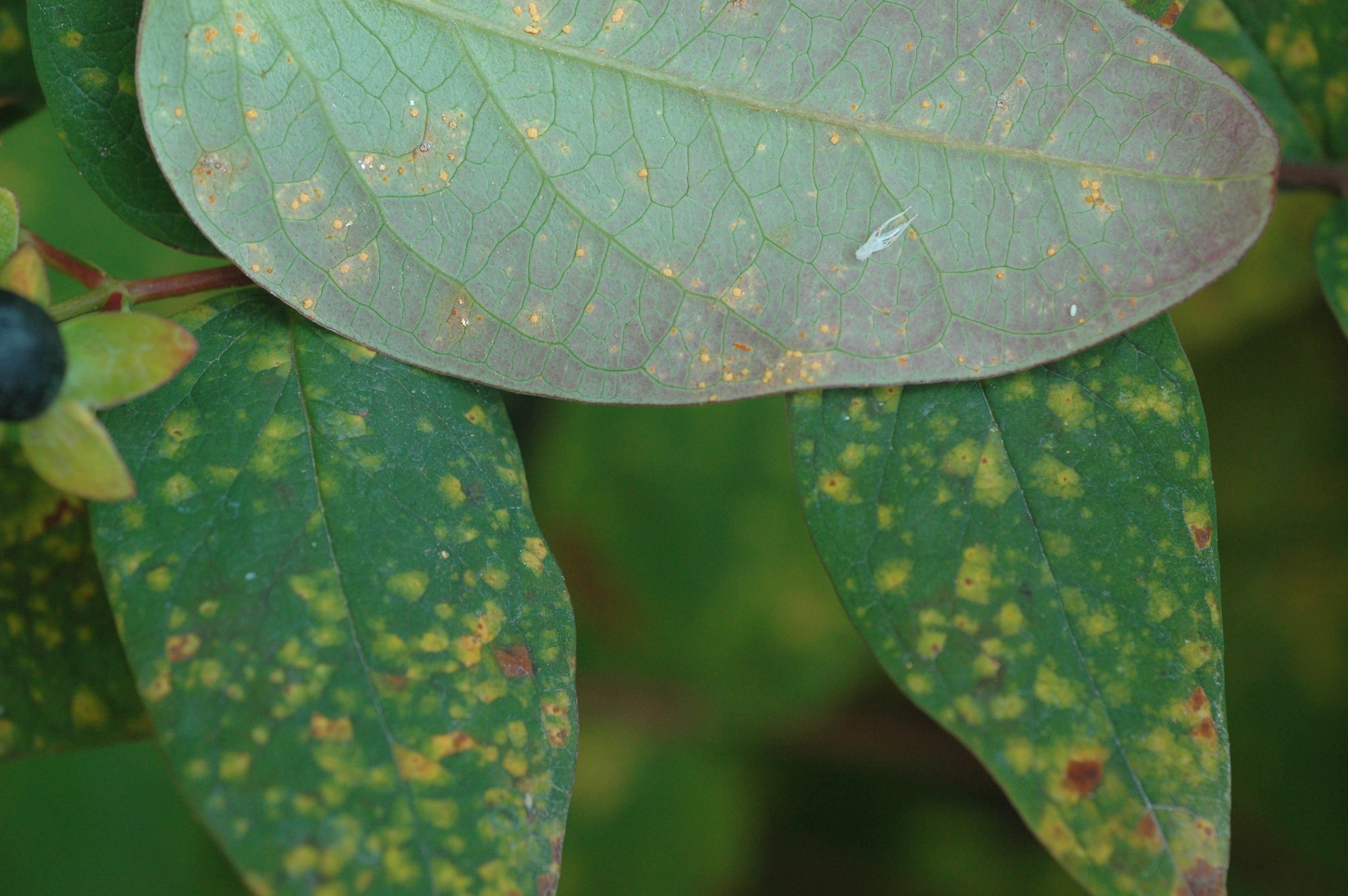
Leaf spots due to Botrytis were at first water-soaked then turned necrotic.
OSU Plant Clinic Image, 2013.
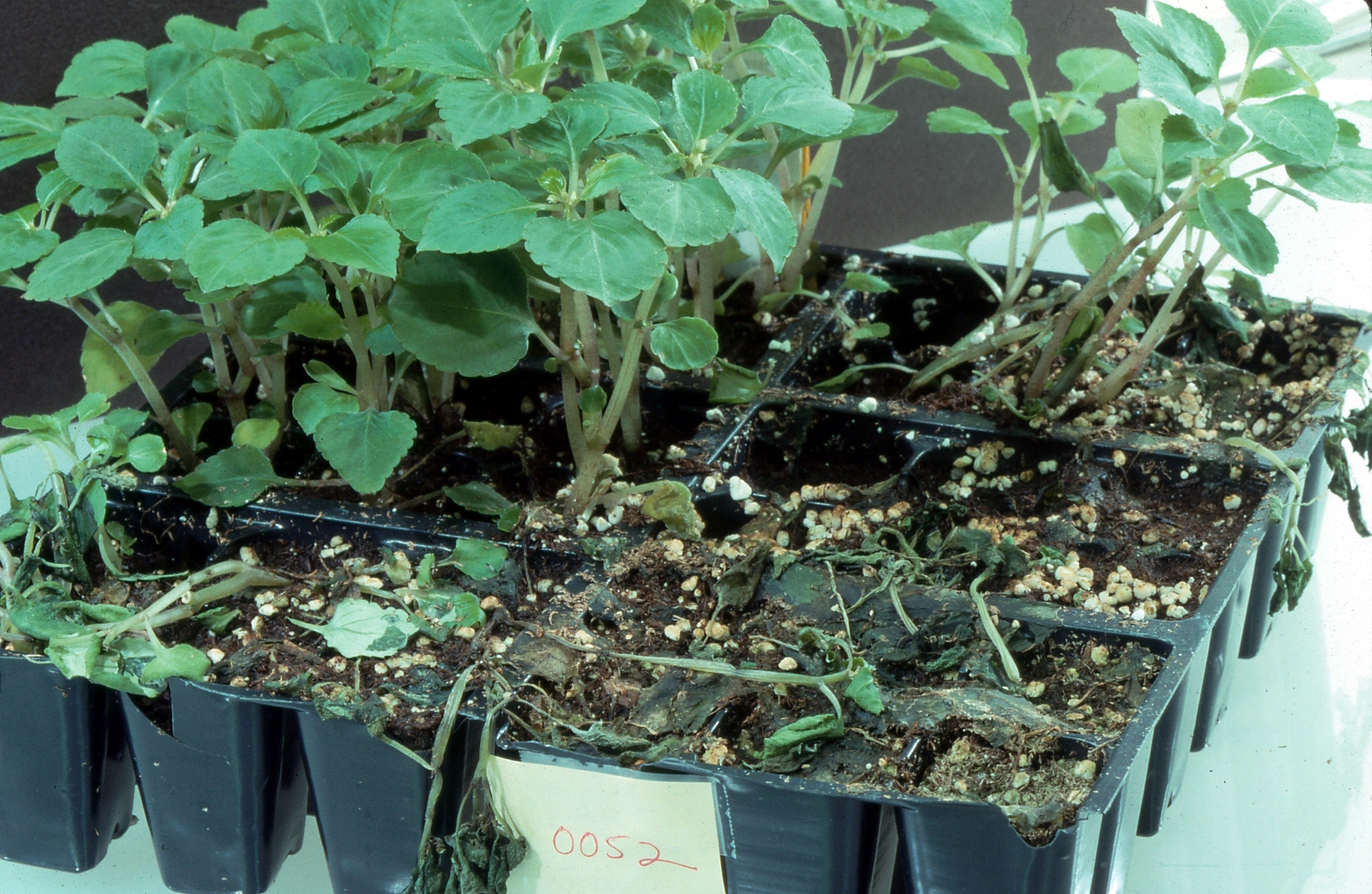
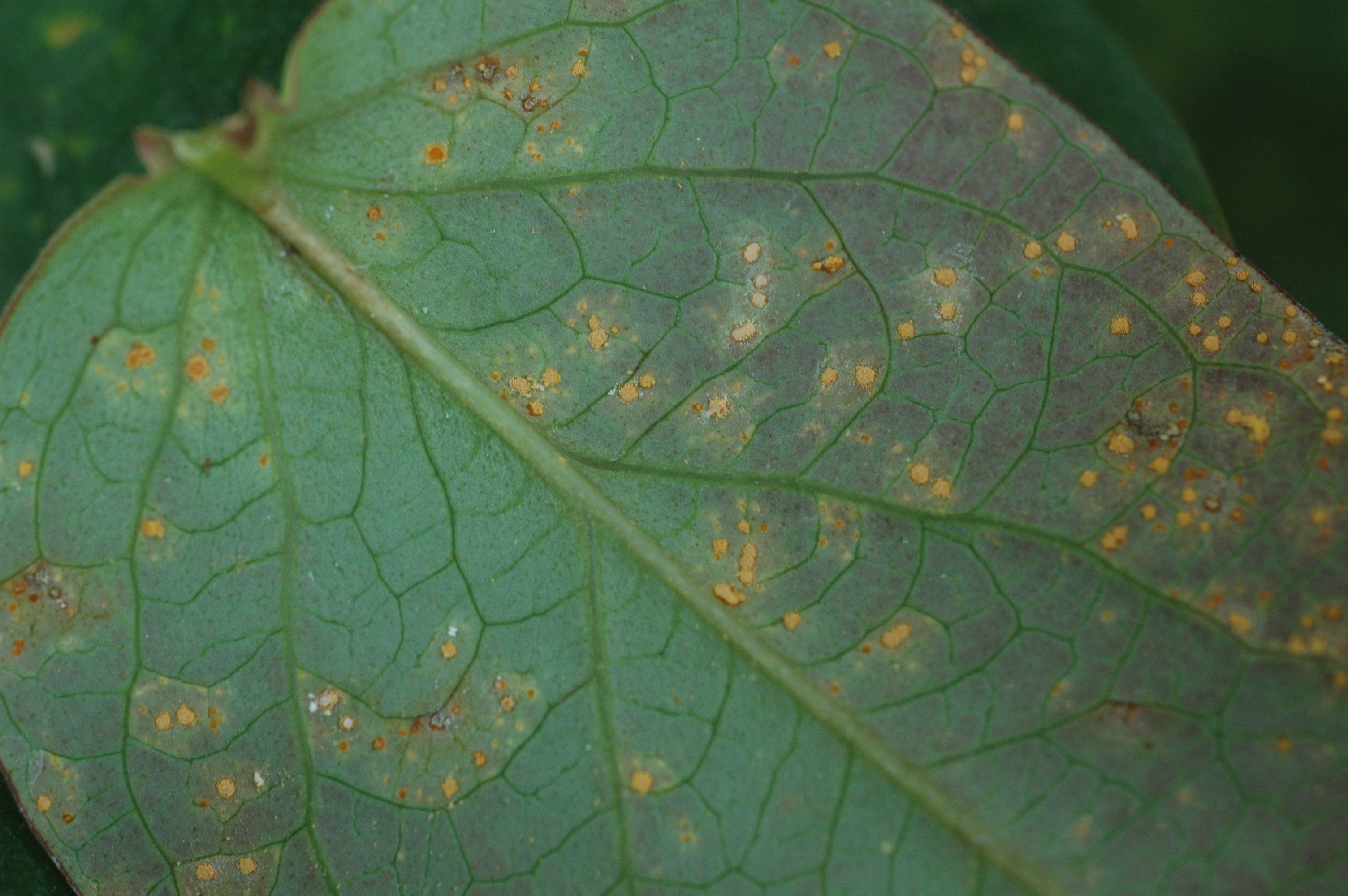
Botrytis was isolated from these leaf blights.
OSU Plant Clinic Image, 2013.
Cause Albugo candida, a fungus-like microorganism, can cause disease on all crucifers including horseradish, arugula, rapeseed (canola), radish, leafy brassicas, head and stem brassicas, and wild mustards. The fungus overwinters as oospores in plant debris or as mycelium in perennial plants. The oospores can germinate and infect young plants, leading to pustules on the plant. Sporangia are produced in pustules, can be moved by wind, rain, or insects, and can germinate, giving rise to zoospores.
Cause Verticillium dahliae or V. longisporum, fungi that can survive as resistant mycelium in soil for many months to years.
Symptoms Unilateral wilting and death of aboveground plant portions. Sometimes, interveinal yellowing of lower leaves and plant stunting precede or accompany wilt. The root's vascular tissue becomes brown or black, reducing the grade of the product when harvested.
Cause An Ascochyta sp. has been reported from Washington, and a Ramularia sp. has been found in Oregon.
Symptoms Necrotic spots on leaves.
Cultural control None have been investigated in the Pacific Northwest.
Chemical control
Cause The fungus Erysiphe flexuosa has been reported in Washington and Idaho and observed in Oregon. Powdery mildews are highly specialized and form a close association with the host such that this fungus only infects species of Aesculus. The disease is favored by shade, warm conditions (60°F to 80°F) and cool nights. Overcrowding of plants is also favorable for disease development.
Powdery mildew may be subtle but extensive on shaded leaves.
Cause Some trees will show symptoms of this nonparasitic problem year after year, regardless of the weather. Suggested causes have included high slat injury and heat but are not consistently associated with symptoms.
Trees in pots combined with high temperatures can be a problem keeping up with watering and resulting in leaf scorch.
Jay W, Pscheidt, 2008.
Hard for this little seedling to take 104F with no water.
Jay W. Pscheidt, 2012.
Cause The fungus Phyllosticta sphaeropsoidea (sexual Guignardia aesculi) overwinters in fallen leaves. Ascospores are produced in the spring and infect new leaves from budbreak through shoot elongation. The disease is favored by wet weather in spring. Although not formally reported from the Pacific Northwest, it has been detected on a few plant samples at the OSU Plant Clinic. It is an economic problem for nursery tree production.
Lots of large, necrotic spots on these leaves.
Photo by Everett Hansen, 1998.
Notice the necrotic spots with yellow margins.
Photo by Everett Hansen, 1998.
By K. Eastwell and C. M. Ocamb
Note the chlorotic (yellowish) areas, as well as distortion and upward curling of the leaf margins.
Photo by C. B. Skotland
Field shot of ApMV-infected hop plant. Note the yellow arcs and rings.
David H. Gent, 2006
Another ApMV-infected hop plant. Note the yellowish-brownish arcs and rings.