Plant Disease Management Handbook

Cause A fungus, Fusarium oxysporum f. sp. gladioli, that lives in soil and plant debris for many years as chlamydospores. Population levels are highest in the top 8 inches of soil. Spores infect roots and cross the basal plate. These infections may continue to enter and spread within the vascular tissues. The fungus is spread widely by contaminated soil and infected corms while local spread can be by water flow and rain splash.

Image related to Iris, Bulbous (Iris spp.)-Fusarium Basal Rot

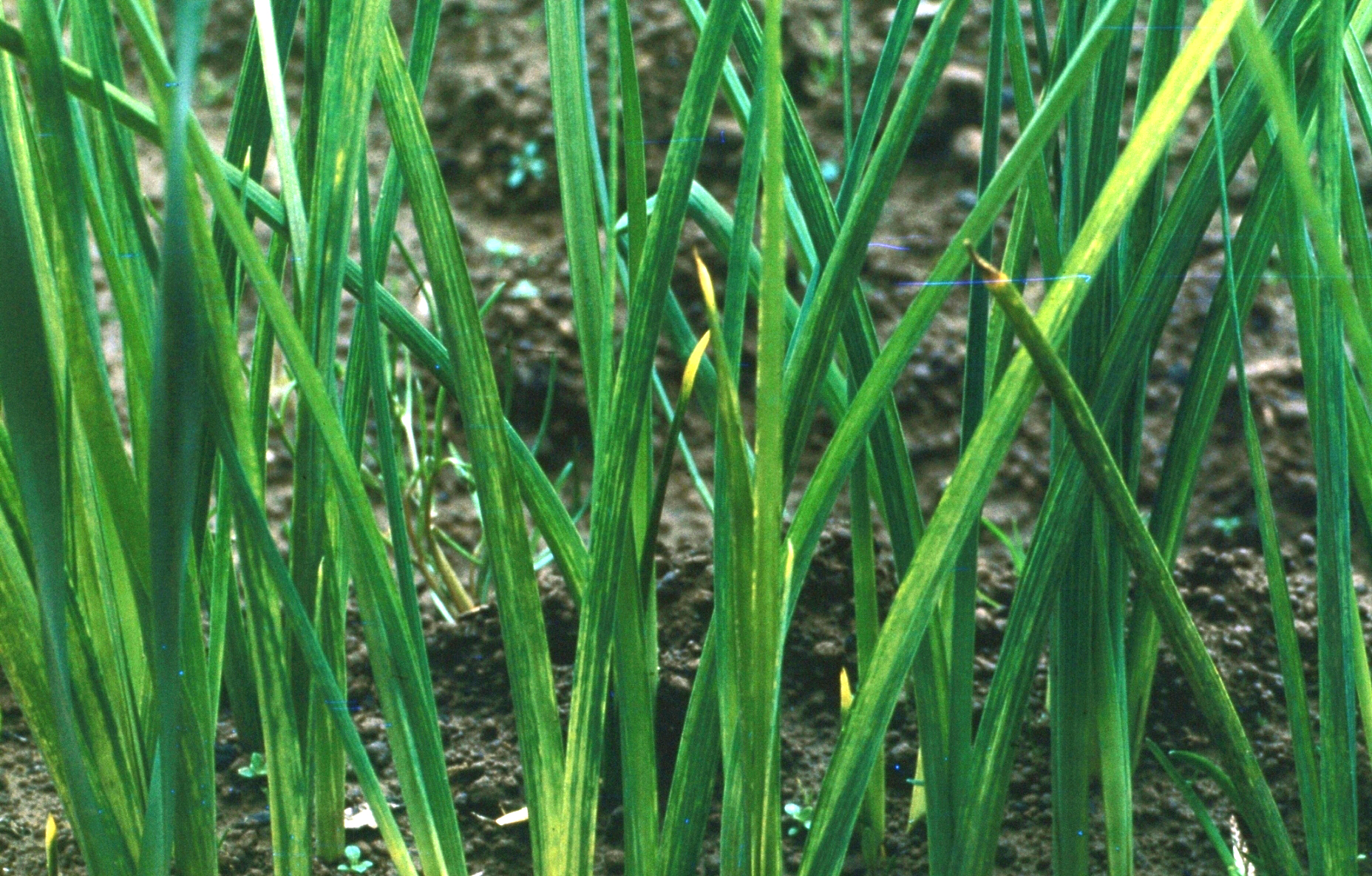
Cause Sclerotium delphinii, a fungus. The sclerotia overwinter in soil or affected plant parts. Infection usually occurs on the stems near the soil surface. Disease development and spread can occur very rapidly under mild to warm, moist conditions in the field or in storage after digging. The disease is widespread and can be serious. In the Pacific Northwest, crown rot is more common on bulbous iris, tulips and lilies than daffodils.

Image related to Iris, Bulbous and Rhizomatous (Iris spp.)-Crown Rot
An Indian Hawthorn shoot
Image related to Impatiens-Impatiens Necrotic Spot

Cause Plasmopara destructor is a host-specific, fungus-like organism known as an oomycete, or water mold. There have been sporadic reports in greenhouses since 2004, but it was not until summer 2011 that regional outbreaks of this disease were seen for the first time in landscape beds and container plantings in North America. The disease was found in landscapes in Oregon and Washington since 2012. Impatiens business dropped 50% to 60% due to this disease alone.

Image related to Impatiens (Impatiens walleriana)-Downy Mildew
Image related to Impatiens-Botrytis Blight

Cause Rust on the common garden ground cover (creeping St. John's Wort - H. calycinum) is caused by the fungus Melampsora hypericorum. The same rust can occur on the therapeutic herb H. perforatum. Another rust, Uromyces hypericifrondosi (formerly Uromyces triquetrus) (which may also be called U.