Plant Disease Management Handbook

Cause A physiological problem. The exact causes of pit breakage are unknown. Low temperatures and/or freeze damage during flowering and early fruit development may be factors. Fruit of most early peach cultivars enters the final swell of growth before the pit is completely hardened. As the fruit enlarges rapidly, stress exerted by the expanding flesh causes (or enhances) much of the pit fracturing.

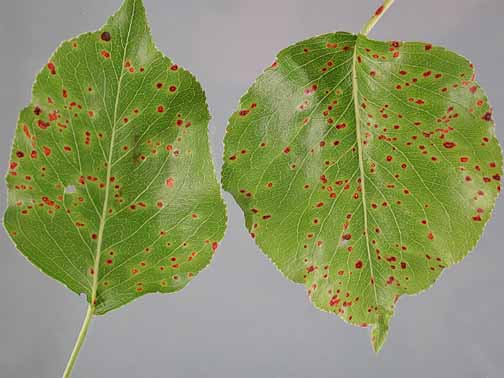
Cause Wilsonomyces carpophilus, a fungus that overwinters on infected peach (stone fruit) buds and twigs. When moisture is continuous for at least 24 hours and temperatures are above 36°F, infection can occur in the dormant season. When temperatures are higher during the growing season, shorter periods of moisture are required for germination and infection; for example, only 6 hours are needed at 77°F. Spores spread primarily by splashing water and can remain viable several months when dry.

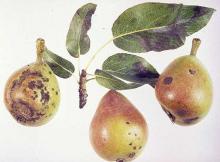
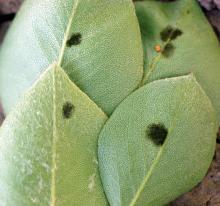
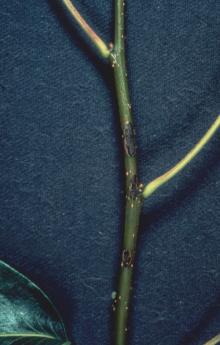
Image related to Peach (Prunus persica)-Shothole (Coryneum Blight)
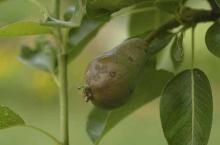
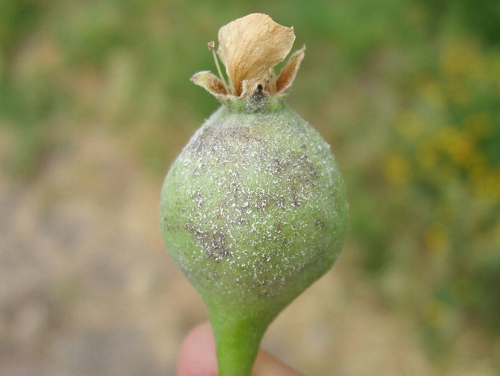
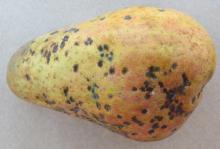
Image related to Peach (Prunus persica)-Russeting

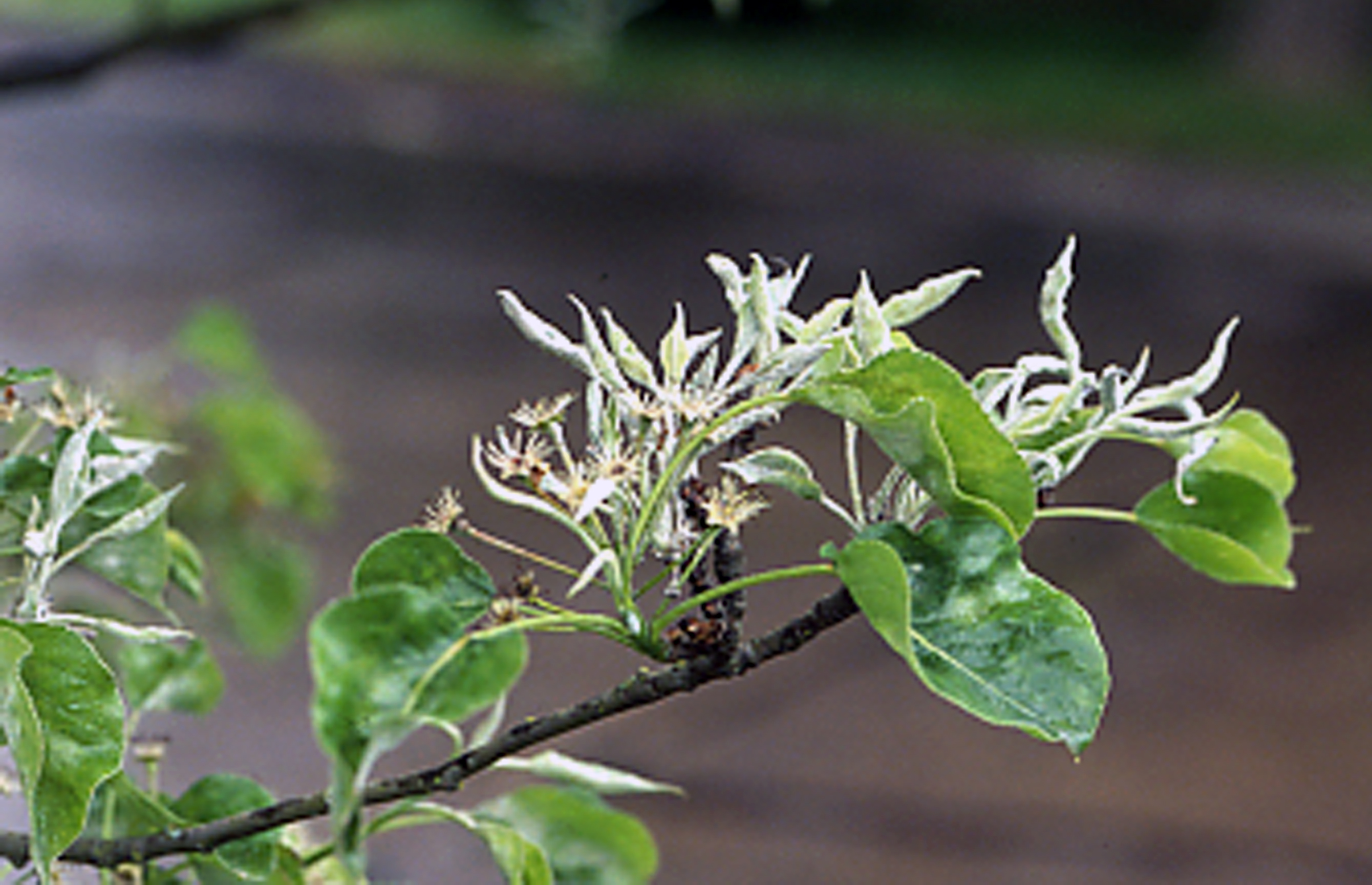
Cause Podosphaera pannosa (formerly Sphaerotheca pannosa) and Podosphaera clandestina, fungi that overwinter on infected twigs, shoots, and buds of stone fruits. Leaves are infected as they emerge from the bud. Colonies that develop on leaves produce airborne conidia that infect other leaves and fruit. Fruit are susceptible to infection until pit hardening. Roses are a host of P.

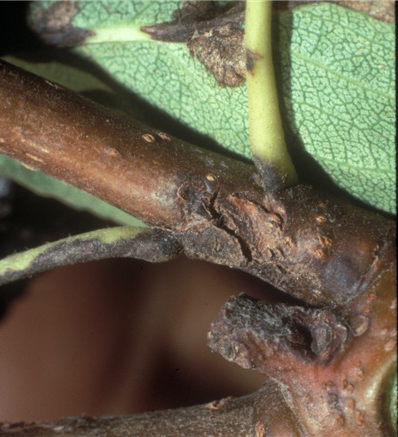
Image related to Peach (Prunus persica)-Powdery Mildew

Cause Plum pox virus (PPV) of which there are several strains. The disease was found in North America for the first time in 1999 in Pennsylvania and has now been detected in New York and Michigan as well as Ontario and Nova Scotia, Canada. Periodic surveys for the virus since 2000 have not found the virus in the Pacific Northwest nursery industry or Oregon's cherry orchards. After 10 years of eradication efforts, Pennsylvania was declared free of the virus in 2009 meeting the requirement of three consecutive years of testing negative.

Image related to Peach (Prunus persica)-Plum Pox (Sharka)

Cause Taphrina deformans, a fungus. Spores of this fungus overwinter on bark, twigs, and old infected leaves. Infection occurs through bud scales in mid- to late winter just as buds begin to swell. Slow growing shoots and leaves can be infected during cool and wet growing seasons. Maximum susceptibility is between bud break and petal fall. In wet seasons, the fungus continues to cause slight summer infection, particularly west of the Cascade Range.

Image related to Peach (Prunus persica)-Leaf Curl

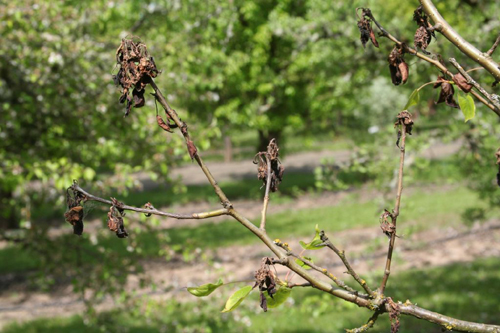
Cause The specific pathogen(s) in the PNW has not been formally identified but the fungi Cytospora cincta (sexual: Leucostoma cinctum), and the closely related C. leucostoma (sexual: Leucostoma persoonii) have been suggested. Molecular techniques have identified C. pulriova from peach cankers in CA and CO and SC.

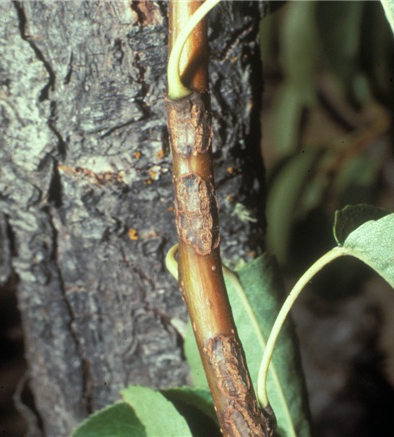
Image related to Peach (Prunus persica)-Cytospora Canker