Plant Disease Management Handbook

See:

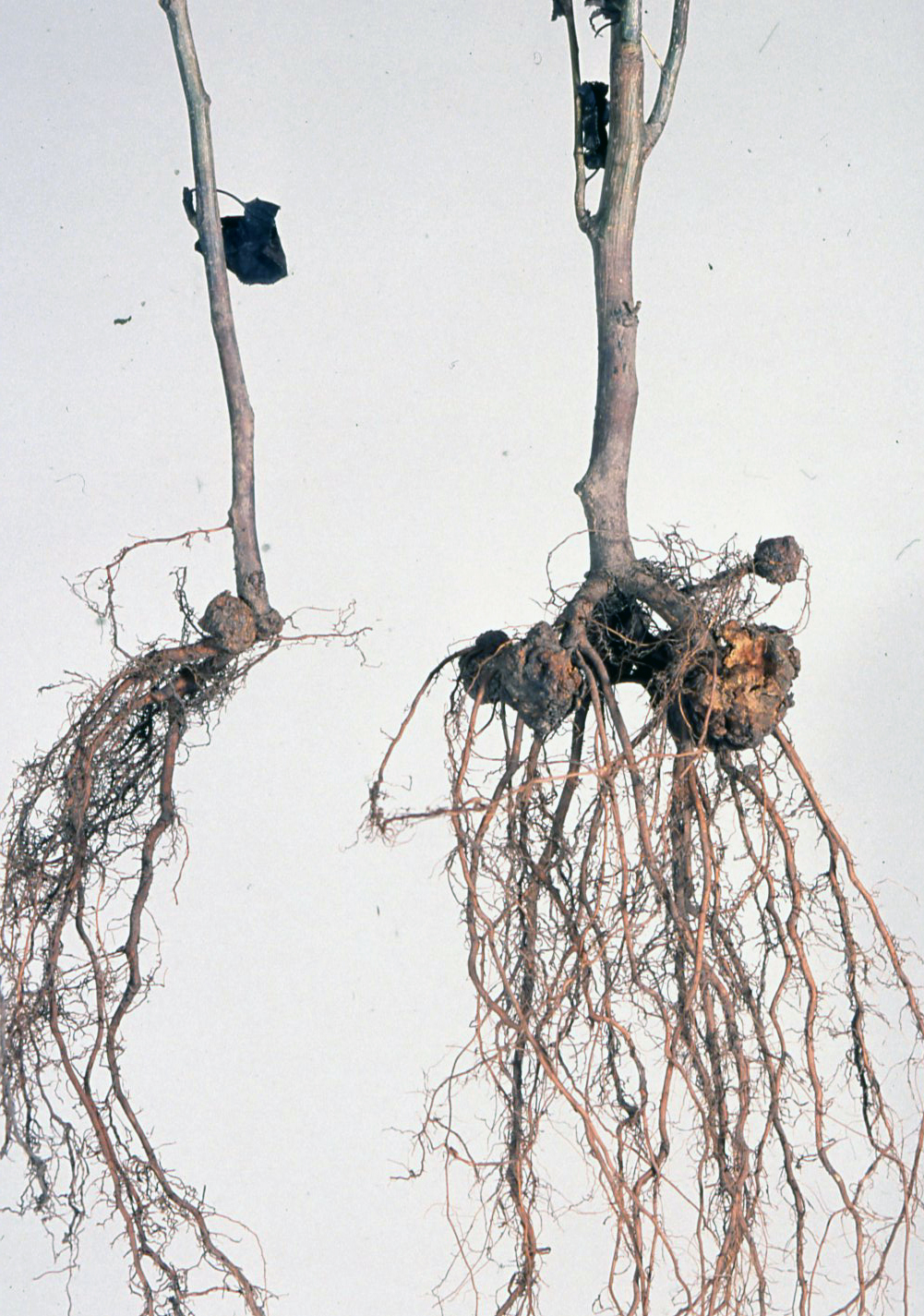
Note Although the crown gall bacterium has a wide host range, plants more likely to have crown gall include all stone and pome fruit, caneberries (such as blackberry and raspberry), euonymus, Photinia, poplar, rose, walnut, and willow.

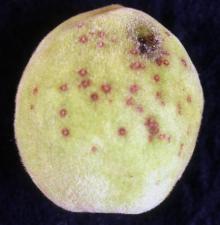
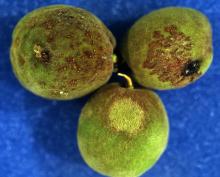
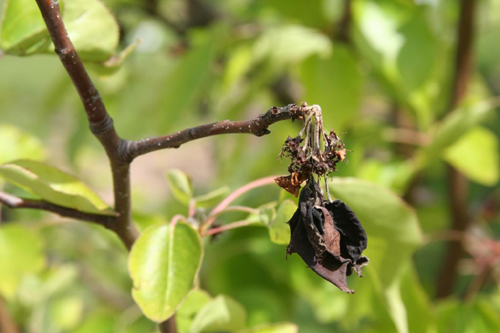
Cause The fungi Monilinia fructicola and M. laxa can incite both a blossom blight, a twig and branch dieback, and a fruit rot of several Prunus spp. including many ornamental and fruit trees. Fungi survive year to year on infected twigs, branches, old flower parts, or mummified fruit. Conidia are produced on infected plant debris in the tree when the temperature is above 40°F.

Cause The fungi, Fusarium oxysporum f. sp. pisi, races 1, 5, and 6, produce wilt symptoms; race 2 produces near-wilt symptoms. Races 5 and 6 are known to be economically important only in western Washington and southwest British Columbia. Races 1 and 2 reportedly are in all pea-growing regions of Oregon and Washington.

Cause Several fungi or fungus-like microorganisms including Pythium spp., Rhizoctonia solani, Thielaviopsis basicola, and Phoma medicaginis var. pinodella, all of which are soilborne. Wrinkled-seed garden peas are more prone to damping-off than smooth-seed field peas.

Image related to Pea (Pisum sativum)-Root Rots

Cause Erysiphe pisi (= Alphitomorpha pisi = Ischnochaeta pisi; anamorph Oidium arachidis), a fungus that can be seedborne but usually survives as conidia on living plants. Normally the disease does not cause serious losses if peas are planted in spring or an early-maturing variety is planted. When peas are recropped on the same ground, the fall planting sometimes develops problems.

Image related to Pea (Pisum sativum)-Powdery Mildew

Cause Eleven reported viruses induce streak symptoms in peas. Alfalfa is the principal inoculum reservoir for streak-inducing viruses in eastern Oregon, eastern Washington, and Idaho. The two viruses that aphids transmit from alfalfa to peas are pea streak virus and alfalfa mosaic virus. Red clover is the inoculum reservoir for the principal streak-inducing virus of western Oregon and western Washington, red clover vein mosaic virus.

Cause The pea seedborne mosaic virus spreads through infected seed. This virus was not known to be in the Pacific Northwest until 1968 and has not escaped into other crop or weed hosts in the United States. The pea aphid (Acyrthosiphon pisum), the green peach aphid (Myzus persicae), and the potato aphid (Macrosiphum euphorbiae) are efficient vectors.

Cause The bean leaf roll virus, which the pea aphid transmits from alfalfa, the overwintering host, to peas. The disease is not seedborne. The disease virtually eliminated susceptible pea lines and varieties in southern Idaho in 1980 and continues to be destructive in irrigated areas of Idaho, Washington, and Oregon.