Chemical control Best when used with cultural controls. Tank-mix and/or alternate products from different groups with different modes of action to prevent the buildup of resistant fungi. Limit the use of any one group during crop production.
Note the necrotic stem canker near the bottom of this plant.
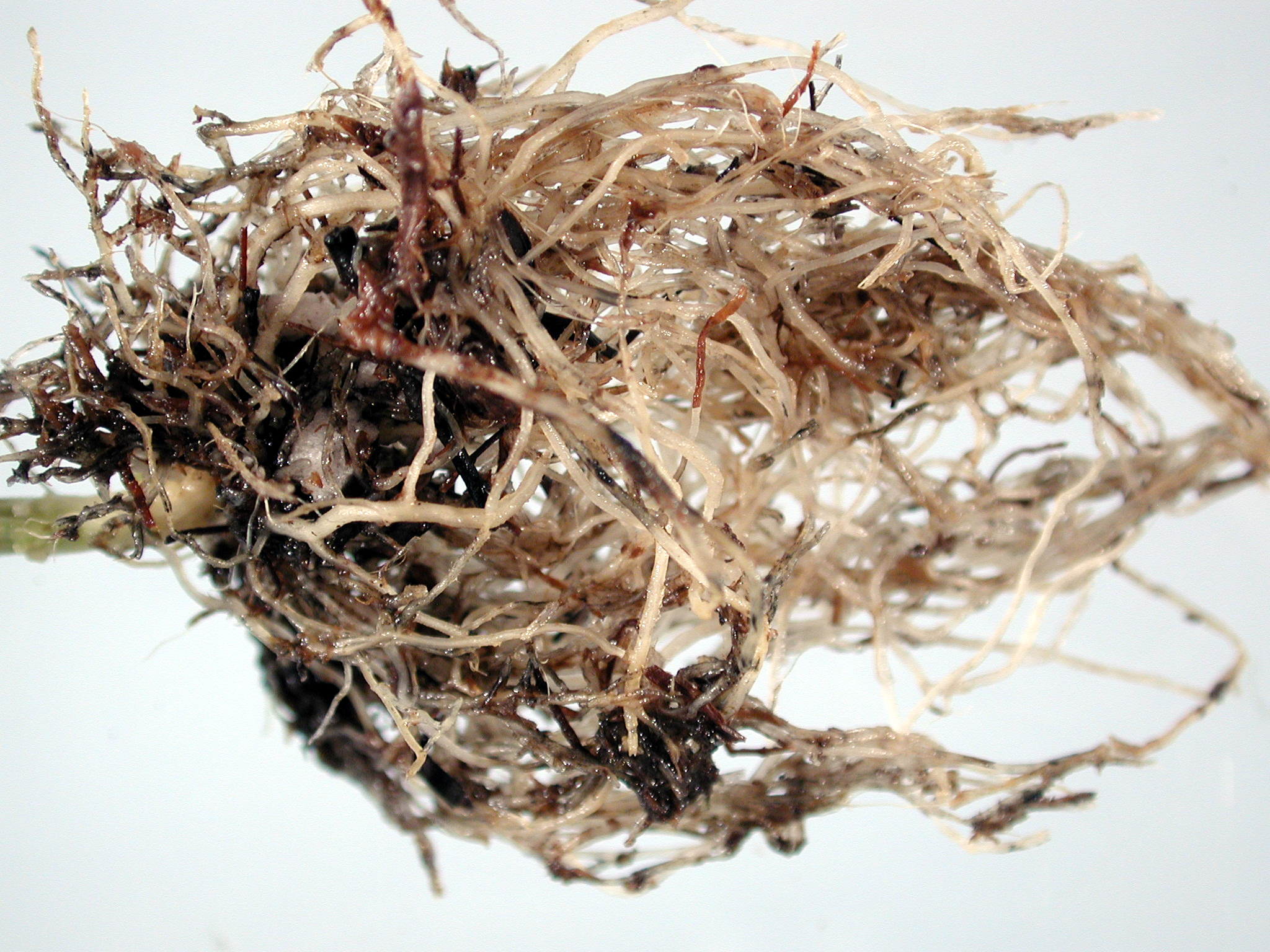
Note Aboveground symptoms include stunted growth, chlorosis, rolling of upper leaves, and reduction in size and number of flowers. Initially, roots or portions of roots are brown, then develop flat, black root lesions with the formation of chlamydospores on the root surface and in the root cortex.
Cause A fungus, Puccinia menthae, which overwinters on mint stubble and on wild and escaped mint. It completes its complex life cycle on one host (autoecious) and is macrocyclic (five spore stages), of which the aecial stage can be systemic in plants. Eleven races have been identified in the Pacific Northwest. Isolates from native spearmint are unable to infect peppermint, and peppermint isolates are unable to infect native spearmint.
Note the lesions of peppermint rust on the underside of this leaf.
Photo by Kathy Merrifield.
Cause A fungus, Golovinomyces biocellatus (syn = Erysiphebiocellata, formerly Erysiphe cichoracearum; anamorph Oidium erysiphoides), which overwinters on mint, stubble, and many wild hosts.It is seldom serious enough on peppermint to warrant control measures; however, it is very destructive on Scotch spearmint.
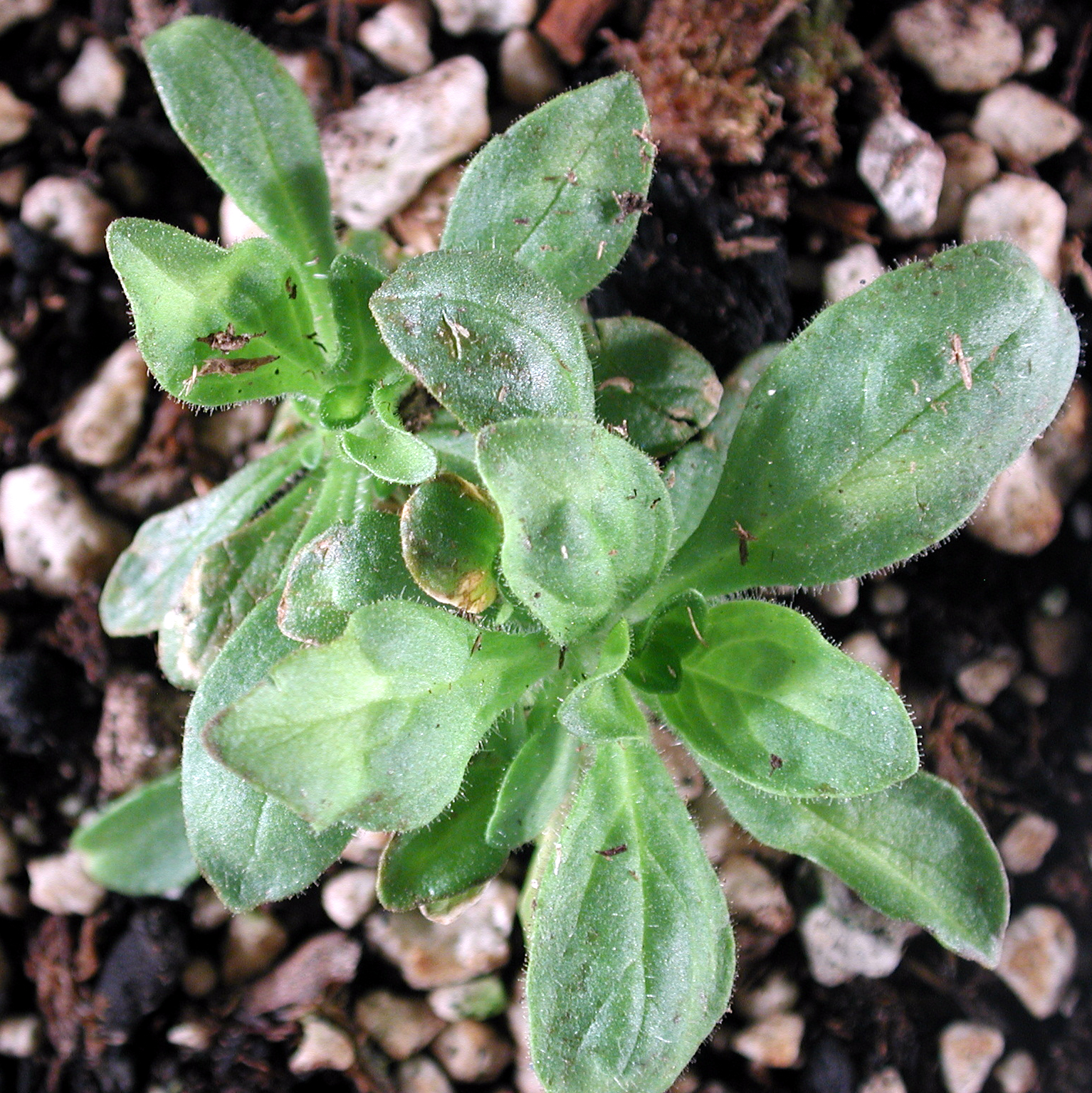
Open patches in a field with severely depressed, red-green plants.
Kathy Merrifield.
Roots near center the of the plant (picture) are dark-brown to black.
Photo by Kathy Merrifield, 1995.
Cause Meloidogyne hapla. It lives in soil and causes plant decline by affecting the root system. The pest is important because it severely injures potential rotation crops such as carrots and potatoes.
Symptoms Galls form on roots; however, infection does not appear to cause yield loss under field conditions.
Cultural control
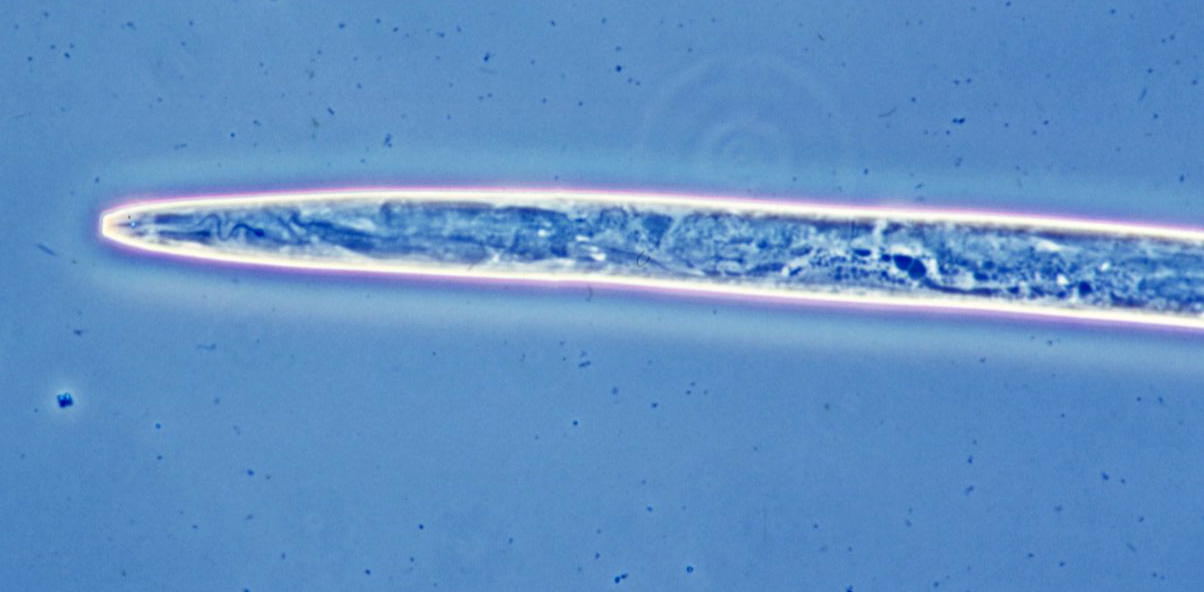
Cause Longidorus elongatus is one of several nematodes that live in soil and cause plant decline by affecting the root system. They are frequently found in the Willamette Valley of Oregon, though seldom in high numbers. Needle nematodes are migratory ectoparasites found only in soil.
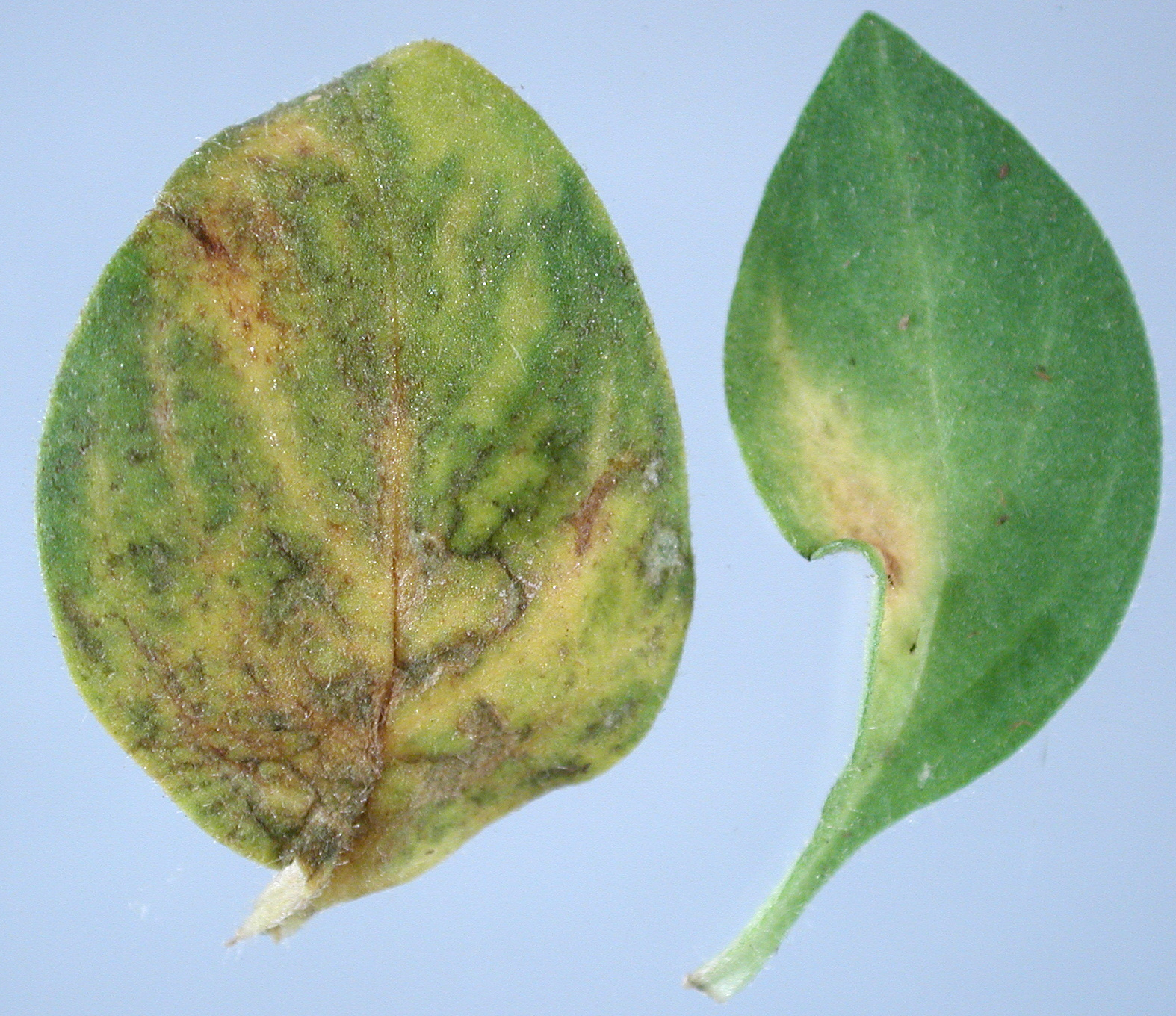
Cause A fungus, Cephalosporium sp. It infects leaves through wounds such as those from rust pustules, insects, or machinery.
Symptoms Irregularly shaped black spots on leaves rapidly coalesce and kill them. Infection may move down the leaf petiole into the stem. It develops rapidly in cool, wet weather and causes severe leaf drop, especially if hot, dry weather follows cool, wet weather.