Plant Disease Management Handbook

By P. B. Hamm and C. M. Ocamb

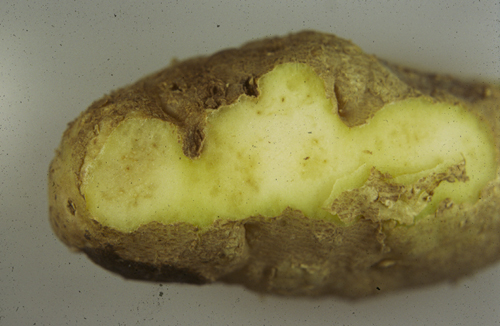
Image related to Potato (Solanum tuberosum)-Scab, Common

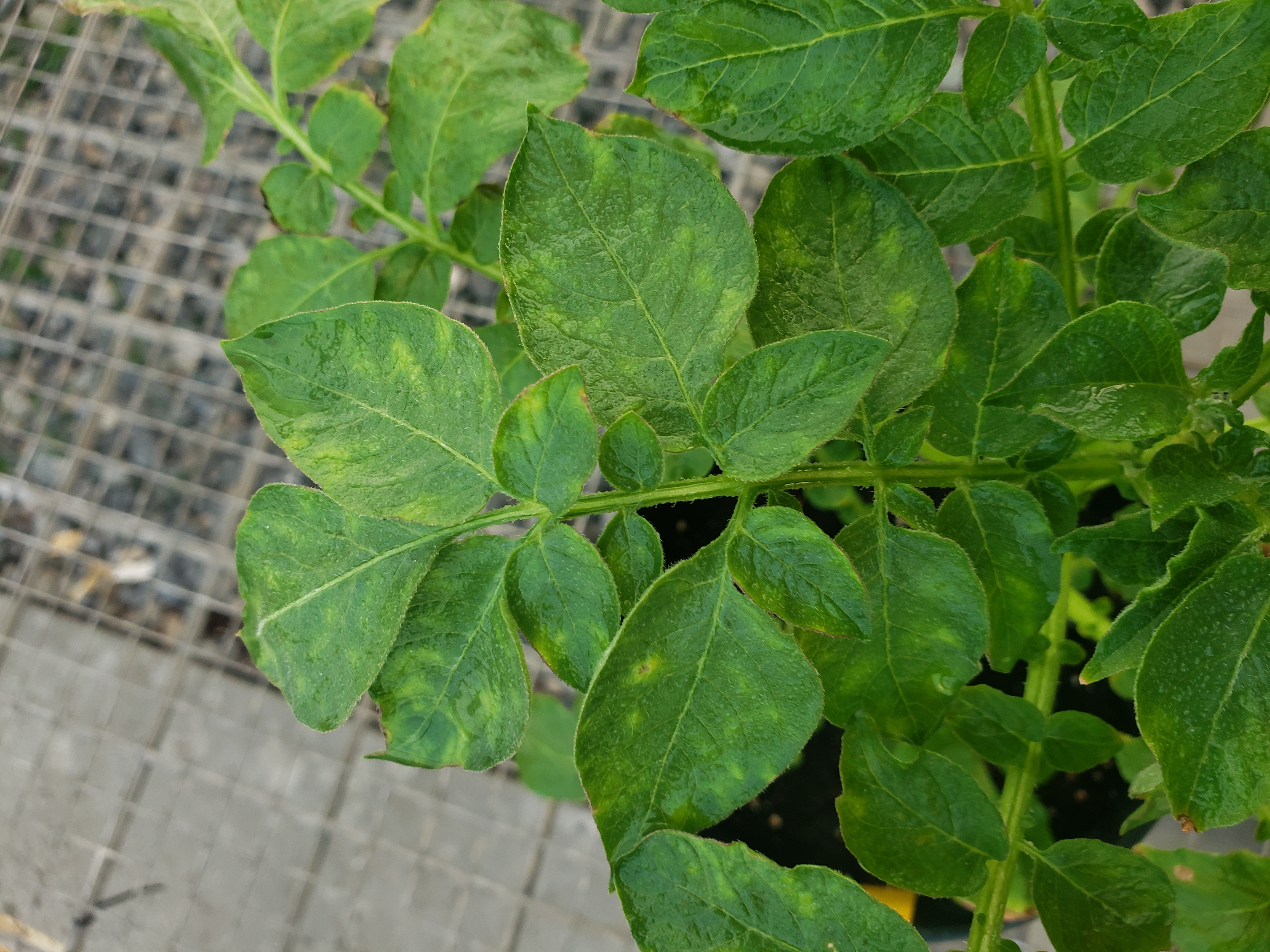
Cause The alfalfa mosaic virus is carried in tubers, but aphids can transmit it from alfalfa plants to potato plants by feeding first on infected plants and then probing noninfected plants. Nearby alfalfa fields or volunteer infected alfalfa plants in potato fields can be a source of inoculum.

Symptoms Large, irregular, yellow to cream-color spots appear on leaves. Tubers may show internal brown necrotic areas.

Image related to Potato (Solanum tuberosum)-Calico

Cause A physiological disorder associated with low moisture content of the tuber at harvest, bruising, low storage temperatures, and potash deficiency. Bruising increases rapidly when the pulp of potatoes being harvested drops below 47°F to 50°F (8.33°C to 10°C). Desiccation (pressure flatting) increases black spot when potatoes are handled.

Symptoms Internal black spots usually are at the tuber's stem end. White, smooth-skinned varieties are more susceptible.

Image related to Potato (Solanum tuberosum)-Black Spot (Internal Black Spot)

By K. Frost and C. M. Ocamb

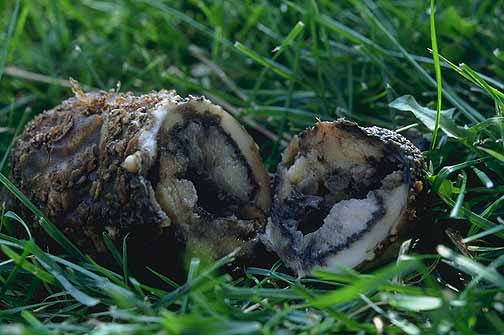
Cause Colletotrichum coccodes, a fungus with a wide host range and present in many potato-growing regions.

Image related to Potato (Solanum tuberosum)-Black Dot

By K. Frost and C. M. Ocamb

Image related to Potato (Solanum tuberosum)-Bacterial Soft Rot, Blackleg and Lenticel Rot

By P. B. Hamm and C. M. Ocamb

See:

Image related to Potato (Solanum tuberosum)-Aster Yellows (Late-breaking Virus)

Cause The fungus Erysiphe adunca var. adunca (formerly Uncinula salicis) has been reported from British Columbia and the disease has been reported throughout the Pacific Northwest. Phyllactinia populi has also been reported from North America. Occasionally encountered on suppressed understory leaves of cottonwood and hybrid poplar.

Cause Drepanopeziza populi-albae (formerly Marssonina populi or M. castagnei) and M. piriformis, fungi, have been reported form Oregon. In British Columbia M. brunnea f. sp. trepidae, M. castagnei, and M. populi have been found.