Plant Disease Management Handbook

Cause Ditylenchus destructor is known only from a small area in Idaho. The main problem is in storage where infected tubers rot, which spreads the disease to other tubers.

Cause Globodera pallida (pale cyst nematode or white cyst nematode) was confirmed during 2006 in Idaho and Golden potato cyst nematode (G. rostochiensis) was found in British Columbia in 1965. A different species (Globodera ellingtonae) was detected on the OSU Powell Butte experiment station, where it has been contained; it has not been found elsewhere in Oregon. Quarantine of areas affected was enacted.

By K. Frost and C. M. Ocamb

Image related to Potato (Solanum tuberosum)-Leak

By K. Frost and C. M. Ocamb

See:

Image related to Potato (Solanum tuberosum)-Latent Viruses

By P. B. Hamm and C. M. Ocamb

Image related to Potato (Solanum tuberosum)-Late Blight

Cause Sugar beet curly top virus causes this disease and the virus is transmitted by the sugar beet leafhopper. In Oregon, the disease is found primarily in eastern Oregon but is also occurs in central Oregon and the Klamath Falls area. The disease essentially parallels the distribution of the sugar beet leafhopper.

Cause Several Fusarium sp., including F. avenaceum, F. oxysporum, and F. solani. These fungi survive in infected plant parts as well as be soilborne for many years.

Cause Several Fusarium spp., including F. sambucinum, F. solani var. coeruleum and F. avenaceum, can cause dry rot. These fungi survive on refuse and live in soil. Infections can originate from infested seed tubers. Tuber rot usually does not occur unless the tuber is injured during harvest. Wounds provide a way for the fungus associated with soil to enter the tuber.

Image related to Potato (Solanum tuberosum)-Fusarium Dry Rot

By C. M. Ocamb and P. B. Hamm

See:

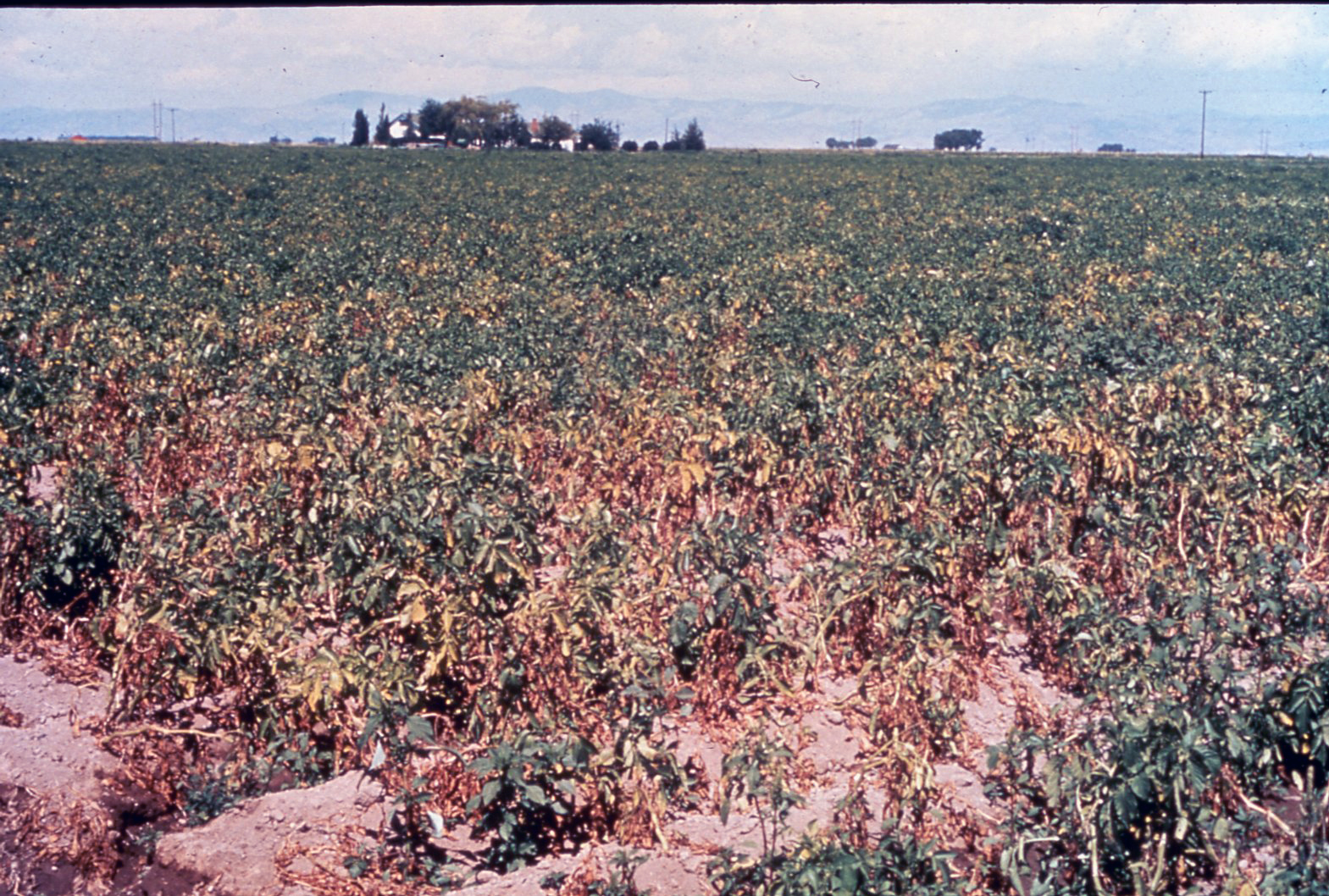
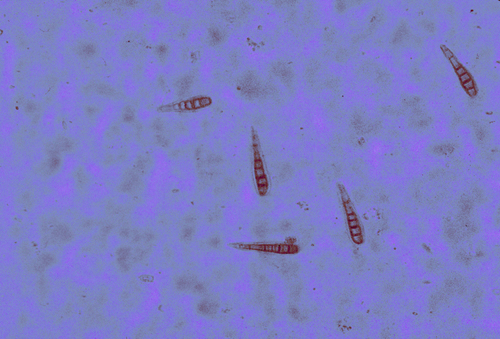
Image related to Potato (Solanum tuberosum)-Early Blight

By K. Frost and C. M. Ocamb

See:

Image related to Potato (Solanum tuberosum)-Corky Ringspot