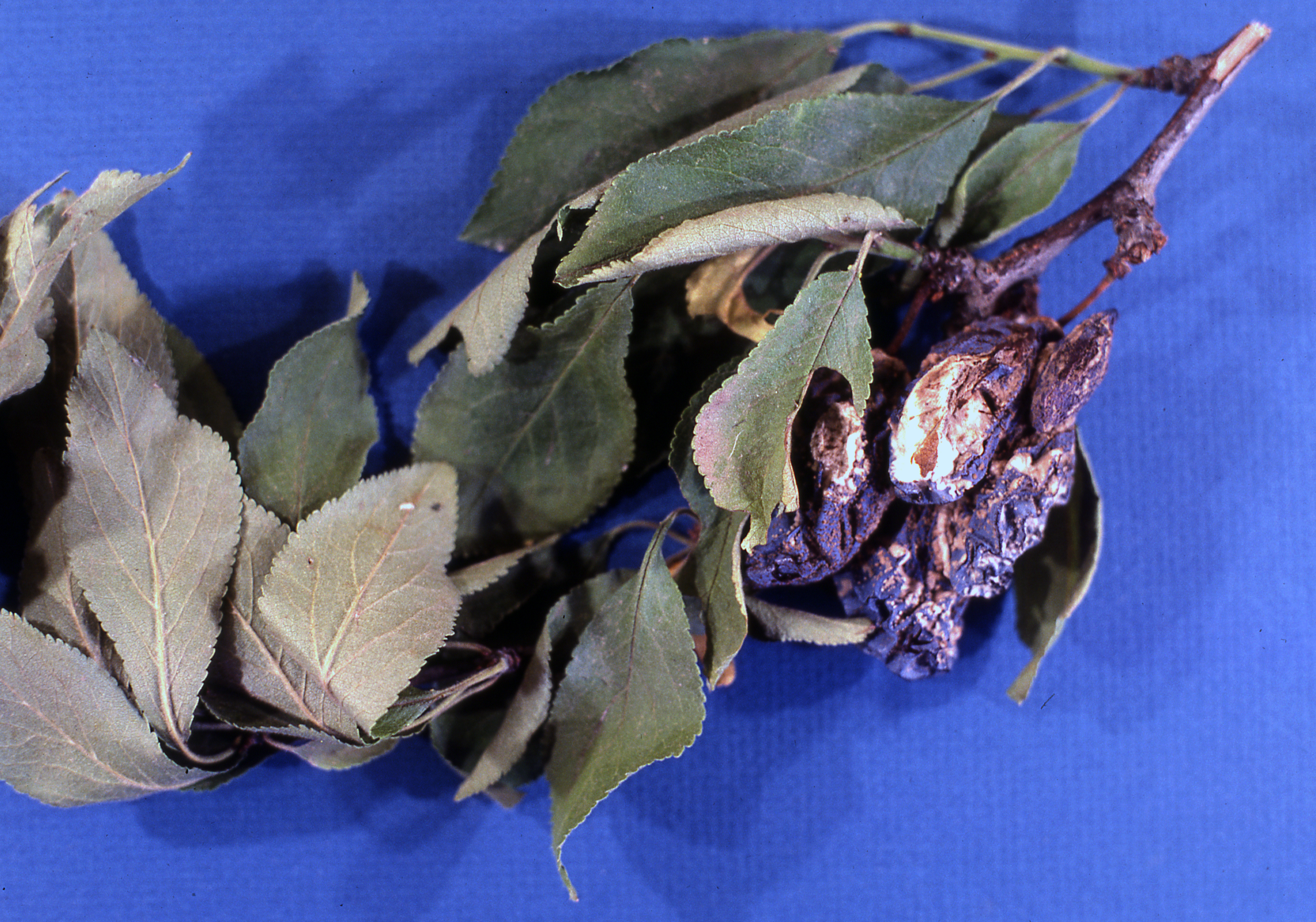
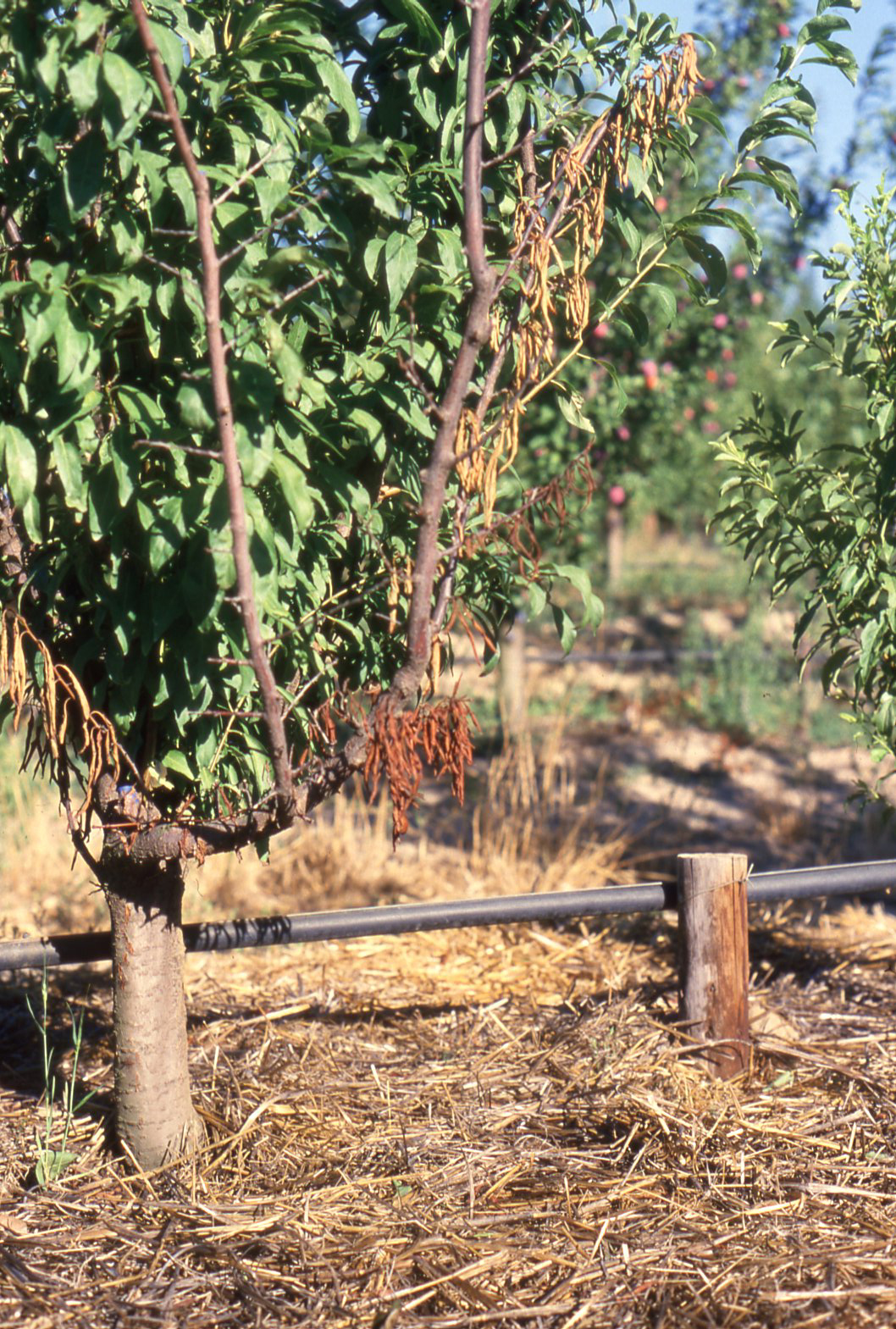
Notes Periodic surveys for the virus since 2000 have not found the virus in the Pacific Northwest nursery industry. Diseased plums are deformed with internal browning of the flesh and pale rings or spots on the stones.
Note: Marianna 2624 as a rootstock is reported to have Armillaria tolerance but has two drawbacks: it suckers profusely and has a shallow root system.
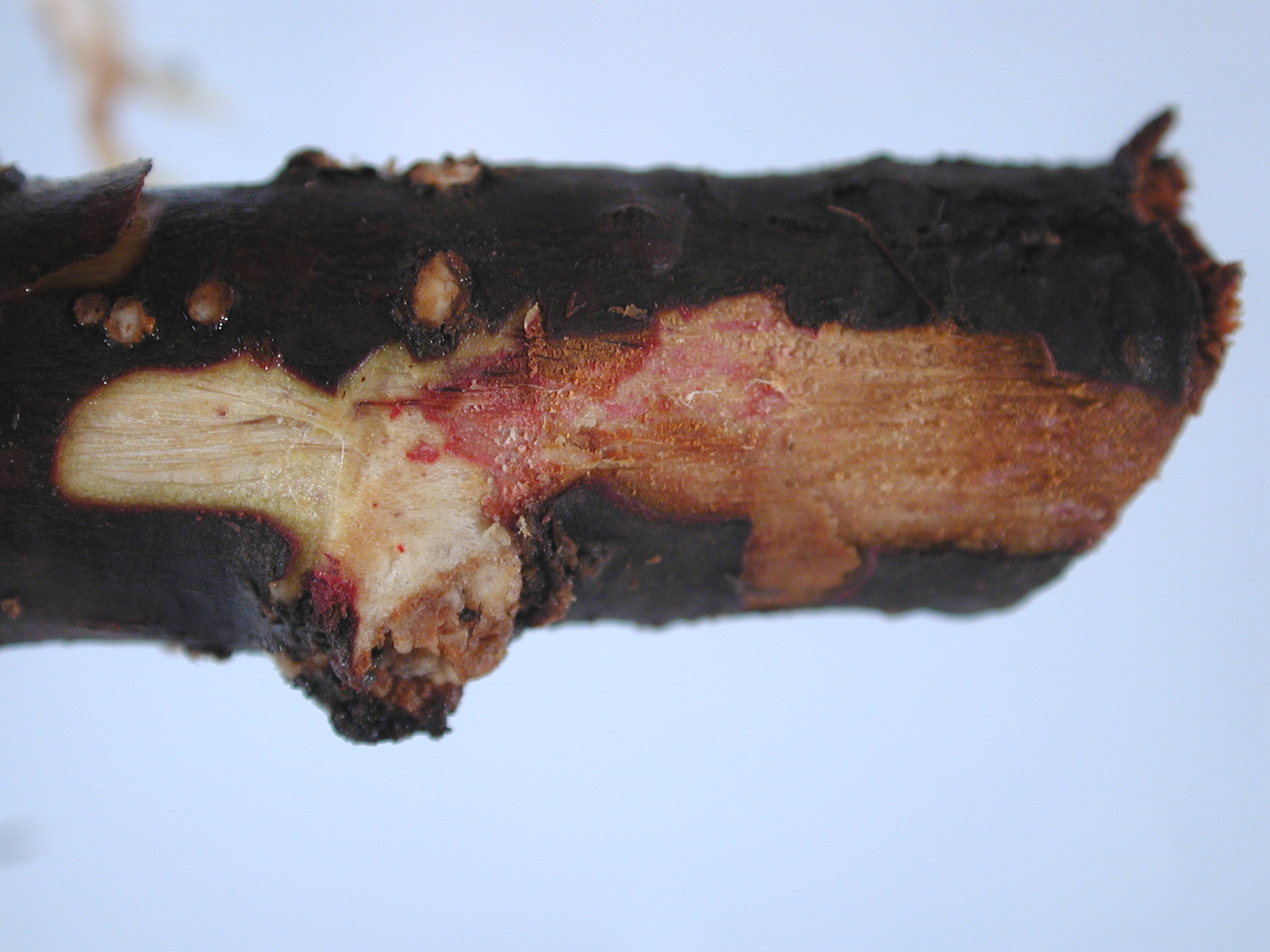
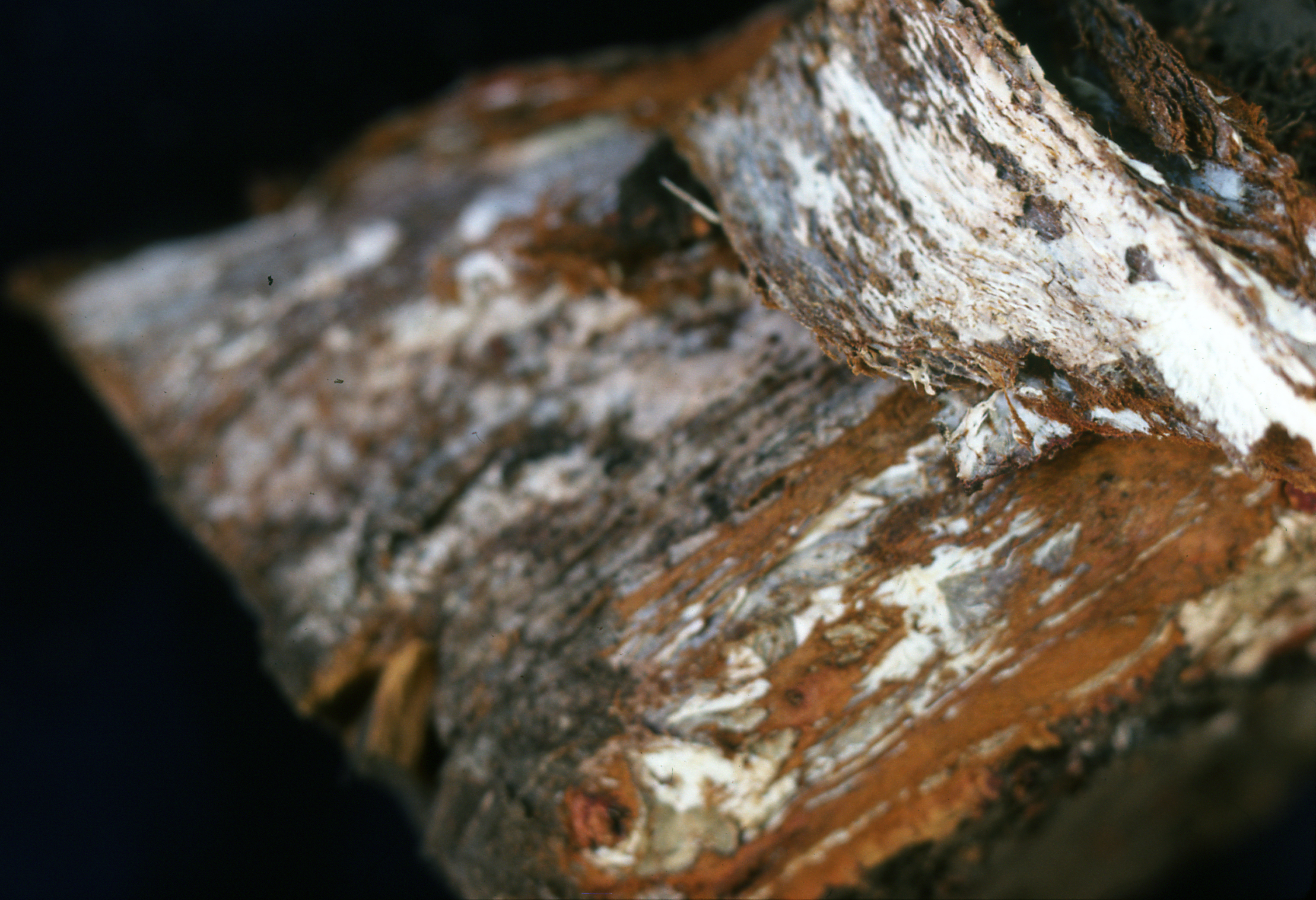
The bark has been peeled back to expose the cambium to show the white mats of the fungal mycelium.
OSU Extension Plant Pathology Slide Collection, 1982.
Cause Cercospora spp. have been found by the OSU Plant Clinic in Oregon, and Ramularia sp. have been reported in Washington. Prevalent in rainy seasons and in overcrowded plantings. Spores are airborne or transported in splashing water. These fungi generally overwinter in leaf debris in and around plants.