Plant Disease Management Handbook

See:

Note: Domestic water that contains chlorine and/or fluoride is usually not harmful to poinsettias. Toxicity of fluoride at >0.4 ppm in the water results in necrotic spots on the tips and margins of young leaves and bracts.

Cause Pectobacterium carotovorum and Dickeya chrysanthemi, bacteria that can spread by workers' hands, cutting tools, or contaminated water supplies. It also can survive in plant debris. Wounds are a common entry way for the bacteria. Any factor that stresses cuttings favors the disease such as long shipping times. Cool temperatures may delay symptoms until warm weather occurs.

Cause Curtobacterium flaccumfaciens pv. poinsettiae, a bacterium that can be spread by cutting tools, and hands, working from infected to healthy plants, splashing water, and in contaminated growing media, Infection of leaves occurs through stomates. Warm growing conditions and high-nitrogen fertility have been associated with the disease. Has become a rare problem.

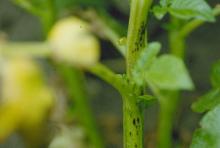
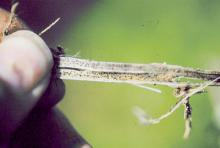
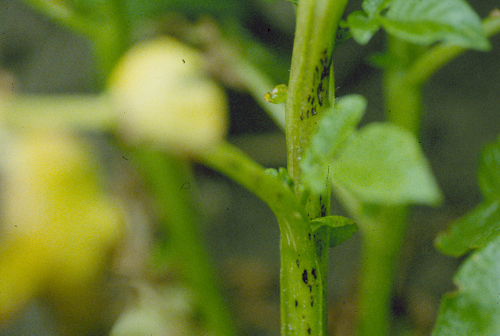
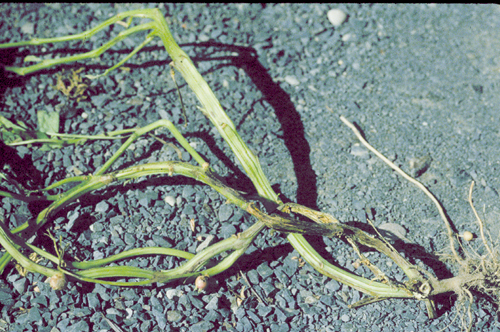
Image related to Poinsettia (Euphorbia pulcherrima)-Bacterial Canker
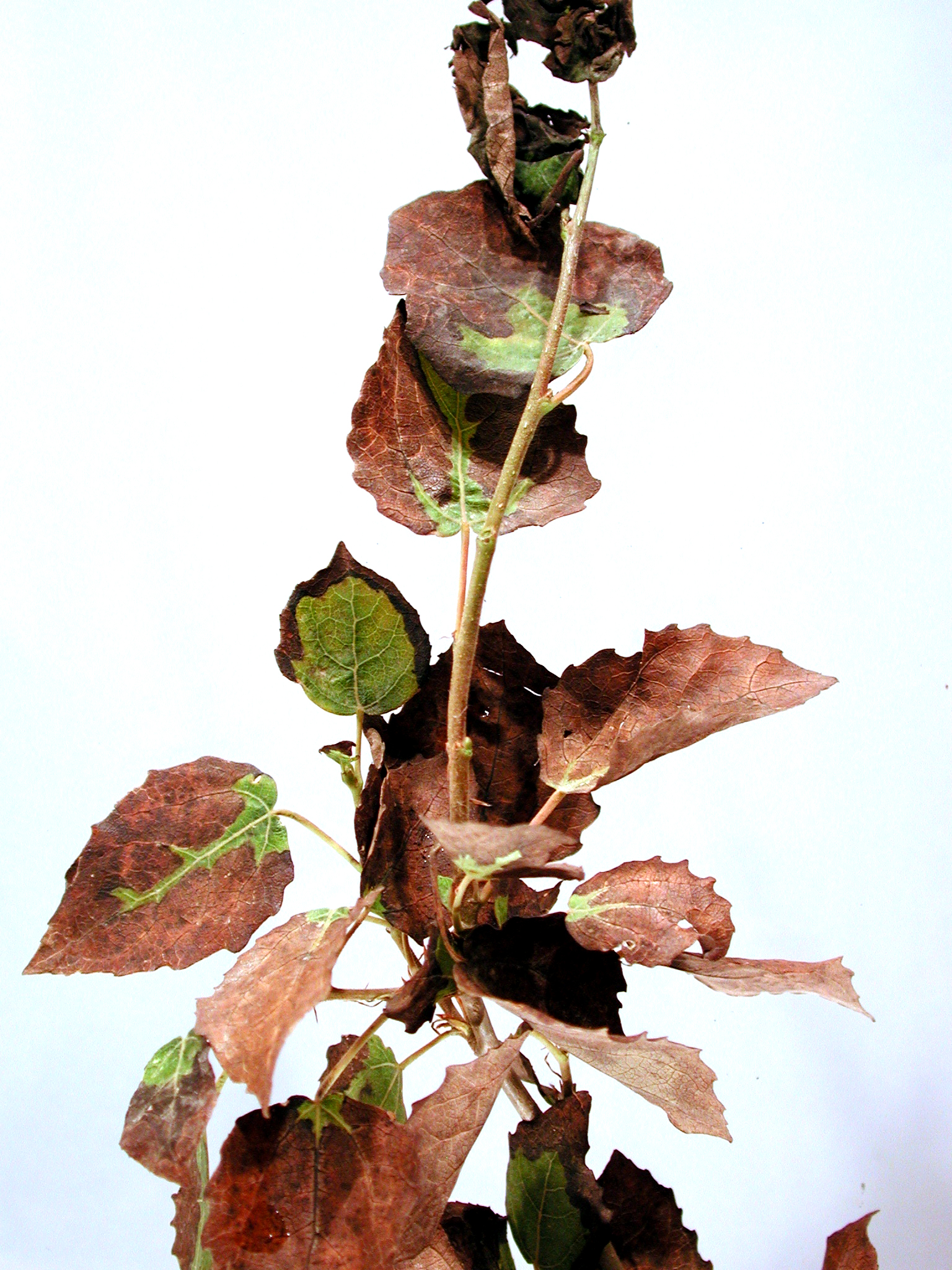
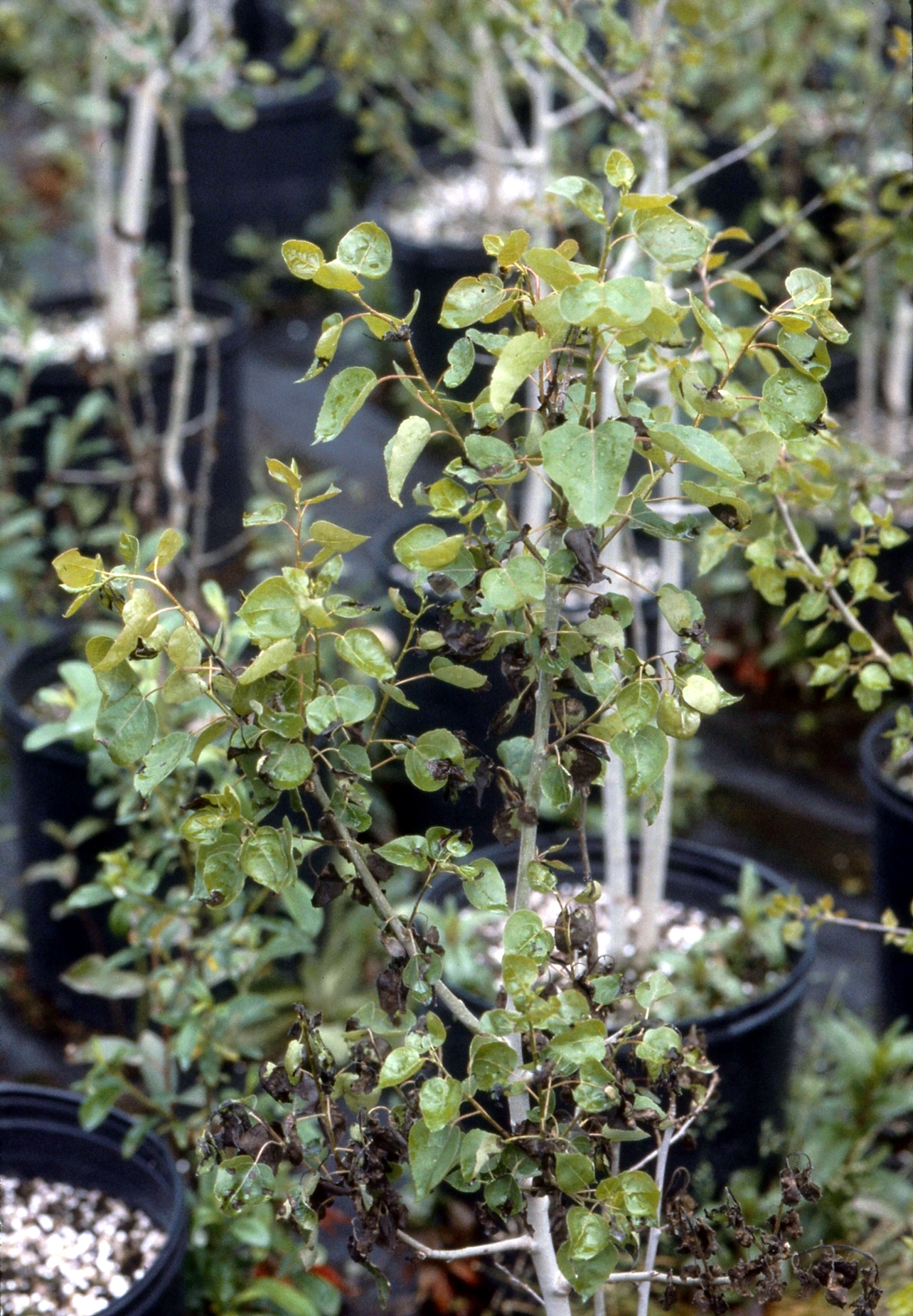
Image related to Plum, Flowering-Brown Rot Blossom Blight

Cause Endocronartium harknessii (formerly Peridermium harknessii), a fungus. The disease is commonly found on the hard pines, particularly those with two needles in the fascicle. Shore pine (Pinus contorta), lodgepole pine (P. contorta var. latifolia), mugo pine (P. mugo), Scots pine (P.