Plant Disease Management Handbook

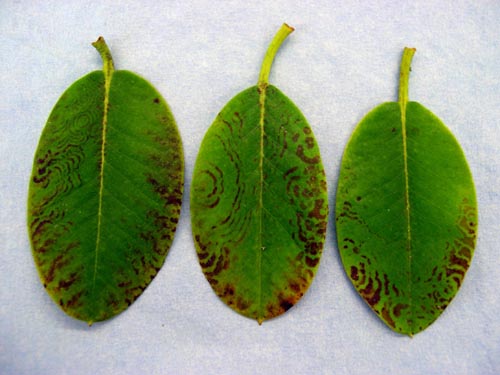
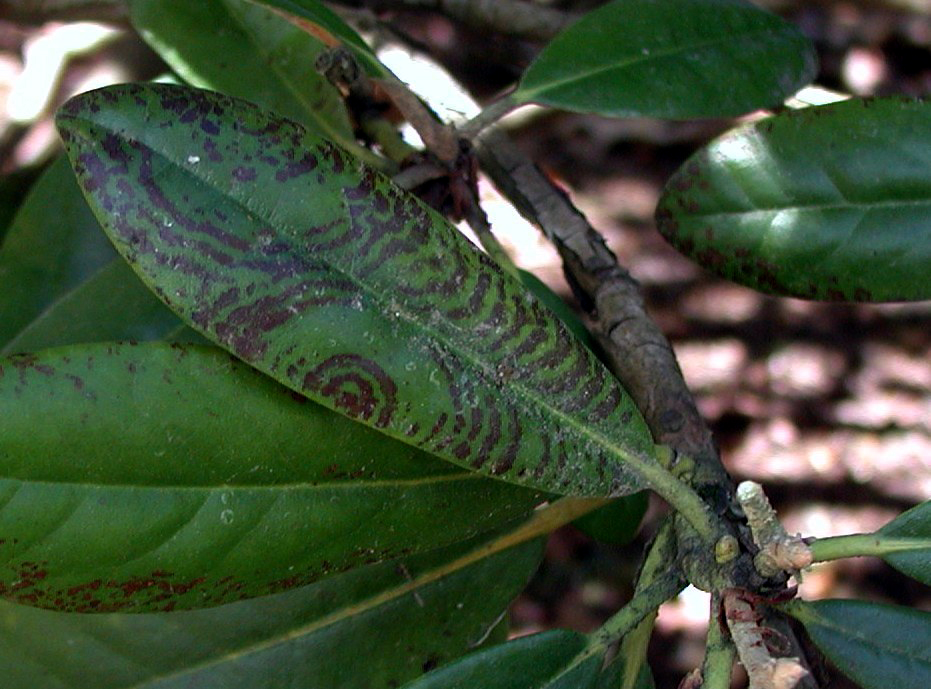
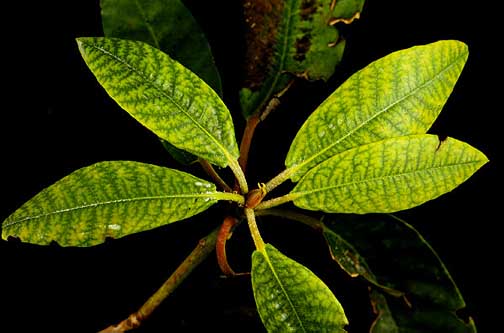
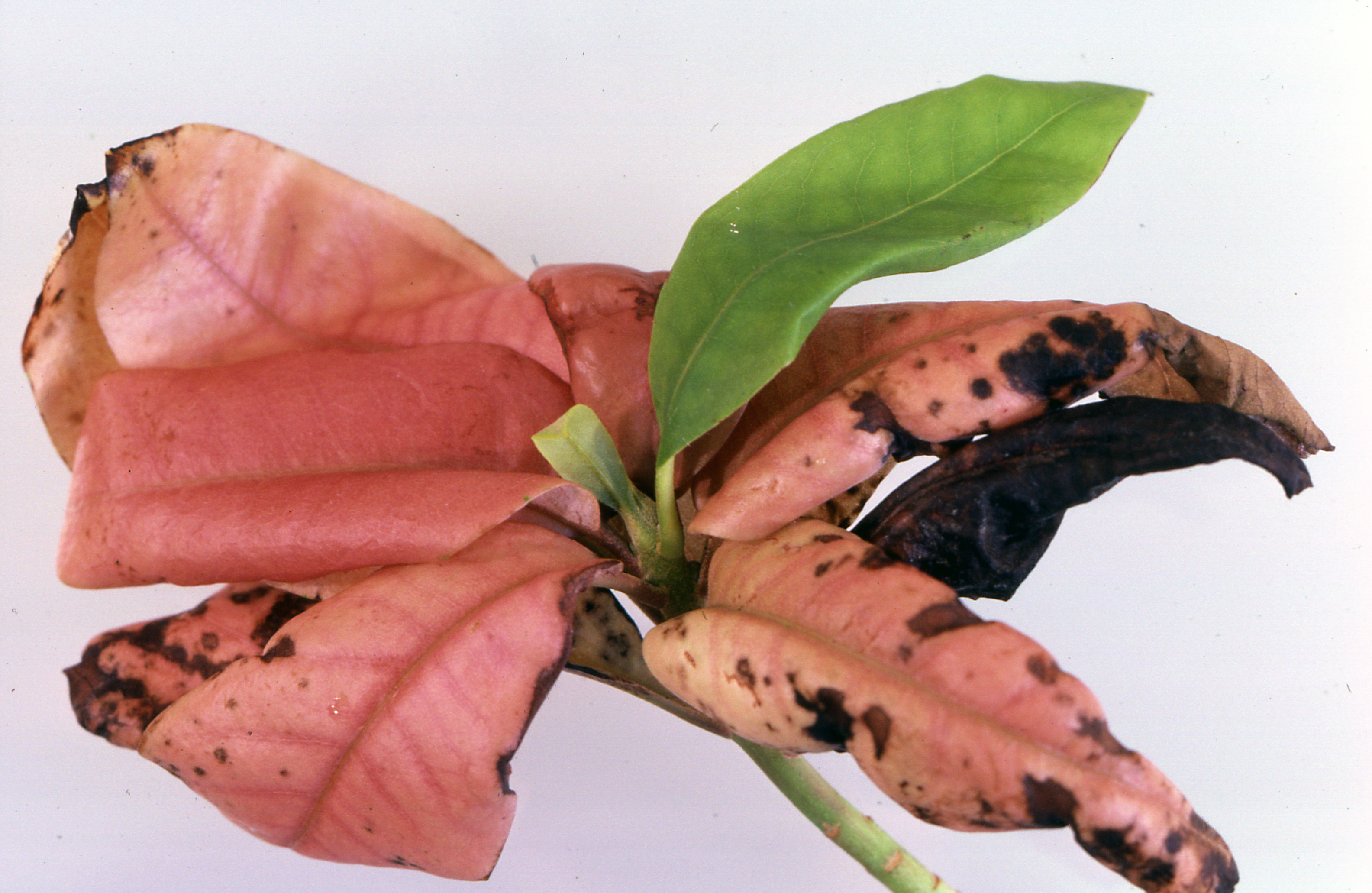
Cause A potexvirus, rhododendron necrotic ringspot virus, has been associated with symptoms of this disease but has not been experimentally proved the cause. Transmission likely is by vegetative propagation, but other methods or vectors are unknown. Insect such as aphids are known to transmit other potex viruses. Pollen or seed may be a means of transmission because many seedlings have been reported with symptoms. Both evergreen Rhododendrons and Kalmia latifolia can be affected.

Image related to Rhododendron-Necrotic Ringspot

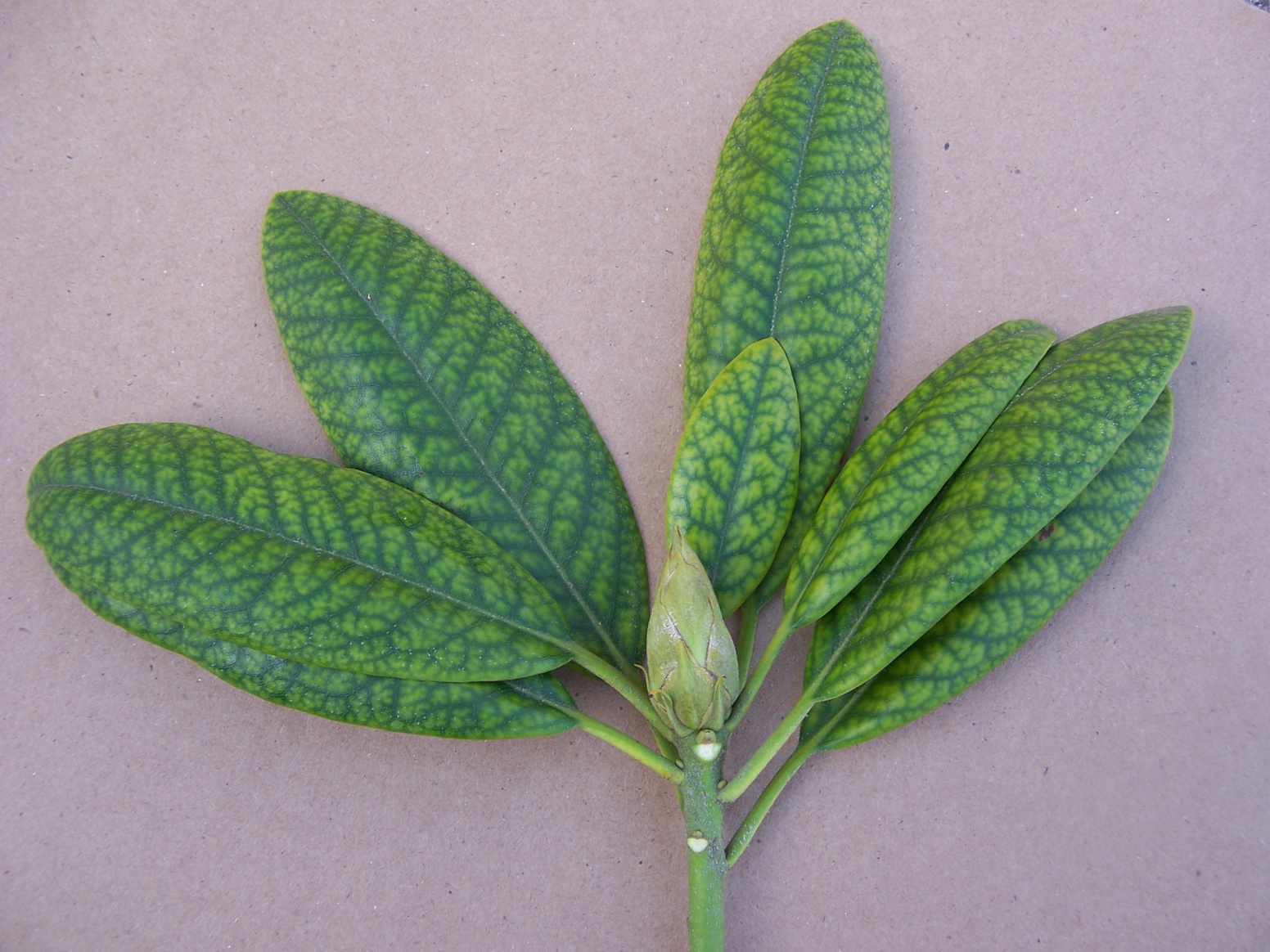
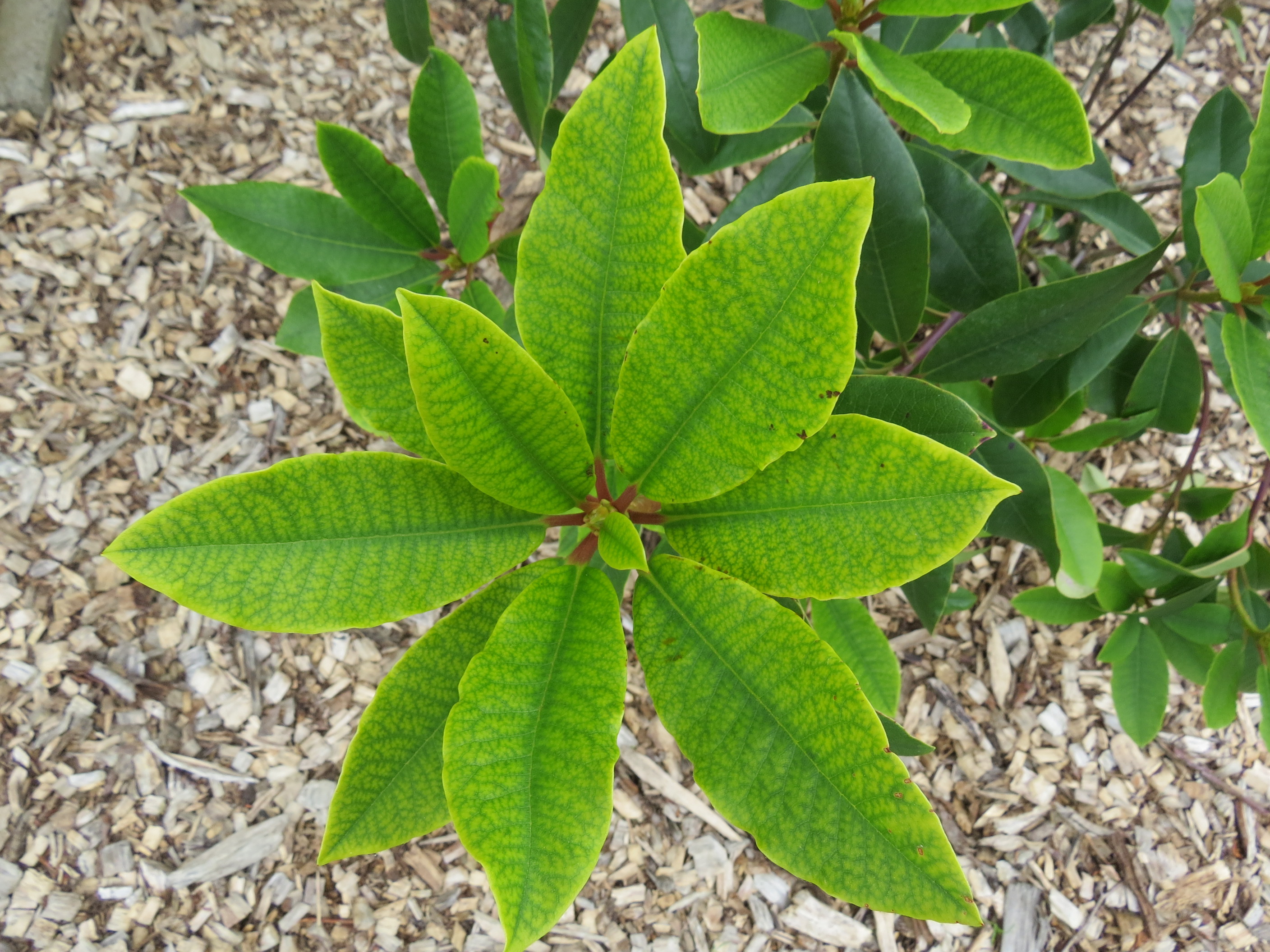
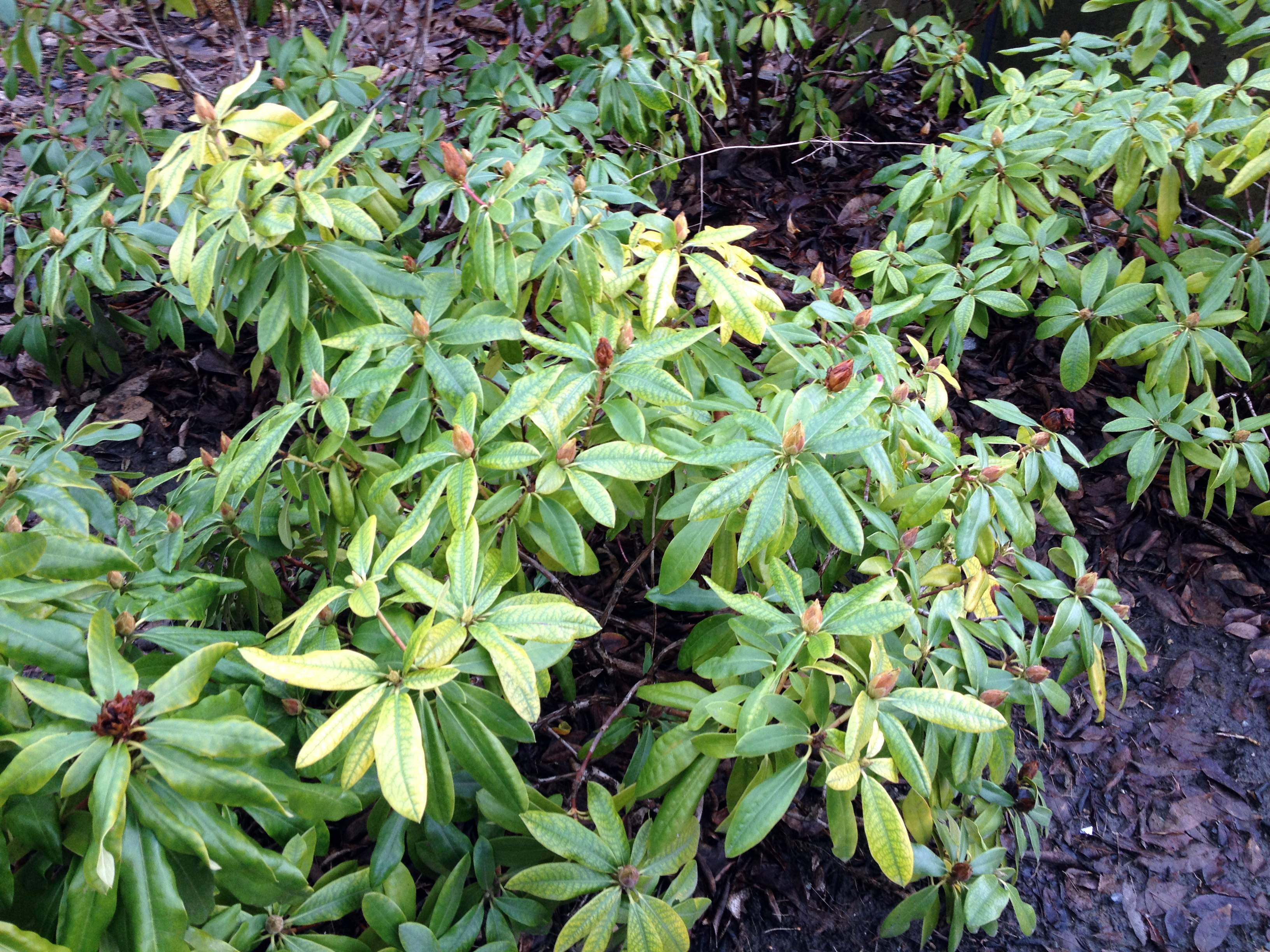
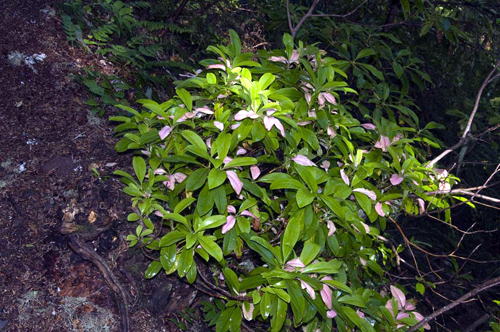
Cause A deficiency of some element, usually iron, in the plant. Iron may be lacking in the soil or in a form unavailable to plants. Lime-induced chlorosis, or leaf yellowing, is caused by strongly alkaline soil, which can make iron or manganese unavailable to plants. Rhododendrons grow normally in acidic soils. The evergreen azaleas R. macrosepalum var. hanaguruma, R. ripense and R.

Image related to Rhododendron-Leaf Spot

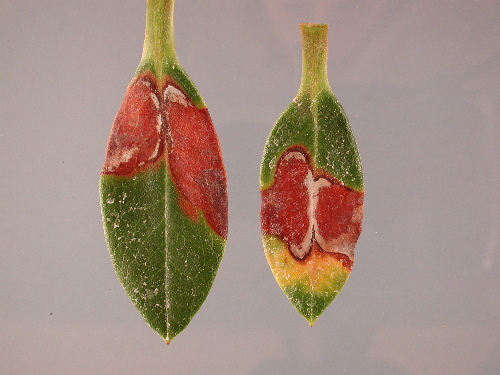
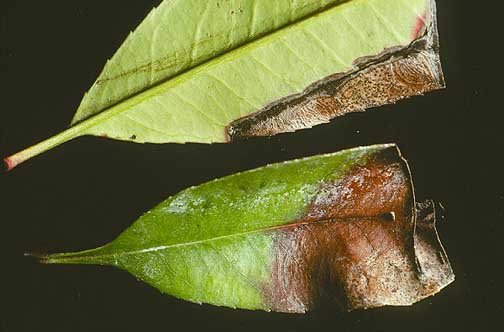
Cause Pestalotiopsis sydowiana, a fungus. A minor problem in the field but potentially severe in propagation. Leaf infection usually follows an injury such as sunburn, sunscald, or low temperature. Infection can be severe if leaves, on cuttings in cutting beds, are cut in half to reduce transpiration combined with heavy misting.

Image related to Rhododendron-Gray Blight

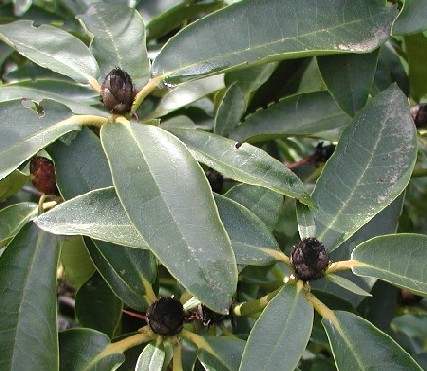
Cause Seifertia azaleae (formerly Briosia azaleae) , a fungus that infects terminal flower buds through axils of the bud scales. Diseased buds may remain attached for 2 to 5 years. Insects and slashing rain spread spores to healthy buds. Plant types range in susceptibility with up to 90% of the buds infected on the cultivar Pink Pearl.

Image related to Rhododendron-Bud Blight

See:

Cause Botrytis cinerea, a fungus. Growers observe that "purple" cultivars are more susceptible than others.

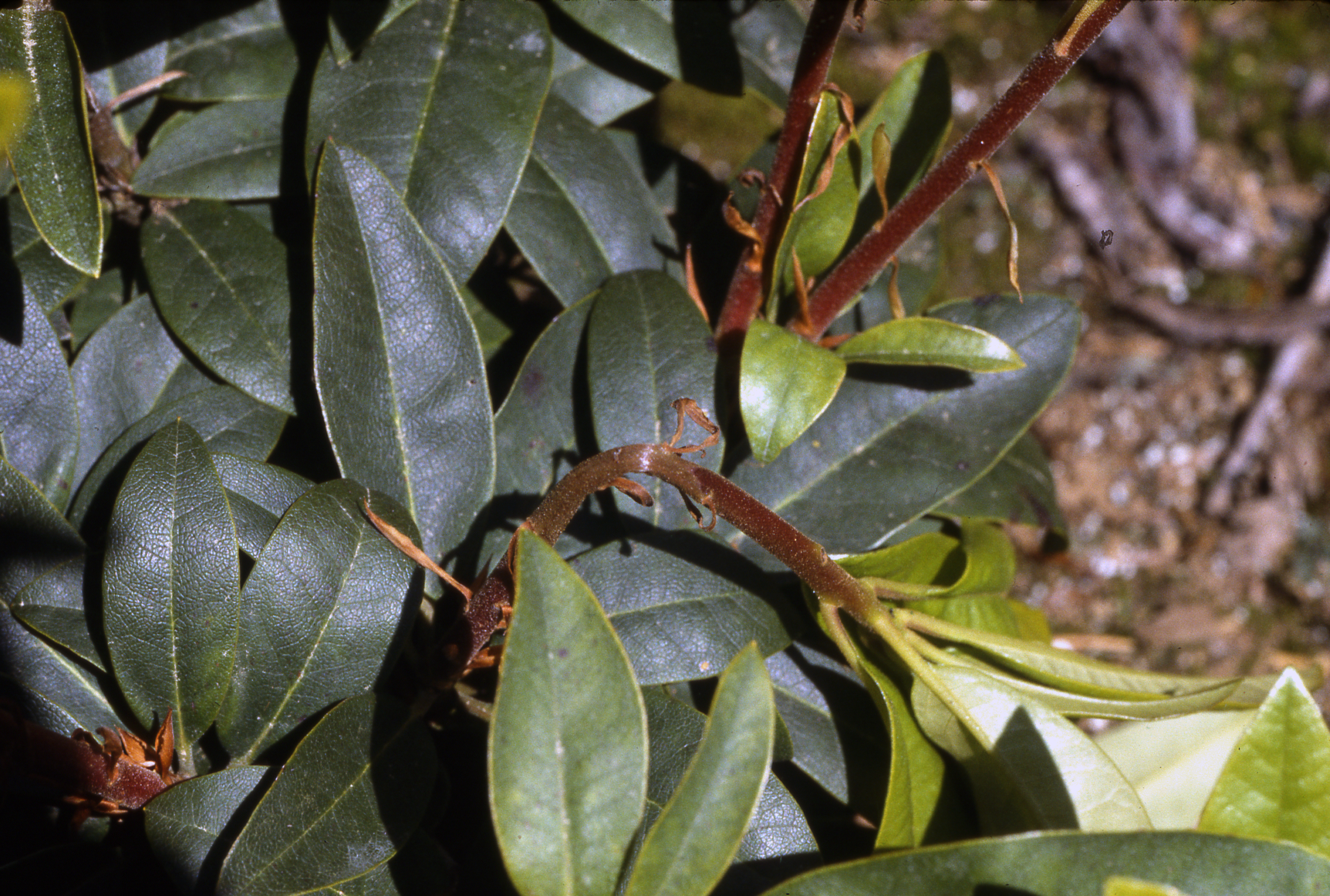
Cause Botryosphaeria dothidea, a fungus, that has been found by the OSU Plant Clinic a few times on samples from coastal areas of western Oregon. Infections occur through wounds. Members of the Botryosphaeriaceae fungi can occur as endophytes, pathogens, and saprophytes on a wide variety of woody hosts. Many are latent fungal pathogens that cause no symptoms under normal conditions.

See:

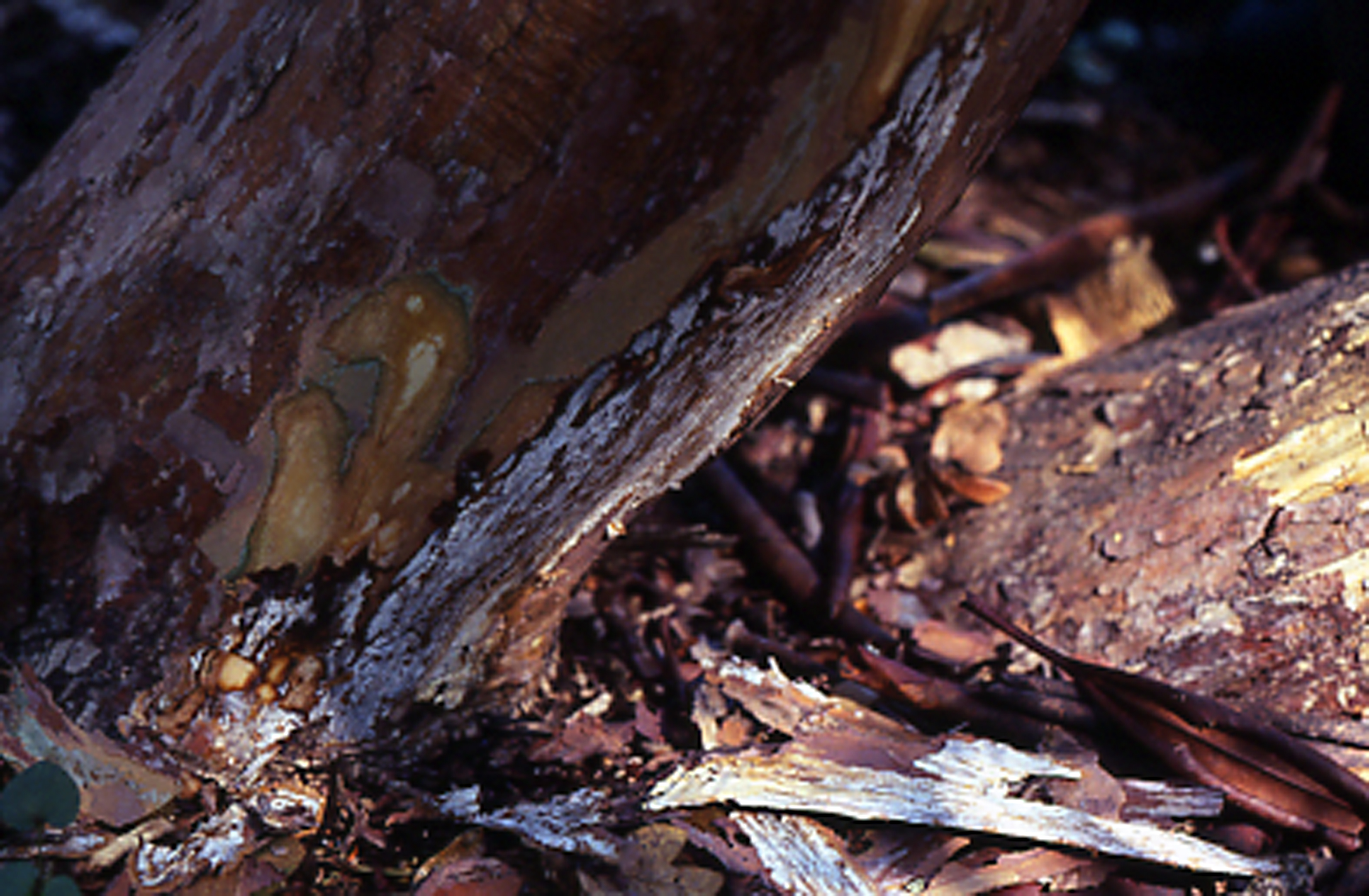
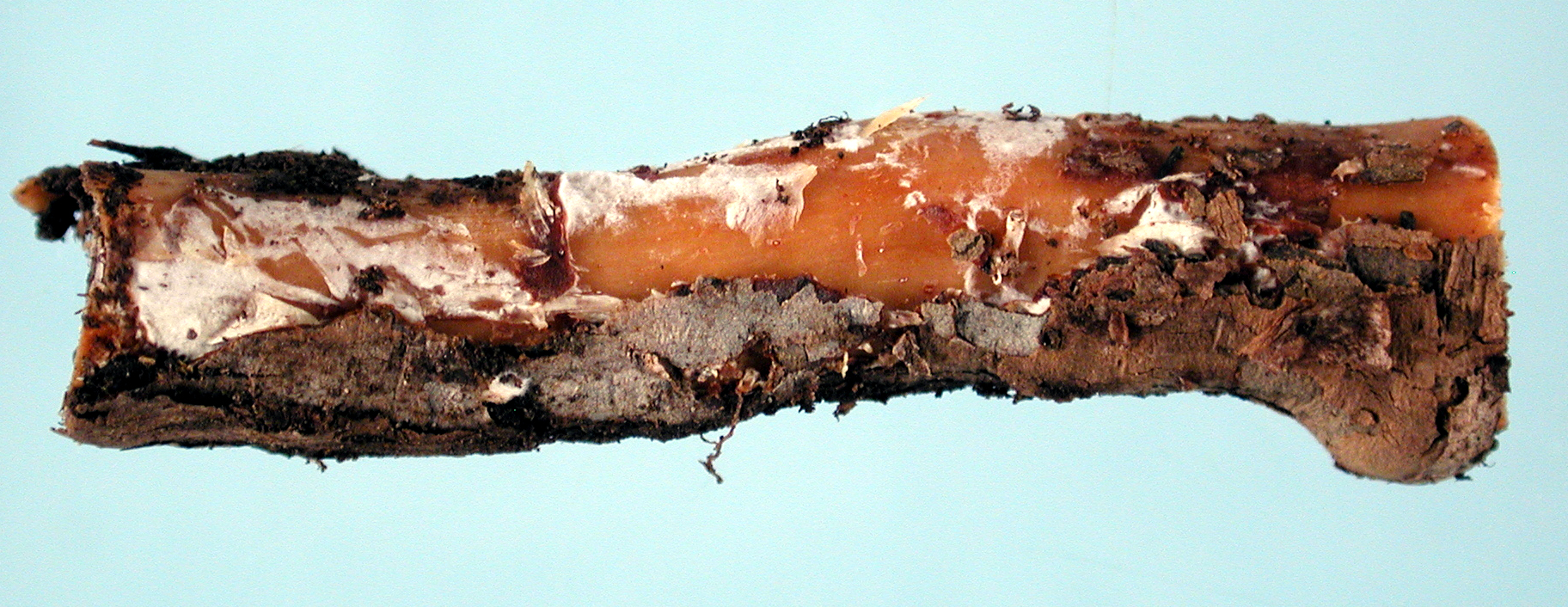
Notes: Armillaria root rot is a problem mostly in the forest. It could also be a problem in the landscape if bushes are planted in new home sites recently cleared of native vegetation. Avoid wounding roots and overwatering in landscape settings.