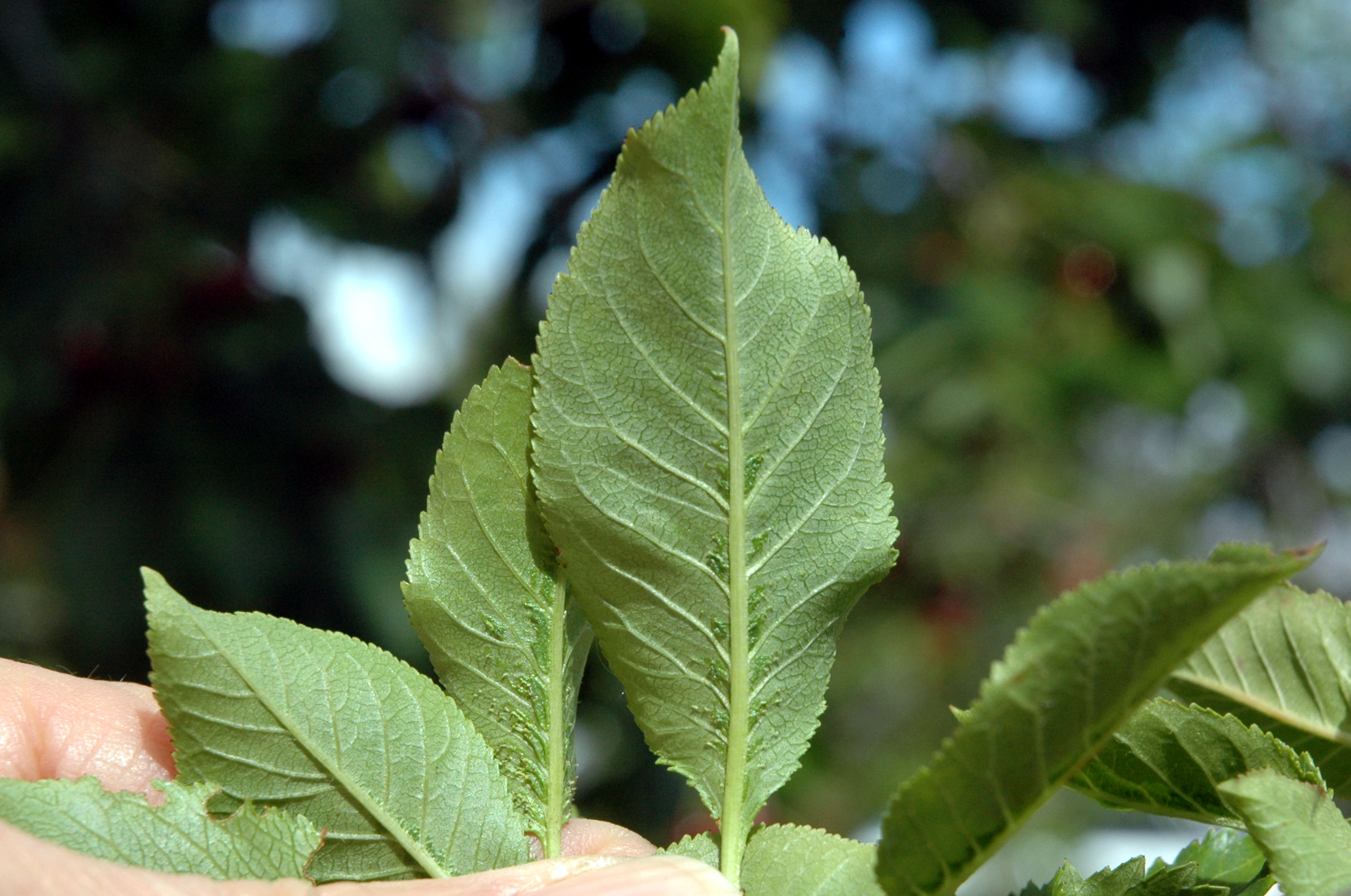
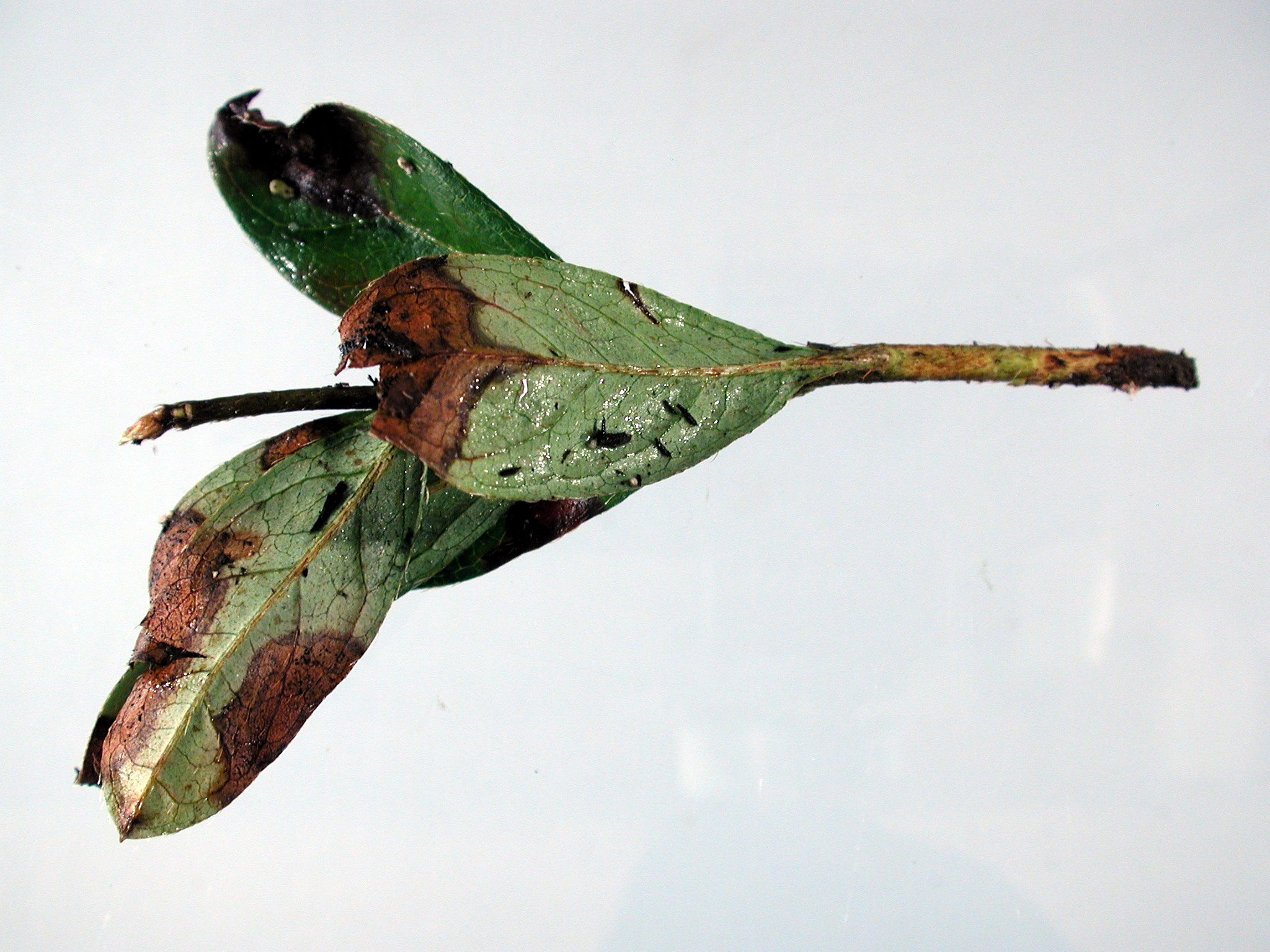
Leaf enations on small leaves of Bing cherry. Enations (small epidermal outgrowths) develop on the underside of these leaves adjacent to the midrib.
Jay W. Pscheidt, 2016.
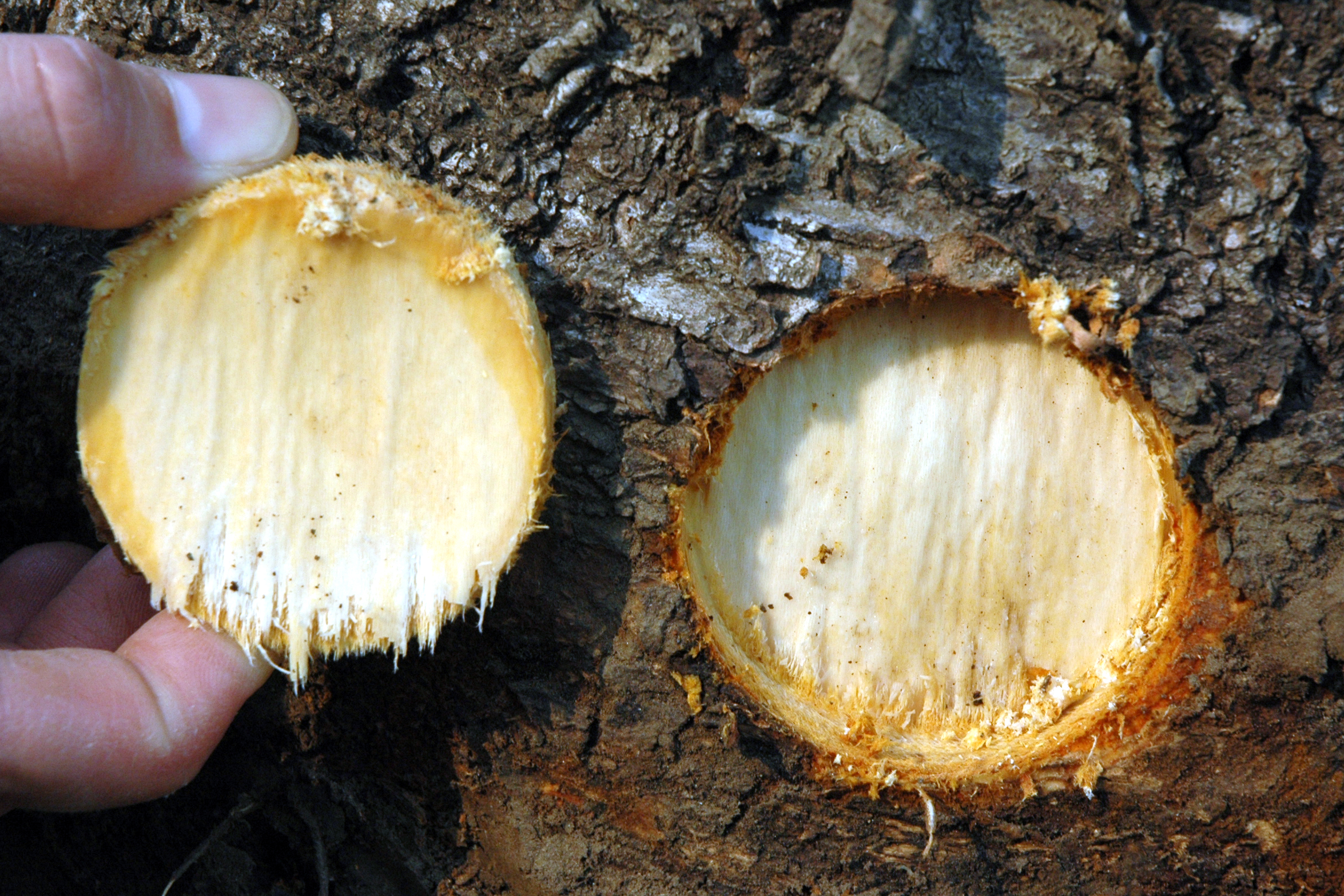
Unlike other strains of TomRSV, trunks may develop only scattered pockets of shallow pits in the vascular cambium area.
Jay W. Pscheidt, 2017.
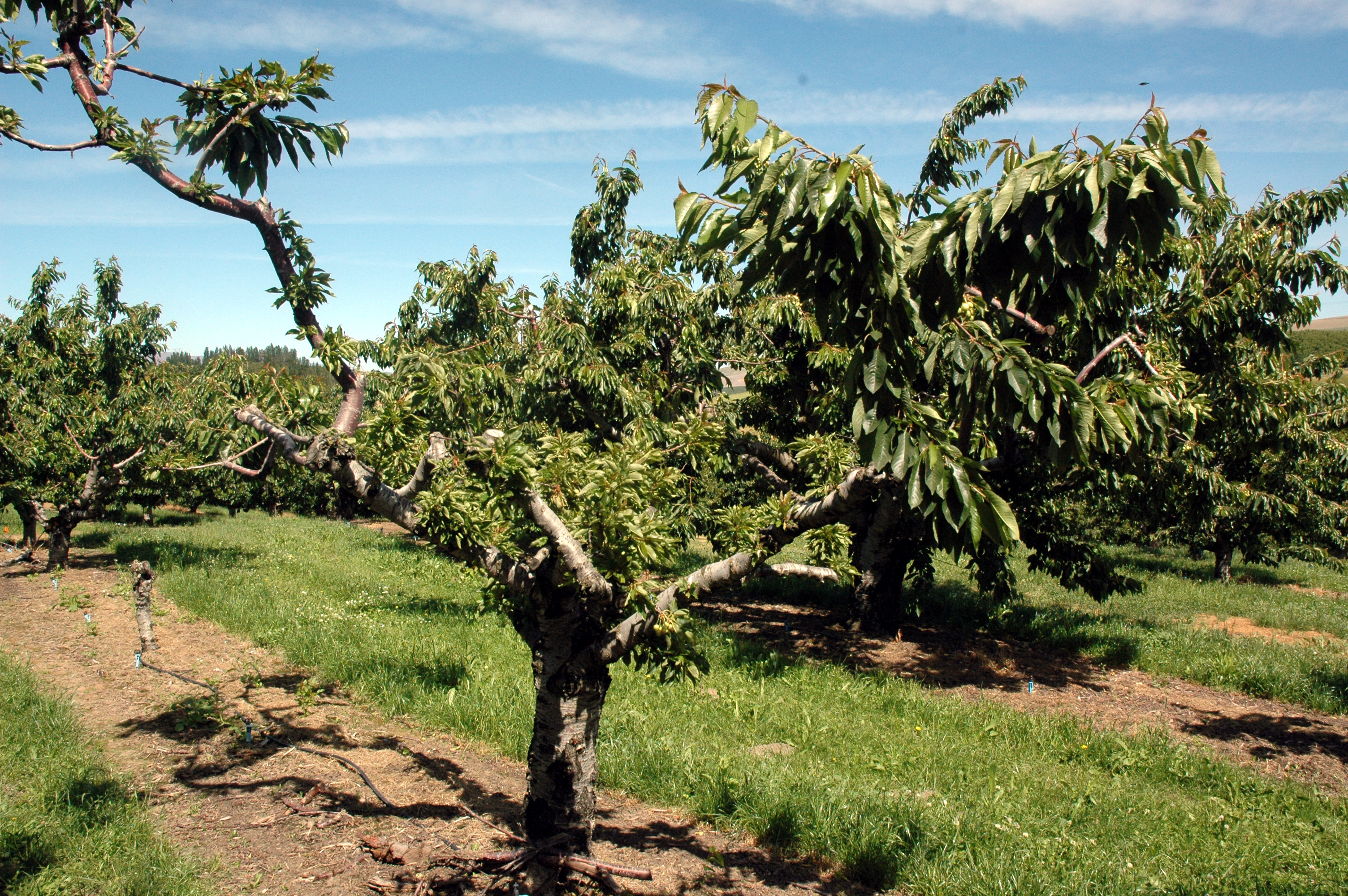
Note that most of this tree has rosetting (compressed) shoots while one branch to the right side has normal shoot and leaf growth. Tree was positive when testing for both ToRSV and PDV.
Note: The disease has been found mostly on newer cultivars such as Black Diamond and Columbia Star but also on Kotata.
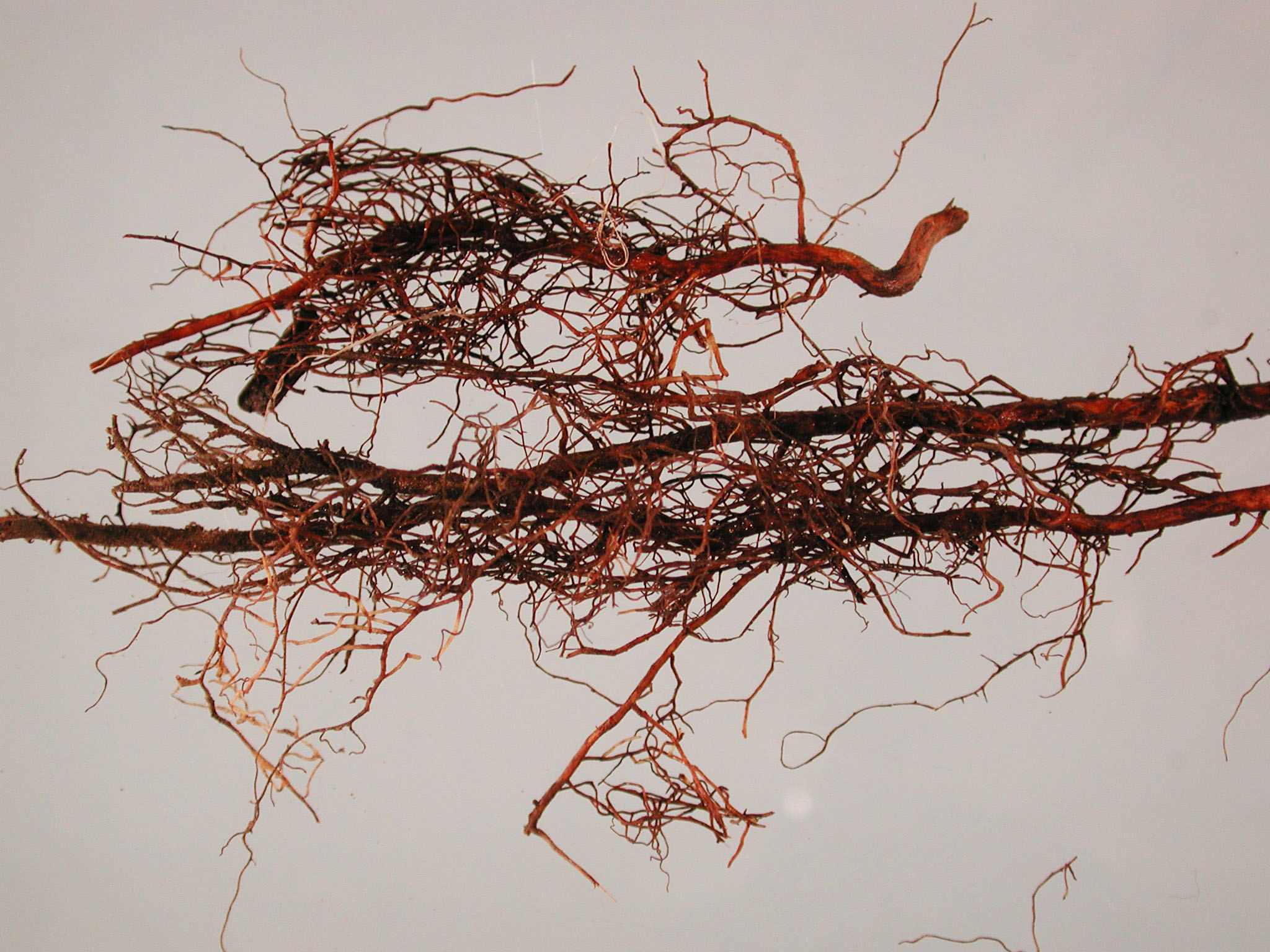
This 'Chester' blackberry had Phytophthora root rot.
OSU Plant Clinic image, 2010.
Note: There have been low levels of nematodes found in the few samples that have been submitted from blackberry. Nematodes have not been an issue in blackberry as they have been in such crops as raspberry.
Cause Two types of wood decay occur in living trees: white rots and brown rots. The more common fungal white rots in birch are caused by Ganoderma applanatus, Fomes fomentarius, and Phellinus igniarus. White rots cause all major structural components of the cell wall-cellulose, hemicellulose, and lignin-to degrade. The strength of white rotted wood decreases only in advanced stages of decay.
Fungal fruiting bodies indicate colonization of the heart wood.